

Germany’s AfD seeking to parlay Saxony-Anhalt win into nationwide momentum
Far-right party faces tests in Berlin and elsewhere as it attempts to turn eastern breakthrough into broader trend, but results likely to be weaker in west
 Add ToI as a Preferred Source on Google
JTA — Germany’s far-right, riding high after winning an eastern state, seeks to capitalize on its momentum in a series of upcoming elections — starting with municipal voting this weekend, followed by two closely watched state contests.
The first test for the Alternative for Germany (AfD) party comes Sunday in municipal elections in the western state of Lower Saxony. A week later, the AfD has its sights on state elections in the capital, Berlin, and the Baltic coast state of Mecklenburg-Western Pomerania.
The AfD beat out other parties in Saxony-Anhalt on September 6 with 43.8% of the vote and 39 of 83 state parliament seats, falling just short of a majority and marking Germany’s greatest far-right victory in a state election since World War II.
“From previous elections, we know that the AfD is currently able to mobilize almost totally its own constituency and potential voters, while its democratic competitors have much more problems,” said Gideon Botsch, the head of the Emil Julius Gumbel Research Unit on Antisemitism and Right-Wing Extremism at Potsdam University.
While polls do not predict the next state election, results appear to match the historic win in Saxony-Anhalt; the AfD currently leads other parties in Mecklenburg-Western Pomerania with about 35% of the vote. And in Berlin, long a stronghold of Germany’s political left, the AfD is jockeying with the center-right Christian Democratic Union (CDU) and the left-wing Linke for first place, with all three polling around 20%.
The AfD, a nationalist, anti-immigrant party whose leaders have proposed rejecting Germany’s “guilt complex” over the Holocaust, has regularly topped nationwide opinion polls for the past year. In surveys asking Germans which party they would choose if federal elections were held “this Sunday,” the AfD often receives the highest results, Botsch told the Jewish Telegraphic Agency.
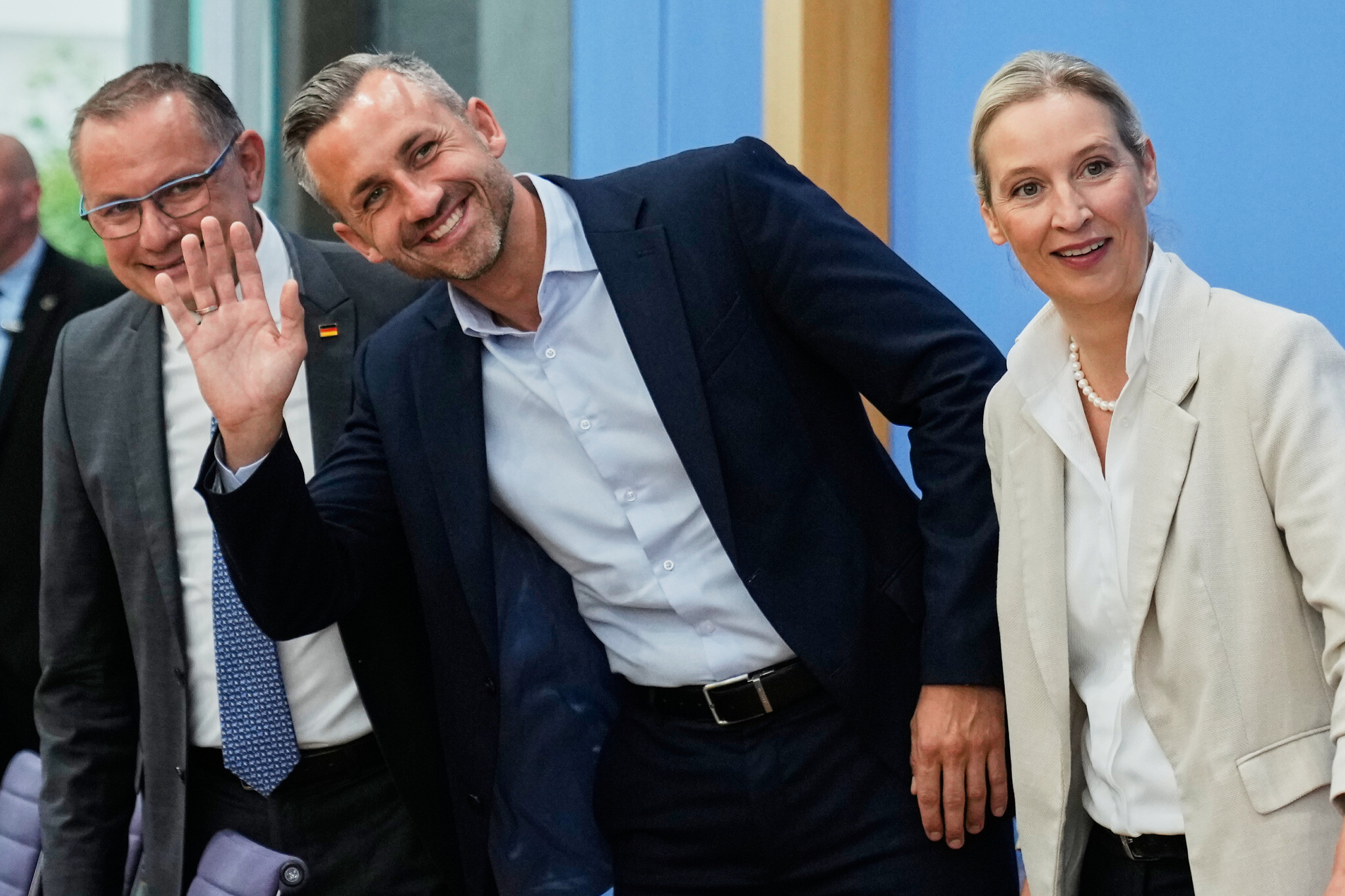
The AfD has built a dedicated and growing base, said Botsch. Its popularity signals frustration with the mainstream parties in power, particularly the CDU, Chancellor Friedrich Merz’s party, amid a sluggish economy. The AfD is especially popular in eastern Germany, where voters are poorer and hit hard by high energy prices exacerbated by the wars in Iran and Ukraine.
The AfD is likely to perform more weakly in the west, where Lower Saxony will hold a municipal election on Sunday. The party has stronger influence in the east, and Germany’s municipal elections tend to hinge more on well-known figures from established parties, said Roger Stöcker, a political scientist at Otto von Guericke University in Magdeburg. Still, even if the AfD doesn’t transform governments, Stöcker said that making inroads to further entrench itself in Lower Saxony would be “a strategically significant success.”
“It’s conceivable that the AfD wins a town hall or a county administration here and there or strengthens its presence in local councils, expanding its local base,” said Stöcker.
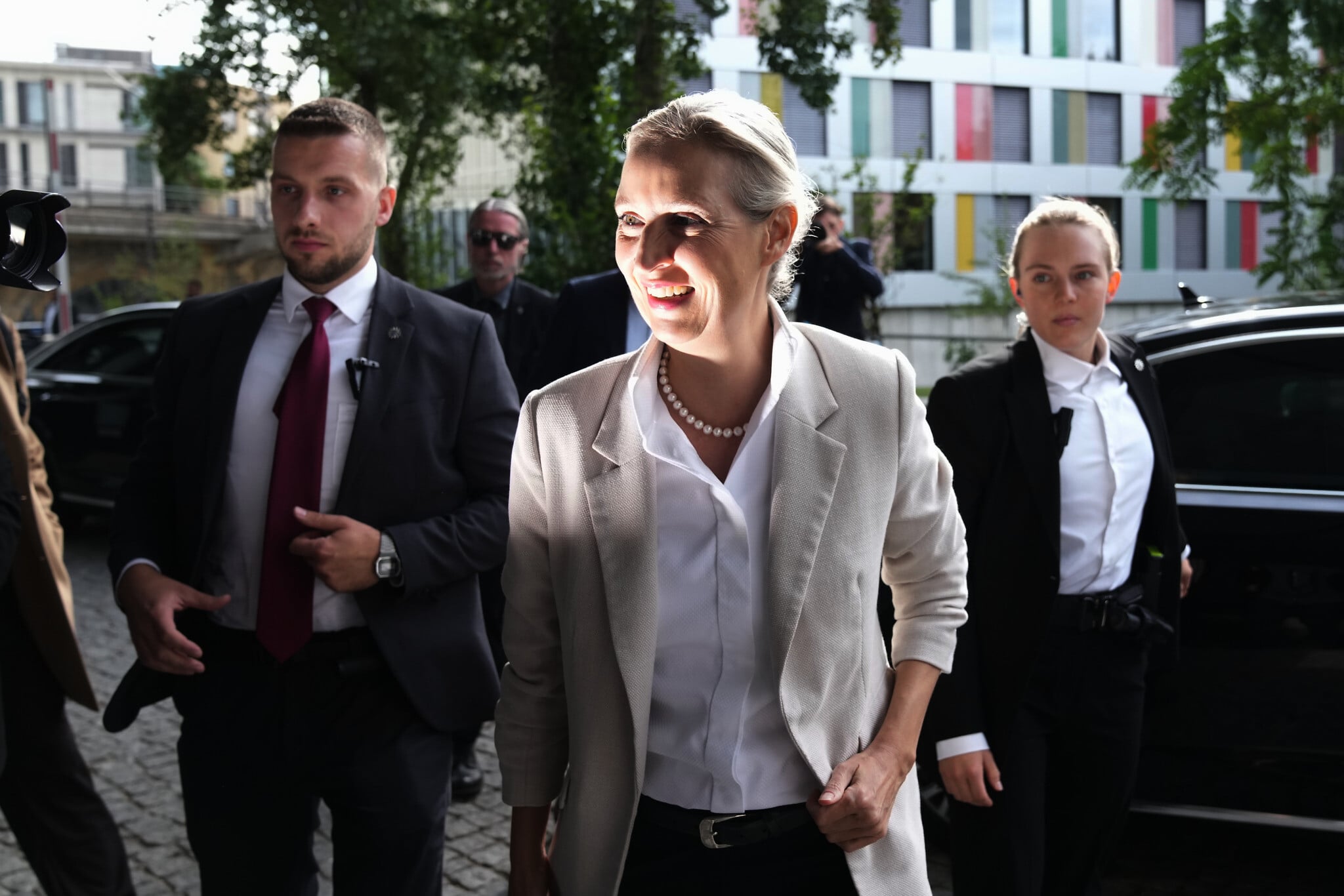
The three upcoming elections are being closely watched for signs of the AfD’s wider-scale momentum, said Daniel Schuster, who heads the Simon Wiesenthal Center’s European office.
“Taken together, these elections can help show whether Saxony-Anhalt was an exceptionally strong eastern result or part of a broader national expansion of the AfD’s electoral base,” said Schuster.
Remko Leemhuis, the director of the American Jewish Committee Berlin Lawrence and Lee Ramer Institute for German-Jewish Relations, added that residents will feel the effects of the AfD’s success even if it falls short of its victory in Saxony-Anhalt. A “very strong AfD result,” short of managing to enter government coalitions, would still “raise serious concerns” for Jewish residents about the party’s influence, said Leemhuis.

Residents in Saxony-Anhalt are waiting to see the ramifications of the AfD’s election victory. Without an outright majority, the party needs partners to join a coalition. Its nationalist agenda in the region includes teaching children less about Nazi leader Adolf Hitler, banning Pride flags in public buildings and requiring artists and cultural organizations to sign a declaration that they will not “disparage Germany and its culture” if they seek state funding.
State governments also control domestic policing and parts of the judiciary. The AfD could use its power in these areas to “put pressure on minorities it dislikes,” including immigrants, Muslims and Jews who are identified with Holocaust remembrance, said Stöcker. At the same time, the AfD could direct policing and intelligence away from right-wing extremism in Saxony-Anhalt, which recorded the second-highest number of right-wing extremist crimes per capita of Germany’s 16 states last year, Leemhuis said.
The AfD’s victory in Saxony-Anhalt marked a “watershed moment” in German politics, according to Roland Abold, the managing director of Infratest Dimap, a German election research institute. Abold said that the result heaped pressure on Merz and the federal government, as “calls for a change in political direction and a reassessment of cooperation with the AfD are likely to intensify.”
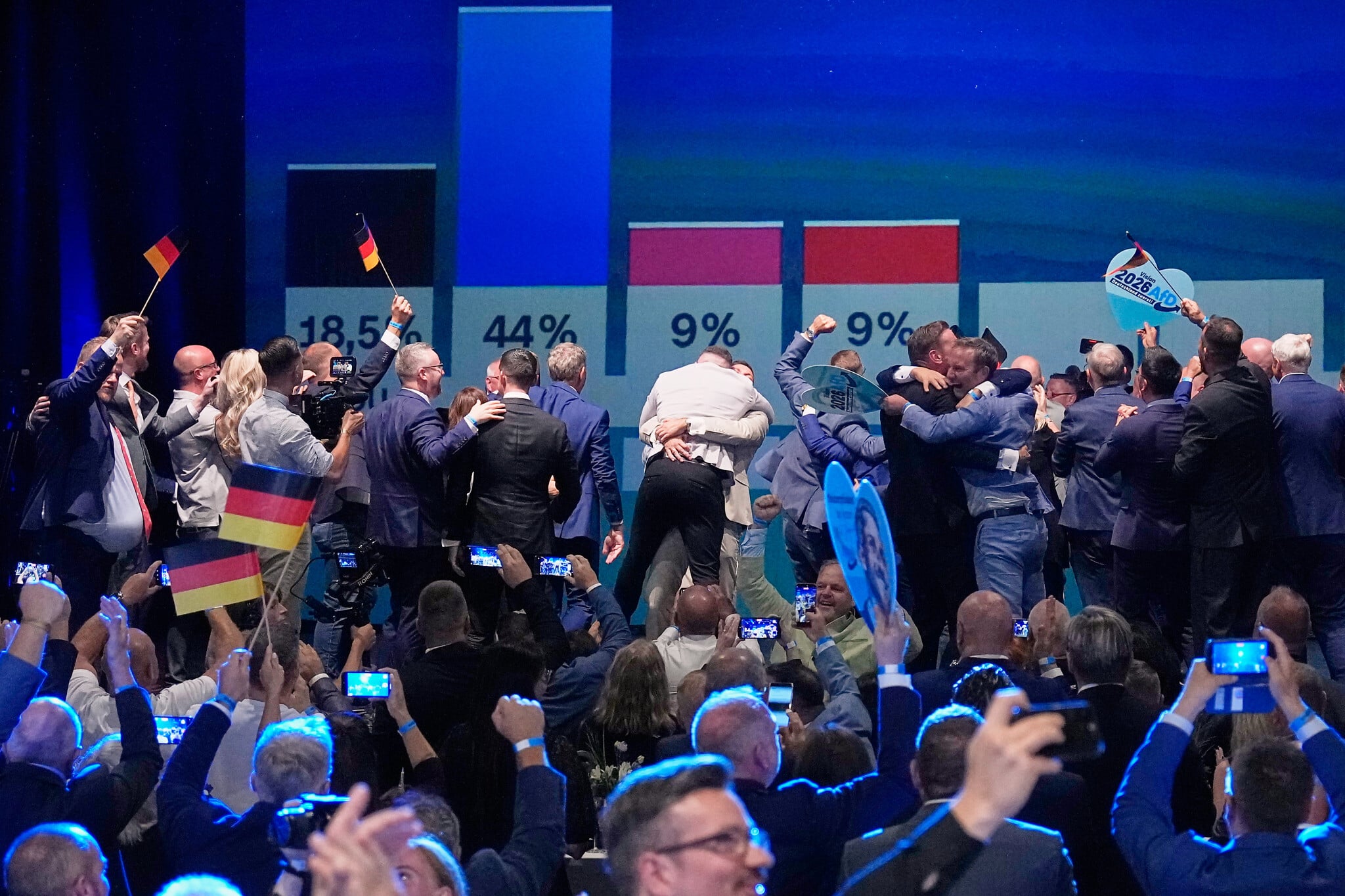
The CDU for now is standing behind Merz, the most unpopular chancellor in modern German history after 16 months in power. But if the CDU faces further heavy defeats in the upcoming elections, questions about Merz as the party’s leader could escalate, said Stöcker.
The AfD already has its eyes on his job. Alice Weidel, the national AfD’s co-chair, announced on Monday that she wants the party to win “at least 40% of the vote” in Germany’s next federal election in 2029.
Ulrich Siegmund, the AfD candidate in Saxony-Anhalt who hopes to become the state premier, said in the same press conference that his goal was “very clear.”
“As perhaps the next Minister-President of Saxony-Anhalt, I need a Federal Chancellor Alice Weidel here in Berlin, so that we can write here history side by side,” said Siegmund.










The Times of Israel Community.