

Lebanese official to ToI: ‘Indiscriminate’ IDF strikes hinder Hezbollah disarmament
In rare engagement with Israeli news outlet, official from Beirut says widescale destruction in south Lebanon delegitimizing country’s efforts to collaborate with Israel against Iran-backed group

 Add ToI as a Preferred Source on Google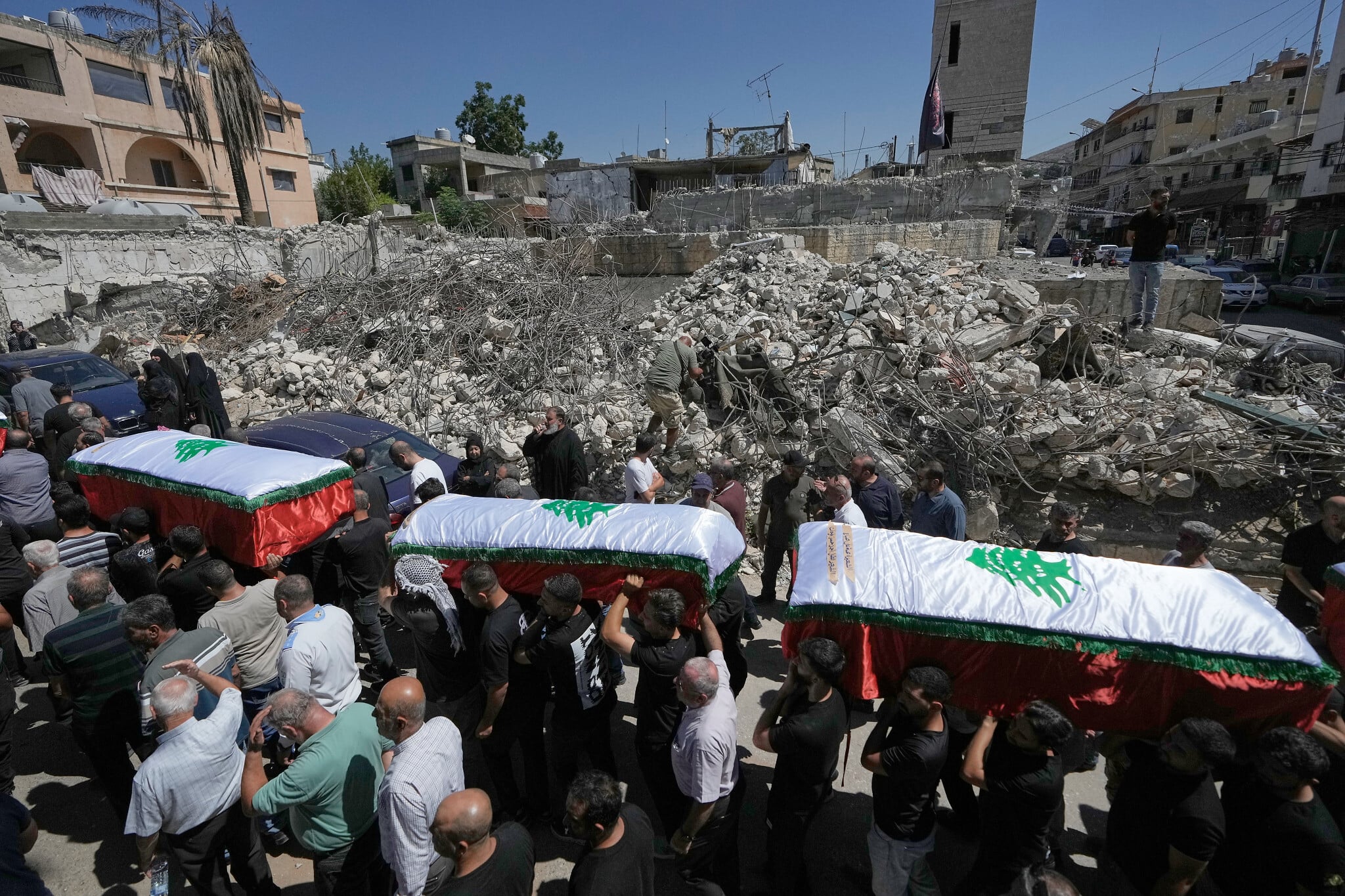
WASHINGTON — IDF strikes in southern Lebanon are extending well beyond Hezbollah infrastructure and are consequently undermining the Lebanese government’s efforts to disarm the terror group, a senior Lebanese official told The Times of Israel this week.
“The more Israel over-targets villages in the south… this has created an enormous backlash against the president and against the efforts that we’re working on with Israel,” the official said in a rare interview with an Israeli news outlet, which was conducted on condition of anonymity amid legislation in Beirut that outlaws such contact.
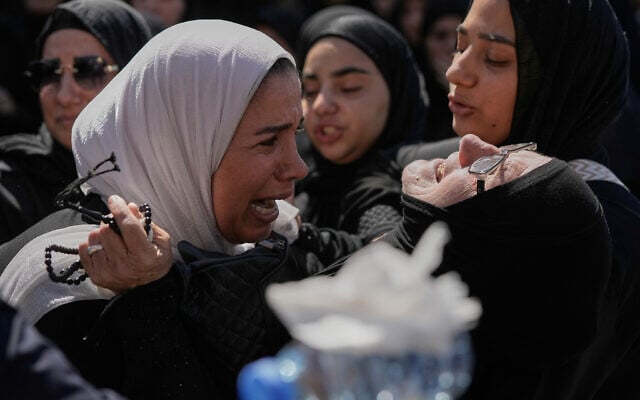
The official cited a strike from roughly 24 hours earlier in the southern Lebanese village of Kfar Rumman, which the Lebanese health ministry said killed 11 people, including a paramedic, four women and two children.
The IDF at the time said it had targeted several Hezbollah operatives who were identified moving weaponry in the town and that it was looking into the reports that civilians had been harmed in the strikes.
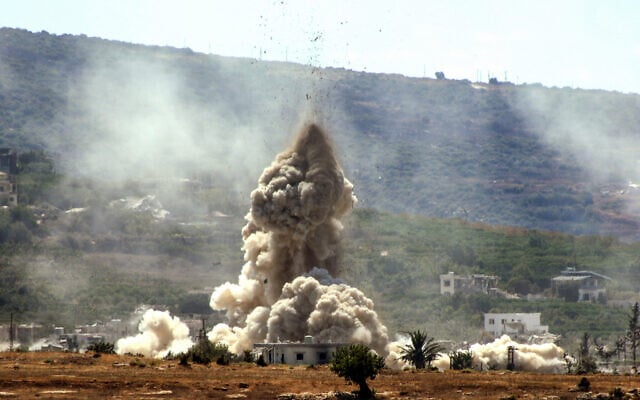
Jerusalem has generally defended the widespread destruction in southern Lebanon by arguing that Hezbollah has riddled many of the villages along Israel’s northern border with tunnels and other terror infrastructure.
But comments from Defense Minister Israel Katz boasting about completely flattening dozens of villages and pledging to remain in southern Lebanon indefinitely have given additional ammunition to critics of the Lebanese government’s engagement with Israel, who argue that Jerusalem has territorial ambitions in the country.
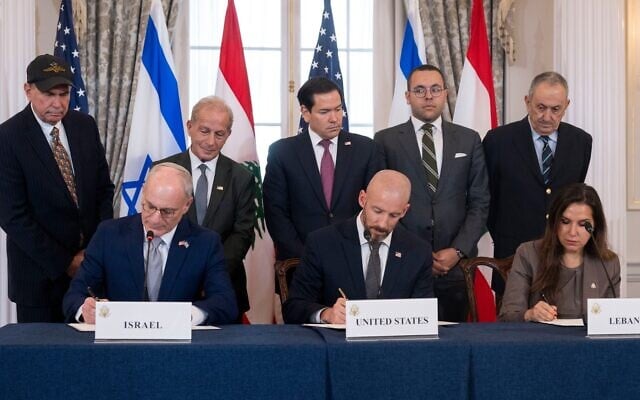
Beirut began holding US-mediated negotiations with Israel in April aimed at collaborating on disarming Hezbollah in a process that would include the IDF’s withdrawal and an eventual peace deal between the two countries.
The sides signed a framework agreement in June that saw the creation of several pilot zones in southern Lebanon from which troops from the Lebanese Armed Forces replaced the IDF, but similar transitions of power have stalled, with Israel claiming that the LAF is not doing enough to disarm Hezbollah.
The Lebanese official said that if Jerusalem is dissatisfied with the LAF’s performance, it should use the negotiations to present specific steps that can be taken to address those concerns.
Hezbollah dragged Lebanon into the Iran conflict in March by launching rockets at Israel. Israel retaliated with a major military operation against the terror group, which has seen the IDF occupy southern Lebanese territory up to a newly established Yellow Line that is roughly six miles deep into the country.
The Lebanese official speaking to The Times of Israel said Israel’s reticence to withdraw and its allegations about the LAF’s ineffectiveness are why it is critical to establish the disarmament verification mechanism, as envisioned by the framework deal.
The sides have been negotiating for months on which countries will be represented on the verification committee, with Israel in recent days issuing additional vetoes on the participation of France and the United Kingdom over their sanctions announcements against West Bank settlements, a Western official said.
The next round of talks between Israel and Lebanon is slated to take place next week in Rome, but the Western official acknowledged that limited progress is expected until after the October 27 Knesset election, with Prime Minister Benjamin Netanyahu’s government showing limited willingness to compromise as the vote approaches.
The two countries face an uphill battle, though, given that Hezbollah is not a part of their negotiations and has renounced them.
The Lebanese official said their government is holding indirect talks with the terror group, but those are proceeding very slowly, as Hezbollah insists that it must keep its weapons “as long as Israel is occupying territories in Lebanon.”
The Lebanese official insisted there is still a rare opportunity to act against Hezbollah, claiming the vast majority of the country still supports disarming the terror group.
This has given Beirut the space to continue its talks with Israel.
“But what’s happening in southern Lebanon — the indiscriminate attacks and destruction — has also created more justification for the Hezbollah community and for the Shiite community to claim that the government is failing to protect the country and that Hezbollah is still needed for that purpose,” the Lebanese official said.
“My message today to the Israeli counterparty is that we both agree that Hezbollah must go, so you need to give some oxygen to the Lebanese state by strengthening its institutions,” they said.
Asked what that means practically, the Lebanese official argued that it starts with the IDF operating in a more targeted manner in southern Lebanon.
The official said Beirut would like to see a return to the way the Israeli army functioned after the November 2024 ceasefire in Lebanon.
In the year-plus that followed, the IDF carried out regular strikes against Hezbollah targets, but the Lebanese official suggested that those were more measured and didn’t extend to include the complete destruction of entire villages.






The Times of Israel Community.