

Germinated by its founder’s trauma, growing farm network cultivates healing through work
Rimon Farms Association, which harnesses nature and agriculture to help PTSD sufferers and youth at risk, is now fundraising to seed two new programs to serve Gaza border area
 Add ToI as a Preferred Source on Google
Sue Surkes is The Times of Israel's environment reporter
Nir Amitay never imagined that a New Year’s Day outing for a beer on Dizengoff Street in Tel Aviv would end in bloodshed.
Two people were killed and seven were injured in 2016 when an Arab-Israeli, Nashat Milhem, opened fire on the Simta pub where Amitay sat with a friend. Security forces spent a week hunting Milhem before killing him in a shootout. Amitay, then a career soldier in a covert unit, was unarmed and recalls chasing the terrorist with a beer glass in his hand.
“I was one of the only ones the terrorist missed,” Amitay says. “Bullets flew on either side of my head; I felt like I was looking at death. The attack was on a Friday. On Sunday, I was back in the army.”
Four years later, while serving in a senior IDF position, Amitay, now 40, married and a father of two, felt “pains in his heart,” yet doctors found nothing physically wrong. He realized the trauma of the attack was surfacing. He read a text that urged people to let their hearts lead them to the right path, and he took it as a sign. A member of Kibbutz Lahav, located about 20 kilometers (12.5 miles) north of Beersheba, he left the army after 17 years, inspired by his childhood memories of farming and his experience working with an at-risk youth.
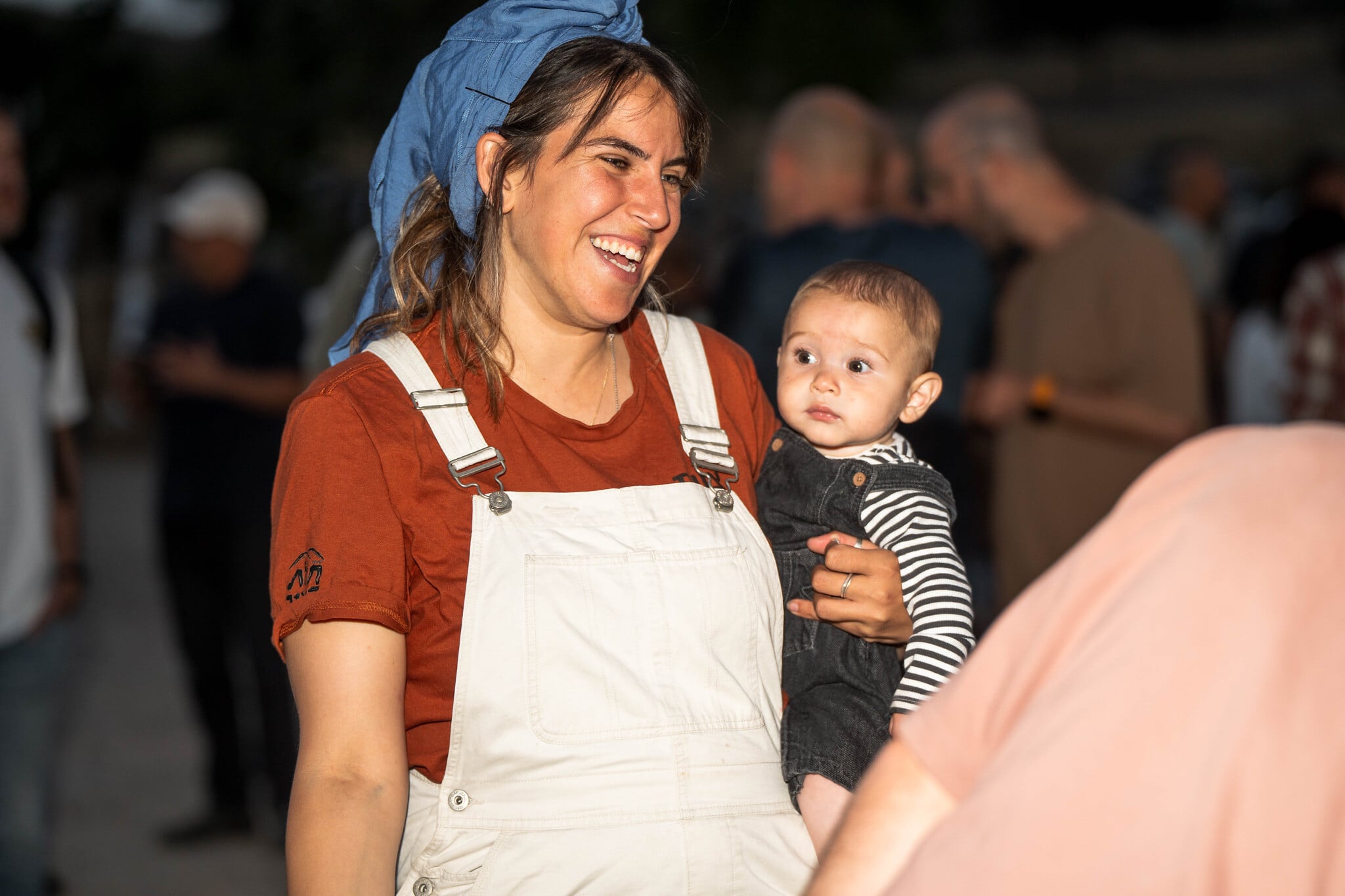
In 2021, he and a group of friends established the first of what would become a nonprofit network of therapeutic farms called the Rimon Farms Association. To date, these farms have served 10,000 people across 25 programs ranging in length from a single day to two years.
“Today we know that [conventional] therapy isn’t enough,” Amitay says, explaining that the farms use nature and agricultural work, including livestock herding, as tools to reconnect people to life and positive thinking.
“Everyone needs roots and wants to feel connected,” he says. “The agricultural work enables people to reconnect spiritually, while the physical labor helps them unload trauma. Seeing a plant grow gives us hope that we can flourish, too.”
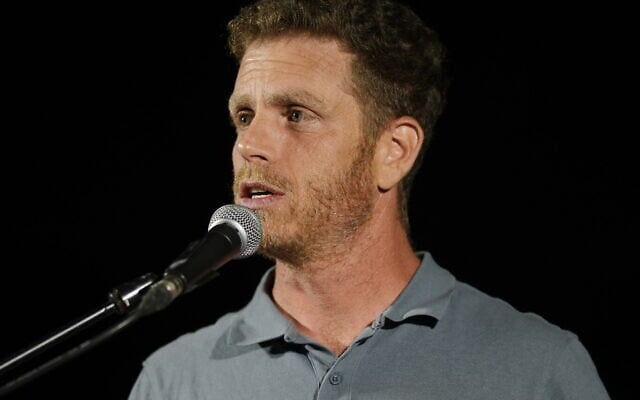
Amitay emphasizes a three-pronged approach: “We want participants to feel significant — whether they’ve planted, farmed, or worked in the carpentry shop. We want them to feel a sense of belonging to a community. And we want them to commit: to their families, to therapy, to apologizing after an outburst, and to choosing life.”
The first project, Rimon Farm in the Lahav Forest, geared toward helping at-risk youth, opened in 2021.
‘The agricultural work enables people to reconnect spiritually, while the physical labor helps them unload trauma’
The impetus for PTSD programming came soon after, catalyzed by the 2021 tragedy of Itzik Saidyan, a former soldier who set himself on fire outside the Rehabilitation Department in Petah Tikva after years of struggling to get care.
“We realized too many people were falling through the cracks,” Amitay says.
Following public outcry, the Defense Ministry launched the “One Soul” program, which expanded funding for such initiatives.
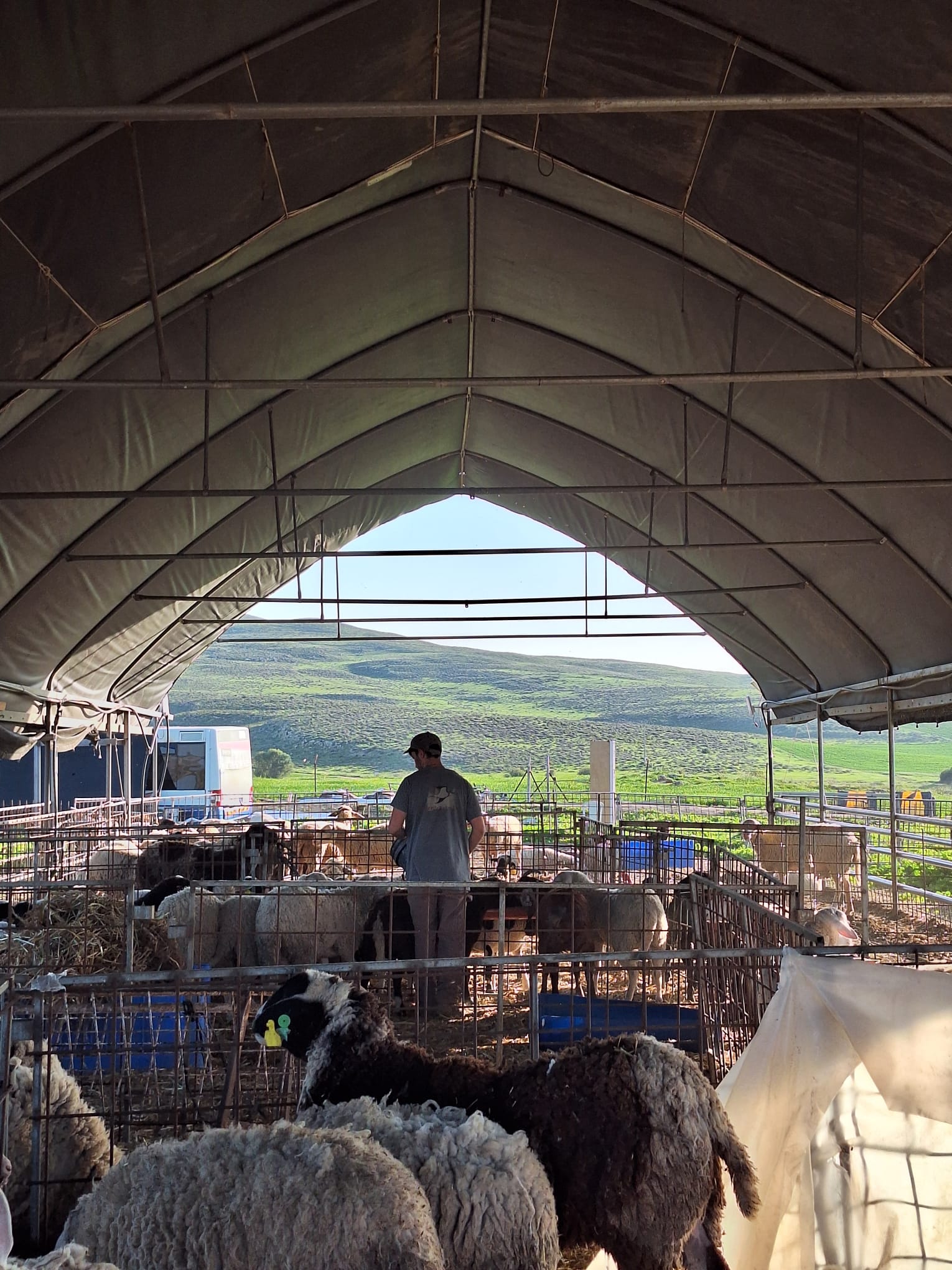
The Lahav farm opened in May 2023. With assistance from PTSD expert Yoram Ben Yehuda — who would later lose his son, Itamar, during the bloody Hamas invasion of October 7, 2023 — Amitay proposed therapeutic sheep farming to the Defense Ministry.
Liran Almosnino, the farm’s herd manager, was subsequently murdered while fighting terrorists on October 7; his wife, Efrat, now manages the herd. On that same day, Rimon Farm volunteer and beloved Soroka Medical Center midwife Adrienne Neta, 66, was slain in Kibbutz Be’eri.
After October 7, Amitay realized the activities needed to expand further to include the “secondary circle” of people who had not directly experienced the events, but were in contact with people who had. These range from teachers, psychologists, doctors, nurses, and social workers, to police officers, and reservists’ wives — the aim: To prevent PTSD before it sets in.
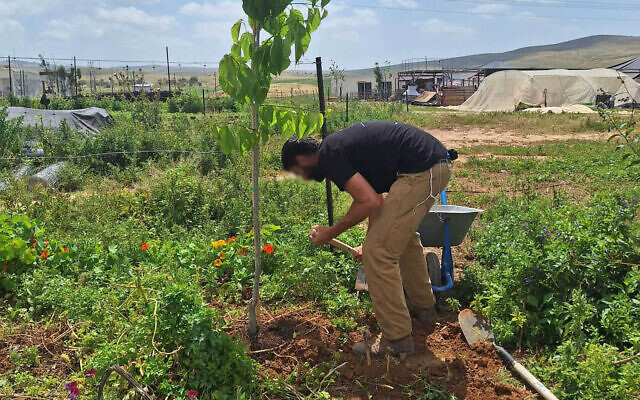
Amitay’s NGO now operates four farms: Rimon for youth, Lahav and Shekef for PTSD, and Or Haner UJA for community rehabilitation. The Rimon Farms Association also runs a center for at-risk women in Netivot and a social cafe in Beersheba.
The organization operates with support from the Defense and Health Ministries and the National Insurance Institute. Referrals come directly from doctors and the mental health hospital in Beersheba.
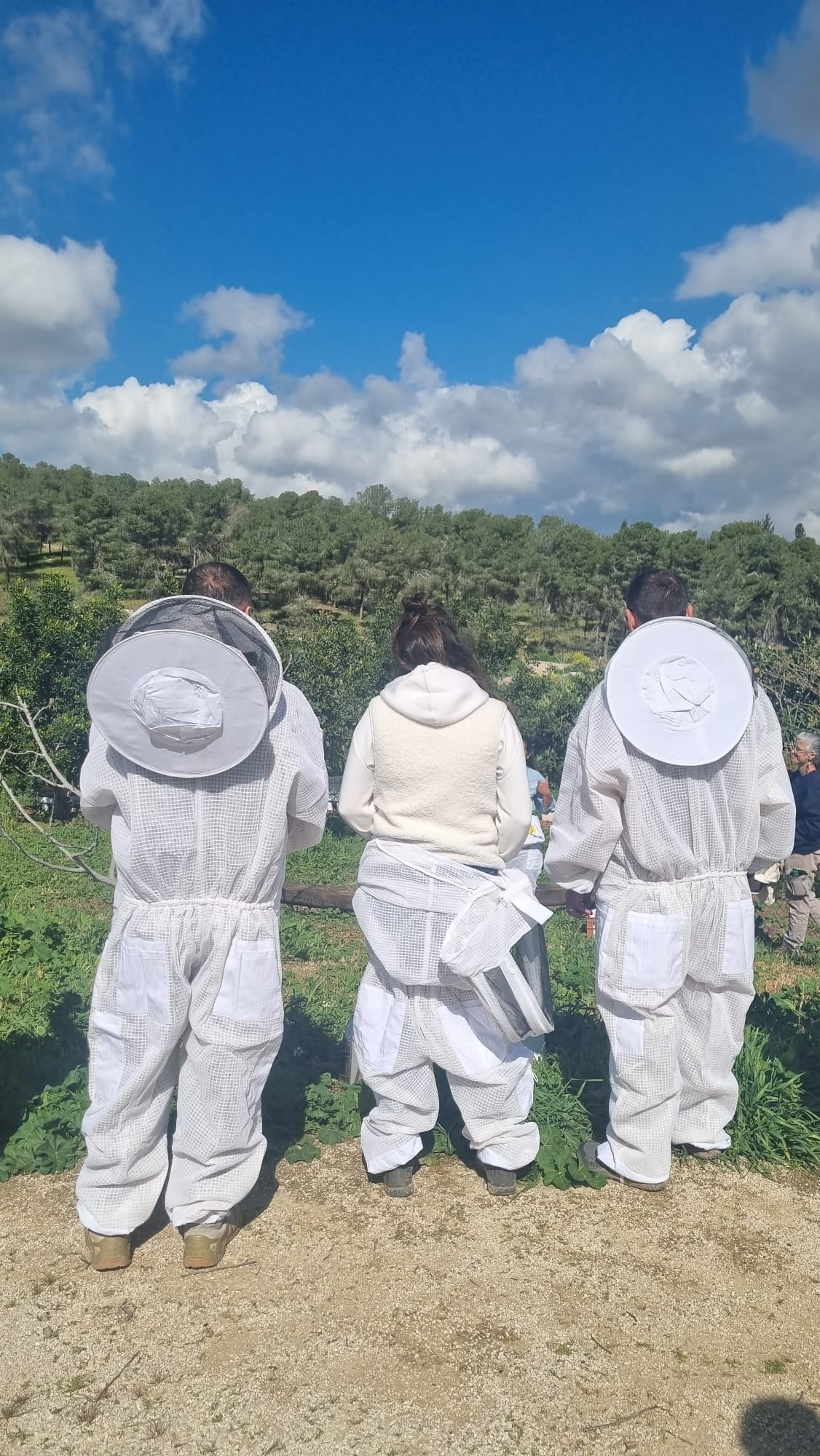
“We’re not done,” Amitay stresses. The NGO has just launched a NIS 5 million ($1.7 million) crowdfunding campaign with an interim goal of NIS 2.5 million to build two additional farms in Kibbutz Nahal Oz and Kibbutz Holit.
“We understood the importance of helping those near the Gaza border,” Amitay says. “These kibbutzim turned to us and offered land. We want to combine agriculture with deep therapy and community activities for the entire region.”
Paz Partush, 29, manages the 45-dunam (11-acre) farm focusing on PTSD on Moshav Shekef, southeast of Kiryat Gat.
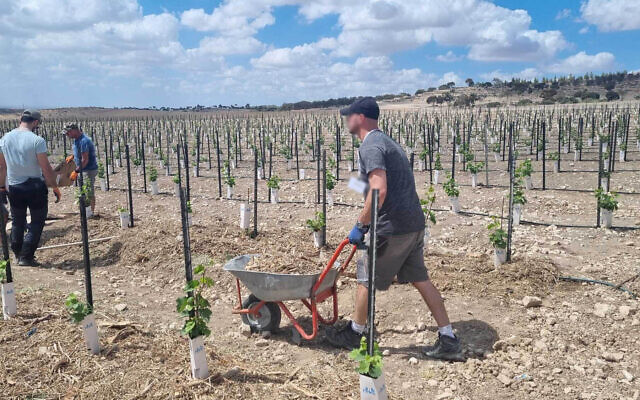
Nestled in a quiet, rolling landscape of Keren Kayemeth LeIsrael-Jewish National Fund forests, the site feels like a haven. Partush and her husband Eyal, arrived on January 1, 2024, “to a field with nothing.” They built sheep pens, planted trees, established a vegetable garden, terraced lavender, and planted a vineyard that now supplies the Yatir winery.
‘We want to combine agriculture with deep therapy and community activities for the entire region’
“Everyone who comes here does something with nature,” Partush says. “When you go back to your roots, something in you connects to who you are, and helps you be healthier.”
Gal Rom, 35, from Sderot, came to the Lahav program after 420 days of reserve duty, including three tours in Lebanon. In one incident, seven soldiers were injured by a Hezbollah explosive device. Rom coordinated first aid and evacuation under fire, then fought for another day with half his force.
His wife, Keren, eventually noticed he had changed.
‘The farm helps you reconnect and become part of a community going through the same thing’
“I came home very closed,” Rom says. “I couldn’t sleep, I couldn’t work. I started drinking heavily, had anger outbursts, and didn’t want to go out.
Keren told me, ‘That’s not the man I married.'”
Skeptical of “cures,” he tried the Defense Ministry-funded course at Lahav.
“Having felt there was nobody who understood me, I discovered that there were,” he says. “With PTSD, you feel you’ve left one world and entered another where you don’t belong. The farm helps you reconnect and become part of a community going through the same thing.”
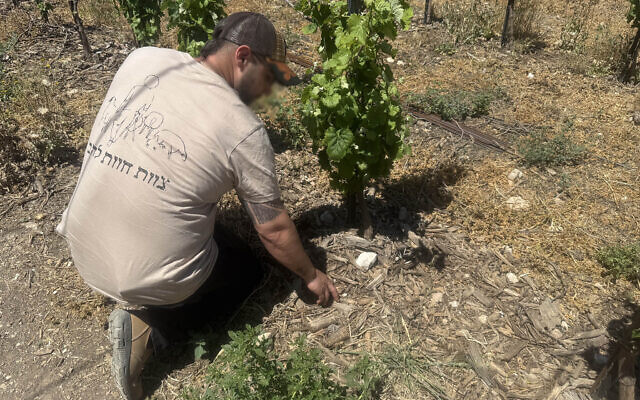
Rom, who works at Intel in Kiryat Gat, has since given up smoking and drinking, and sleeps better, if not well. But he has yet to return to his job.
“I know I was a ‘Rambo’ during the incident, but I’ve learned that you have to open yourself up to heal,” he says. “I felt like the living dead. The farm helped me get back on my feet. These farms save lives.”







The Times of Israel Community.