

High Court to review justice minister’s power to appoint supervisor in criminal probe
After democracy watchdog challenge, Chief Justice Amit calls for an expanded panel of justices to re-examine the court’s own ruling that permitted the appointment
 Add ToI as a Preferred Source on Google
Jeremy Sharon is The Times of Israel’s legal affairs and settlements reporter
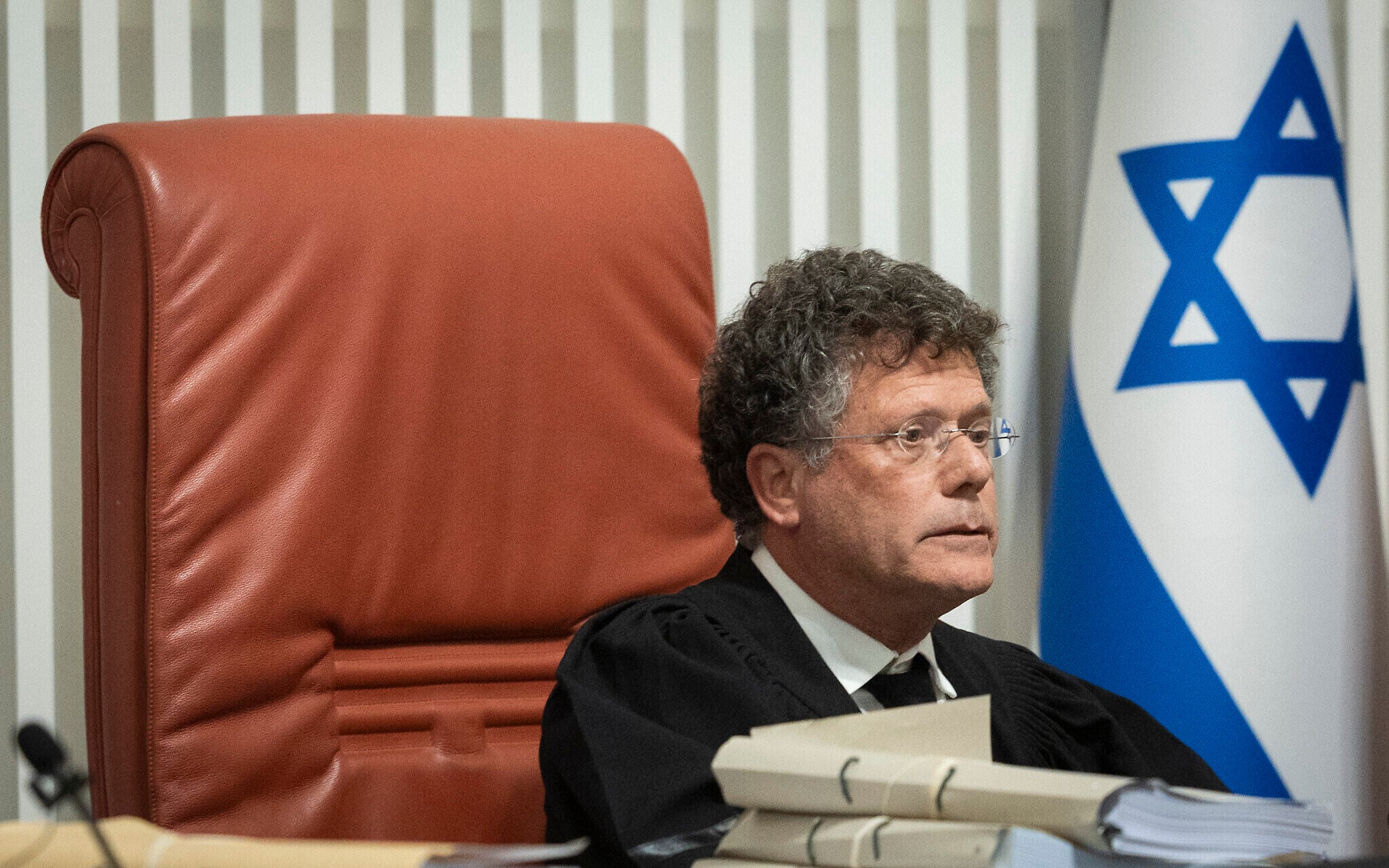
In a review of a decision it made last month, the High Court of Justice said Thursday it will hold a hearing with a full panel of all 11 serving justices on the question of whether the justice minister is legally entitled to appoint a supervisor for a criminal investigation in cases where the attorney general and state attorney have a conflict of interest.
The decision came following a request from Israel Democracy Guard, a liberal organization, for a review hearing on the High Court’s ruling in November that the justice minister has that authority. That ruling was handed down regarding Justice Minister Yariv Levin’s decision to appoint a supervisor for the Sde Teiman video leak affair.
The selection process has been rocky. On Wednesday, the High Court struck down Levin’s second pick for the supervisor role. In November it invalidated his first pick for the position, but upheld his right to make the appointment.
The upcoming review, however, will not pause that selection process, stated Supreme Court President Isaac Amit, who wrote the decision for a review.
Amit set February 18 as the date for the submission of final briefs ahead of the review hearing, and said a date will be set in the first half of 2026 for the hearing itself.
Israel Democracy Guard filed its request for an additional hearing on the matter arguing that the original ruling set an unprecedented principle enabling political involvement in the criminal prosecution process, which required greater judicial scrutiny.
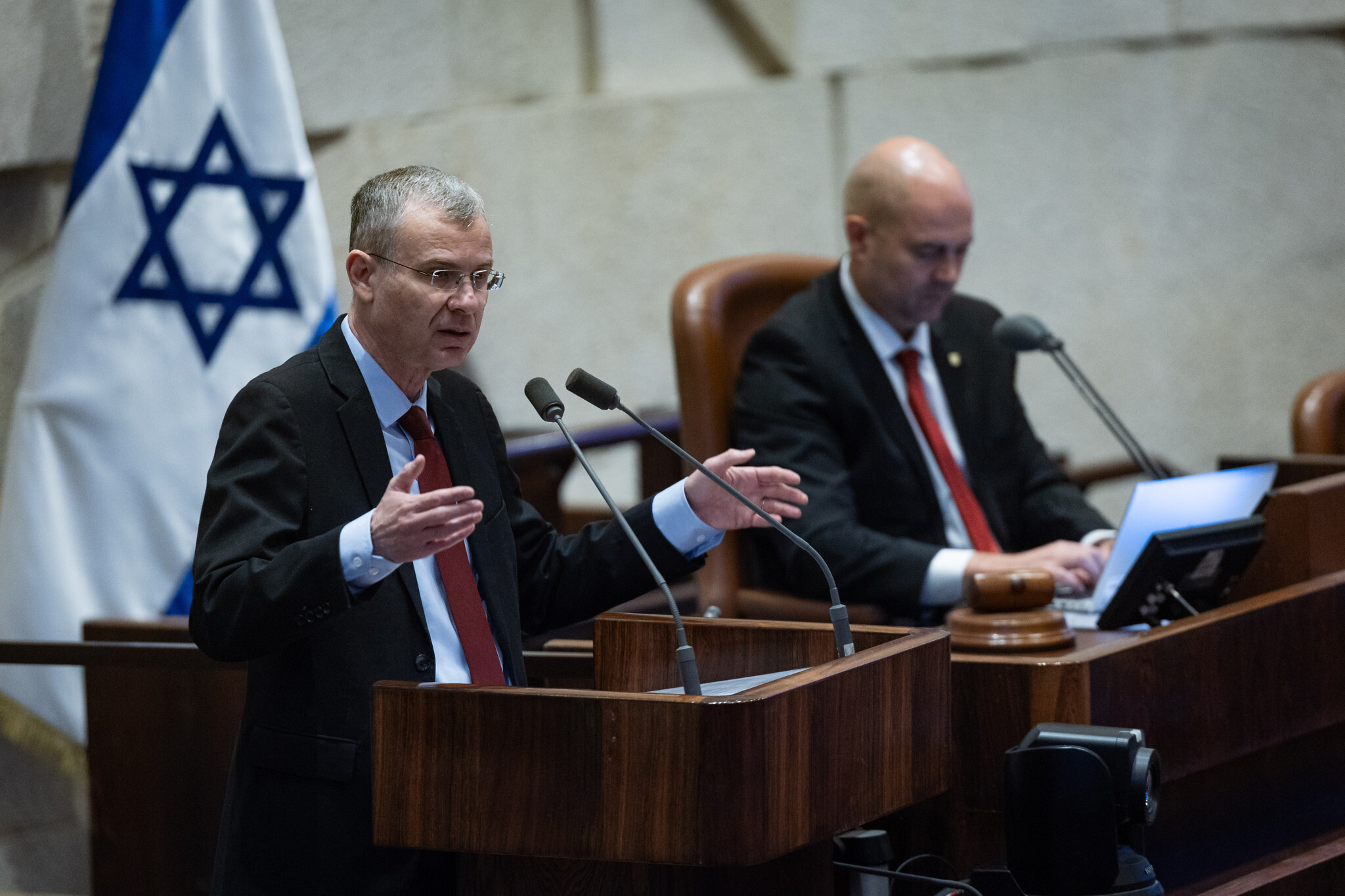
In the Sde Teiman case, former military advocate general Yifat Tomer-Yerushalmi has admitted that she authorized the leak of a surveillance video last year purporting to show the abuse of a Palestinian security detainee by IDF soldiers at the Sde Teiman military facility. She then lied about the matter while ostensibly leading the investigation to find the leaker.
Levin initially chose State Ombudsman for Judges Asher Kula to oversee the investigation of the leak, but the court ruled that the pick was invalid since the law explicitly bans the ombudsman from serving in any other position or carrying out any other function while in office.
He then tapped retired district court judge Yosef Ben-Hamo to supervise but the court blocked that move as well, ruling that the investigation supervisor must be a “senior public official,” who was an expert in legal affairs, and whose job was closely connected to criminal investigations or prosecutions.
The court said Ben-Hamo does not qualify as a senior public official. Levin slammed the ruling and accused Justice Yael Willner, who wrote the unanimous decision, Amit, and Attorney General Gali Baharav-Miara of a conspiracy against him, noting that Willner had headed the High Court panel that ordered the justice minister to hold a vote on appointing a new Supreme Court president in January after he had refused to do so for nearly 16 months.
Amit was appointed president in a vote in the Judicial Selection Committee, in line with the principle of seniority.
“Now the debt has been paid,” stormed Levin.

An investigation such as the Sde Teiman one would usually be overseen by the attorney general. But the court said a conflict of interest, stemming from Baharav-Miara’s involvement in an earlier investigation of the leak, blocked the attorney general from overseeing the investigation. That ruling’s language appeared to maintain the possibility of Baharav-Miara holding authority over whether to issue indictments in the case, however.
Levin, whose legislative bid to hobble the judiciary has sparked mass protests since he announced it in early 2023, has championed the ongoing effort to oust Baharav-Miara altogether, which is the subject of a separate court battle. He has also pushed legislation to divide up the AG’s role and strip it of its power to constrain the government.








The Times of Israel Community.