

Attorney at war: Why government legislation splitting up the AG role is so divisive
The government claims the AG’s power to block policy stymies the will of the electorate, but critics say annulling that authority would remove a key pillar guaranteeing rule of law

 Add ToI as a Preferred Source on Google
Jeremy Sharon is The Times of Israel’s legal affairs and settlements reporter
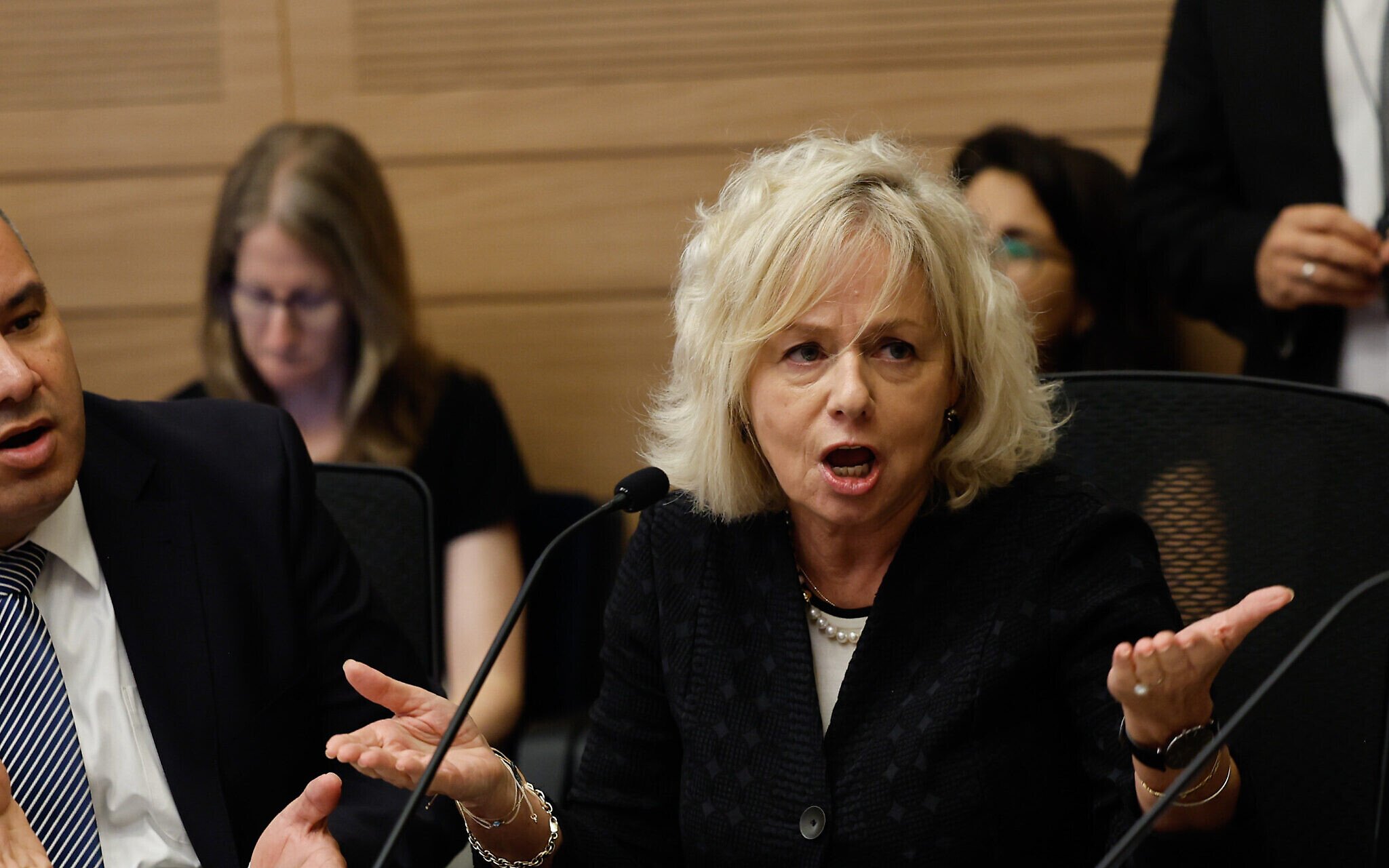
With much of the nation still distracted by what appears to be the tail end of Israel’s longest-ever war, a key Knesset committee convened on Monday to advance legislation that would have far-reaching consequences for the system of government.
The legislation, titled the “Separation of the Attorney General’s Role Bill,” would carve up the role of attorney general into three separate positions.
But the name obscures its more radical components and clauses.
These clauses would give a ruling coalition, including the current one, total control over the appointment and dismissal of the three officials who would fill the roles that would replace the current attorney general position.
The bill would also remove all effective power from the slimmed-down attorney general position in their role as the government’s chief legal adviser, so that the government would no longer be bound by the legal opinion of the attorney general.
Backers of the bill have insisted that these far-reaching reforms are necessary to enable elected governments to fulfill their mandate and carry out the will of the electorate.

But critics argue that the legislation would remove one of the only brakes on executive power from Israel’s system of government, and politicize the criminal prosecution service as well.
The current role of the attorney general
At present, the attorney general’s role is very powerful — too powerful, according to the government.
The position combines three functions. The first is to serve as the government’s chief legal adviser to tell it when its policies, decisions, appointments and other actions are or are not in accordance with the law.
Crucially, the attorney general’s legal determinations are seen as binding on the government, unless the High Court of Justice says otherwise — a situation stemming from a key High Court ruling in 1993, although this power was never stipulated in Knesset legislation.
The second is as the head of the prosecution service, with ultimate power to file criminal indictments, in particular against senior officials, including cabinet ministers and the prime minister.
And the third is to represent the government in legal proceedings, mostly in the High Court, when its policies or legislation are challenged in petitions.
A cabinet resolution approved in 2000, based on the recommendations of the Shamgar Commission, determined that the attorney general be appointed by the cabinet on the recommendation of a public, professional committee headed by a retired Supreme Court justice for a six-year term, and be fired on the recommendation of the same committee, if it deems that circumstances justify such a step.
General nuisance
The current government has clashed with Attorney General Gali Baharav-Miara since its first weeks in office, in large part over its efforts to weaken the judiciary and limit other checks on executive power.
Justice Minister Yariv Levin and other cabinet ministers have accused Baharav-Miara of thwarting key government policies, decisions, and legislation, thereby undermining the will of the elected government and, by extension, of the people.
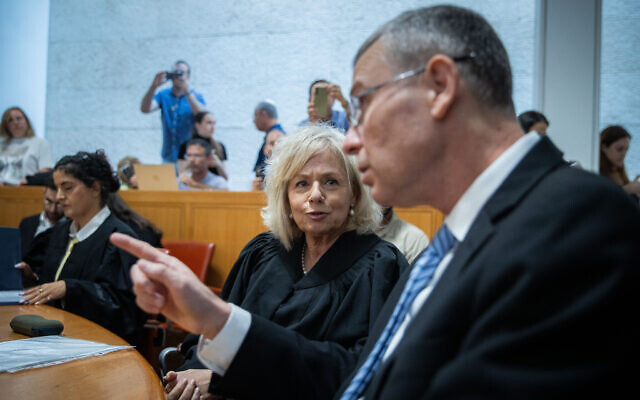
To list several instances, Baharav-Miara has opposed the government’s flagship legislation abolishing the judicial standard of reasonableness (the High Court struck down the legislation); legislation giving politicians control of judicial appointments; and Levin’s refusal to appoint a new Supreme Court president (which the High Court ruled was invalid).
Baharav-Miara also opposed the appointment of a temporary head of the Second Authority broadcast media regulatory authority (which the High Court reversed while sharply criticizing her) and the appointment of an acting civil service commissioner (which the High Court partially reversed).
The government has also argued that there is an inherent conflict of interest in the attorney general having to, on the one hand, work closely with the government to advise it on its policies and legislation and, on the other — as head of the prosecution — be in charge of investigations and prosecutions of senior cabinet ministers and the prime minister.
The rule of thirds
The legislation in question therefore aims to split the position of attorney general into three separate jobs.
It would preserve the role of an attorney general as the legal adviser to the government, but their legal determinations would henceforth not be binding on the government or the Knesset and its committees.
In other key changes to the role, the attorney general could only file a legal position paper when the prime minister or another cabinet minister requests one.

And the appointment of the attorney general would be in the control of the government, with the prime minister and justice minister nominating a candidate and the cabinet confirming their selection.
The attorney general could also be dismissed via the same process, meaning that they would serve entirely at the government’s pleasure. The legislation also does not set out a fixed term for the attorney general, making the position even more dependent on the goodwill of the government.
Prosecutor general and solicitor general
The bill would also siphon off the prosecutorial role of the attorney general and create a prosecutor general who would head the prosecution service and hold the ultimate power to order criminal investigations, and file, amend or retract indictments.
Like the attorney general, the prosecutor general would be appointed in an entirely political process, with the justice minister selecting a candidate and the Knesset Constitution, Law and Justice Committee, which is always controlled by the coalition, confirming the appointment.
The prosecutor general would serve for a six-year period. But they could be fired by the government if the justice minister and the Knesset Constitution Committee recommended the move and the entire Knesset plenum approved it.
The legislation would also create a position that in other countries is a solicitor general, to represent the government in court.
They alone would be able to represent the government in court. Currently, the attorney general has the power to refuse to represent the government if they oppose its position, as Baharav-Miara has done on numerous occasions, but can agree to let it find different legal representation in such a case.
The solicitor general would be appointed by the justice minister alone, and serve for six years. The government could fire them on the recommendation of the justice minister and the Constitution Committee.
Will of the people vs the rule of law?
Speaking to The Times of Israel, Prof. Yoav Dotan, an expert in public and constitutional law at the Hebrew University’s Faculty of Law, said that in theory, the proposal to split the roles of head of the criminal prosecution service and legal adviser to the government was “not necessarily a bad idea,” since there is “something of an institutional conflict of interest” in having the two roles combined, although not an especially severe one.
But Dotan, who has been sharply critical of the kind of judicial activism that the coalition also opposes, said he believed the government was not interested in sincere structural reform to the law enforcement institutions. Rather, he said, it was aiming to erode the restraints on executive power and find a way to stop Prime Minister Benjamin Netanyahu’s corruption trial.
The bill, drafted by Constitution, Law and Justice Committee chairman Simcha Rothman, would achieve both goals by removing the attorney general’s authority to block government policy and empowering the government-appointed prosecutor general to withdraw indictments.
“Today, the only de facto way to get the government to obey the law is through the binding nature of the attorney general’s decisions,” said Dotan.
The other option is going to court, “but then you need to hope that the court can rule” before the government carries out the possibly illegal action it is pursuing, he said.
Doten described the attorney general’s role as “a brake” on the government and an “extra layer of insulation” to ensure the preservation of the rule of law while judicial processes are playing out.
Ori Aronson, an associate professor of law in the Bar-Ilan University Faculty of Law, was equally skeptical of the government’s motives.
Like Dotan, he said that, in theory, it might be beneficial to split the role of attorney general so that they can focus on the public interest through advising the government, rather than on criminal prosecutions.
But, he asserted, Rothman’s legislation was not about enacting structural reforms to the law enforcement agencies, and instead was part of Levin’s judicial overhaul push to remove the legal advisory brakes on government action.
Like Dotan, Aronson said expecting the High Court to address every instance where the government might wish to do something illegal was “unrealistic” and “not an effective mechanism to enforce the rule of law on the government.”
According to Aronson, “The discussion at the moment is not about making legal advisers better at their job, but about creating areas where political actors are relieved from the need to accept what the law is, as determined by an authorized official.”
He also rejected arguments about how few other countries have an attorney general powerful enough to block government policy.
Aronson noted that there are very few checks on executive power in Israel other than the High Court and the attorney general; that unlike other democracies Israel has only one chamber of parliament, no federal system, and no commitment to international treaties or courts; and that the government has built-in control over the Knesset.
Another argument Levin, Rothman, and others have used to justify the neutering of the attorney general’s role is that Baharav-Miara has repeatedly blocked the will of the government, including over some of the coalition’s key policies, actions and legislation. This, they insist, constitutes an illegitimate obstacle presented by an “unelected clerk” to the implementation of the will of the electorate and its right to have the policies it seeks advanced.
But Aronson said that despite the frequent headlines, the attorney general and the legal advisory system have worked effectively with the government to implement its policies in the vast majority of cases.
Just because a certain policy is a key agenda item for the administration does not have any bearing on its legality, he said.
“The very fact of the intensity of the government’s preferences is in and of itself not a legal argument,” added Aronson. “Just because something is important to the government does not relieve it of its obligation to act legally.”










The Times of Israel Community.