

Levin officially taps retired judge to head Sde Teiman leak probe, amid court battle
High Court delays appointment amid petitions against choice of Yosef Ben-Hamo, saying he is not a ‘senior public servant’
 Add ToI as a Preferred Source on Google
Justice Minister Yariv Levin on Thursday officially submitted his nomination for retired district court judge Yosef Ben-Hamo to head the ongoing investigation into the former IDF military advocate general, despite the nomination not conforming to a High Court order.
Shortly after the announcement, the High Court of Justice issued an interim order delaying the appointment, which Levin in turn denounced as a “whitewashing enterprise.”
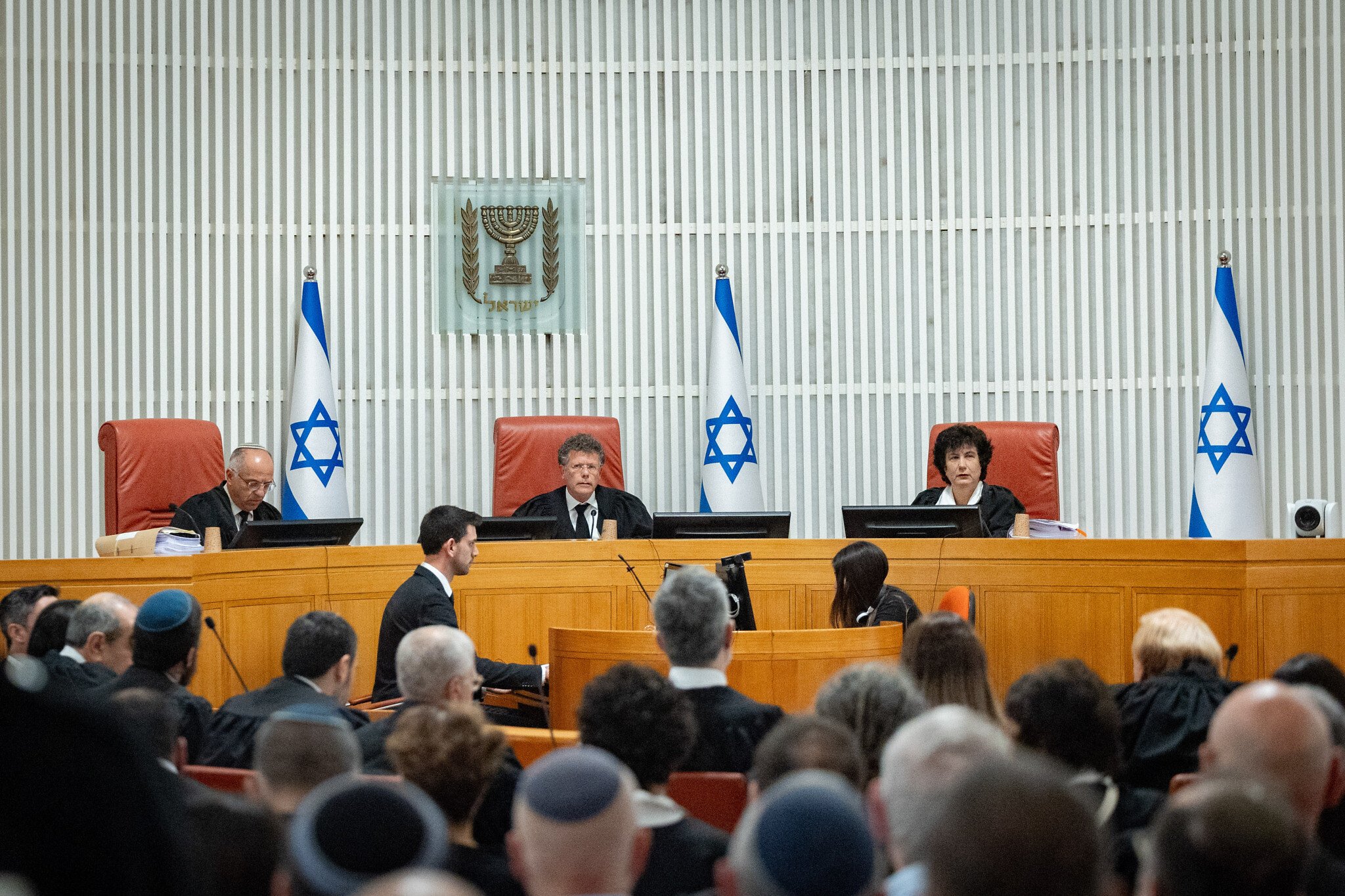
Levin announced the appointment earlier this week, following a ruling by the High Court of Justice on Sunday that allowed him to make his choice provided the appointee is a “senior public servant,” which Ben-Hamo is not.
The appointee will have the authority to “oversee and inspect” the criminal investigation of the Sde Teiman leak affair, the High Court stated in its ruling.
In the case, former military advocate general Yifat Tomer-Yerushalmi has admitted that she authorized the leak of a surveillance video last year purporting to show the abuse of a Palestinian security detainee by IDF soldiers at the Sde Teiman military facility. She then lied about the matter while ostensibly leading the investigation to find the leaker.
Levin initially chose State Ombudsman for Judges Asher Kula to oversee the investigation, but the court ruled that the pick was invalid since the law explicitly bans the ombudsman from serving in any other position, or carrying out any other function, while in office.
Such an investigation would usually be overseen by Attorney General Gali Baharav-Miara. But the court said a conflict of interest, stemming from her involvement in an earlier investigation into the leak, blocked the attorney general from overseeing the investigation. That ruling’s language appeared to maintain the possibility of Baharav-Miara holding authority over whether to issue indictments in the case, however.
Levin, whose bid to hobble the judiciary has sparked mass protests since he announced it in early 2023, has championed the ongoing effort to oust Baharav-Miara altogether, which is the subject of a separate court battle. He has also pushed legislation to break up the AG’s role and strip it of its power to constrain the government.
On Wednesday, the High Court declined a petition to delay Levin’s ability to appoint someone to the role, but said that once he does tap a supervisor for the investigation, the request may be evaluated, and an additional hearing is likely.
Immediately following Levin’s official appointment, the Israel Democracy Guard petitioned the court against the nomination, seeking a delay in its implementation. In its order pausing the appointment, the High Court gave Levin, the attorney general, and the state attorney’s office until Monday to respond to the petition.
The court’s ruling stipulated that the supervisor must have no political affiliation, be an expert in legal affairs, and have a job closely connected to criminal investigations or prosecutions.
However, the High Court ruling also stipulated that the supervisor be a “senior public servant,” which Ben-Hamo is not. Levin claimed that he could not find such an individual suitable for the role.
Shortly after making the official appointment, Levin released a video statement in which he assailed the High Court, saying its conditions for who could be appointed were “almost impossible to fulfill.”
“The Courts Authority won’t allow the appointment of an active judge; civil servants who are part of the legal advisory system and the State Attorney’s Office are prohibited. Other civil servants who were proposed don’t meet the criteria of a ‘senior public servant,’ or they can’t be appointed due to conflicts of interest,” he said.








The Times of Israel Community.