

Is Israel’s state broadcaster doomed to be a state mouthpiece?
As the IBA is disbanded, Netanyahu has been holding off on appointing a council to oversee its replacement. Some see that as part of a bid to ensure the new entity toes his line
 Add ToI as a Preferred Source on Google
Marissa Newman is The Times of Israel political correspondent.
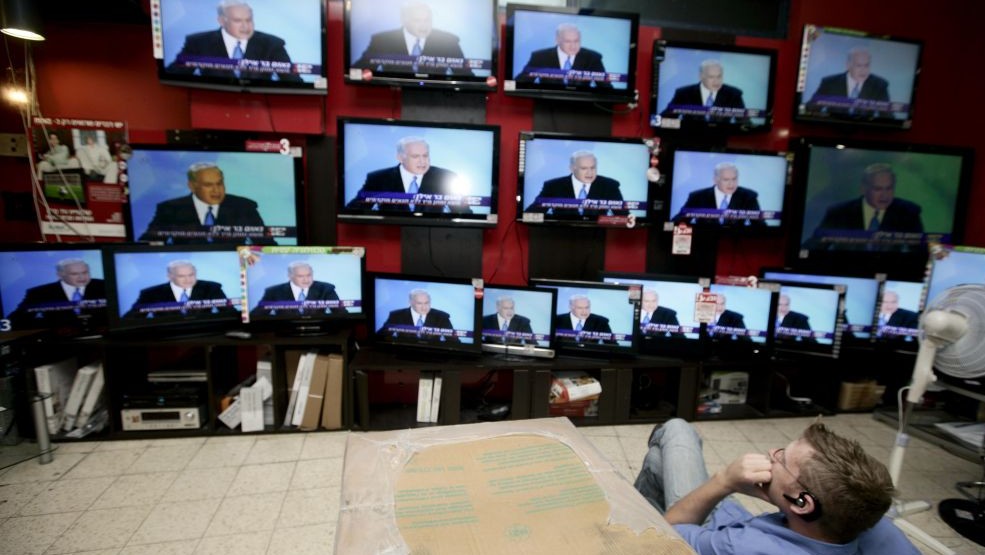
As the government moved to abolish the publicly funded Israel Broadcasting Authority and replace it with a new state broadcaster, opposition lawmakers charged this week that Prime Minister Benjamin Netanyahu was seeking to kill off a staple of democracy — an admittedly dysfunctional one — and transform it into another government mouthpiece along the lines of the staunchly pro-Netanyahu free tabloid Israel Hayom.
The Knesset on Monday held a stormy committee session debating an amendment to a law passed last year that is set to be brought for a second and third reading on Wednesday. The bulk of the criticism centered on mass layoffs at the IBA, initially stipulated in the legislation but ultimately removed from the amendment, and on Netanyahu’s failure to appoint an independent council to oversee the establishment of the new entity. The latter point, critics said, showed that the prime minister, who also holds the communications portfolio, is out to muzzle the press.
Sure, the IBA is in dire need of reform, several opposition lawmakers from the Zionist Union party conceded, but the way the prime minister is handling the issue imperils free speech in Israel.
“This moment, when Bibi is taking control of the IBA, casts a dark shadow on free press and democracy,” Zionist Union leader Isaac Herzog said Monday. His party colleague Tzipi Livni, who supported the reform in the previous Knesset, charged that Netanyahu’s “political control over the entire media is, in his eyes, the main goal that will ensure his future survival. This is how a totalitarian regime acts, this is how it controls public opinion.” However, Livni acknowledged, it’s true the IBA has become “cumbersome, wasteful of public funds” and susceptible to political interference.

“The public broadcaster has been assassinated, and Israeli democracy got a bullet between the eyes,” another Zionist Union MK, Itzhik Shmuli, more dramatically said Monday while noting the IBA was in “desperate need of reform, huge reform.”
Pulling the plug on the current iteration of the IBA, with its four television stations, multiple radio stations and long history, is shaping up as a traumatic move. And behind the controversy lies a deep discrepancy inherent in the twin beliefs that the state broadcaster is a democratic imperative and remarkably prone to political meddling.
Why does Israel need an IBA?
In principle, the state broadcaster is touted as the only form of media that fully defends the public interest, free of the commercial pressures and political puppeteering that plague other outlets. In practice, however, Israel’s state broadcaster is widely seen to be rife with both.
According to longtime IBA employee Itay Nevo, the public broadcaster is key to Israel’s democracy, since “its owners are the public. And the people paying their salaries are the public.”
Since the IBA is currently funded by a TV tax paid by Israeli citizens (the tax was canceled as part of the new law), “the ability to maintain journalistic independence is far greater than journalists working for the commercial channels,” maintained Nevo.
Dr. Oranit Klein Shagrir, a researcher who has studied the IBA, said in an email that “the public broadcaster is vital as a body of criticism, and as an institution that protects the public interest.”
‘This moment, when Bibi is taking control of the IBA, casts a dark shadow on the free press and democracy’
“Especially in Israeli society, which is a heterogeneous society, particularly here, the public media is very significant as a meeting place between all groups and opinions, a space where controversial issues can be discussed, and social divides bridged,” Klein Shagrir added.
Dr. Tehilla Shwartz Altshuler, a researcher for the Israel Democracy Institute who helped draft the legislation, said Israel’s small market of viewers and distinct language, coupled with a proven Israeli preference for Hebrew-language content, make the public broadcaster necessary.
Producing Hebrew TV and radio – both news and entertainment — without public funding supplementing these projects would simply not be financially viable for investors.
“The bottom line is that in a small market like Israel, you must supplement the market, both in terms of news and on the level of original TV [programming],” she said.
Moreover, without the public broadcaster, the Israeli media market will devolve into a monopoly, thus limiting the “marketplace of ideas,” she maintained.
Despite the lofty aspirations for the entity, in the past few years, the IBA has been accused of overspending, paying inflated salaries, and tolerating deep political involvement in its everyday affairs.
The IBA’s Nevo attributed the body’s many ills to the politicians who appointed its leadership.
“Why is the political intervention so bad? Because the people who’ve appointed the leaders of the public broadcaster until now are politicians. And who did they appoint? They didn’t appoint [media] professionals. They appointed people who are close to them politically, who can preserve their airtime and [produce] reports that fit their worldview,” he said.
“Netanyahu was the one to appoint Yoni Ben-Menachem, who was the last director-general, and chairman Amir Gilat. All the members of the governing committee — Netanyahu appointed them,” he said. With these leaders at the helm, the IBA made a series of poor financial choices that were later blamed on its employees, he maintained. For example, between 2002 and 2004, the government spent NIS 240 million ($61 million) to produce “a propaganda channel that would be broadcast in Arab states,” he said. “In the end, it failed. And it was done with the TV tax money, meaning with the public funds… money that went to the garbage.”
Shwartz Altshuler said the State of Israel has spent NIS 900 million to 1 billion a year on the IBA. Producing the highest-quality news should cost NIS 250 million-300 million, she assessed. “Where’s the rest of the money? It’s supposed to be in television,” and in the production of BBC-like documentaries. “In practice, it’s not there. It’s in the corruption, in the inflated salaries, in the workers’ unions.”
The reform process for the new entity is intended to see the current 1,500 IBA staffers cut to some 700; it’s not clear that all those 700 will come from the ranks of existing employees.
The new legislation will force the treasury to set aside some NIS 500 million a year for the new corporation, part of which will be taken from a car tax, Shwartz Altshuler said.
“It’s very easy for them to come and say that if you close the IBA it will harm democracy, but the truth is that the reform is designed for greater optimization of the money,” she said.
On the question of political interference, she said every Israeli government – right-wing and left-wing – has been guilty of meddling in the IBA, to various degrees. “The question is to what extent the prime ministers can restrain themselves, where their boundaries are.”
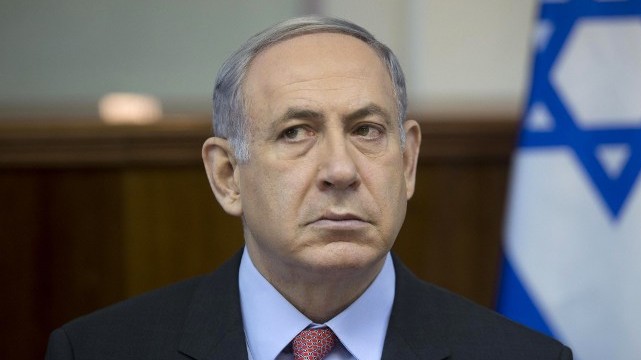
Klein Shagrir concurred. “It’s very easy to bandy the slogan ‘Netanyahu is trying to control the public broadcaster.’ Obviously, the prime minister would be happy to control a central media body like the IBA, but prime ministers and politicians before him have wanted that since it was established. And they did control it: through the Knesset Finance Committee, which had to approve the TV tax and IBA budget every year and through the leadership, and executive committee, and the plenary.”
The amendment to the law, which is expected to pass in the Knesset on Wednesday, delays the opening date of the new corporation to March 2016. Nevo, however, is certain that it will take longer — if it opens at all — and Shwartz Altshuler believes another extension will be given until September 2016.
“Unfortunately, I’m not optimistic about the process of breaking up [the IBA] and setting it up again,” added Klein Shagrir. “There are too many political interests involved in the issue, and too few public interests and professional considerations. We need to set up a new, strong, professional, public broadcaster, independent of the government or interested parties. This is a goal every Israeli citizen ought to be aspiring to.”
Why is Netanyahu stalling?
To drive a larger wedge between the political leadership and public broadcaster, the new amendment requires that an independent council be set up to oversee the establishment of the new broadcasting company. The candidates have been selected, but Netanyahu, without explanation, has held off on formally appointing the council – a move fueling much of the current debate about the new broadcaster.
“All he [Netanyahu] needed to do was appoint the council for the new public broadcaster, which has already been selected,” said Zionist Union MK Merav Michaeli, a former IBA employee herself, on Monday. “But Netanyahu isn’t appointing it, because he doesn’t want an independent broadcaster.” MK Erel Margalit, also of Zionist Union, on Monday lodged a petition with the High Court to force him to appoint the council.
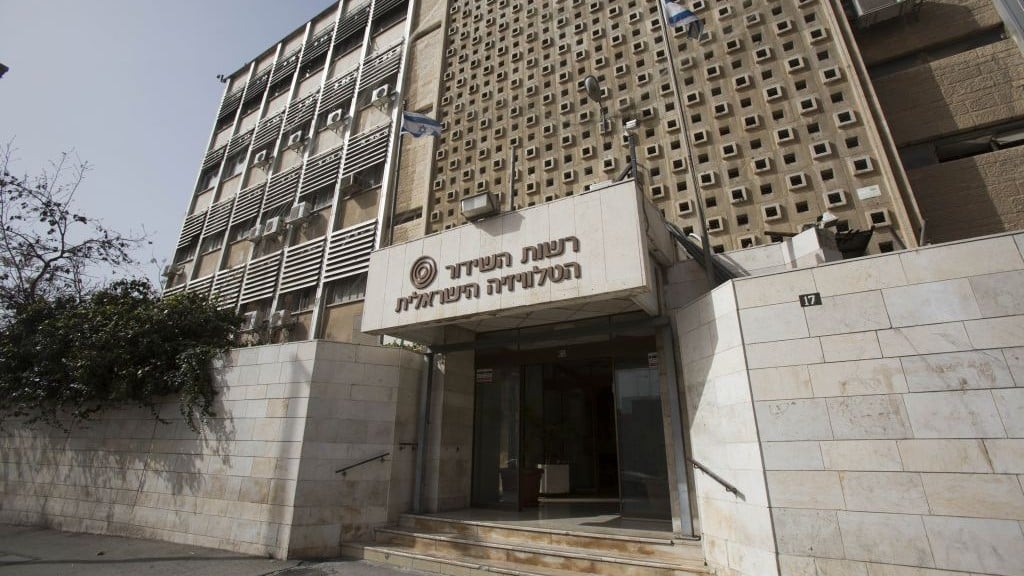
Shwartz Altshuler said that two main theories have emerged in an attempt to explain Netanyahu’s slow-paced approach to assembling the council. Either, as Michaeli charges, Netanyahu wants to retain control over the broadcaster. Or — and she said she leans toward this explanation — since an election has taken place since the council candidates were selected, Netanyahu wants to restart the vetting process, but, knowing it will take time, has sought to get the director-general started in building the new organization.
The new — officially temporary — director-general, Eldad Koblantz, is “super-professional. He’s not a person who is linked to Netanyahu. He’s not a person who I think voted for Netanyahu. He’s not a person who people suspect will do whatever Netanyahu tells him,” she said.
Nevo disagrees sharply. The reforms were designed to separate the broadcaster from the government through the council, he said. But Netanyahu has held off on setting up the council, hiring Koblantz as the temporary director-general instead, he said.
“And the prime minister is on top of Eldad Koblantz. He can tell him, ‘Give me this broadcast, cancel that broadcast, fire that man, hire that man.’ The political involvement has deepened, and it’s a tragedy, simply a tragedy.”









The Times of Israel Community.