

Israelis vote to keep big-party politics out of the local mix
In city after city, the electorate firmly rejected efforts by challengers from national parties to enter the municipal fray
 Add ToI as a Preferred Source on Google
Haviv Rettig Gur is The Times of Israel's senior analyst.
Israel’s local elections ended Tuesday night with a resounding victory for the status quo.
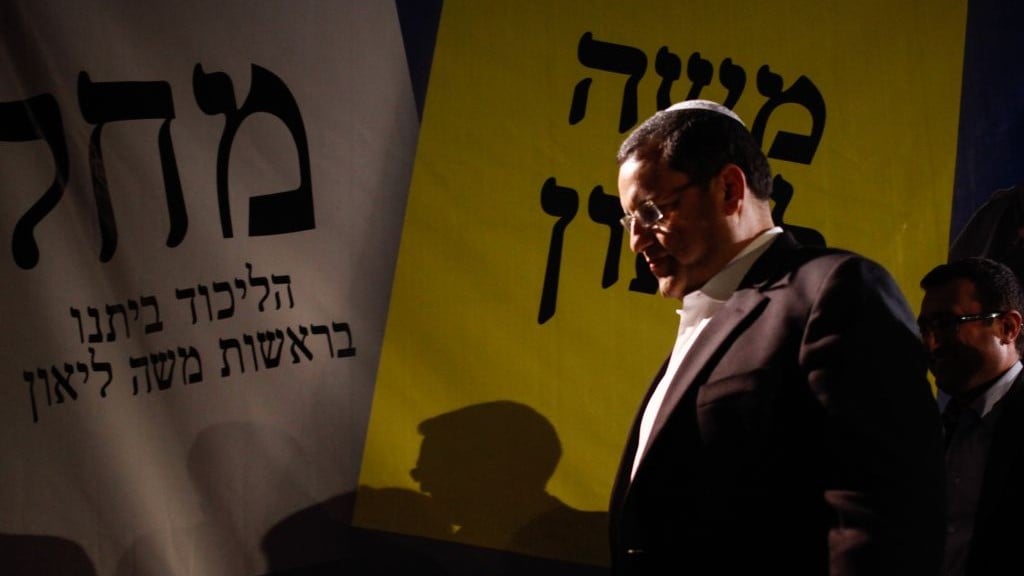
Analysts saw low turnout as a harbinger of victory for upset candidates such as Meretz MK Nitzan Horowitz in Tel Aviv or Likud candidate Moshe Lion in Jerusalem. Indeed, national parties took an unprecedented interest in the elections, investing political standing and public relations efforts in an attempt to show they can deliver victories at the local level.
But it was not to be. Voters throughout Israel largely rejected national parties, national politics and ideologically charged challenges to sitting mayors. Even the ostensible political bases of the challengers — whether Sephardi Haredim in Jerusalem or disaffected young leftists in Tel Aviv — were neither mobilized behind the candidates who tried to speak for them nor particularly eager for change.
Even in towns such as Ramat Hasharon and Bat Yam, where incumbents faced serious charges of corruption or other malfeasance, voters preferred incumbency to change.
For sitting mayors in Israel’s two major cities, the elections are a vindication. Tel Aviv’s Ron Huldai, now entering his fourth term in City Hall, is considered a successful chief executive of Israel’s iconic modern city. And Tel Aviv’s immense wealth gaps, which formed the bulk of the Horowitz campaign’s challenge to Huldai’s long-standing rule, were not to be laid at the mayor’s doorstep, voters seemed to say.
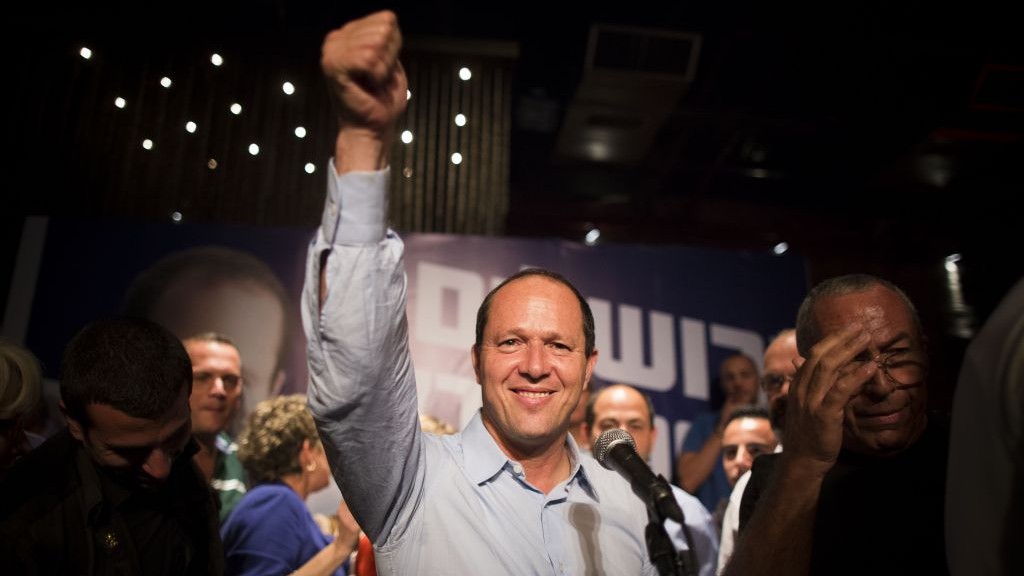
In Jerusalem, the satisfaction in Kikar Safra, Jerusalem’s city hall, is even greater. Incumbent Nir Barkat is entering his second term as Jerusalem’s “secular alternative” to Haredi rule of the city, secure in the knowledge that there are also many Haredim who want him to continue running their city. Despite fierce efforts to unseat him on the part of Shas chairman Aryeh Deri and, reportedly, the party’s late spiritual leader Rabbi Ovadia Yosef (whose “last decree,” we are told, was a call to vote for Barkat’s challenger Moshe Lion), the ultra-Orthodox campaign against him failed even to mobilize the Haredi street. Barkat could not have won with the meager 36 percent turnout if at least some Haredi residents had not decided to either stay home or actively vote for him.
Jerusalem is also a city where ethnic extraction matters. Large neighborhoods of Mizrahi, or “eastern,” Jews whose parents and grandparents came to Israel from the Muslim world, are supposed to feel an instinctive opposition to an elitist Ashkenazi, or European, candidate. Barkat is as elitist — a multimillionaire investor — and, culturally, as Ashkenazi as they come. But he’ll be starting a second term in Kikar Safra with the satisfying knowledge that even many Mizrahi Jews are happy, or at least not overly unhappy, with his stewardship of their city.
As always, it is important to note that Jerusalem’s Arab residents, comprising as much as one-third of the city’s population, once again refused to vote in the municipal elections in protest over Israel’s control of the city.
The losses sustained by the challengers in Tel Aviv and Jerusalem are also indicative of another trend seen widely in these elections: the rejection of “parachute” national candidates. Cities are not stepping-stones in a political career focused elsewhere, voters seemed to say.
Thus, perhaps with the exception of Ze’ev Bielski, who returned from a failed Knesset bid to win his former seat as Ra’anana mayor, candidates from national politics were largely rejected by voters: Lion, who moved to Jerusalem just months before the municipal elections; Horowitz, who refused during his campaign to say whether he would leave the Knesset to serve on Tel Aviv’s city council even if he failed to win the top job; Carmel Shama Hacohen, who sought to win Ramat Gan after failing to return to the Knesset in January on the Likud list; former Yisrael Beytenu MK Lia Shemtov in Upper Nazareth; and even MK Hanin Zoabi in Nazareth, one of the most high-profile of Israeli Arab leaders.
Meanwhile, in Beit Shemesh
It is worth remembering this nationwide rejection of the nationalization of local politics before turning to Beit Shemesh.
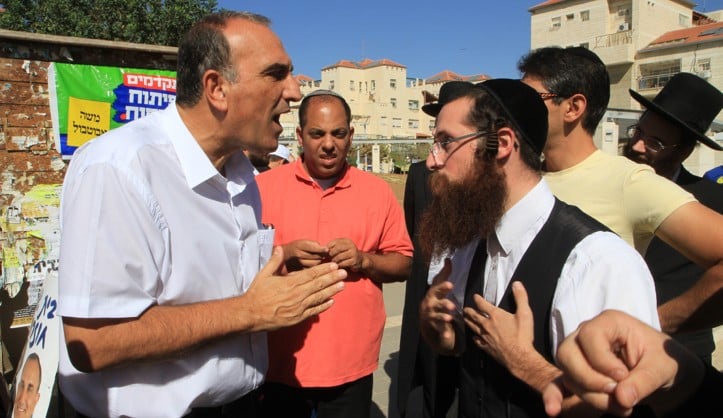
On Wednesday morning, when it was clear he had lost to incumbent mayor — and Haredi rabbi — Moshe Abutbul, Beit Shemesh mayoral challenger Eli Cohen lamented that the race had taken on religious overtones, telling Army Radio that he, too, was a “traditional” Jew.
Of course, his own campaign worked hard to warn Beit Shemesh voters (or at least reporters) of the threat of continued Haredi rule of the city. But faced with the loss, he did not lament the victory of a Haredi Beit Shemesh over a secular one. Rather, his about-face suggested that his own assessment of the results saw Beit Shemesh voters rejecting first and foremost the transformation of their municipal race into an arena for Israel’s national identity battles.
Bad information
No accounting of these elections would be complete without a word about the dismal handling of information, from voting instructions to elections results, by the Interior Ministry. The website offering Israelis instructions on voting rules and ballot stations was not translated into Arabic, Russian, English, French, Amharic or any other language spoken by large numbers of Israelis.
The ministry failed to publish the lists of candidates until just a few short days before the elections — and then did so in a bizarre downloadable Excel spreadsheet that ran into thousands of dense entries. The voting results were published hours after figures had already appeared on municipal websites, and in the same unreadable format — even as many municipalities (for example, Jerusalem and Modiin) managed to publish more accessible figures.
The ministry also repeatedly lamented the low turnout and repeatedly called on Israelis to go vote, but did not feel election day should be made a national holiday, as is done for elections to the Knesset.
Local elections are profoundly important to Israeli public life. Key services, including education, welfare and public health, are handled largely in local government. If voters can be said to have sent any message on Tuesday, it was that they wanted their local governments to remain local and concerned with these administrative functions, rather than becoming embroiled in the divisive ideological and identity politics of the Knesset.
With the Interior Ministry’s handling of the elections, it might be fair to complain that the national government seems, in its turn, less than committed to the flourishing of local politics.










The Times of Israel Community.