

Knesset advances 5.1% deficit and spending hike amid Iran war
Bill seeks to raise deficit from 3.9%, increase spending cap by $10.2 billion, and add $2.2 billion war reserve as conflict with Iran, Hezbollah escalates
 Add ToI as a Preferred Source on Google
Ariela Karmel is a political correspondent at The Times of Israel. She previously reported for Calcalist and Haaretz. She holds an MA in Middle Eastern and African History from Tel Aviv University and a BA in Political Science from the University of British Columbia.

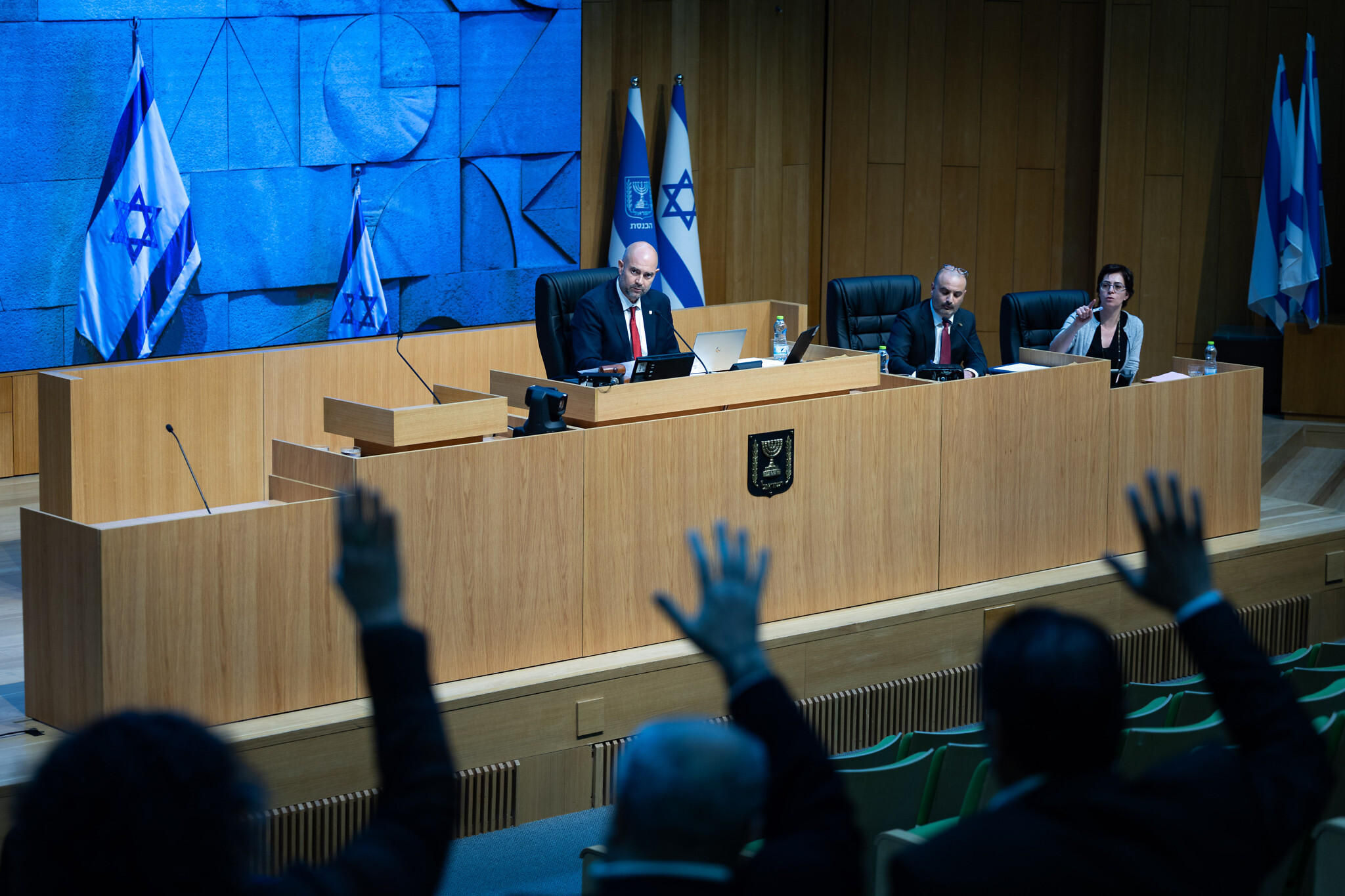
The Knesset voted early Tuesday 53-45 in favor of the first reading of Finance Minister Bezalel Smotrich’s bill increasing the deficit ceiling and defense spending in the proposed 2026 budget. The legislation will now move to the Finance Committee where it will be prepared for the two further votes it must pass in order to become law.
The bill would amend the as-yet-unpassed budget amid the war against Iran and Hezbollah by raising the deficit ceiling to 5.1 percent of GDP, up from 3.9%, and increasing the legal expenditure cap by NIS 32 billion ($10.2 billion).
It would also create a contingency reserve of up to NIS 7 billion ($2.2 billion) for security needs if war-related defense spending exceeds NIS 28 billion ($9 billion) — the amount that the government last week voted to transfer to the NIS 112 billion ($34 billion) defense budget by instituting a 3% cut across all ministries.
The coalition repeatedly postponed discussion of the bill due to threats from the ultra-Orthodox parties Shas and United Torah Judaism to vote against it. Ultimately, both parties voted in favor of the bill, except for United Torah Judaism’s chairman Yitzhak Goldknopf and MK Ya’akov Tessler.
The government last week simultaneously authorized over NIS 5 billion ($1.6 billion) in discretionary funds for Haredi institutions, West Bank settlements, and other party priorities in the 2026 state budget, while also announcing that it had set aside its controversial draft exemption bill for yeshiva students, so that the 2026 state budget can be passed as quickly as possible to help cover the cost of the war with Iran.
However, Hebrew media reported that the allocation of coalition funds has not yet cleared legal review, prompting uncertainty over whether the transfers can proceed.
That was reportedly the reason for the Haredi parties’ threats to vote against the bill to increase the deficit, and why they may refuse to support the broader state budget.
The 2026 state budget passed its first reading in January with partial Haredi support, and needs to pass its second and third readings by March 31 or the government will fall, with a new election called automatically.









The Times of Israel Community.