

Less than 40% of average seasonal rainfall fell December to February
With whole country defined from dry to extremely dry on drought index, Israel Meteorological Service says Golan Heights most parched since measurements began in 1968
 Add ToI as a Preferred Source on Google
Sue Surkes is The Times of Israel's environment reporter
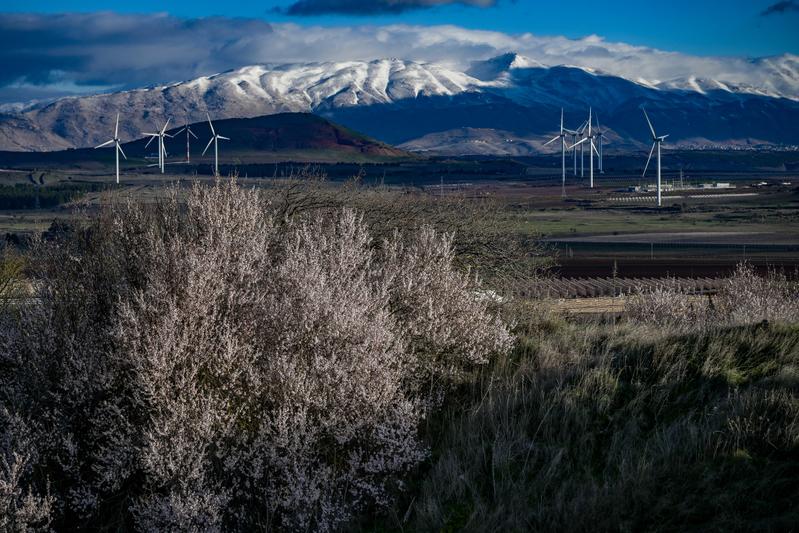
The Israel Meteorological Service reported Monday that less than 40 percent of the average seasonal rainfall for December, January and February fell this winter.
These months should see about two-thirds of the year’s precipitation.
While January was unseasonably sunny, the number of rainy days in February was higher than average. February was also the coldest since February 2003.
In the Upper Galilee and the Golan Heights in northern Israel, the situation was defined as “extremely dry” on the drought index.
Similar conditions were last reported in the 2013 to 2014 season.
The Golan Heights is the driest it has been since measurements began in 1968.
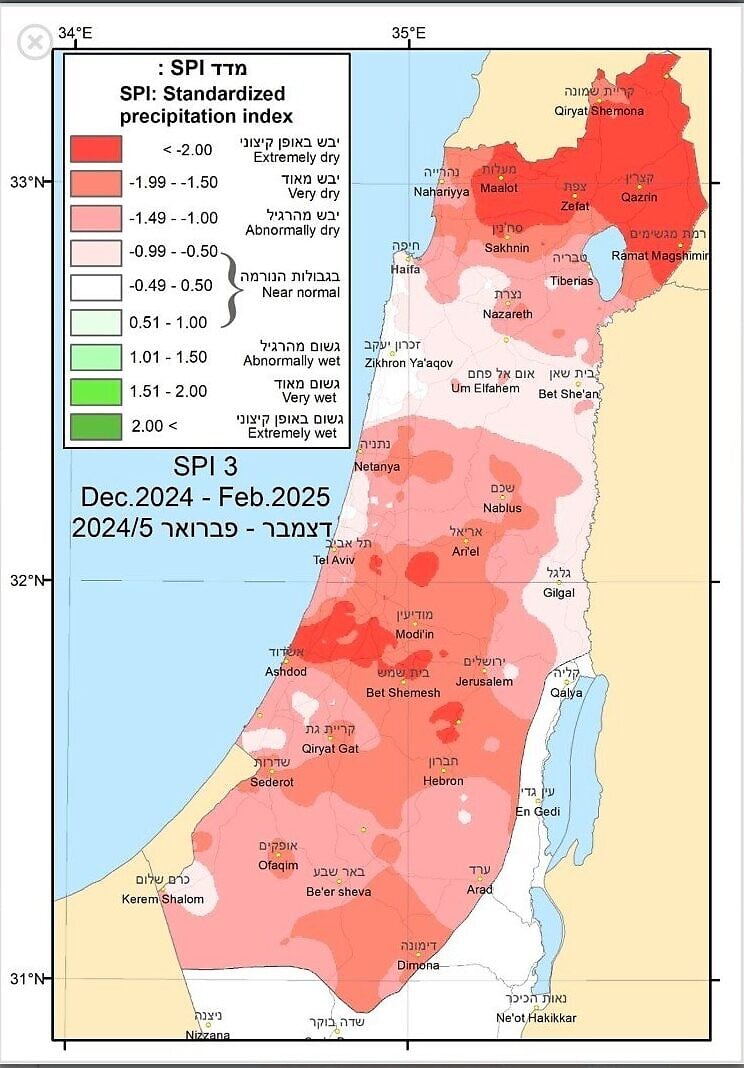
Parts of the southern coastal plain and the lowlands were also defined as extremely dry, having not seen such parched conditions since winter 1998 to 1999.
The rest of the country was defined mainly as “dry” or “drier than usual.”
On Tuesday, the Sea of Galilee was 2.11 meters (692 feet) below sea level — 2.46 meters (eight feet) below the upper red line.
The lower red line is at -213 meters (-699 feet) below sea level. Pumping beyond this risks damaging the ecosystem.
While the Sea of Galilee is Israel’s largest natural source of fresh water, it is no longer critical to the country with desalinization plants and recycling accounting for the majority of water used.
While rain is predicted from Wednesday to Friday, it is not expected to change the picture substantially.








The Times of Israel Community.