

Likud MK says IDF conscription bill aims to draft half of Haredim ‘not in yeshiva’
Controversial legislation, apparently set to enable most Haredi young men to continue to evade service in the coming years, is almost ready, says Defense Committee chair Bismuth
 Add ToI as a Preferred Source on Google
Sam Sokol is a former political correspondent at The Times of Israel. He was previously a reporter for the Jerusalem Post, Jewish Telegraphic Agency and Haaretz. He is the author of "Putin’s Hybrid War and the Jews"
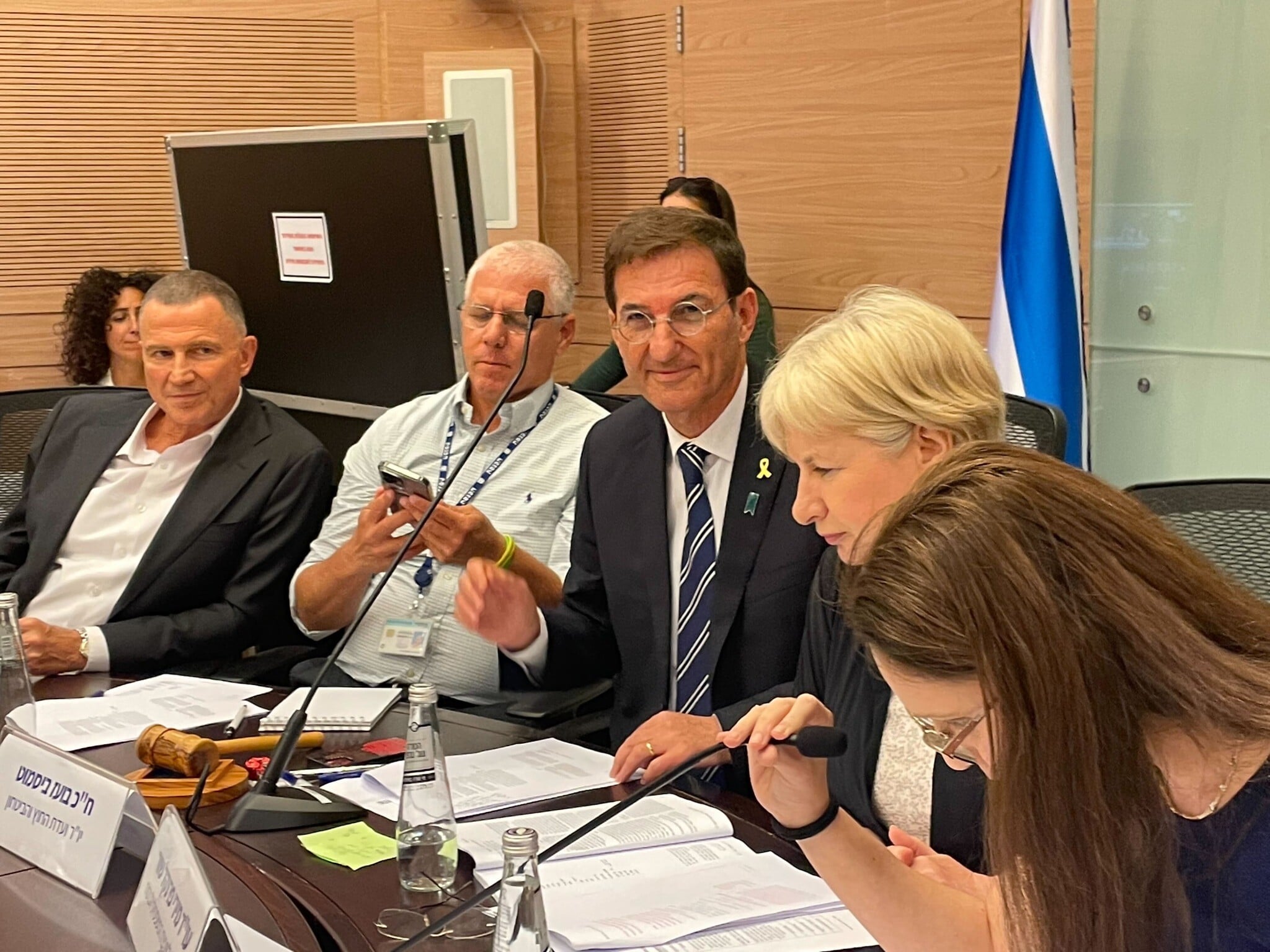
Knesset Foreign Affairs and Defense Committee chairman Boaz Bismuth on Saturday appeared to confirm that his revised draft of a government-backed bill regulating ultra-Orthodox conscription would continue to exempt full-time yeshiva students from IDF service for the foreseeable future, and would draft only half of the eligible members of the community not engaged in full-time Talmud study, gradually, over the next five years.
Speaking with Channel 12’s “Meet The Press,” the Likud lawmaker rejected “fake” news reports regarding the contents of the bill — widely seen as intended to codify draft exemptions for much of the Haredi community, impose weak sanctions on evaders and pave the way for the ultra-Orthodox parties to return to the coalition. He said he would soon “present the final text to my colleagues on the committee.”
The “locomotive is ready to leave the station [and is] waiting for passengers,” he says. “The law is more or less ready. I am in full coordination with the prime minister. The prime minister wants this law; very much so,” he said.
Appearing to confirm hints that the bill will allow those enrolled full-time in yeshiva to continue their studies without fear of conscription for years to come, Bismuth told the network that “within five years, 50 percent of those not in yeshiva” will enlist in the army — a development which he called “huge.”
He did not specify how the military would decide which half of the Haredim not studying at yeshiva to enlist and who would be among the other 50 percent to be exempted.
Bismuth further stated that there will be an “oversight mechanism” and sanctions, and that only 10% of those mobilized will serve in national service, as opposed to military service. However, he rejected the idea of a “revolution” in Haredi enlistment, comparing it instead to the gradual increase in female combat troops over the years.
Two decades ago, there were debates over women in combat, but “today, when my daughter comes back from Gaza with a red beret, it’s obvious. It’s the same with Haredim — each one who enlists is an ambassador,” he said.
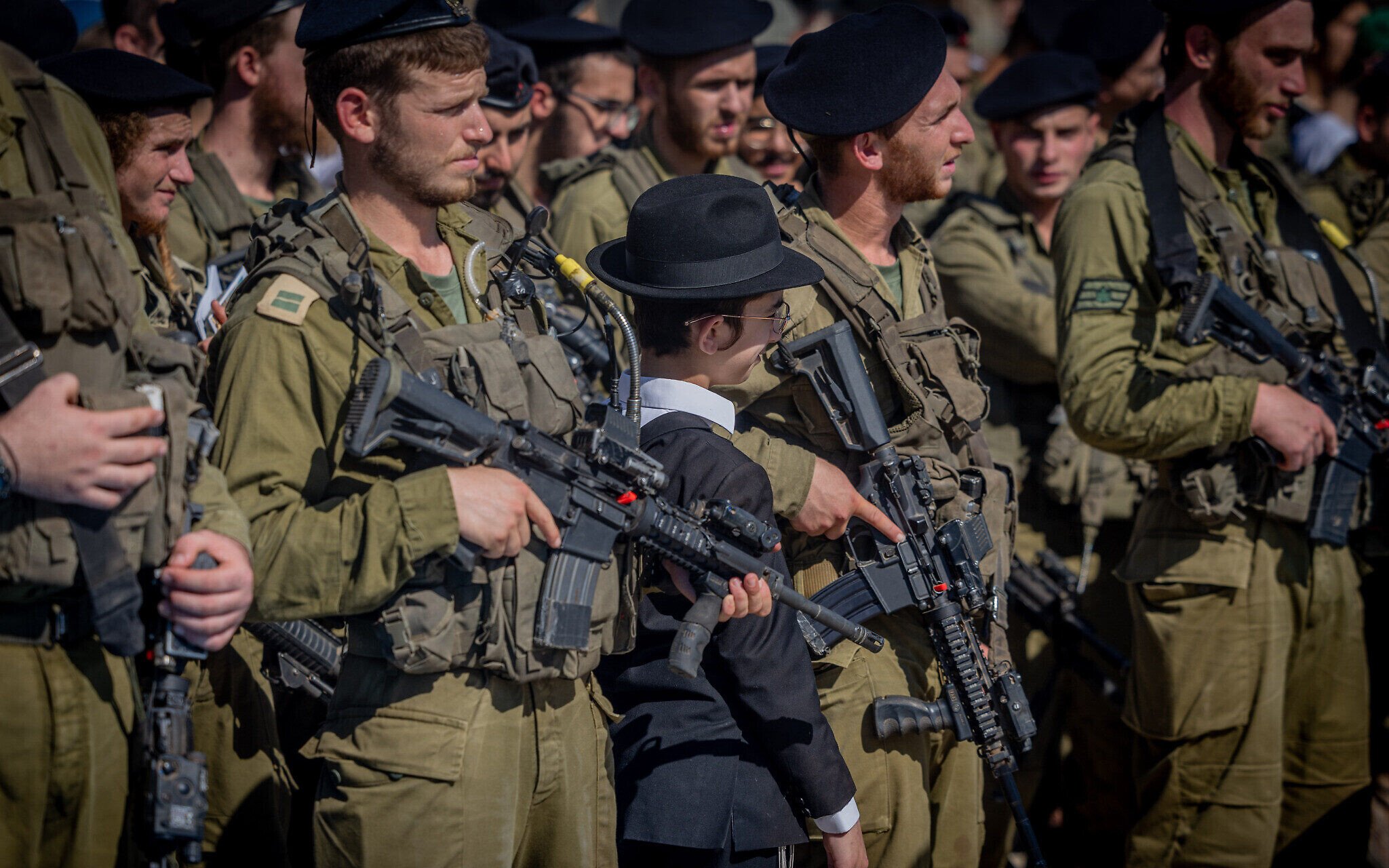
For the past year, the Haredi leadership has pushed to pass a law keeping its constituency out of the IDF, after the High Court ruled that decades-long blanket exemptions from army duty traditionally afforded to full-time Haredi yeshiva students were illegal.
Some 80,000 ultra-Orthodox men aged between 18 and 24 are currently believed to be eligible for military service, but have not enlisted. The Israel Defense Forces has said it urgently needs 12,000 recruits due to the strain on standing and reserve forces caused by the war against Hamas in Gaza and other military challenges.
Bismuth was appointed chairman of the Foreign Affairs and Defense Committee in August after both of the coalition’s ultra-Orthodox parties, Shas and United Torah Judaism, left the government to protest its failure to advance the long-stalled legislation, which critics have derided as an “evasion bill.”
After taking over the committee, Bismuth largely threw out a version of the bill prepared by former chairman Yuli Edelstein — which the Haredi parties were deeply critical of — and started over. He has said that he believes Israelis must “find the balance” between Torah study and military service, and that Israel needs both soldiers and Torah students.
Bismuth’s version of the bill was set to be presented to his committee nearly a month ago, but has repeatedly been postponed.
Speaking with Channel 14 last month, he declared that his goal was to send the bill to the plenum for its final two readings in December, insisting that its passage would lead to the conscription of 10,000 Haredim within two years, a number he said would continue to increase going forward.
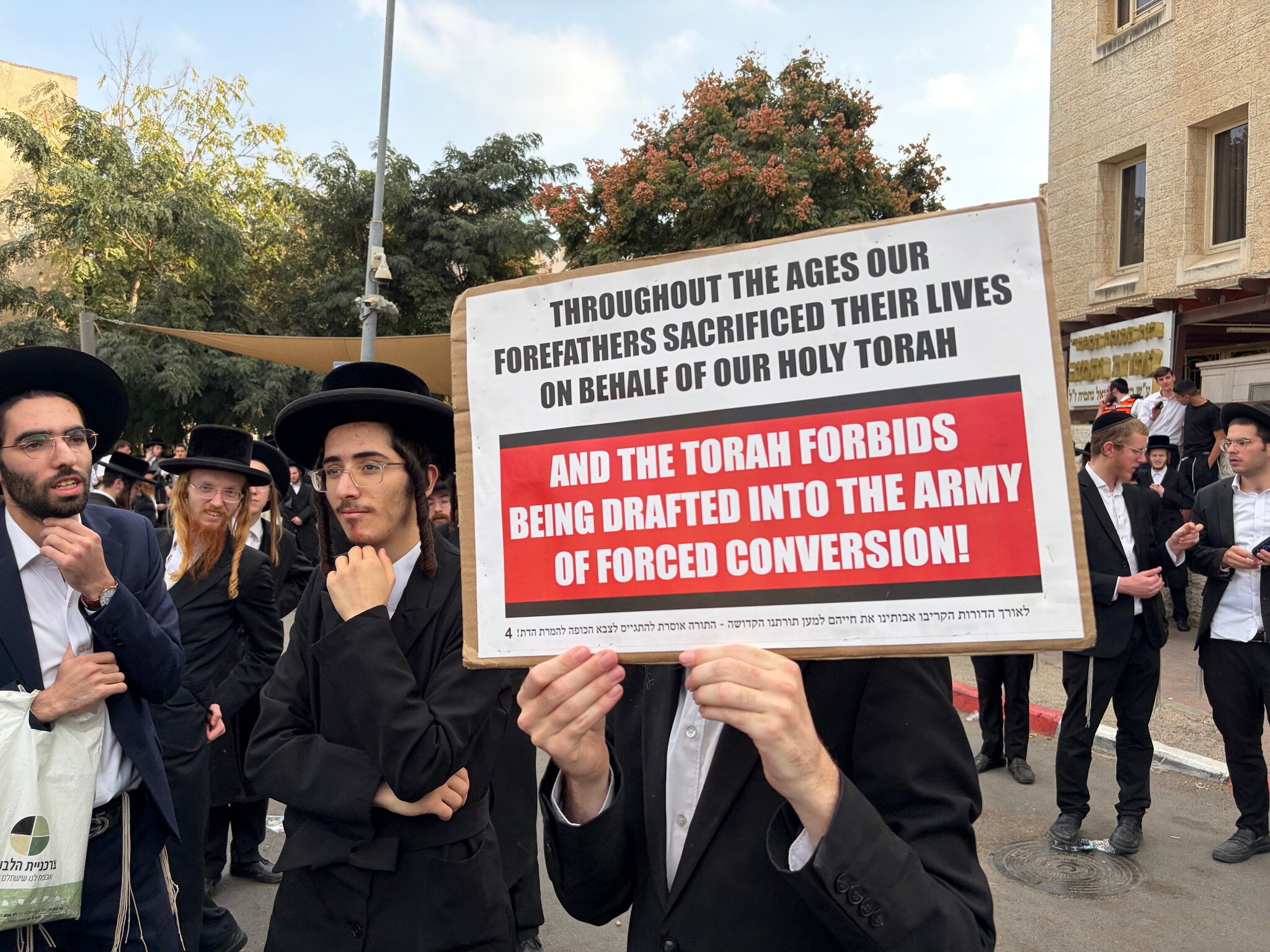
While “there will be sanctions — there will be personal sanctions, there will be institutional sanctions, there will be serious sanctions” — placed on those who are called up but refuse to serve in the military, Bismuth cautioned at the time that it was necessary to respect the ultra-Orthodox lifestyle and that he was promoting sanctions “meant to poke the Haredim in the eye.”
Stating that he had met with many rabbis from across the Haredi community, he said that the consensus among them was that those engaged in studying Torah full-time should be allowed to continue, while those who don’t should enlist.
“I admire those who wear the uniform, but just as much — and I say this out loud — I admire those who study the Torah,” Bismuth said, adding that he was working hard on the bill to ensure that it would not be struck down by the High Court.
According to Hebrew-language news reports, a document of principles submitted by Bismuth to his committee’s legal adviser stipulates that within five years, 50 percent of the annual Haredi draft cohort will be conscripted, and the age of exemption will remain at 26. Government funding for yeshivas will only be cut if they fail to meet army enlistment quotas after a year, and sanctions on individuals who do not serve in the army will only go into effect after two years if the overall enlistment goal is not met.




The Times of Israel Community.