

Scrapping a year’s work, Knesset panel reboots talks on bill regulating Haredi conscription
‘It’s a shame to go through the whole process again only to reach the same point,’ former chairman Yuli Edelstein tells Foreign Affairs and Defense Committee
 Add ToI as a Preferred Source on Google
Sam Sokol is a former political correspondent at The Times of Israel. He was previously a reporter for the Jerusalem Post, Jewish Telegraphic Agency and Haaretz. He is the author of "Putin’s Hybrid War and the Jews"
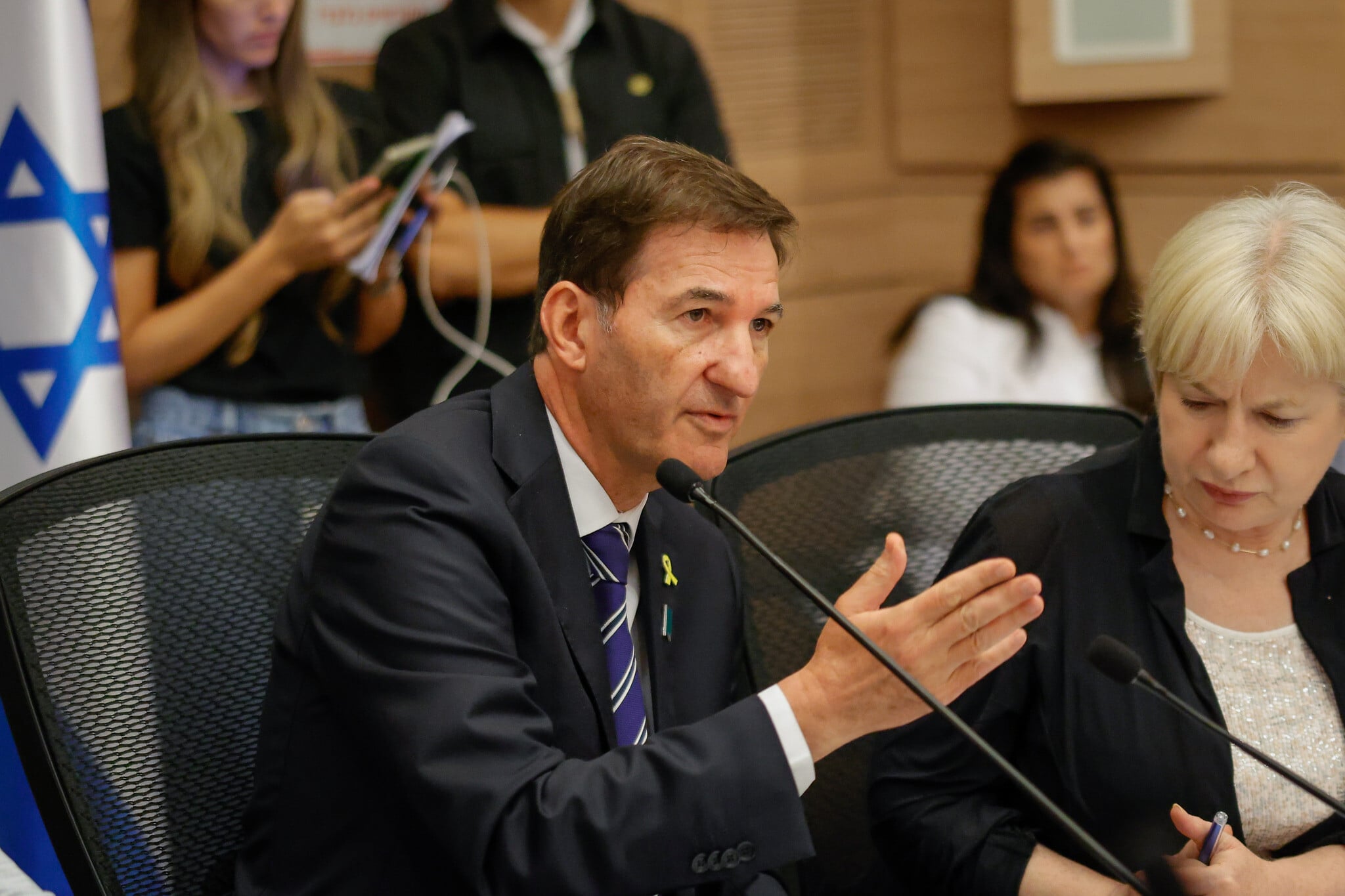
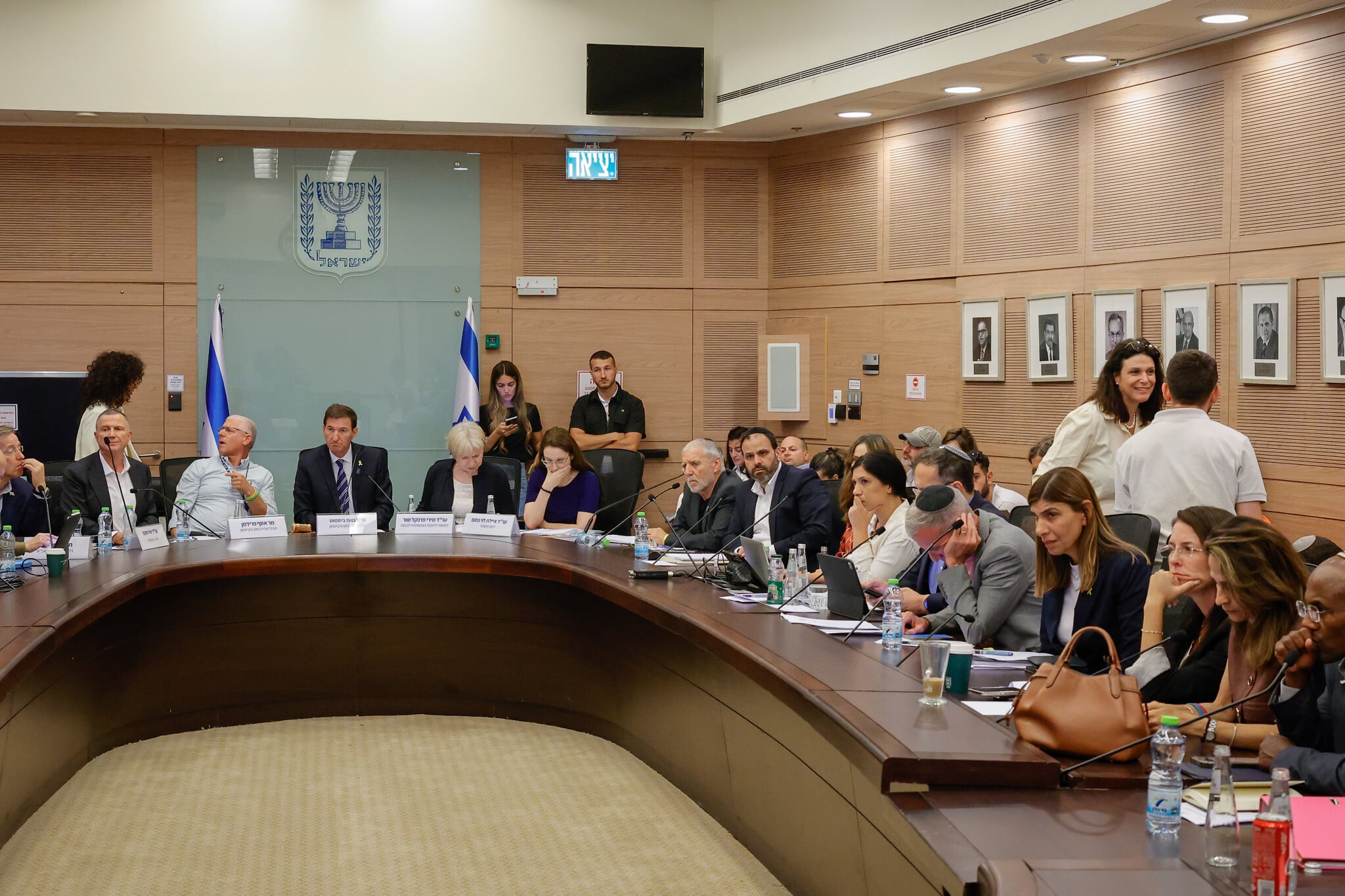
After more than a year of discussions and hearings, the Knesset Foreign Affairs and Defense Committee on Wednesday restarted work on the government’s controversial ultra-Orthodox conscription regulation bill from scratch, prompting scathing criticism from opposition lawmakers as well as former committee chairman Yuli Edelstein.
Wednesday’s discussion, the second dealing with Haredi enlistment and exemptions since MK Boaz Bismuth took over the committee from his fellow Likud MK in late July, was centered around the original wording of the legislation as advanced last summer rather than an updated and much harsher version presented by Edelstein last month.
Addressing lawmakers, Bismuth declared that the hearing would focus on clauses of the legislation that were “not in dispute” while committee legal adviser Miri Frenkel Shor said that the text of the bill under discussion was the one first proposed by Blue and White-National Unity chairman Benny Gantz in 2022 and revived by the Knesset in 2024.
In response, Gantz, who first advanced the bill while serving as defense minister under the previous government, insisted that while he had supported the bill at the time as a “bridging law until we could advance a real service framework,” it is “no longer relevant today” amid the ongoing security challenges facing Israel.
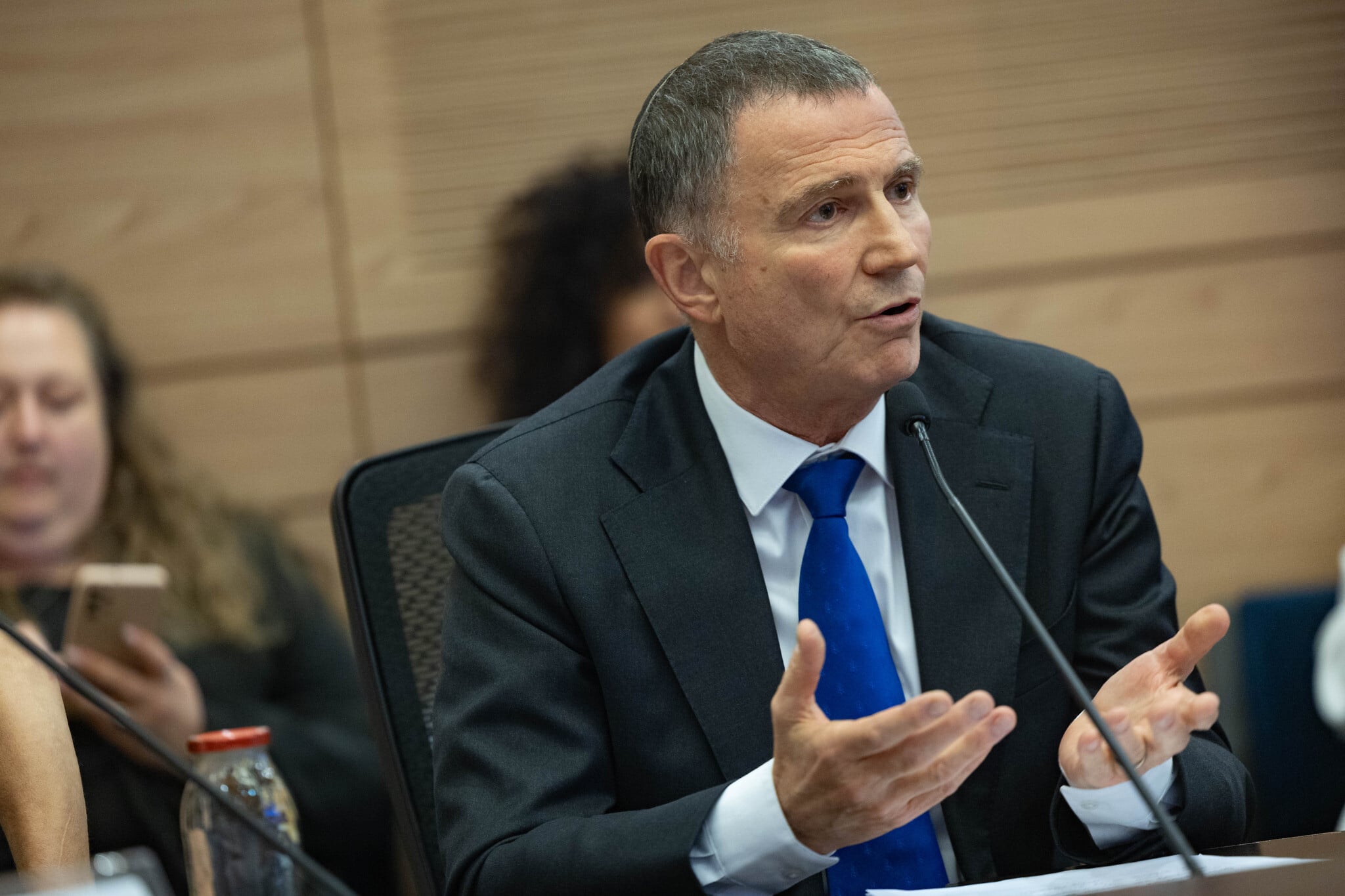
The decision to restart from scratch also elicited strong pushback from Edelstein, who told the panel that after dozens of meetings, lawmakers had already arrived at a draft of the bill.
“I have no particular love for [my] draft, it was a compromise… However, if the intention now in these debates is to reach something less than this draft…after we hold another round of discussions here, then this will surely not lead to ultra-Orthodox enlistment. It is a shame to go through the whole process again only to reach the same point. That would be like slamming on the gas while in neutral,” he said.
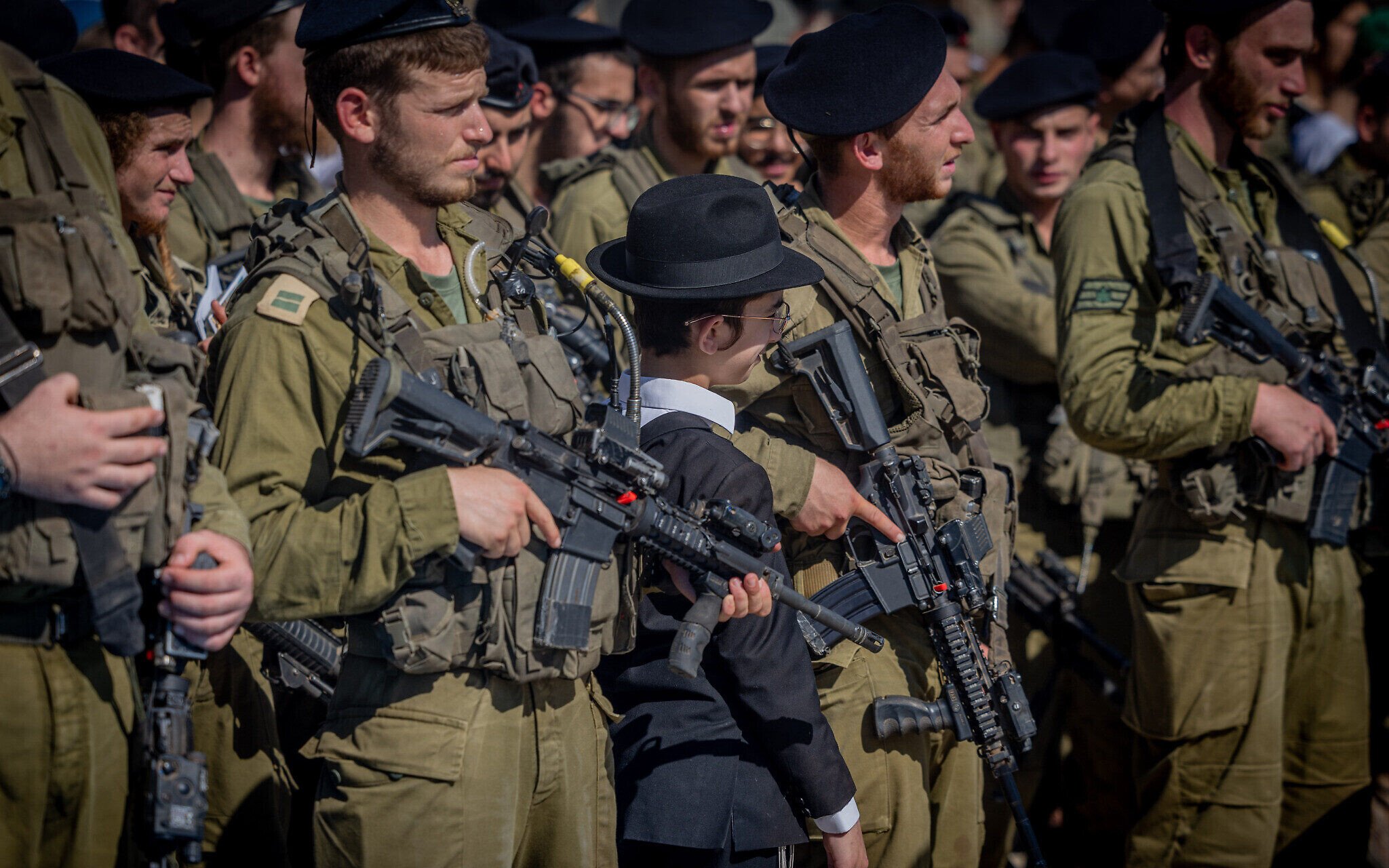
Some 80,000 ultra-Orthodox men aged between 18 and 24 are currently believed to be eligible for military service, but have not enlisted. The Israel Defense Forces has said it urgently needs 12,000 recruits, due to the strain on standing and reserve forces, throughout the ongoing war against Hamas in Gaza and other military challenges.
Both of the Knesset’s Haredi parties, Shas and United Torah Judaism, have been pushing for the passage of a bill to enable most ultra-Orthodox men to continue avoiding military conscription, following last summer’s High Court ruling that the decades-long blanket exemptions from army duty traditionally afforded to the Haredi community were illegal.
Ironically, under the old version of the bill being discussed by the committee, the defense minister “cannot grant an exemption even to a single person,” Edelstein argued, because according to the bill as written, such exemptions can only be given after “‘taking into account security needs and the size of the regular forces,'” he said.
“We had a closed meeting here [and the IDF] told us the state of the regular forces, and therefore, per the current draft, a reasonable defense minister cannot exempt even a single person.”
Bismuth, pushing back against Edelstein, said that the current approach was “better than driving at 120 [kilometers per hour] and getting nowhere,” while Shas MK Yinon Azoulay insisted that there had been no agreement on Edelstein’s proposed draft.
Yesh Atid MK Elazar Stern at one point told Azoulay to shut up and, as tempers flared, he was ejected from the chamber.
Yesh Atid MK Elazar Stern is removed from a meeting of the Knesset Foreign Affairs and Defense Committee pic.twitter.com/h744g6wpsD
— Sam Sokol (@SamuelSokol) September 3, 2025
In a tweet, Stern, the former chief of the IDF Personnel Directorate, accused Bismuth of seeking to “rape” the committee, stating that he had been removed because he had “requested data and figures from military officials.”
“The only Knesset members who were pleased and supported him were [the ultra-Orthodox] Yaakov Asher and Yinon Azoulay, the draft dodgers. These are his ‘security-minded’ friends,” Stern wrote.
‘Wasting time’
Bismuth accused the opposition of filibustering, declaring that he would not let them “waste time anymore” and insisting that he would advance legislation to solve the conscription issue.
“I want the conscription of Haredim into the army in accordance with the IDF’s preparation,” Bismuth told lawmakers. He acknowledged the many inquiries he had received following this week’s report on the Walla news site that he supported the approval of a wartime “emergency regulation,” which would allow for the immediate drafting of enough soldiers to fill the military’s manpower shortage while also lifting sanctions on ultra-Orthodox draft evaders.
Responding to demands for clarification from lawmakers, Bismuth said that he had held meetings with many people involved in the issue since taking over the committee in late July and argued that if the opposition wanted to conscript Haredim, they needed to drop the Walla report and move on to their planned discussion of the proposed bill.
Demanding exemptions
UTJ left the coalition in July after being presented with a copy of a proposed enlistment bill prepared by Edelstein, which it argued violated the terms of a supposed compromise reached in June. UTJ was quickly followed by Shas, which, while quitting the government, remained part of the coalition.
According to reports, the June compromise delayed the application of some sanctions and stipulated that the status of all yeshiva students would be reset and needed to be regulated from scratch, meaning that many of those who have received multiple draft orders and been declared evaders will no longer be subject to arrest.
However, the bill ultimately presented by Edelstein was significantly harsher, calling for the immediate application of sanctions on draft dodgers, including the revocation of drivers’ licenses and a ban on international travel.
In the wake of Shas and UTJ’s exit from the government, Prime Minister Benjamin Netanyahu’s Likud selected Bismuth to replace Edelstein as Foreign Affairs and Defense Committee chairman, in the hope that he would be able to advance a bill and bring the Haredim back into the coalition.
“The government is seeking a law that suits its political needs, instead of a law that provides solutions for the needs of the soldiers and reservists who are collapsing under hundreds of days of reserve and active service,” Blue and White-National Unity MK Pnina Tamano-Shata told The Times of Israel following Wednesday’s discussion.
“Replacing [Edelstein’s proposal] and restarting the debates two years after the outbreak of the war is disrespectful toward the fighters, the wounded and Israeli society as a whole. There must be service for everyone, without discriminating between blood and blood, with all the personal consequences that come with evasion,” she said.
Collapsing under strain
Ahead of the debate on Haredi conscription, soldiers and relatives of the hostages lashed out at lawmakers, describing intense suffering as a result of the war.
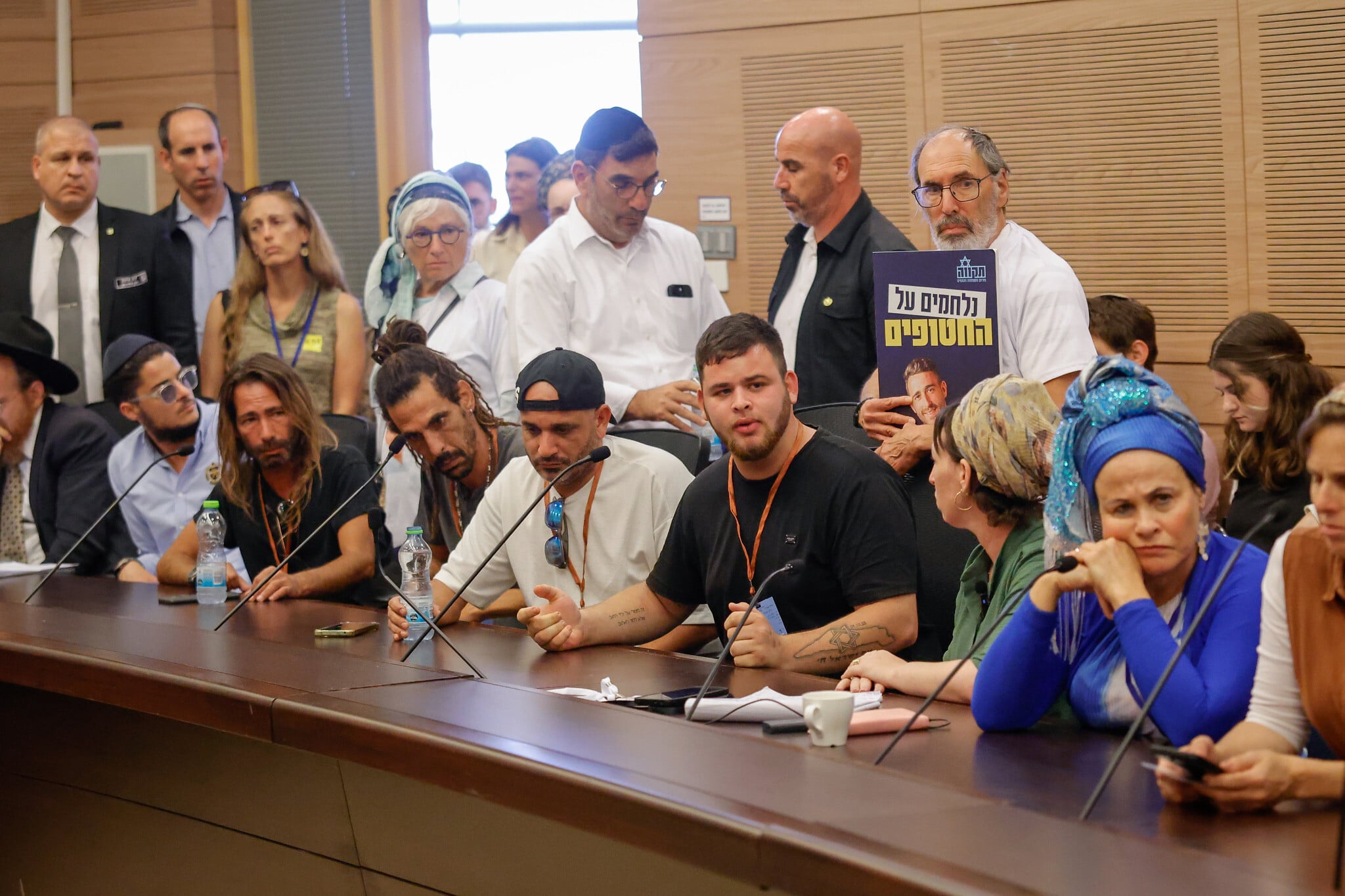
One 21-year-old combat veteran said he was “a walking corpse” who had tried to commit suicide after seeing his friends die in front of him.
“I see bodies in front of my eyes. And I don’t want to live, I can’t live. This situation can’t continue. And if we’re here to save lives and if we don’t wake up after this damn war, there will be a wave of suicides here. We’ll see bodies in the streets,” the soldier stated before storming out of the chamber.
The father of hostage Rom Braslavski screamed at members of the committee that “instead of having a toast on Rosh Hashanah, you will be drinking the blood of the hostages.”
“You will drink their blood because they are dead,” yelled Ofir Braslavski, asking MKs if any of them cared that his son was “dying.”
“You all need to go home… My son is dying, does that interest any of you? This happened on your watch,” he declared.


The Times of Israel Community.