

Live updates (closed)
 Add ToI as a Preferred Source on Google
The Times of Israel liveblogged Wednesday’s events as they happened.
‘Everybody should do that’: Netanyahu defends Somaliland recognition in Newsmax interview
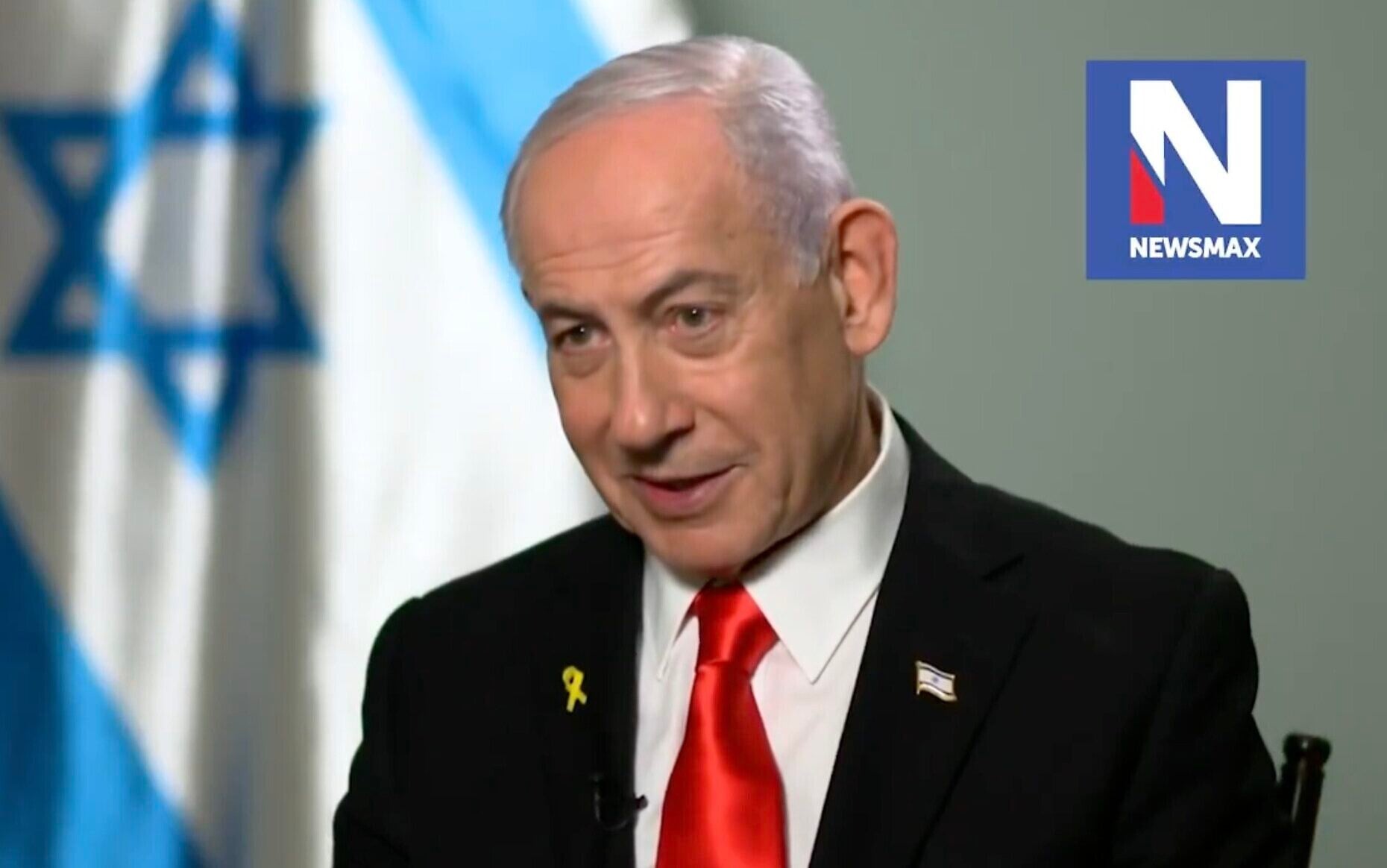
Prime Minister Benjamin Netanyahu speaks with Newsmax in an interview broadcast on December 30, 2025. (X screenshot)
Prime Minister Benjamin Netanyahu defends Israel’s decision to formally recognize the self-declared Republic of Somaliland amid international condemnation of the move, in an interview with Newsmax during his visit to the US.
“Why not support a democratic moderate country that wants to join the Abraham Accords? I think everybody should do that,” Netanyahu says when asked about the reasoning behind the decision, which sparked a wave of backlash from many Muslim-majority and European nations.
“Somaliland has six million citizens – moderate Muslims, they want to join the Abraham Accords, and I think that’s very good,” the premier says.
“They are democrats, they’ve had elections,” he continues, contrasting that with “the rest of Somalia, which is hodgepodge, has had Al-Shabaab terrorists there, never had elections for, I don’t know, for decades, has had a lot of terrorists coming there.”
Following Netanyahu’s announcement of the move last week, Channel 12 reported that the prospect of ties between Israel and Somaliland emerged as Israel searched for countries willing to take in Palestinians from Gaza during the war with Hamas. Another central Israeli motivation for deepening ties with Somaliland is the latter’s proximity to Yemen, access to which would make it easier for Israel to conduct strikes and surveil the Iran-backed Houthi rebels in Yemen.
Tune 4p eastern @Newsmax @IsraeliPM Netanyahu interview pic.twitter.com/yP1sr8HO4H
— Greta Van Susteren (@greta) December 30, 2025
Tear gas canister fired by IDF during West Bank raid sparks fire in Palestinian home
A tear gas canister fired by Israeli troops during a raid of the central West Bank village of Aboud sparked a fire in a Palestinian home, briefly trapping an elderly woman inside.
The IDF says soldiers fired the tear gas to break up a demonstration that had broken out during the raid, which had included the hurling of stones at troops.
The army in a statement acknowledges that the fire was likely caused by its tear gas canister, adding that Palestinian firefighters managed to evacuate the building of all inhabitants.
Several suffered from smoke inhalation, including the elderly woman who was rushed to the hospital for treatment, Palestinian media reports.
احتراق منزل جراء إلقاء قوات الاحتلال قنبلة في قرية عابود شمال غرب رام الله pic.twitter.com/Um1PvFcYyo
— التلفزيون العربي (@AlarabyTV) December 30, 2025
Amid US scrutiny, Netanyahu asserts ‘handful of kids’ responsible for settler violence
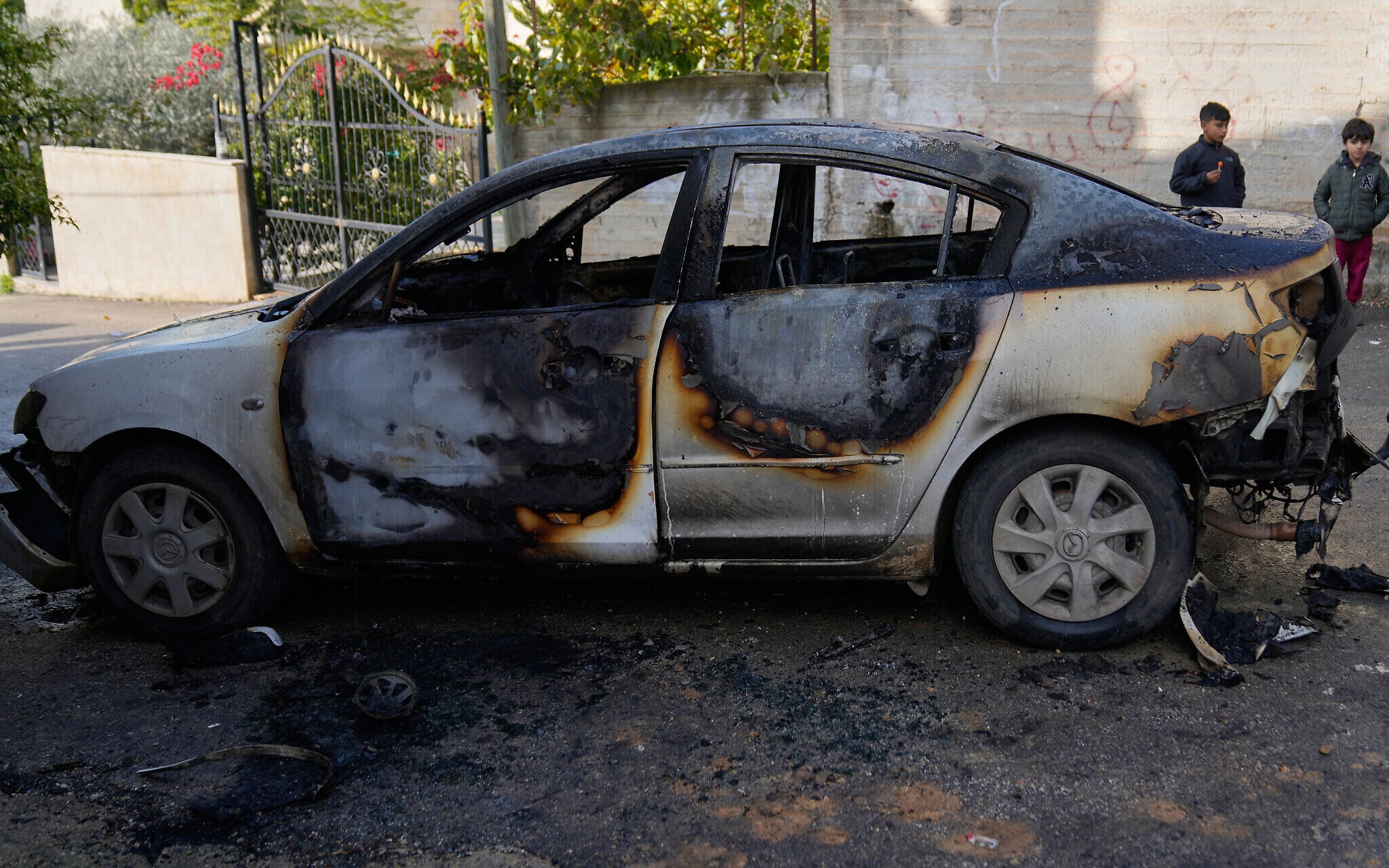
Illustrative: Children stand next to a vehicle that was torched during a settler rampage in the early morning in the West Bank town of Ein Yabrud, December 17, 2025. (AP/Nasser Nasser)
Prime Minister Benjamin Netanyahu downplays rising settler violence in the West Bank, asserting only “a handful of kids” are responsible for the unrest while insisting that he is “putting a special effort” to stop the phenomenon, as he is interviewed by Fox News while visiting the US.
“When they’re talking about it, they’re talking about a handful of kids,” Netanyahu says, apparently referring to media coverage of the violence. “We actually located it. It’s about 70 kids. They’re not from the West Bank. They’re actually… teenagers who come from broken homes, and they do things like chopping olive trees, and sometimes they try to burn a home. I can’t accept that. That’s vigilanteism. I’m taking that out.”
Asked about apparent disagreement on the matter with US President Donald Trump, Netanyahu denies any significant conflict.
“I think we both want to see a future in which that territory is not used for terrorist attacks,” the premier says. “We’ve done a lot of things in that regard. We also want to build a lot of infrastructure there, both for us and for our Palestinian neighbors. I think there’s a lot of room to talk about it. But I think ultimately, Israel has to have military control over this area.”
Trump and his top aides expressed concern over several Israeli policies in the West Bank during their meetings Monday with Netanyahu, a US official told The Times of Israel, saying they took particular issue with unchecked settler violence, settlement expansion and Israel’s withholding of several billion dollars in Palestinian Authority tax revenues.
Netanyahu says Hamas must surrender all its rifles for Trump’s peace plan to advance
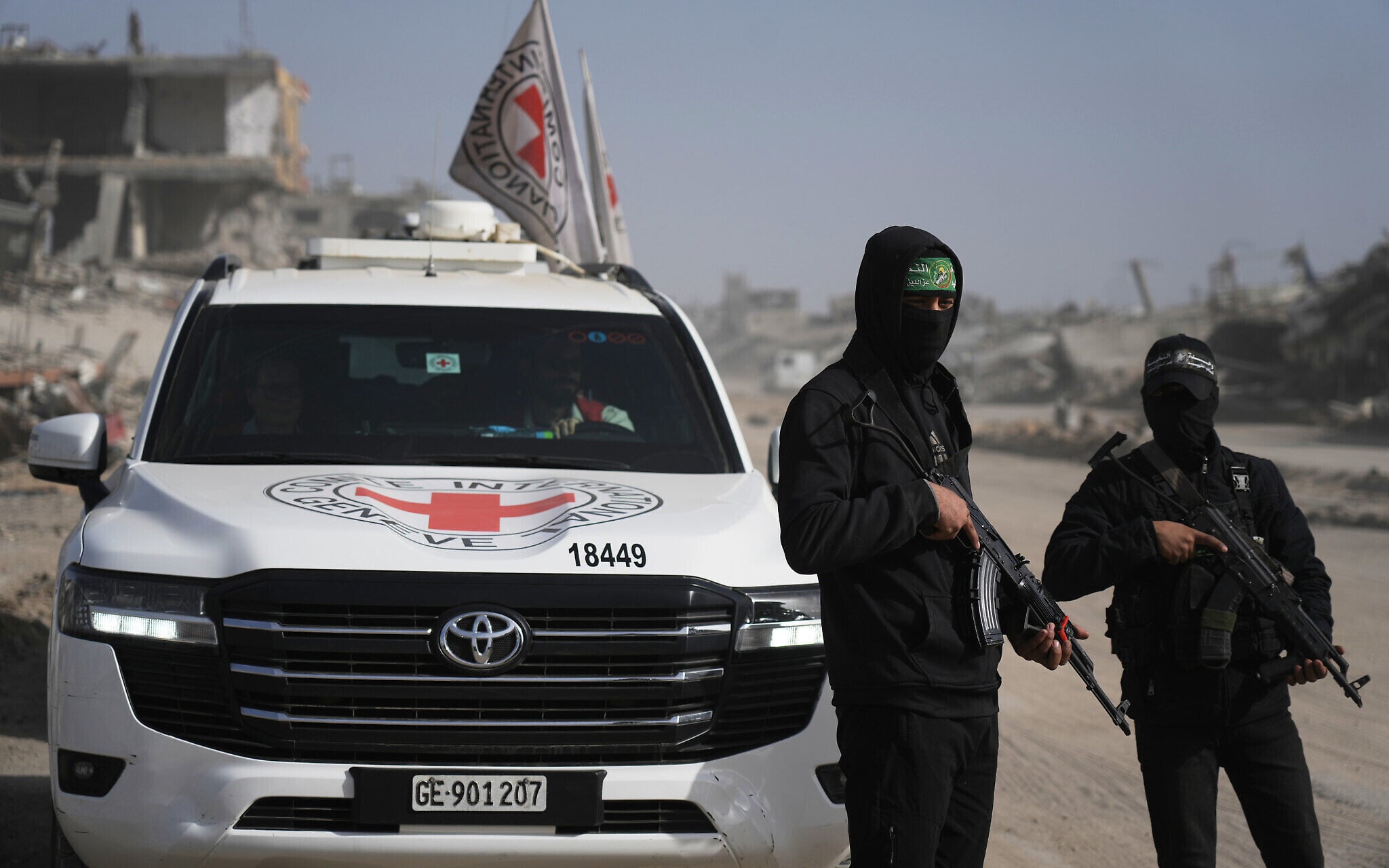
Hamas gunmen accompanied by members of the International Committee of the Red Cross head to Zeitoun neighborhood of Gaza City to search for the remains of the final hostage, December 8, 2025. (AP/Jehad Alshrafi)
Prime Minister Benjamin Netanyahu says that Hamas must surrender all its rifles and tunnel infrastructure in order for Washington’s Gaza peace plan to advance.
When asked by Fox News what is complicating the transition to the second phase of the plan, Netanyahu replies, “One word: disarmament,” adding that “Hamas committed to disarm” but “refuses to do it.”
While US officials have claimed that the terror group agreed to disarm shortly before the first phase of the deal was signed on October 9, Hamas has repeatedly denied this.
Netanyahu says that Hamas has “got still about 20,000 people with basically Kalashnikov rifles, which they use periodically to execute anyone who doesn’t want the continuation of their tyranny.”
“And they have altogether 60,000 AK rifles. That’s what disarmament means – got to take all these rifles, take them away from them, and break up those terror tunnels that they have, still hundreds of kilometers of terror tunnels. Hamas refuses to do it,” he says.
Asked if he believes phase two of the Gaza plan can be reached even if Hamas is unwilling to disarm, Netanyahu says, “I think we have to give it a chance.”
“There’s an attempt to bring an international force,” he continues, referring to the International Stabilization Force that would be deployed in Gaza as part of the US plan. “So far, it hasn’t come to fruition, but we’ll give it a chance. Because if it can be done… the easy way, fine. And if not, it will be done another way.”
Netanyahu says Iran seeking to reestablish missile and nuclear capabilities damaged in war
Speaking with Fox News, Prime Minister Benjamin Netanyahu says Iran is trying to reestablish missile and nuclear capabilities that were damaged during the June war.
“We set them back considerably in both areas, but yeah, they’ll try,” Netanyahu says. “I think with Iran, the real issue is that they should accept the fact they shouldn’t have nuclear enrichment capability, they should take out all the material that they’ve already enriched — take it out of Iran, and have inspections.”
“We don’t seek escalation, I hope they don’t, but if they do, all bets are off,” he adds.
In year-end summary, IDF says it struck some 20,900 targets across all fronts in 2025

Illustrative: Troops with the IDF's Golani Brigade seen operating in Rafah near the 'Yellow Line' in Gaza in this handout photo cleared for publication on December 15, 2025. (IDF)
The IDF releases a year-end summary of its operations in 2025, outlining extensive military activity across multiple fronts, including Gaza, Lebanon, the West Bank, Iran and Yemen.
According to the report, the IDF mobilized some 307,000 reservists during the year and carried out about 430 operations across all fronts, striking approximately 20,900 targets. Naval forces logged around 130,000 sea hours and conducted 50 maritime strikes.
In the Gaza Strip, the military says nearly 14,000 terror targets were hit, including weapons depots and command facilities. Dozens of senior Hamas commanders were eliminated, among them brigade, battalion and company-level leaders. In Lebanon, the IDF reported killing around 380 Hezbollah operatives and striking nearly 1,000 targets, while documenting some 1,920 ceasefire violations by the terror group.
In the Central Command, which is responsible for the West Bank and other areas of central Israel, the army says it killed roughly 230 terrorists, arrested about 7,400 suspects – including nearly 1,200 Hamas operatives – and seized more than 1,300 weapons, alongside millions of shekels in terror funds. Thirty terror suspects’ homes were demolished, with a total of 80 brigade-level operations conducted.
The report also details Israeli operations further afield, including strikes in Iran, where the IDF says dozens of senior regime figures and 11 nuclear scientists were killed as part of Operation “Rising Lion,” and in Yemen, where senior Houthi military and government officials were targeted in air operations.
On the home front, the military highlights expanded civil defense measures, including the deployment of 1,500 mobile bomb shelters, renovation of 200 public shelters and handling of more than 1.5 million calls to the Home Front Command emergency hotline.
The IDF also reports 91 fallen soldiers from “war-related circumstances” during the year, 821 wounded soldiers, and significant investments in medical evacuation, mental health care, training and logistics as fighting continued on multiple fronts.
After 2 years of war, record high 32% of Israelis say they need mental health support — survey
A record 32 percent of Israelis say they need professional mental health support after two years of war, according to a new end-of-year survey conducted by Maccabi Healthcare Services.
Among Israel Defense Forces personnel serving as conscripts or reservists over the past year, the situation appears more severe: 39% report needing mental health support, 26% express concern about depression and 48% report sleeping issues.
The survey was conducted in November among a representative national sample of 1,100 Israelis, ages 20–75 from across the country, combining self-reported survey data with anonymized medical records from approximately 2.7 million Maccabi members.
According to the survey, nearly one in three Israelis says they feel they need professional mental health support. Seventeen percent of respondents describe their mental state as fair or poor, compared with 13% before the war.
Lifestyle habits show mixed trends, with 62% of Israelis describing their physical health as very good or excellent, an increase compared with the period before the war. Only nine percent define their health as fair or poor, a significant decline from the levels recorded shortly after the October 7, 2023, Hamas attack and the outbreak of the war.
Smoking rates worsened during the past year, with 30% of smokers reporting that they increased their smoking. At the same time, Maccabi data show high use of fitness services, with approximately 2.5 million workout sessions booked through the health fund’s UPAPP app in 2025. Pilates was the most popular activity, followed by gym workouts and yoga.
However, sedentary behavior remains widespread, with Israelis sitting an average of 8.2 hours a day, with 20% saying they sit more than 11 hours daily. About 30% of Israelis say they do not engage in any aerobic physical activity. Yet almost half of Israelis report that they adhere to a healthy lifestyle to a large or very large extent, an increase of about 15% compared with the prewar period.
Medical data from Maccabi’s records show a seven percent increase in winter morbidity during the 2024–2025 season compared with the previous winter. The number of births declined by 4% compared with 2024. Preventive screenings for breast cancer remained stable, while cervical cancer screening rates rose slightly.
The use of injectable medications for obesity treatment increased sharply. In 2025, more than 100,000 Maccabi members purchased hundreds of thousands of packages of weight-loss injections, while the number of bariatric surgeries dropped by 17% compared with the previous year.
The most common medical diagnosis during 2025, given by both family physicians and pediatricians, was upper respiratory tract infection. Among family doctors, the next most frequent diagnoses were for abdominal pain, coughing and lower back pain. Among pediatricians, they were sore throat, abdominal pain, and fever.
The survey also points to changes in how Israelis seek medical information. Fifty-seven percent report searching for medical information online, 50% consult doctors or medical staff, 44% use health fund or hospital websites and 32% turn to artificial intelligence tools. However, only 21% say they place high trust in AI-based medical recommendations, while a third report no trust at all.
Attitudes toward flu vaccination remain cautious. Forty percent of respondents say they have never received a flu shot, and only 4% of them are considering vaccination this year. The data were collected in November, before the peak of flu season in December.
“In a period of change and uncertainty, it is essential to understand the health of Israeli citizens based on up-to-date objective data alongside the public’s own perceptions,” says Sigal Dadon-Levi, CEO of Maccabi Healthcare Services. “I call on decision-makers in Israel to use it to formulate more precise policy and provide real responses to the health challenges we face.”
Mamdani taps anti-Israel activist Ramzi Kassem as his chief counsel
Roughly a day before he is set to take office on January 1, New York City Mayor-elect Zohran Mamdani taps a longtime anti-Israel activist, Ramzi Kassem, as his chief counsel.
Kassem, who was on Mamdani’s transition team, is a longtime anti-Israel activist who was on the legal team for the Columbia University Palestinian protest leader, Mahmoud Khalil, after Khalil was detained by US authorities.
Kassem comes to the role after heading Creating Law Enforcement Accountability and Responsibility (CLEAR), a resident nonprofit and legal clinic at the CUNY Law School. CLEAR has advised some of the most hardline anti-Zionist activist groups in the city.
Kassem also served as a policy adviser on immigration to former US president Joe Biden’s administration.
Mamdani posts on social media that CLEAR “has been on the front lines of providing legal defense for students detained by ICE and supporting many more at risk.”
Welcome to A New Era, Ramzi Kassem!
Ramzi Kassem joins the administration from the City University of New York School of Law, where he co-founded and now co-directs CLEAR (Creating Law Enforcement Accountability & Responsibility), which has been on the front lines of providing… pic.twitter.com/KmDmYGFTbg
— Zohran Kwame Mamdani (@ZohranKMamdani) December 31, 2025
US Justice Department to review 5.2 million pages of Epstein files, document shows
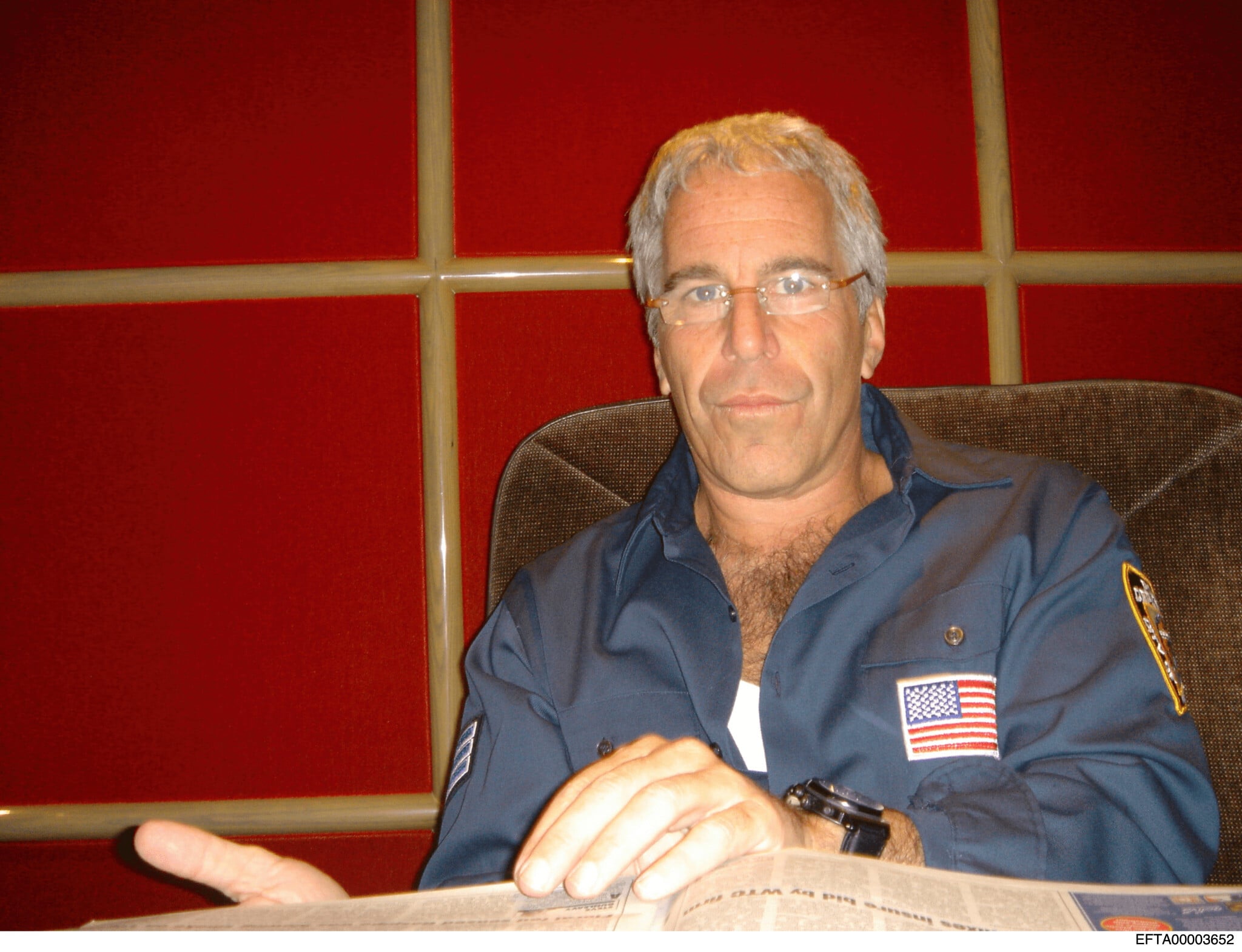
This undated photo released by the US Department of Justice shows Jeffrey Epstein. (US Department of Justice via AP)
The US Justice Department reveals it has 5.2 million pages of Epstein files left to review and needs 400 lawyers from four different department offices to help with the process through late January, according to a government document reviewed by Reuters.
This is likely to extend the final release of the documents to much later than expected after a December 19 deadline set by the US Congress, the document says.
The White House and the Justice Department do not immediately respond to Reuters’ requests for comment.
The Trump administration ordered the Justice Department to release the files tied to criminal probes of Jeffrey Epstein, the late financier and convicted sex offender, who was friends with US President Donald Trump in the 1990s, in compliance with a transparency law passed by Congress last month.
Collectively, the Criminal Division, the National Security Division, the FBI and the US Attorney’s office in Manhattan are providing 400 attorneys to review the files, the document says, a more precise, and potentially much larger, figure than previous estimates from the department.
The review will occur between January 5-23, the document added.
The department said last week it had uncovered more than a million additional documents potentially linked to Epstein.
The law, approved by Congress with broad bipartisan support, requires all Epstein-related files to be made public, despite Trump’s months-long effort to keep them sealed. Under the statute, all documents were to be released by December 19, with redactions to protect victims.
Report: In 2025, Israel’s population growth rate fell below 1% for first time ever

Illustrative image: a newborn baby (iStock via Getty Images)
A new report by the Taub Center finds that Israel’s population growth rate is set to fall below one percent this year for the first time in the country’s history, dropping to 0.9%.
The study says that the growth rate has fallen under 1.5% twice in Israel’s history, both times in the early 1980s.
The unprecedentedly low growth rate this year, the report says, is mainly due to Israel’s net migration, where data has shown more people leaving the country than coming.
In 2024, 82,700 Israelis left the country, about 50,000 more than immigrated to Israel, and that trend was expected to continue in 2025, demographers noted.
The number of births, historically high in Israel when compared with Western nations, has held steady, while the death rate is slowly rising, the Taub report says.
Zev Stub contributed to this report.
IDF reportedly attacks two sites in south Lebanon
The IDF this morning bombed a building in Houla and carried out a drone strike on a bulldozer in Aita al-Shaab, both in southern Lebanon, local media reports. There are no reports of injuries.
مسيرة للاحتلال تستهدف جرافة بقنبلة في بلدة عيتا الشعب جنوب لبنان. pic.twitter.com/1Giuwe98VW
— شبكة قدس الإخبارية (@qudsn) December 31, 2025
The military does not immediately comment.
Police investigating possible arson after 5 cars burst into flames in south
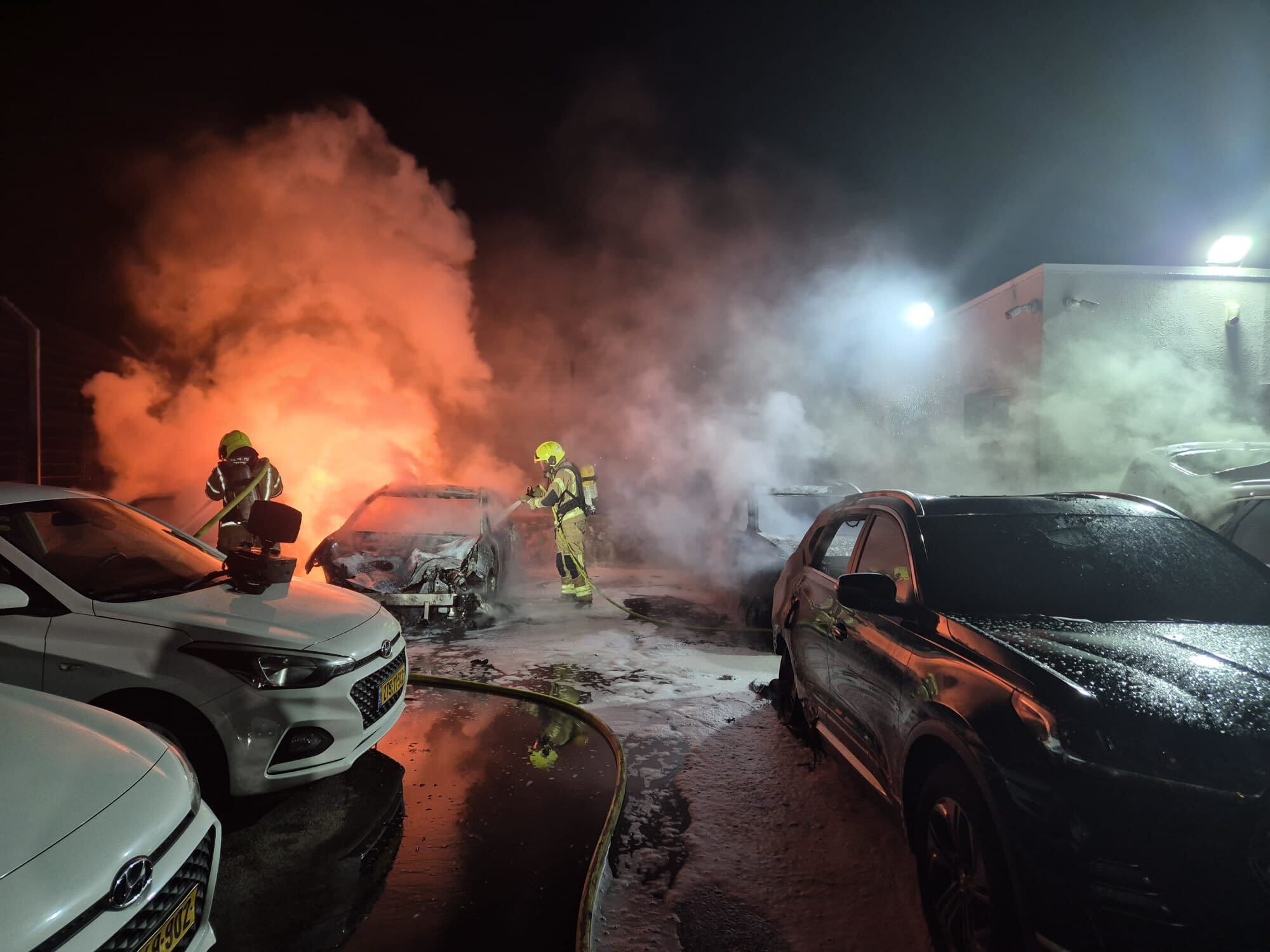
Firefighters extinguish blazes in a parking lot in Lehavim, a Jewish town in the Negev, caused by an apparent arson attack overnight on December 31, 2025. (Fire and Rescue Service)
Fives cars went up in flames overnight in a parking lot in Lehavim, a Jewish town in the Negev, in what police are investigating as an arson attack.
Police say the incident is a “price tag” operation by Bedouin Israelis seeking revenge for an ongoing anti-crime raid by police in the nearby town of Tarabin al-Sana. “Price tag” attacks generally refer to attacks by Israeli West Bank settlers in retaliation for Palestinian violence or Israel’s evacuating illegal outposts.
Firefighting squads were called to the scene in Lehavim at around 2 a.m. and extinguished the blazes near the town’s entrance. No injuries were reported.
The incident comes after days of clashes between law enforcement and Bedouin residents in Tarabin al-Sana.
The raid was launched in the wake of a similar arson incident in the Jewish localities of Giv’ot Bar and Mishmar Hanegev, also nearby, in which masked assailants thought to be from the nearby Bedouin town vandalized dozens of cars and set fire to at least two.
That vandalism appeared to be revenge for an earlier police raid, as law enforcement ramps up its presence in the Negev as part of a far-reaching operation to crack down on criminal activity in Bedouin society.
A senior police official says “the rules have changed” for Bedouin towns in the Negev.
“They don’t understand that they won’t frighten us; we will intensify the measures,” he asserts.
Police have cordoned off Tarabin al-Sana with cinderblocks and arrested at least 27 people, including four minors, as part of the raid.
The heightened police activity had rattled locals, who consider the operation an attempt to impose collective punishment on the village for the actions of a handful of criminals.
Ben Gvir heading to Tarabin al-Sana after suspected arson attack
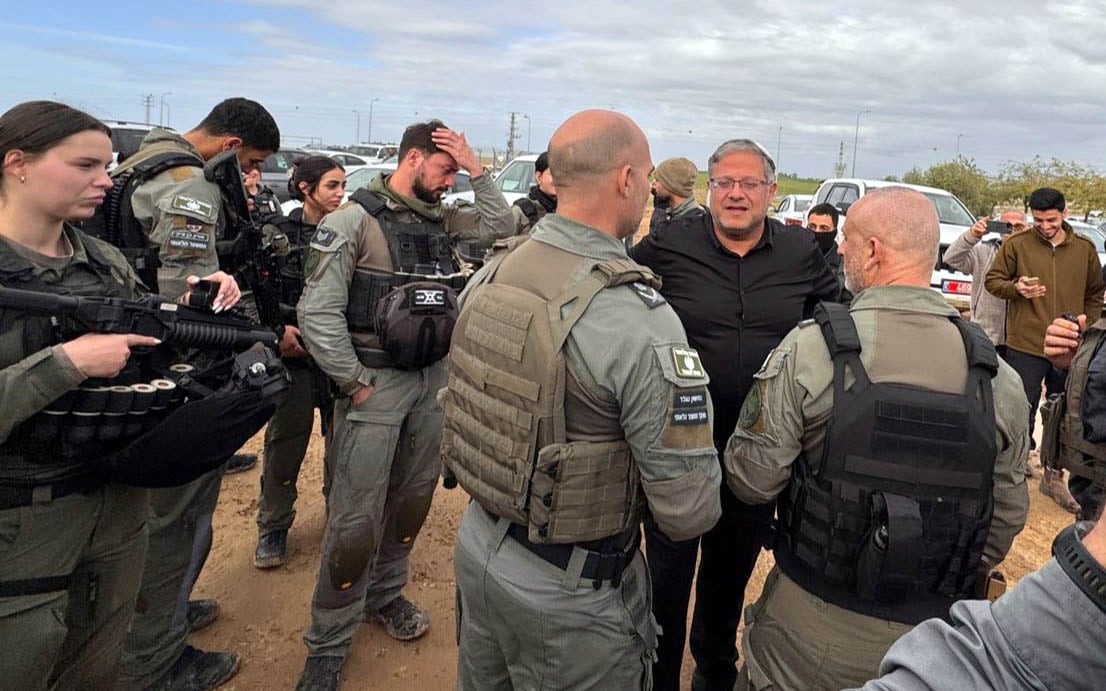
National Security Minister Itamar Ben Gvir speaks to police forces at the entrance to Tarabin al-Sana, a Bedouin town in the Negev, during a days-long raid in the village on December 30, 2025. (Office of Itamar Ben Gvir)
National Security Minister Itamar Ben Gvir is en route to the southern Bedouin town of Tarabin al-Sana following a suspected arson attack in a nearby Jewish town overnight.
Five cars went up in flames in Lehavim, an affluent town northeast of Tarabin al-Sana, in what police suspect is arson carried out as revenge for a sweeping raid in the Bedouin village.
The far-right minister is expected to deliver a message at the entrance to Tarabin al-Sana denouncing the “price tag” attack against the police operation that aims to “bring back governance to the Negev,” his office says.
Tensions have been high in the Negev for a month as police crack down on crime in the Bedouin sector, as part of Operation New Order, which Ben Gvir declared in mid-November.
On Monday, hundreds of heavily armed officers entered Tarabin al-Sana in an ongoing raid that has seen 24 arrests so far, including four minors on suspicion of stone-throwing. Residents have complained that the operation constitutes collective punishment.
MK Ohad Tal spent more of 2025 abroad than any other lawmaker, including ministers — report
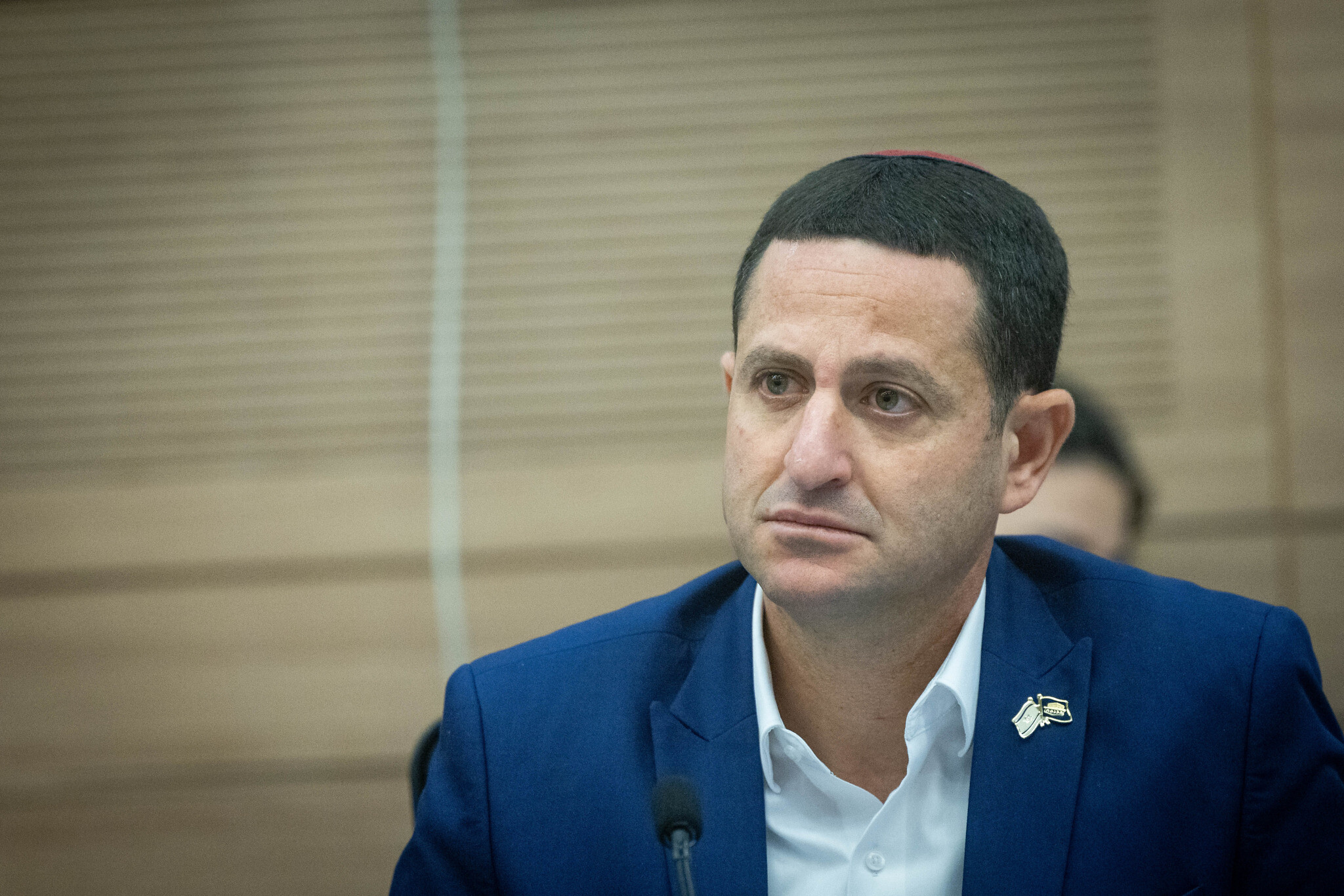
MK Ohad Tal attends a Foreign Affairs and Defense Committee meeting at the Knesset in Jerusalem on July 30, 2024. (Chaim Goldberg/Flash90)
The Israeli lawmaker who spent the most time abroad in 2025 was Ohad Tal, an MK for the far-right Religious Zionism party, Channel 12 reports.
The network says that based on freedom-of-information requests and Knesset data, Tal spent over two months in total out of the country — 68 days overall — more than any cabinet minister or fellow MK.
In second, unsurprisingly, was Foreign Minister Gideon Sa’ar, who spent 64 days abroad. Following him, Economy Minister Nir Barkat spent 60 days of 2025 out of Israel, while the figure for Transportation Minister Miri Regev — whose international travel has drawn scrutiny — was 57 days.
Haim Katz, who holds several ministerial portfolios including helming the Tourism Ministry, was abroad for 41 days this year.
Tal’s office said in a statement to the network that much of his travel was geared toward public diplomacy on Israel’s behalf. It said he met with members of the US Congress and other parliamentarians, held meetings and gave interviews in international media outlets.
“MK Tal is proud to be one of the only ones in Knesset who is standing up to defend Israel on the international front,” the statement says. “The State of Israel needed to do much more on this front.”
High Court orders state comptroller to freeze his October 7 investigation
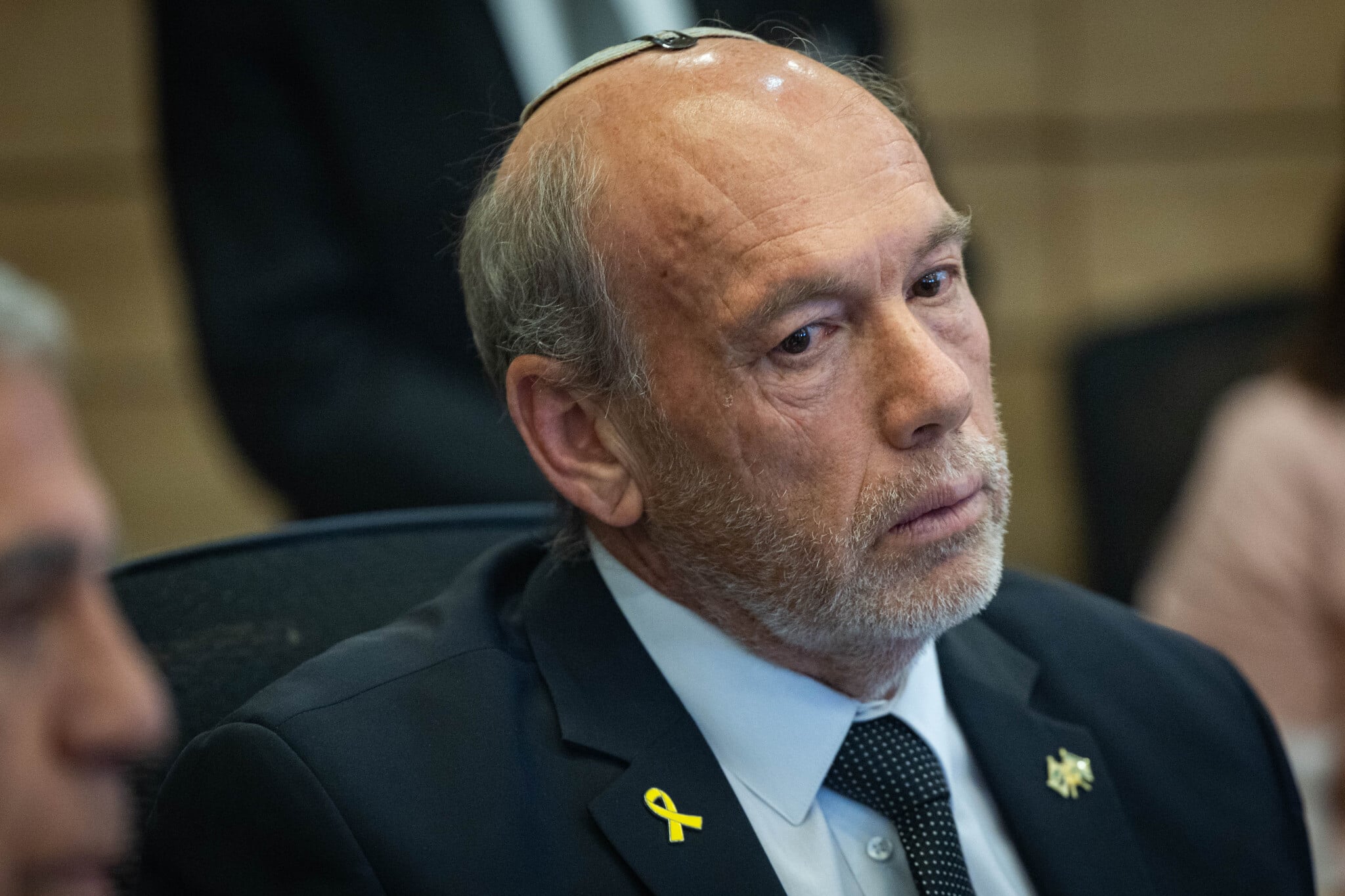
State Comptroller Matanyahu Englman attends a State Control Committee meeting at the Knesset in Jerusalem, May 12, 2025. (Yonatan Sindel/Flash90)
The High Court of Justice issues an interim order against State Comptroller Matanyahu Englman barring him from continuing his investigation into the failures surrounding the devastating October 7, 2023, Hamas-led onslaught.
The court orders him not to summon officials to give their version of events or provide documentation to the State Comptroller’s Office, nor to publish any draft or final report that he may have already drawn up on aspects of his probe.
The judges write that they are basing the order on an agreement between the state comptroller and state agencies, including the IDF, from April, in which the court validated a framework for the comptroller’s investigation.
The court also conditionally orders the state comptroller to justify his investigation into areas of policy and strategy, which petitioners against his probe have said go beyond the remit of his office. Conditional orders switch the burden of proof from the petitioners to the respondent, and indicate that the court believes a petition has merit.
The Movement for Quality Government in Israel, one of the petitioners against Englman, welcomes the decision, saying, “An event of exceptional magnitude like the October 7 disaster requires a comprehensive, independent and nonpartisan investigation by a state commission of inquiry alone,” and asserts that the state comptroller’s investigation is compromising evidence, violating due process rights, and is designed “to prevent the establishment of a state commission of inquiry.”
Englman’s probe has drawn scrutiny in part because he was appointed under a government led by Prime Minister Benjamin Netanyahu, who has rejected efforts to establish a state commission of inquiry to probe the October 7 attack.
17-year-old girl hospitalized for kidney failure after hair-straightening treatment

Illustrative: A hair stylist combs through hair after using a treatment for long-term straightening. (Andrii Borodai via iStock by Getty Images)
A 17-year-old girl who underwent a hair-straightening treatment was hospitalized with severe kidney failure at Shaare Zedek Medical Center, the hospital reports.
Another woman, 25, also suffered from kidney failure caused by hair straightening a little over a month ago.
The girl, suffering from vomiting, dizziness, and severe headaches, was hospitalized with acute kidney failure for several days in the pediatric department.
She was released on Monday and will continue outpatient follow-up at the hospital’s pediatric nephrology institute.
A study published by Prof. Linda Shavit, head of the hospital’s nephrology institute, and Dr. Alon Benaya, a physician at the institute, in 2023 documented 26 cases of women aged 14 to 58 with no underlying medical conditions who arrived at emergency departments across the country with severe kidney failure.
The researchers found that all of them had undergone hair-straightening treatments containing glyoxylic acid. The Health Ministry has since revoked licenses for dozens of cosmetic products containing glyoxylic acid.
“It is essential not to apply hair-straightening products directly to the scalp or the hair roots, but to maintain a distance of at least 1.5 centimeters from them,” says Shavit. “In addition, both hairdressers and clients must be careful not to heat the product and to act only according to the manufacturer’s instructions.”
Iran prosecutor vows ‘decisive’ response if protests destabilize country — state media
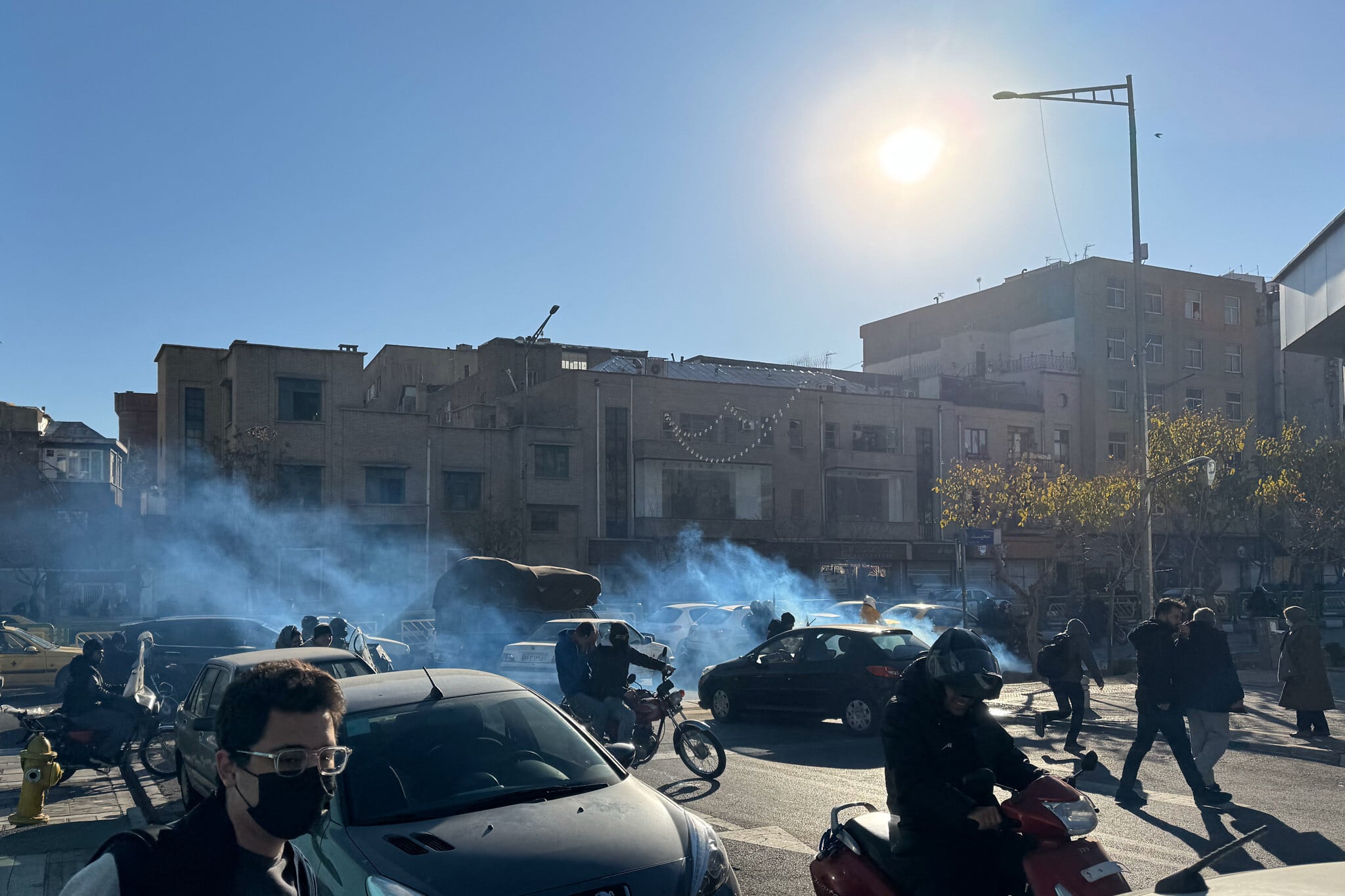
Shopkeepers and traders protest in the street against the economic conditions and Iran's embattled currency in Tehran on December 29, 2025. Some shopkeepers in Tehran closed their stores on December 29 in protest against economic hardships and sharp swings in Iran's embattled currency, Iranian media reported, following similar demonstrations a day earlier. Iran's currency has hit new lows on the unofficial market, with the US dollar trading at around 1.42 million rials on Sunday, compared to 820,000 rials a year ago and the euro nearing 1.7 million rials, according to price monitoring websites. (Photo by HANDOUT / FARS NEWS AGENCY / AFP)
Iran’s prosecutor general says that economic protests that are gripping the country are legitimate, but any attempt to create insecurity will be met with a “decisive response.”
“Peaceful livelihood protests are part of social and understandable realities,” Mohammad Movahedi-Azad tells state media. “Any attempt to turn economic protests into a tool of insecurity, destruction of public property, or implementation of externally designed scenarios will inevitably be met with a legal, proportionate and decisive response.”
Turkey detains 125 more ISIS suspects in nationwide sweep, minister says
Turkey has detained scores of people suspected of affiliation with the Islamic State (ISIS) jihadist group during nationwide raids, the interior minister announces on X.
“We captured 125 Daesh suspects in simultaneous operations carried out in 25 provinces this morning,” Ali Yerlikaya says, using the Arabic acronym for ISIS.
Turkey has staged a number of raids targeting suspects after three police officers were killed Monday during an operation against the extremist group in Yalova in the northwest.
The hours-long clash also left six ISIS members dead, all Turkish nationals.
Yesterday, the security forces arrested 357 people during another operation targeting ISIS.
Today’s raids took place in Istanbul and 24 other provinces including Ankara and Yalova, the minister says.
“25 ilde bu sabah eş zamanlı olarak Jandarmamız ve Polisimiz tarafından düzenlenen operasyonlarımızda; 125 DEAŞ şüphelisini yakaladık.”
Afyonkarahisar, Ankara, Aydın, Bursa, Eskişehir, Hatay, Kahramanmaraş, Mardin, Mersin, Uşak, İstanbul, Niğde, Sakarya, Kastamonu, Kocaeli,… pic.twitter.com/9rw4jRleWW
— Ali Yerlikaya (@AliYerlikaya) December 31, 2025
Yerlikaya shares a video excerpt in which the security forces raided several suspects’ homes, some of whom could be seen with their hands cuffed behind their backs.
“Those who seek to harm our brotherhood, our unity, our togetherness… will only face the might of our state and the unity of our nation,” he writes.
Hijacking meeting of Knesset women’s rights committee, Ben Gvir accuses it of ‘harming police’
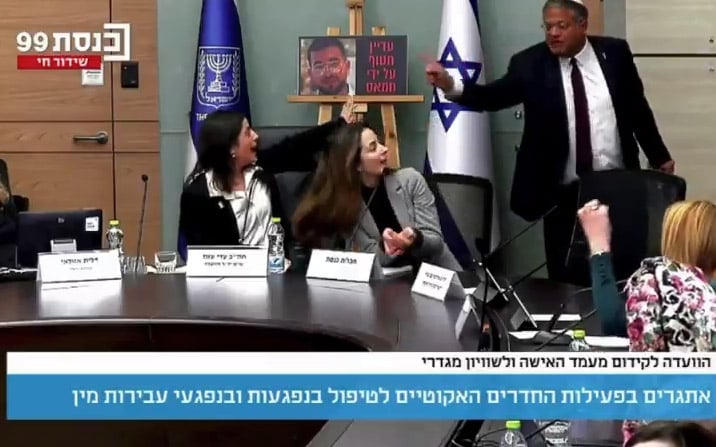
National Security Minister Itamar Ben Gvir storms out of a meeting of the Knesset Committee for the Advancement of the Status of Women and Gender Equality on December 31, 2025. (Screenshot/X)
National Security Minister Itamar Ben Gvir accuses the Knesset Committee for the Advancement of the Status of Women and Gender Equality of “harming police officers” without providing evidence, after making a rare and unexpected appearance at a committee meeting on victims of sexual violence.
The far-right minister says that he is attending “for one reason: because you have hurt our representatives.” The charge prompts outrage from the committee members, who demand an explanation.
“I’m giving you a chance — police and [ministry] representatives will attend today, and I’m asking you not to harm them,” he continues, ignoring and speaking over committee members.
Acting committee chair Yesh Atid MK Adi Azuz, an opposition lawmaker, accuses Ben Gvir of derailing the session, asking, “Did you come here to provoke or to help? Forty-six women have been murdered since the beginning of the year.”
“You haven’t done what I’ve done in the last three years,” the minister retorts, declining to elaborate.
There has been a sharp uptick in femicide cases in Israel, with 32 instances recorded this year, in addition to 12 more women murdered in non-femicide-related cases, according to an annual report published last month by the Israel Observatory on Femicide.
Femicide refers to the intentional murder of women or girls because of their gender.
Despite that spike, Ben Gvir has been boycotting opposition-led Knesset committees, including this one, and committee members have accused him of ordering representatives from his ministry and police not to cooperate with the panel.
“Finally, he comes because we’re petitioning the courts over the fact that not only does he refuse to cooperate with the committee or participate, but he prevents representatives from his ministry from doing so,” regular chair Meirav Cohen of Yesh Atid says.
She recently submitted a pre-petition warning to the High Court over Ben Gvir’s “illegal instruction” to Israel Police, Prison Service, and National Security Ministry representatives to boycott committee meetings.
IDF must be ready for ‘surprise war,’ Central Command chief warns after snap inspection

Head of IDF Central Command Maj. Gen. Avi Bluth conducts a surprise inspection of units in the West Bank, December 30, 2025. (Israel Defense Forces)
Head of Central Command Maj. Gen. Avi Bluth warns that the military must remain prepared for the possibility of a sudden outbreak of war, following a surprise inspection of units in the West Bank yesterday, the IDF says.
“The baseline scenario we must prepare for is readiness for a surprise war,” Bluth says at the conclusion of the inspection. “We are required to maintain a high level of preparedness and alertness, while using the time to strengthen our professional foundations.”
According to the military, the surprise inspection examined the readiness of three battalions across three brigades and two regional divisions, including the implementation of procedures, outpost defenses and the fitness of forces to operate in both routine and emergency scenarios.
Bluth said inspections are “a vital tool” for maintaining operational readiness, allowing commanders “to identify gaps before they become root problems, learn, refine processes and continuously improve the readiness of our forces – in routine [times] and during an emergency.”
The findings of the inspection will be used to sharpen standards and strengthen preparedness across the Central Command, which is responsible for the West Bank and areas of central Israel, the IDF says.
Yesh Atid accuses government of trying to delay court ruling on freeze of ultra-Orthodox school funds
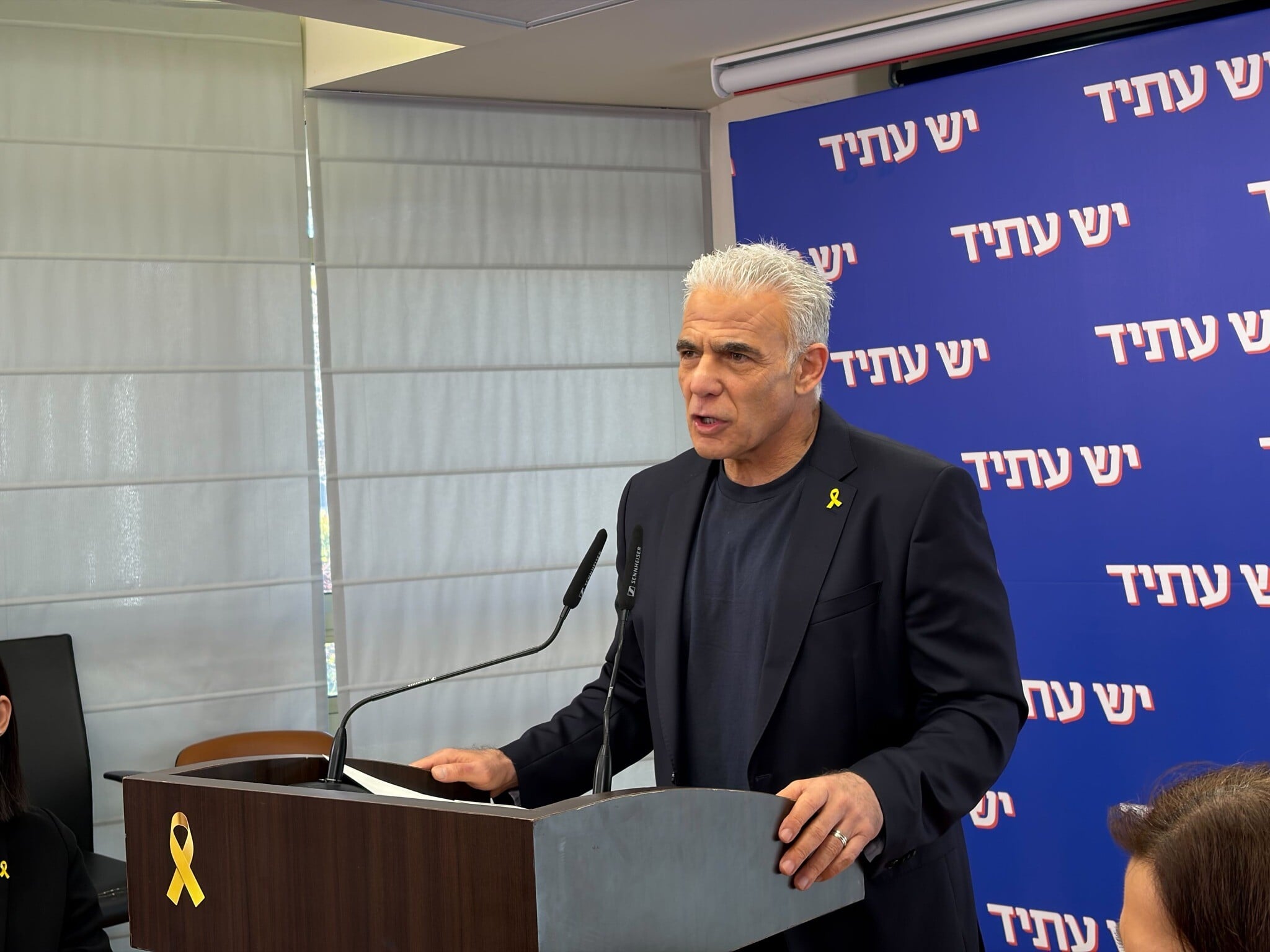
Opposition Leader Yair Lapid addresses a weekly Yesh Atid faction meeting in the Knesset, on December 29, 2025. (Sam Sokol/ The Times of Israel)
Yesh Atid accuses the government of purposely dragging out its response to the party’s High Court petition that sought to block the transfer of additional state funds to ultra-Orthodox schools.
The party, helmed by Opposition Leader Yair Lapid, claims the delay was geared toward enabling the government to move some of the funds before any judicial decision.
Yesh Atid’s petition had sought an “urgent interim injunction” against the transfer of roughly NIS 1 billion ($314 million) from the remainder of the 2025 state budget to ultra-Orthodox educational institutions.
The High Court of Justice gave the government until 8 a.m. today to respond to the petition.
The government requested an extension earlier today to respond to the petition and “committed that until a High Court ruling is issued, it would halt any further transfers of funds to Haredi educational institutions that are unsupervised and in violation of the law.”
Yesh Atid, however, says this response reflects a dishonest tactic: “While the petitioners were waiting for a response from the State, the latter acted to establish ‘facts on the ground,’ and some of the funding had already been transferred to ultra-Orthodox educational institutions,” the party says.
In response, the party says that it “requests that the High Court give its opinion regarding the state’s response to the petition.”
The petition addressed last week’s Knesset Finance Committee approval of NIS 786 million ($247 million) to school networks affiliated with the ultra-Orthodox Shas and United Torah Judaism parties, and NIS 136 million ($43 million) to so-called “recognized but unofficial” schools, which are supposed to teach 75 percent of the state-directed core curriculum but often do not.
EU says Israel suspending Gaza charities would block ‘life-saving aid’
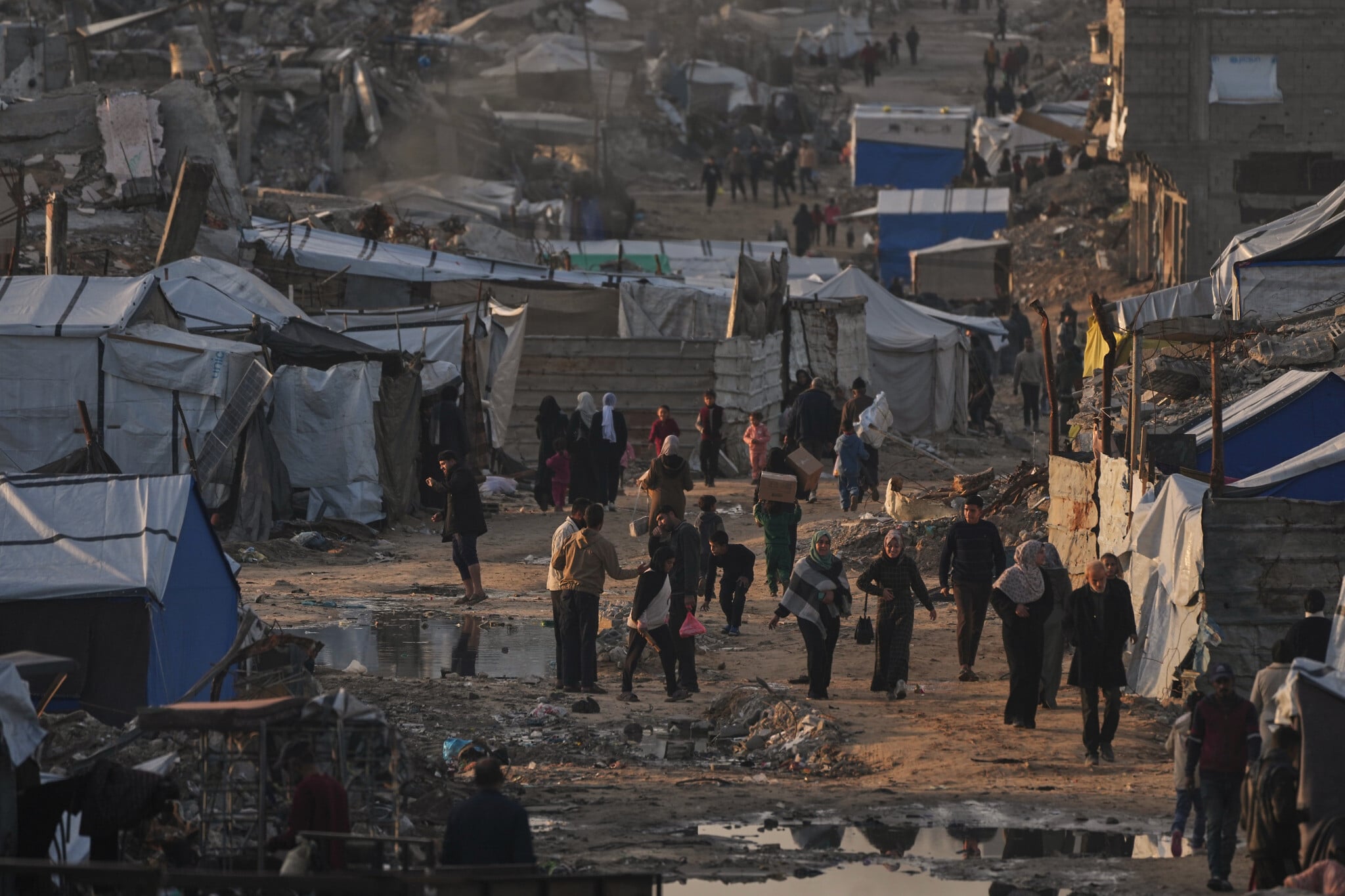
Palestinians walk along a street past a tent camp surrounded by buildings destroyed during the Israel-Hamas war in Gaza City, December 30, 2025. (AP/Jehad Alshrafi)
The EU warns that Israel’s revocation of the licenses of 37 international nonprofits operating in Gaza and the West Bank will block “life-saving” assistance from reaching Gaza’s population.
“The EU has been clear: the NGO registration law cannot be implemented in its current form,” EU humanitarian chief Hadja Lahbib posts on X, after Israel said the groups would be barred for not complying with stringent new requirements to register with the government.
“IHL (international humanitarian law) leaves no room for doubt: aid must reach those in need,” Lahbib wrote.
Organizations had until December 31 to register under the new framework, which Israel says aims to prevent “hostile actors or supporters of terrorism” operating in the Palestinian territories, rather than to impede aid.
The Diaspora Ministry announced yesterday that organizations that “refused to submit a list of their Palestinian employees in order to rule out any links to terrorism” had received notice that their licenses would be revoked as of January 1, with an obligation to cease all activities by March 1.
The list includes multiple branches of Doctors Without Borders and Oxfam, the Danish and Norwegian Refugee Councils, Caritas Internationalis, an umbrella for Catholic charities, the Quaker-founded American Friends Service Committee and the International Rescue Committee.
Several groups said the new rules will have a major impact on aid distribution in Gaza, with humanitarian organizations saying the amount of aid entering Gaza remains inadequate amid crises caused by winter rains
The Defense Ministry said the expiration of the licenses will not affect aid provision in Gaza.
‘Back to Oct. 6’: Defense Ministry director says Finance Ministry stiffing IDF, ‘playing games’
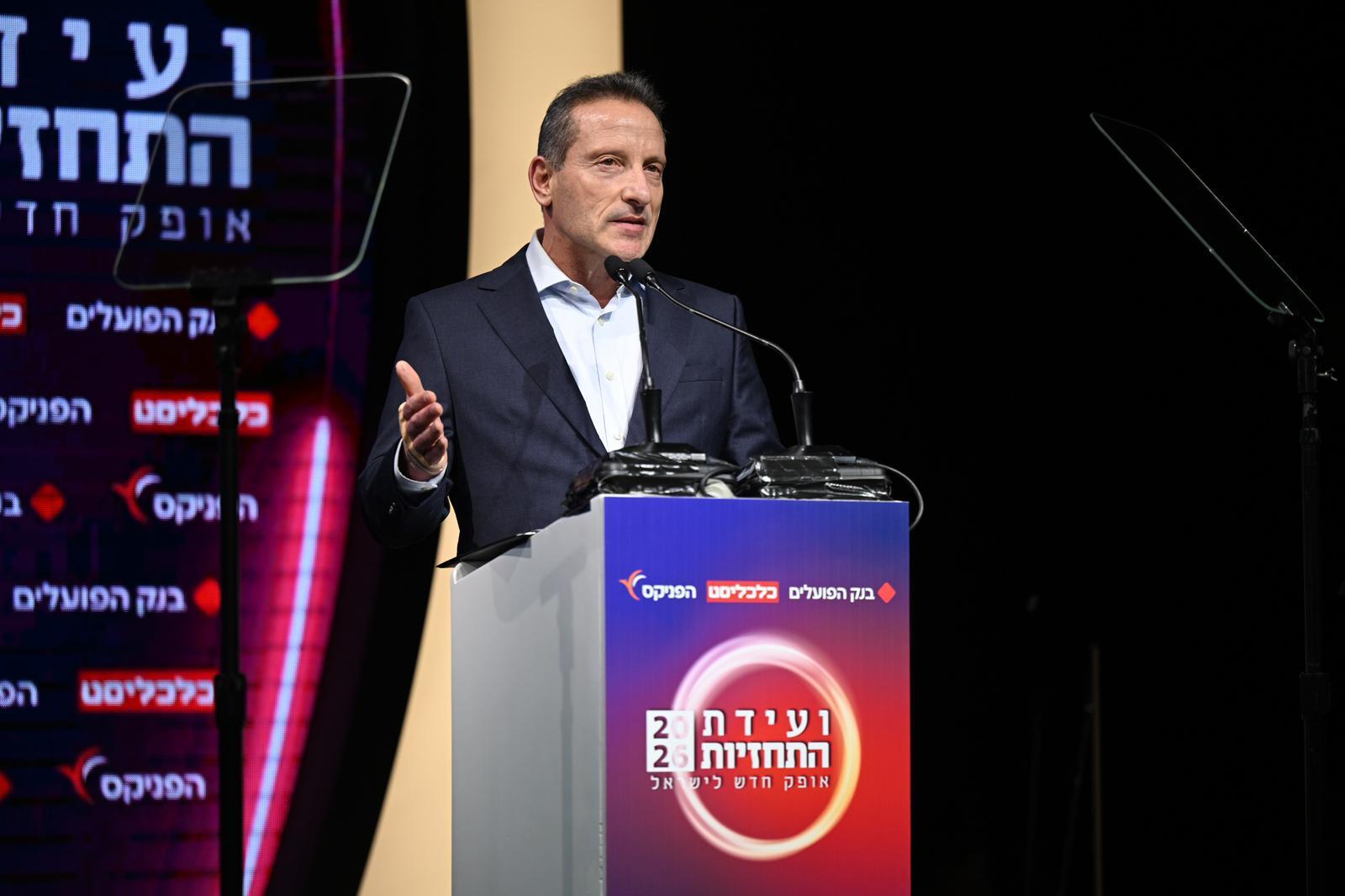
Defense Ministry Director General Amir Baram speaks at a forecast conference hosted by business newspaper Calcalist, December 31, 2025. (Defense Ministry)
Defense Ministry Director General Amir Baram warns that Israel has slipped back into flawed prewar economic thinking, arguing that current budgetary frameworks are insufficient to meet the country’s security challenges, according to a statement from the Defense Ministry.
“We went back too quickly to October 6,” Baram says, referring to the period before Hamas’s shock October 7, 2023, onslaught, at a forecast conference hosted by business newspaper Calcalist. “We are certainly not at the correct operating point in terms of funding volumes and cash flow, at the pace and scale required for the IDF.”
Baram accuses the Finance Ministry of knowingly underbudgeting defense needs while placing expanding demands on the military.
“The budget framework agreed for 2026 is NIS 112 billion [roughly $35 billion]. The Finance Ministry knows that the ‘operational framework’ – the total scope of missions that the political echelon imposes or is expected to impose on the IDF – will be far larger,” he says.
He continues, “What does it do? It ‘plays games’ with the defense establishment… consistently underbudgets, drags the industries into debt, and then accuses the IDF of alleged overruns – overruns that are clearly inevitable.”
He warns that under the current budgeting method, “which has not fundamentally changed from what was practiced before October 7,” Israel would fail to meet the pace of force buildup required for future conflicts.
While noting that the intensity of fighting has declined and that Israeli technology has produced “very significant achievements,” Baram stresses that “even now, all arenas remain open,” and says Israel must prepare for prolonged, multifront conflicts rather than short, limited rounds of fighting.
Baram says the Defense Ministry is pushing to expand domestic production capacity and boost defense exports, arguing that such investments would strengthen both national security and the Israeli economy in the long term.
Chikli calls High Court’s Amit a ‘clown,’ joins calls for government to defy rulings
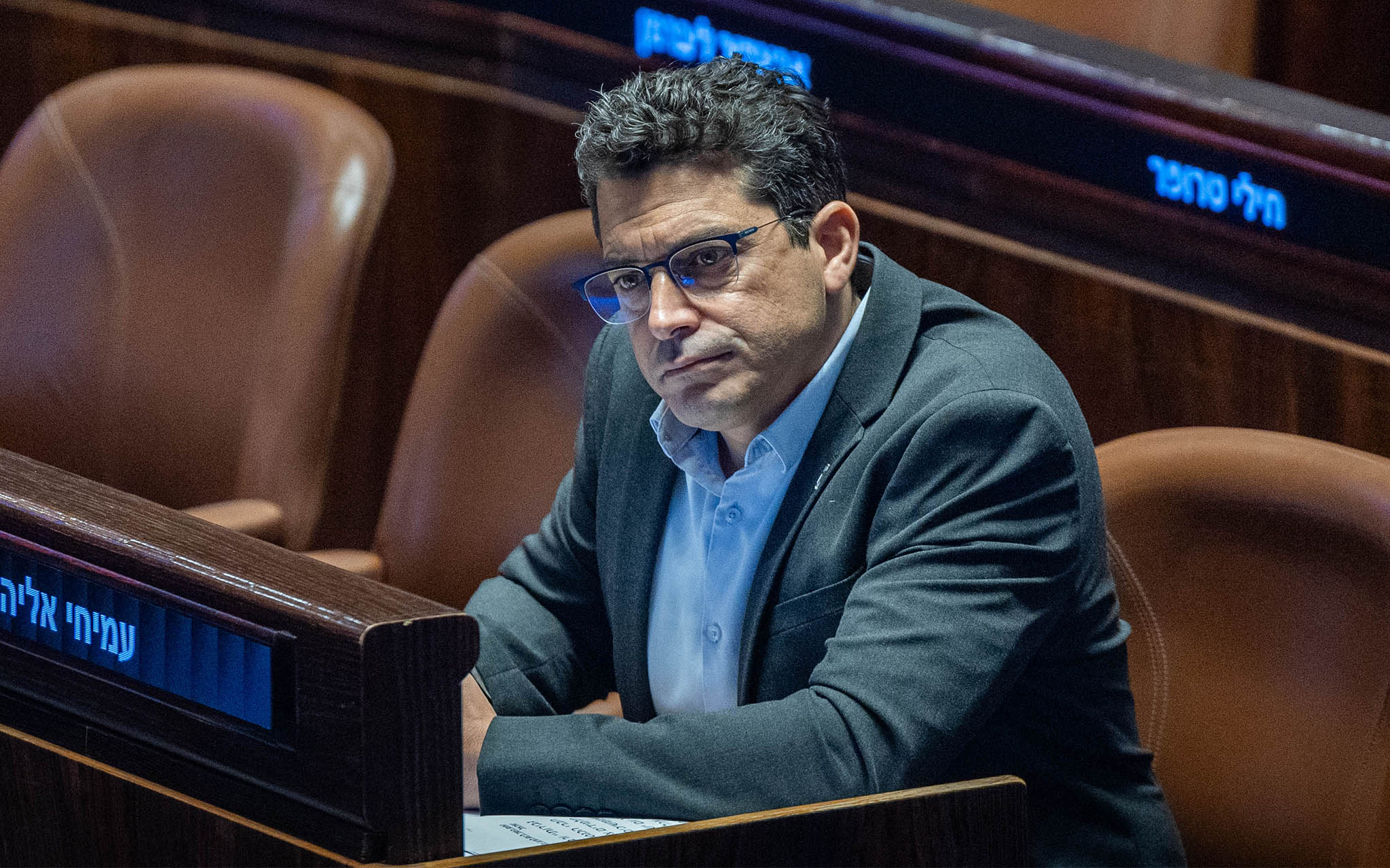
Diaspora Affairs Minister Amichai Chikli attends a session at the Knesset in Jerusalem, May 7, 2025. (Yonatan Sindel/Flash90)
Diaspora Affairs Minister Amichai Chikli urges the government to disobey court rulings, joining those who have echoed comments made by Finance Minister Bezalel Smotrich in his recent attack on Supreme Court President Isaac Amit.
“The Supreme Court, headed by the clown Isaac Amit, is turning into a circus,” writes Chikli in a post on X. “I call on the prime minister and justice minister to state clearly and unequivocally that any ruling issued without being based in Knesset legislation will not be respected.”
Smotrich was widely accused of inciting against Amit when he vowed on Monday to “trample” him, after which the Supreme Court president accused the finance minister of crossing a “red line.”
Communications Minister Shlomo Karhi later called for Smotrich’s comments “to be put into action,” and similarly urged the government to openly defy rulings by the High Court. Smotrich then doubled down on his statement while saying he wasn’t calling for violence.
In his post, Chikli condemns a series of recent court rulings freezing or striking down government legislation, including today’s interim order barring State Comptroller Matanyahu Englman from continuing his investigation into the failures surrounding the October 7, 2023, Hamas-led onslaught.
“The Supreme Court has no legal authority to invalidate the work of the state comptroller, who operates as an independent authority under Basic Law!!!” writes Chikli.
He also rails against the court’s decision on Sunday to temporarily freeze the government’s controversial proposal to shutter Army Radio, and its unanimous decision earlier this month to annul the government’s firing of Attorney General Gali Baharav-Miara. His comments come amid the government’s years-long effort to weaken the courts through a controversial judicial overhaul, which critics have called a threat to democracy.
Ben Gvir calls on Shin Bet to launch operation alongside police in southern Bedouin town
National Security Minister Itamar Ben Gvir calls on the Shin Bet to start operating in Tarabin al-Sana, a southern Bedouin town that has been subject to a days-long police raid.
He also threatens to “thrash” criminals in the town.
Last night, cars were set alight in Lehavim, a nearby Jewish town, in what police suspect was an act of revenge arson by Bedouin residents amid the ongoing crackdown.
Speaking to reporters at the entrance to the village, he claims that the new Shin Bet chief, David Zini, agrees with him that the incident is “terror in every sense.”
Hundreds of police entered the Bedouin town Monday, following a similar arson incident in Giv’ot Bar and Mishmar Hanegev.
He says that there has been a “change” since Zini began leading the security agency. “The Shin Bet now goes down to the Negev and operates in towns like these, but I want the Shin Bet and police to be here 100%,” he declares.
Ben Gvir on another "governance tour" in Tarabin al-Sana amid days-long police raid on Bedouin town pic.twitter.com/lHsM1TJrg7
— charlie summers (@cbsu03) December 31, 2025
He says that criminals have only one option, “to raise a white flag” amid the ongoing operation. “I don’t intend to blink,” he says. “I say to everyone who is law-abiding, there is nothing to fear, but to everyone who isn’t law-abiding, we will thrash you.”
Under heavy security, the far-right minister tours the town, flanked by members of the National Guard, a force within the Border Police.
Levin says Supreme Court decisions ‘have nothing to do with the law,’ slams planned ‘extremist’ conference
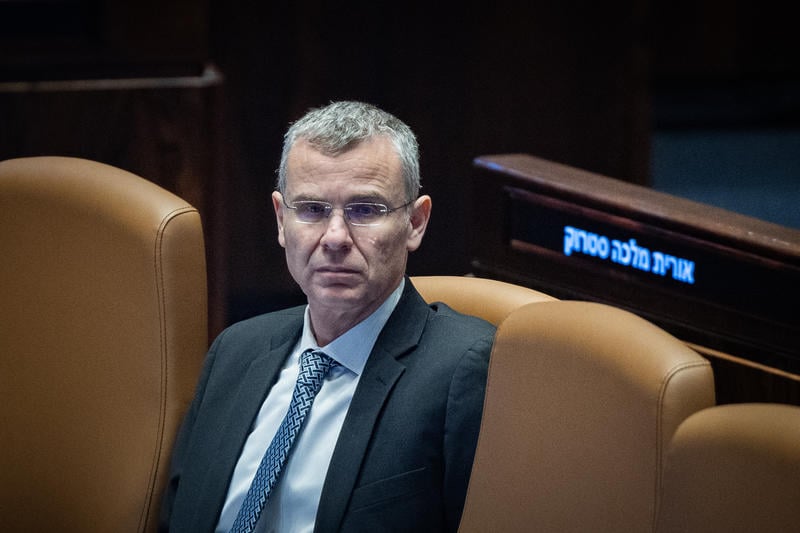
Justice Minister Yariv Levin attends a plenum session at the assembly hall of the Knesset in Jerusalem, May 7, 2025. (Yonatan Sindel/Flash90)
Justice Minister Yariv Levin claims that decisions made by the Supreme Court are all political, motivated by “extremist” positions, and “have nothing to do with the law,” the latest attack on the court from the cabinet.
In a tirade against the court and the larger Israel Courts Administration, Levin denounced a seminar set to be held in the Supreme Court building in January entitled “Educating for Democracy” as an “extremist political conference,” since the two speakers at the event are both politically left-wing, according to the justice minister.
The event is set to be staged by the Israel Courts Heritage Museum, located in the Supreme Court building, with Supreme Court President Isaac Amit and his predecessor Esther Hayut there. Amit will deliver opening remarks.
One of the speakers is Asa Kasher, a renowned Israeli philosopher and Israel Prize laureate who authored the IDF’s code of conduct.
Levin noted that Kasher has said that it was “impossible to bear the Haredi dictatorship” and described the Haredi community as “an economic parasite,” remarks that Levin said were “racist” and constitute “incitement.”
The second speaker is Uki Maroshek-Klarman, executive director of the Adam Institute for Democracy and Peace, whom Levin denounced for what he said were her associations with left-wing organizations, as well as for sharing posts denouncing Israeli military action in Gaza that harmed civilians and calling for military service refusal during the war against Hamas.
“The majority of Israeli citizens today understand that the decisions of the Supreme Court are made from a political place, are motivated by an extremist worldview, and have nothing to do with the law,” charged Levin.
He denounced the court for excluding right-wing voices from the “extremist conference,” and called on the Court’s Administration to cancel the event.
The Judicial Authority rejected Levin’s characterization of the seminar as political as “a false and misleading claim.” It pointed out that the Adam Institute was recognized as an educational institution by the Education Ministry, and said the seminar “aims to educate for shared values and deepen understanding of the fundamental principles on which the State of Israel is based as a democratic state.”
In Bedouin town, Ben Gvir says police will ‘thrash’ minors who throw stones
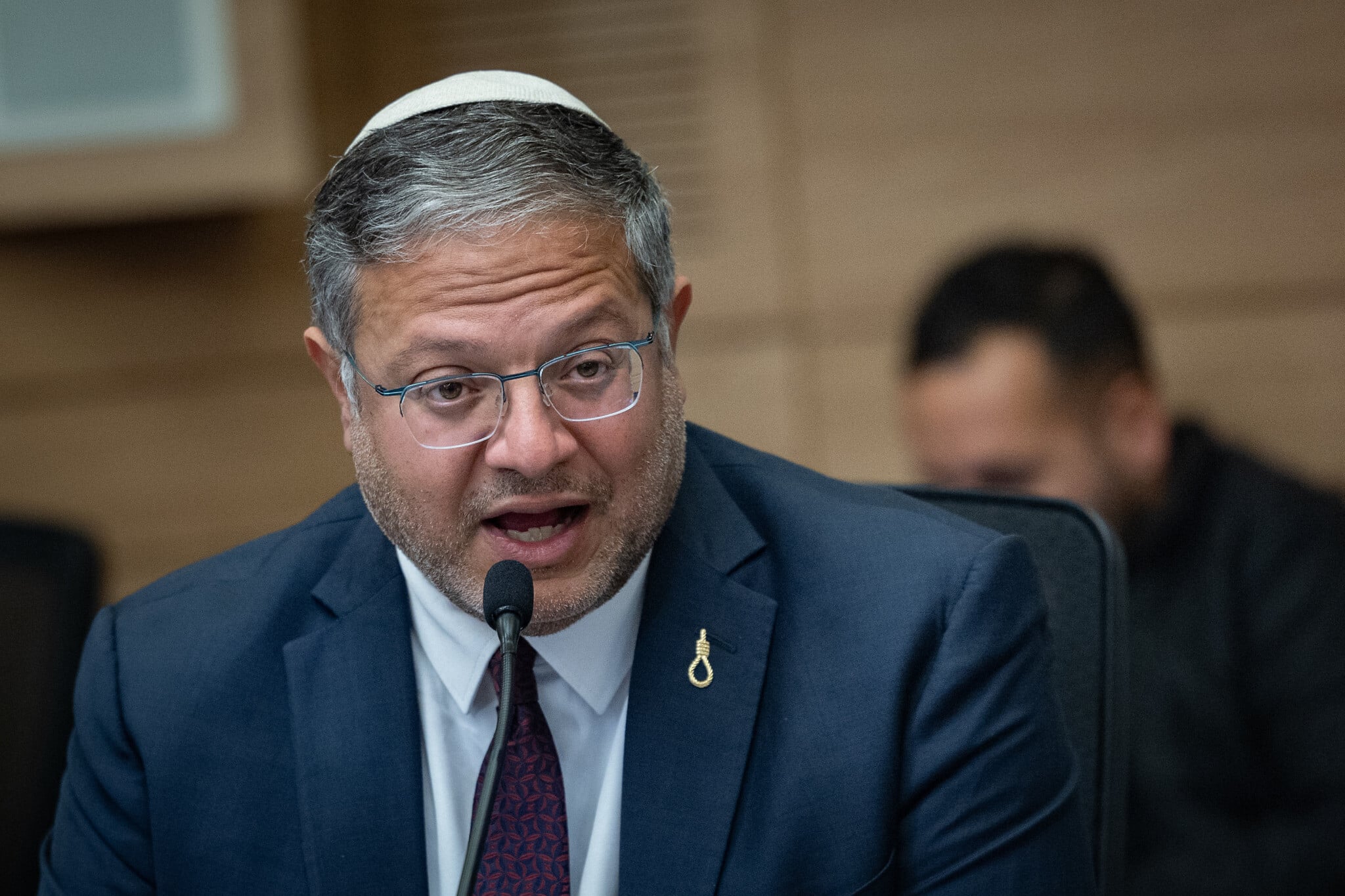
National Security Minister Itamar Ben Gvir attends a National Security Committee meeting at the Knesset on December 31, 2025. (Chaim Goldberg/Flash90)
National Security Minister Itamar Ben Gvir addresses reports of police arresting young children during an ongoing raid on Tarabin al-Sana, a Negev Bedouin town, by saying police will “thrash” offenders.
“If a minor throws a stone, he needs to be dealt with harshly. A stone is a stone; stones kill,” he says, in response to a question from The Times of Israel.
He says that “even if a 14-year-old boy threw it, a stone can kill. I won’t let them touch a hair on the heads of our fighters.”
“Even a minor, if he throws a stone, they [law enforcement] will thrash him,” he vows.
Yesterday, residents in the Bedouin town reported that officers had arrested children as young as eight without informing parents of their whereabouts.
The age of criminal responsibility in Israeli law is 12.
Police yesterday said that they have so far arrested 24 suspects on various offenses there since Monday, including four minors for stone-throwing.
More than 69,000 Israelis left Israel in 2025, as population reached 10.18 million

Travelers at Ben Gurion International Airport, October 23, 2025. (Nati Shohat/Flash90)
More than 69,000 Israelis left the country in 2025 under the shadow of Israel’s wars with Gaza and Iran, with the country experiencing a negative migration balance for the second straight year, the Central Bureau of Statistics says in a year-end report.
Despite this, Israel’s total population reached a record 10.178 million residents by the end of the year, about 112,000 more than last year. The population includes 7.771 million Jews and others (a category that includes non-Arab Christians and other people not defined by religion), representing 76.3 percent of the total population, and 2.147 million Arabs, or 21.1% of the populace. An additional 260,000 people, roughly 2.6%, are classified as foreigners.
The CBS says 24,600 new immigrants arrived in 2025, about 8,000 fewer than in 2024. It is a slightly different figure from the 21,900 the Immigration and Absorption Ministry announced on Monday.
Meanwhile, some 19,000 Israelis returned to Israel after extended stays abroad, and 5,500 people arrived for family reunification. That brought the total migration balance to a net loss of about 20,000 people, the CBS says.
In 2024, a whopping 82,700 Israelis left the country, about 50,000 more than moved to Israel. Throughout most of the State of Israel’s history, there have been more Jews moving to Israel than leaving it, with the exception of certain periods in the 1950s and 1980s, demographers have noted. Both of those decades saw economic hardship.
Natural growth remained the primary driver of population increase, with 182,000 births recorded in 2025. Approximately 76% of those births were to Jewish mothers and 24% to Arab mothers. Meanwhile, 50,000 residents died during the year, a slight decrease from the 52,000 deaths recorded in 2024.
New bill seeks to give Israel authority over antiquities in West Bank’s areas A and B
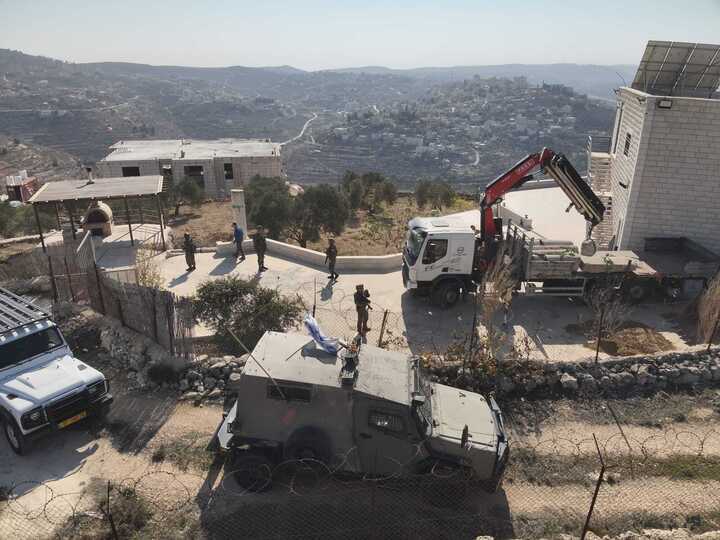
The Civil Administration seizes dozens of archaeological artifacts from the Burj Lasana archaeological site north of Ramallah in the West Bank on December 4, 2025. (COGAT)
A new version of a bill seeks to give Israel power over antiquities and archaeological sites in the West Bank’s Areas A and B, which are governed to varying extents by the Palestinian Authority.
The bill’s lead sponsor, Likud MK Amit Halevy, also sought to include the Gaza Strip in the bill’s purview, according to a publicly available text of the bill.
The first clause of the bill states that “the purpose of this Law is to establish the direct responsibility of the State of Israel for the care of antiquities, heritage and archaeological sites in Judea and Samaria,” the biblical name of the West Bank.
The second clause describes the geographical scope of the law as “the Judea and Samaria area” and adds in parentheses that, “at this stage, the proposed law shall apply to Areas A, B, and C.”
Under the 1993 Oslo Accords, the PA was to have full security and civil control over Area A, and civil control over Area B. Area C — comprising the majority of the West Bank — is under full Israeli control.
The notes attached to the clause explain that “the proponent [Halevy] seeks to apply the authority under the proposed law also to the areas of the Gaza Strip.”
Under the Oslo Accords, Israel’s involvement in West Bank antiquities is only supposed to extend to Area C. Currently, the body responsible for antiquities is the Staff Officer of the Archaeology Unit of the Civil Administration, a branch of the Defense Ministry’s Coordinator for Government Activities in the Territories (COGAT).
At the moment, under a ceasefire signed in October, Israel has control over 53% of the Gaza Strip, which is mostly empty of civilians. The other half of the enclave is under de facto Hamas control.
The original version of the bill proposed that the Israel Antiquities Authority (IAA) oversee antiquities in the West Bank. The IAA, however, opposed the move, and as a result, the bill has been rewritten to create a new Israeli civilian body for the purpose.
During a meeting of the Education and Culture Committee to discuss the bill today, only the first clause was presented.
Iranian authorities say government building attacked in south
Several people attacked and damaged a provincial governor’s office in southern Iran today, according to authorities quoted by the justice ministry’s Mizan agency, after days of protests over the economy.
“A portion of the provincial governors’ office door and its glass were destroyed in an attack by a number of people,” says Hamed Ostovar, the head of Fasa city’s judiciary, as quoted by Mizan, without specifying how the attack was carried out.
Fasa is located 780 kilometers (485 miles) south of the capital Tehran, where a spontaneous movement against the high cost of living broke out on Sunday among shopkeepers before spreading to some universities.
Nonprofits slam Israeli revocation of West Bank, Gaza licenses; Catholic org vows to keep operating
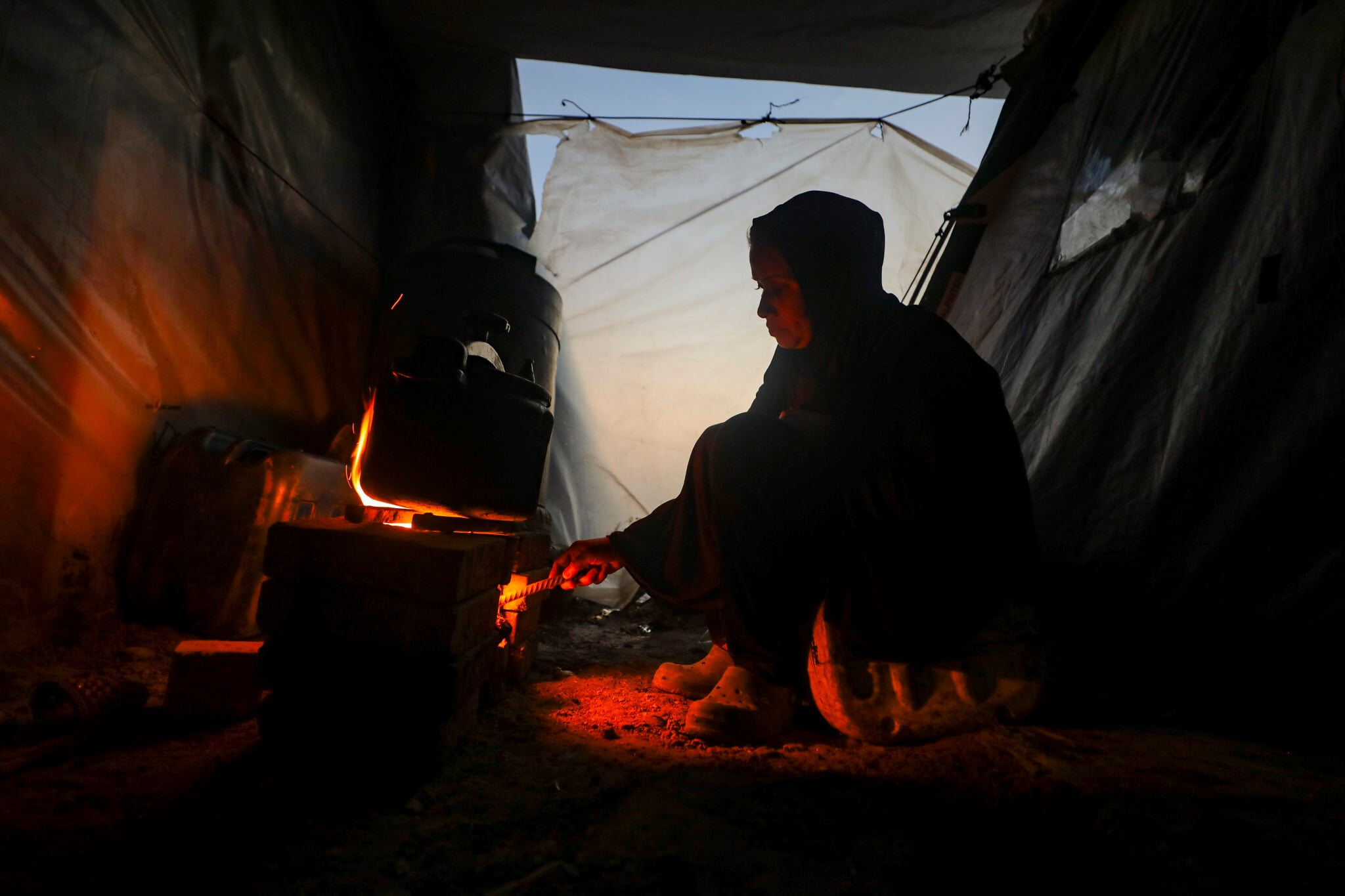
Palestinians warm themselves and cook over a bonfire in the Bureij area in the central Gaza Strip, December 30, 2025. (Ali Hassan/Flash90)
Caritas Jerusalem will continue to operate in Gaza, West Bank, and Jerusalem, a spokesperson of the Latin Patriarchate of Jerusalem says in a statement, one day after the Diaspora Affairs Ministry announced that the licenses of 37 international nonprofits will expire on January 1 because the groups did not comply with stringent new requirements to register with the government.
Other nonprofit groups and international organizations slammed the license revocation as well, saying it endangers aid provision during a precarious winter in Gaza.
Israeli authorities maintain that the new regulations are necessary due to what they say are findings by the security services that some nonprofit organization workers have been involved in terrorist activities. Israel has accused terror groups of diverting aid.
According to the statement from the Latin Patriarchate of Jerusalem, which represents the Catholic Church, Caritas Jerusalem’s “status and mission have been recognized by the State of Israel through” two foundational agreements signed in the 1990s “between the Holy See and the State of Israel.”
The statement acknowledged that the group “has not undertaken any re-registration process with the Israeli authorities.”
“Caritas Jerusalem will continue its humanitarian and development operations in Gaza, the West Bank, and Jerusalem, in accordance with its mandate,” the statement further reads.
Caritas Internationalis, the umbrella Catholic humanitarian group that brings together over 160 associations worldwide, is likewise included on the list of organizations set to be banned.
The list also includes chapters of Doctors Without Borders, Oxfam, the International Rescue Committee, and Refugees International.
“This action has no legitimate basis, and as such, constitutes a violation of the intent of the Trump-brokered cease-fire agreement,” Refugees International says in a statement, referring to the October ceasefire in Gaza backed by US President Donald Trump. “The suspension is not motivated by a sincere desire to prevent diversion of aid; it is a pretext to further restrict aid to Gaza while silencing independent aid organizations.”
“This action will cost the lives of Palestinians,” it warns.
Hamas says 1 killed by IDF gunfire, 2 by structural collapse over past 48 hours
Hamas’s health ministry says in a 2 p.m. report that Gaza hospitals have received the body of one person killed by IDF gunfire over the past 48 hours, as well as two bodies of Gazans killed before that period.
The ministry does not identify the people or specify where or when they were killed.
Palestinian media reported yesterday that the body of an 11-year-old girl, Dana Muqat, was brought to Gaza City’s Shifa Hospital after she was shot dead by the IDF on the Hamas-controlled side of the Gaza ceasefire line in Gaza City’s eastern Tuffah neighborhood. The IDF has not commented on the reports.
استشهاد الطفلة "دانا حسين مقاط" برصاص الاحتلال الصهيوني في منطقة الزرقا، قرب حي التفاح، شمال شرق مدينة #غزة. pic.twitter.com/RGTxWXvO1d
— Talal Ibrahim (@Talal81ibrahim) December 31, 2025
Gaza hospitals have also received 10 people wounded by IDF gunfire over the past 48 hours, the Hamas health ministry says. It does not specify where the people were wounded or the severity of their injuries.
In addition, two people, including a 4-year-old girl, have been killed by structural collapse due to heavy rainfall since noon on Monday, according to the Hamas ministry. It does not say where or precisely when they were killed.
Palestinian media reported yesterday that a young girl, Eilaf Barbakh, was killed and three others wounded last night after a wall collapsed on tents housing displaced Palestinians next to the Red Cross hospital near Rafah.
استشهاد طفلة وإصابة عدد من النازحين إثر انهيار جدار على خيام النازحين قرب مستشفى الصليب الأحمر الميداني في مواصي مدينة رفح، جنوب قطاع #غزة pic.twitter.com/9jd2OZq3Jt
— Talal Ibrahim (@Talal81ibrahim) December 31, 2025
A man was also said to have been killed Monday afternoon from the collapse of a wall on a tent in Tel al-Hawa, in southern Gaza City. The man could not immediately be identified.
In total, 19 Gazans have been killed by structural collapse due to heavy rainfall this winter, the Hamas ministry says.
Hamas’s civil defense agency has warned displaced Palestinian not to shelter from the rain in buildings damaged by bombing.
The UN reported in October that over half of Gaza’s structures were destroyed in the war between Hamas and Israel, and that roughly 40% of the remaining structures are severely or moderately damaged.
Hundreds of thousands of displaced Gazans face flooding of their tents and shelters by heavy rains, and aid groups charge that materials for shelters and sandbags are not being allowed to enter the enclave.
COGAT, the Israeli Defense Ministry body that oversees aid to Gaza, has denied the allegations, saying it has let in hundreds of thousands of tents and tarpaulins and is waiting for international organizations to let in close to 100,000 pallets of “water-related items.”
Sydney brings in New Year with nod to victims of Bondi terror attack

Fireworks burst over the Sydney Harbour Bridge as New Year's celebrations begin in Sydney, December 31, 2025. (AP/Rick Rycroft)
Sydney begins 2026 with a fireworks display held under an enhanced police presence, weeks after terrorists killed 15 people at a Hanukkah celebration event in the city.
Sydney’s annual New Year’s Eve celebrations are known globally for their spectacular fireworks, with 40,000 pyrotechnic effects stretching seven kilometers (four miles) across buildings and barges along its harbor, including the city’s iconic Harbour Bridge and Opera House.
At this year’s ceremony, organizers hold a minute of silence for the victims of the attack at 11 p.m. local time (2 p.m. Israel time), with the Harbour Bridge lit up in white and a menorah projected onto its pylons.
“After a tragic end to the year for our city, we hope that New Year’s Eve will provide an opportunity to come together and look with hope for a peaceful and happy 2026,” Sydney’s Lord Mayor Clover Moore says ahead of the event.
Traditional Christmas celebrations at Bondi were likewise muted this year, and several New Year events planned there were canceled.
Around 3,000 police, some carrying long arms, are deployed in the city during the main New Year celebrations, which typically attract over a million revelers.
“We have to show defiance in the face of this terrible crime and say that we’re not going to be cowed by this kind of terrorism, and we’re not going to change the way we live our life in our beautiful city,” New South Wales Premier Chris Minns says.
Knesset approves bill designating day to commemorate Moroccan Jewish immigration
The 23rd day of the Hebrew month of Tevet will be marked as a national day to commemorate the immigration of Moroccan Jews to Israel and remember those who perished on the way, according to a bill approved in Knesset today.
The date corresponds with the January 10, 1961, sinking of the “Egoz” ship, which was carrying 44 Moroccan Jews immigrating to Israel in a clandestine voyage organized by the Mossad intelligence agency.
Rough weather had caused the ship’s hull to crack. The bodies of 22 of those on the boat are buried at the Mount Herzl cemetery in Jerusalem, while the other corpses were never found.
According to the bill, sponsored by Shas faction chairman MK Yinon Azoulay, schools will teach about the heritage of Moroccan Jewry on that day, and a special session will be held in Knesset.
Following the vote, Shas chairman Aryeh Deri calls it “the closing of a circle for the glorious Moroccan community.”
“The time has come for the State of Israel to remember and cherish our dear parents and grandparents, who gave their lives to immigrate to the Land of Israel and continue the tradition and legacy of our father’s house,” Deri says.
אני גאה ושמח שאישרנו היום בכנסת את החוק של ש״ס, לציון עליית יהודי מרוקו ולהנצחת אחינו שנספו בדרכם לארץ ישראל.
זהו רגע של סגירת מעגל אישית ולאומית – הוקרה להורים ולסבים שלנו שמסרו נפש כדי להגיע לארץ ולשמור בה על המסורת ומורשת בית אבא. pic.twitter.com/EOaxRRl1yA— אריה מכלוף דרעי (@ariyederi) December 31, 2025
Comptroller says he’ll obey court freeze of his Oct. 7 probe, but insists his work ‘objective’
State Comptroller Matanyahu Englman says his office will abide by a High Court of Justice order to freeze his inquiry into core aspects of the failures surrounding the events of the October 7, 2023, Hamas invasion and atrocities, and refrain from publishing his findings.
He insists, however, that despite allegations in petitions against his probe, the work being done by his office is “independent and objective,” and said his office was a key institution for reviewing the functioning of the government and its agencies.
“The state comptroller is at present the only state agency that has worked to bring the truth to light and provide answers to Israeli citizens about the October 7 failure. Without the public release of the reports, failings will not be corrected – including failings that, if corrected, could save lives,” he adds.
Petitioners against the state comptroller’s inquiry have argued that his methods are flawed and in particular he has failed to interview key subjects of his probe, harming their rights. They have also argued that investigating a catastrophe such as the October 7 attacks, the worse invasion ever suffered by the State of Israel, is beyond the scope of the comptroller’s duties, and will harm and taint any future, independent investigation.
UN rights chief slams ‘outrageous’ Israel suspension of aid groups in Gaza
The United Nations rights chief described Wednesday Israel’s threat to suspend dozens of aid groups from operating in Gaza from January as “outrageous,” calling on states to urgently insist Israel shift course.
“Israel’s suspension of numerous aid agencies from Gaza is outrageous,” Volker Turk says in a statement.
“Such arbitrary suspensions make an already intolerable situation even worse for the people of Gaza,” he warns.
“This is the latest in a pattern of unlawful restrictions on humanitarian access,” Turk says, pointing to Israel’s ban on the UN agency supporting Palestinian refugees, UNRWA, and “attacks on Israeli and Palestinian NGOs amid broader access issues faced by the UN and other humanitarians.”
“I urge all States, in particular those with influence, to take urgent steps and insist that Israel immediately allows aid to get into Gaza unhindered,” he says.
The UN High Commissioner for Human Rights says he wants to “remind the Israeli authorities of their obligation under international law to ensure the essential supplies of daily life in Gaza.”
This, he stresses, includes “allowing and facilitating humanitarian relief.”
The Diaspora Affairs Ministry announced Tuesday that the licenses of 37 international nonprofits operating in Gaza and the West Bank that did not comply with stringent new requirements to register with the government will expire on January 1.
The Defense Ministry said the expiration of the licenses will not affect aid provision in Gaza, where humanitarian groups continue to claim Israel is letting in too little assistance. The Diaspora Ministry described the new rules, instituted in March, as a safety measure meant to weed out nonprofit workers with ties to terror groups.
Israel begins razing 25 residential buildings in West Bank camp
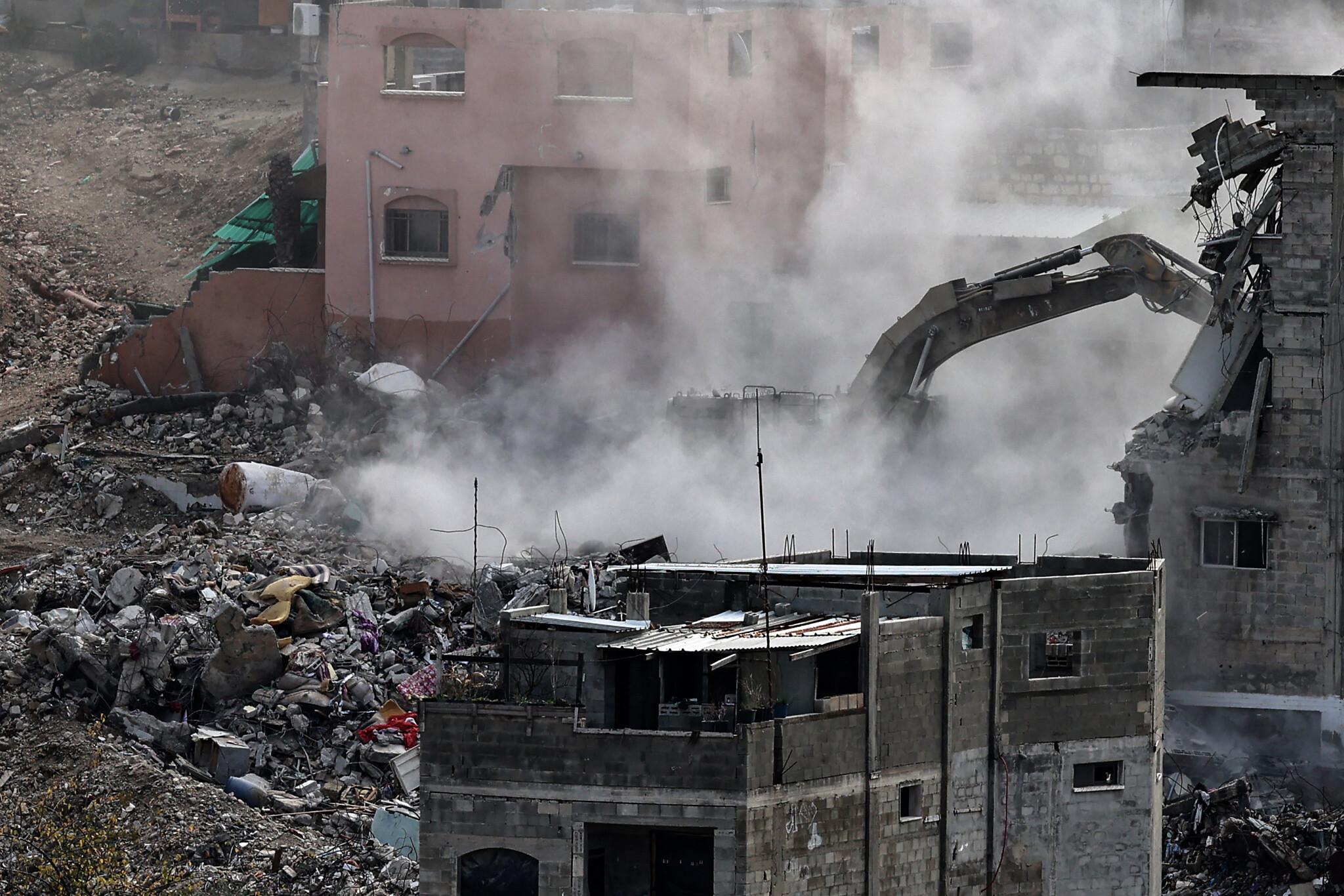
An Israeli military excavator tears down one of 25 residential buildings earmarked for demolition in the Nur Shams camp Palestinian refugees east of the northern West Bank city of Tulkarem, amid an ongoing offensive on December 31, 2025. (Photo by Zain JAAFAR / AFP)
Israeli bulldozers have begun demolishing 25 buildings housing Palestinians in a refugee camp, in what the military says is an effort to root out armed groups in northern areas of the West Bank.
The buildings, home to some 100 families, are in the Nur Shams camp, a frequent site of clashes between Palestinian gunmen and Israeli forces.
Israeli military bulldozers and cranes tore through the structures early this morning, sending thick plumes of dust into the air, an AFP journalist reported. Many residents watched from a distance.
The military says the demolitions were part of an operation against Palestinian terror groups.
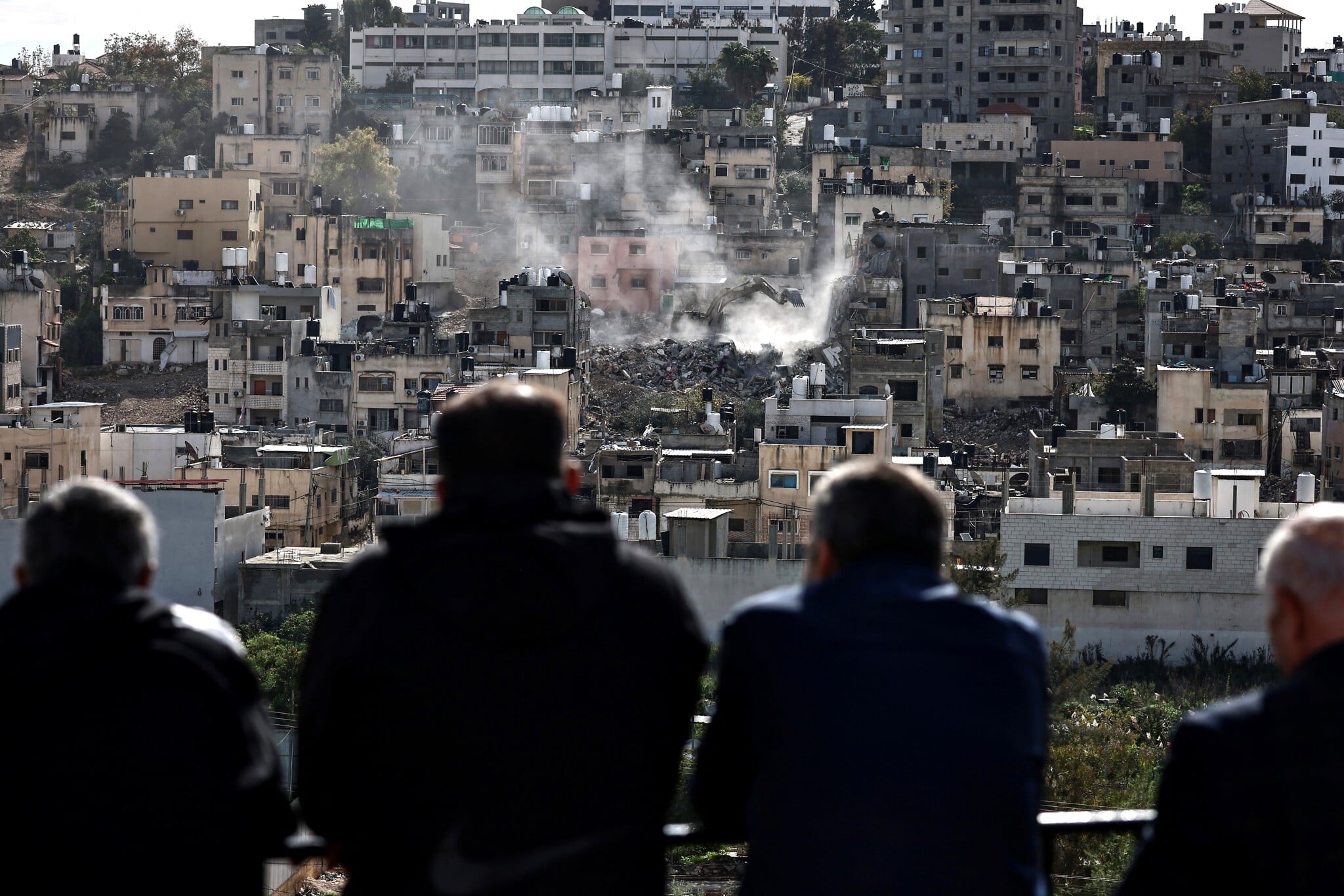
“Following ongoing counterterrorism activity by Israeli security forces in the area of Nur Shams in northern Samaria, the commander of the Central Command, Major General Avi Bluth, ordered the demolition of several structures due to a clear and necessary operational need,” the military tells AFP in a statement.
“Areas in northern Samaria have become a significant center of terrorist activity, operating from within densely populated civilian areas.”
Earlier this year, the military launched an operation it said was aimed at dismantling Palestinian armed groups from camps in northern West Bank — including Nur Shams, Tulkarem and Jenin.
“Even a year after the beginning of IDF operations in the area, forces continue to locate ammunition, weapons, and explosive devices used by terrorist organizations, which endanger IDF soldiers and impair operational freedom of action,” the military says on Wednesday.
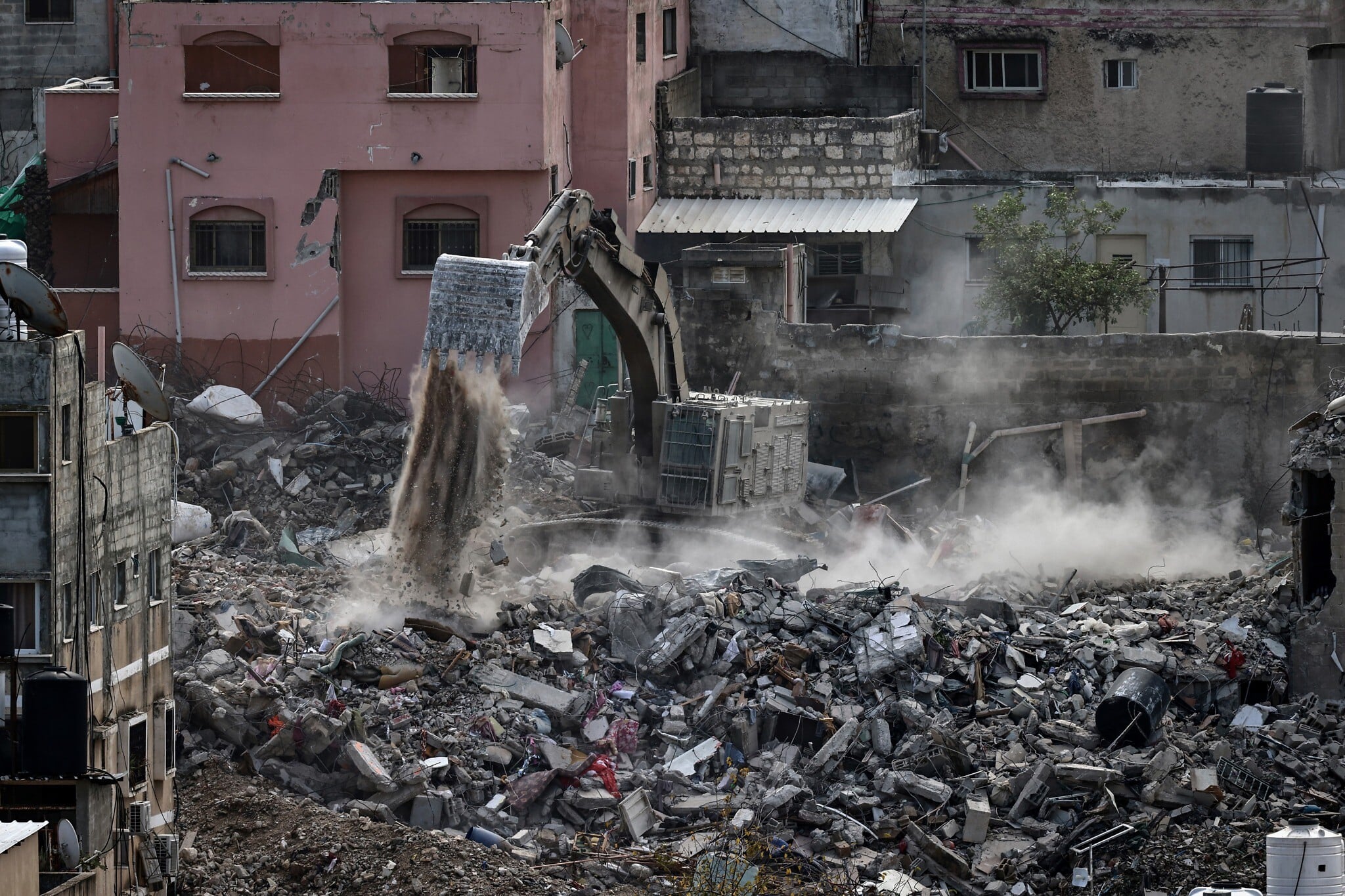
Earlier in December, AFP reported residents of the targeted buildings retrieving their belongings, with many saying they had nowhere to go.
The demolitions form part of a broader Israeli strategy aimed at easing access for military vehicles within the densely built refugee camps of the West Bank.
Nur Shams, along with other refugee camps in the West Bank, was established after the creation of Israel in 1948, when hundreds of thousands of Palestinians were displaced from their homes in what is now Israel.
With time, the camps they established inside the West Bank became dense neighborhoods not under their adjacent cities’ authority. Residents pass on their refugee status from one generation to the next.
Many residents believe Israel is seeking to destroy the idea of the camps themselves, turning them into regular neighborhoods of the cities they flank, in order to eliminate the refugee issue.
Bedouin leaders blast Ben Gvir over days-long police raid of Bedouin town, urge PM to intervene
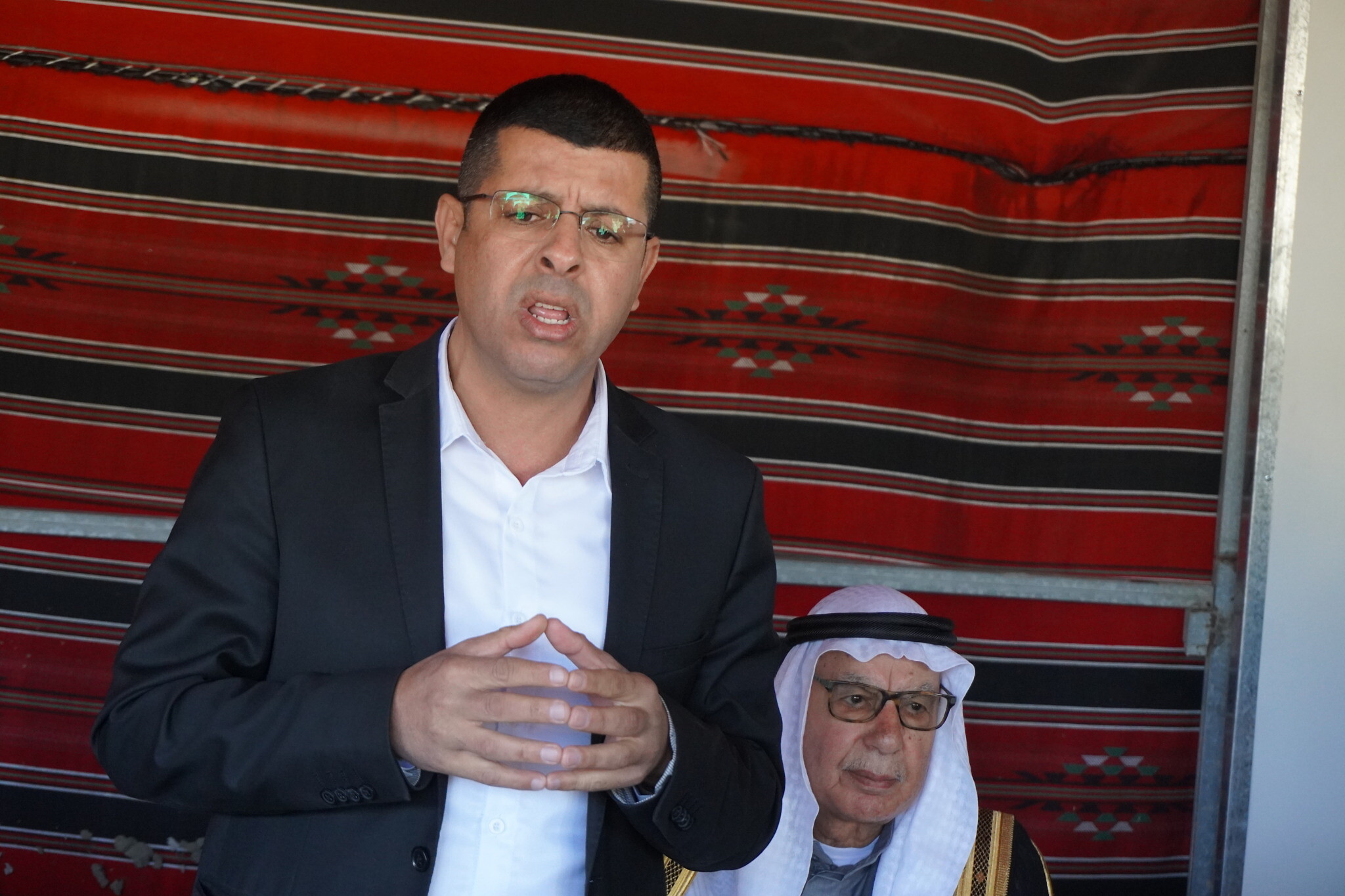
Ra'am MK Waleed Alhawashleh speaks to reporters in Tarabin al-Sana, a Bedouin village subject to a days-long raid by police, on December 31, 2025. (Charlie Summers/Times of Israel)
Ra’am lawmaker Waleed Alhawashleh, a member of the Bedouin community, blasts National Security Minister Itamar Ben Gvir as a “failed minister” after he toured Tarabin al-Sana this morning.
Police launched a sweeping raid on the Bedouin village on Monday in the wake of several arson incidents in nearby Jewish areas and have been operating there since.
Ben Gvir has made visits to Tarabin al-Sana several times this week while flanked by heavy security. Today, he walked through the town as Border Police forces fanned out and conducted searches in houses along the way.
At a gathering in the village, Alhawashleh decries the far-right minister. “He’s demolished some 5,000 houses in the Negev. There are over 250 murders in Arab society,” he says.
He calls on Prime Minister Benjamin Netanyahu to intervene in the operation underway in Tarabin al-Sana.
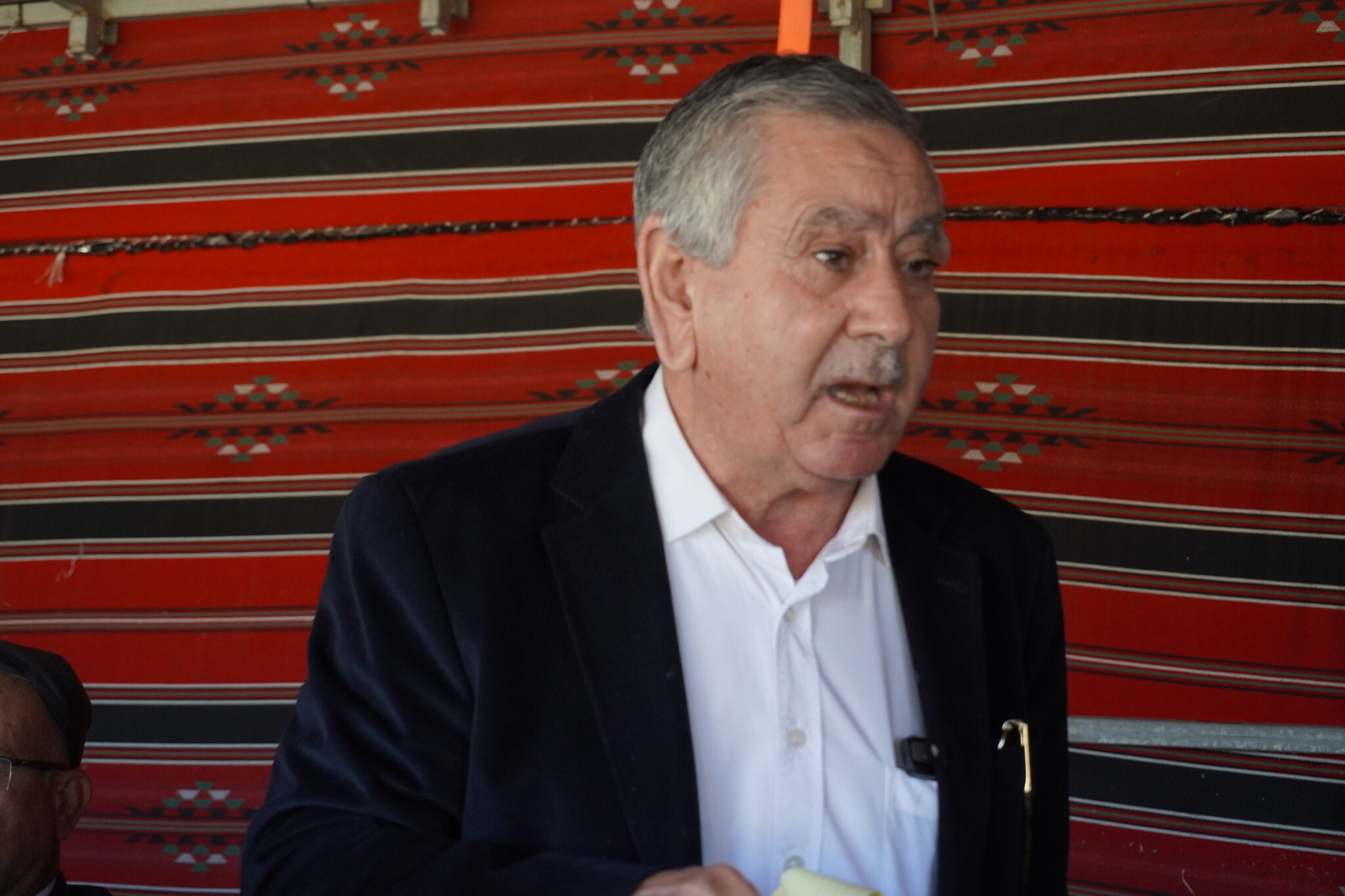
“I know that the prime minister is currently in the United States, but there must be a directive to the police” to put an end to the “campaign of incitement,” Alhawashleh says.
“This man [Ben Gvir] cannot make choices in a sane manner. He comes here, and he wants to cause damage to the relations between Jews and Bedouins in the Negev, and we aren’t interested in this,” he continues.
Rahat Mayor Talal Alkernawi, speaking to the crowd, derides Ben Gvir as a “megalomaniac” seeking heightened tensions between Jews and Arabs in the south.
“We have nothing against the Israel Police, but this violent megalomanic who comes and essentially wants to set this place on fire,” he says.
The raid is underway following several arson incidents in Jewish towns adjacent to Tarabin al-Sana over the past week.
Masked individuals vandalized and set fire to several cars in Giv’ot Bar and Mishmar Hanegev, and last night, five vehicles were set alight at the entrance to Lehavim.
The first arson attack was thought to be revenge for a police operation on Friday, in which officers entered the village searching for a stolen horse.
Police characterize both arson incidents as “revenge operations.” However, Alkernawi claims that the second arson incident, which took place at a gas station on the edge of a Jewish town, is related to an ongoing family dispute between two Bedouin families.
Alkernawi says that he and other Bedouin politicians “condemn all violence.”
“We condemn any and all harm to our neighbors and their property,” he says, but adds that “to come and incite against us [Bedouins] is unacceptable.”
Medical charity MSF urges Israel to allow it to operate in Gaza and West Bank in 2026
International medical charity Doctors Without Borders (MSF) urges Israel to allow it to continue operating in Gaza and the West Bank in 2026.
“We call on the Israeli authorities to ensure that MSF and other INGOs (international non-governmental organizations) are registered in Israel to continue working in the West Bank and Gaza in 2026,” MSF tells AFP in a statement.
Israel plans to ban 37 aid groups, including MSF, from operating in Gaza starting tomorrow unless they hand over detailed information on their Palestinian staff.
Hamas brands Israeli ban on aid groups ‘criminal behavior’
Hamas condemns Israel’s decision to ban several aid groups from operating in Gaza, urging the international community to prevent what it described as a move targeting Palestinians.
“The occupation government’s decision to revoke the operating licenses of dozens of international relief organizations constitutes a dangerous escalation and a blatant disregard for the humanitarian system,” the terror group says in a statement.
“We call on the international community, and the United Nations in particular… to take urgent and effective action to condemn this criminal behavior,” it adds.
Katz urges IDF readiness for Oct. 7-style attack on West Bank communities

From left to right: Central Command head Maj. Gen. Avi Bluth, Defense Minister Israel Katz, and Deputy Chief of Staff Maj. Gen. Tamir Yadai during a visit to the West Bank, December 31, 2025. (Shlomi Amsalem/Defense Ministry)
Defense Minister Israel Katz warns that the IDF must be prepared for a potential attack on Israeli communities in the West Bank “in the style of October 7,” during a visit to the West Bank.
According to a statement from Katz’s office, he received a security briefing and situational assessment alongside senior commanders, including Central Command head Maj. Gen. Avi Bluth — who made similar comments earlier today.
Katz praises IDF, Border Police and other security forces for what he describes as determined operations that have led to a sharp decline in terrorist activity and a significant improvement in the West Bank’s security situation.
Katz says operations carried out over the past year in the Jenin, Tulkarem and Nur Shams refugee camps – including evacuations, counterterrorism operations and the continued presence of IDF troops – had reduced terrorist activity in the territory by more than 80 percent. He calls for studying the model and potentially expanding it to additional camps.
The defense minister stresses that, as in Gaza, Lebanon and Syria, the IDF would remain on the ground in the West Bank to act as a buffer between civilians and terror groups. He also instructs officials to advance plans to relocate IDF bases to the northern West Bank, describing the move as a “historic correction” with both security and settlement significance – remarks that come in the wake of a terror attack last week in which two Israelis were killed, and whose assailant was later identified as being from the northern West Bank town of Qabatiya.
“You must prepare to respond to a possible attack on communities in the West Bank and along the seam line, in the style of October 7, by jihadist elements,” Katz says, concluding his visit.
National Guard fighters manning checkpoints at entrance to Bedouin town as cops continue raid
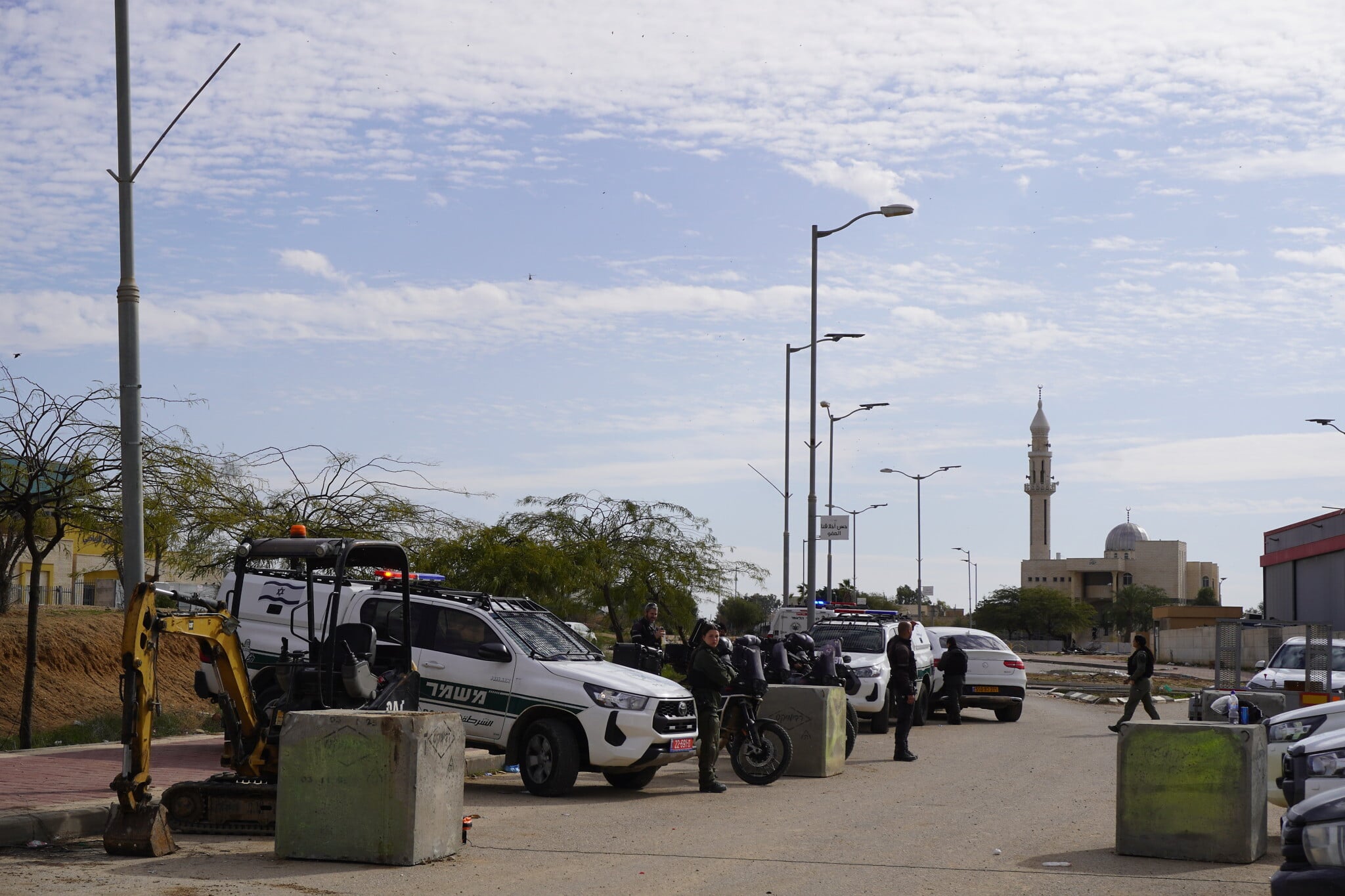
National Guard fighters and other Border Police forces stand at the entrance to the Bedouin town of Tarabin al-Sana, which has been closed off with cinderblocks, on December 31, 2025. (Charlie Summers/Times of Israel)
Security forces are checking the identity cards of all those who enter or leave Tarabin al-Sana, as part of a raid on the Bedouin town that has been underway for three days now.
Officers in the National Guard, a controversial Border Police force that came into being under National Security Minister Itamar Ben Gvir, have placed cinderblocks at the entrance to the village.
Drivers form a line as they wait to undergo a security inspection at the ad hoc checkpoint. A National Guard officer tells a driver exiting the town that they are obligated to identify each person who passes through.
Yesterday, police announced that the National Guard would take over responsibility for the ongoing raid in Tarabin al-Sana, which began Monday, when hundreds of officers and Border Police fighters entered the town.
Police have been cracking down on Bedouin locales throughout the Negev over the past month, as part of an anti-crime operation that Ben Gvir declared in November. The operation aims to stem violent crime, arms trafficking and traffic violations among southern Israel’s Bedouin population.
Residents have bemoaned law enforcement’s new practice of erecting haphazard checkpoints at the entrances to towns, saying the roadblocks cause hours-long traffic jams. Police have erected such checkpoints in Tarabin al-Sana, Lakiya and Tel Sheva so far.
Rahat mayor Talal Alkernawi, who currently serves as the head of an umbrella organization for Negev Bedouin towns, says he intends to take legal action against the practice by petitioning the High Court of Justice to intervene.
While such roadblocks are often erected at the entrances to Palestinian towns in the West Bank and East Jerusalem neighborhoods, the practice has seldom been used against Israeli citizens until November this year.
IDF uncovers apparently old, loaded rocket launcher in northern Gaza
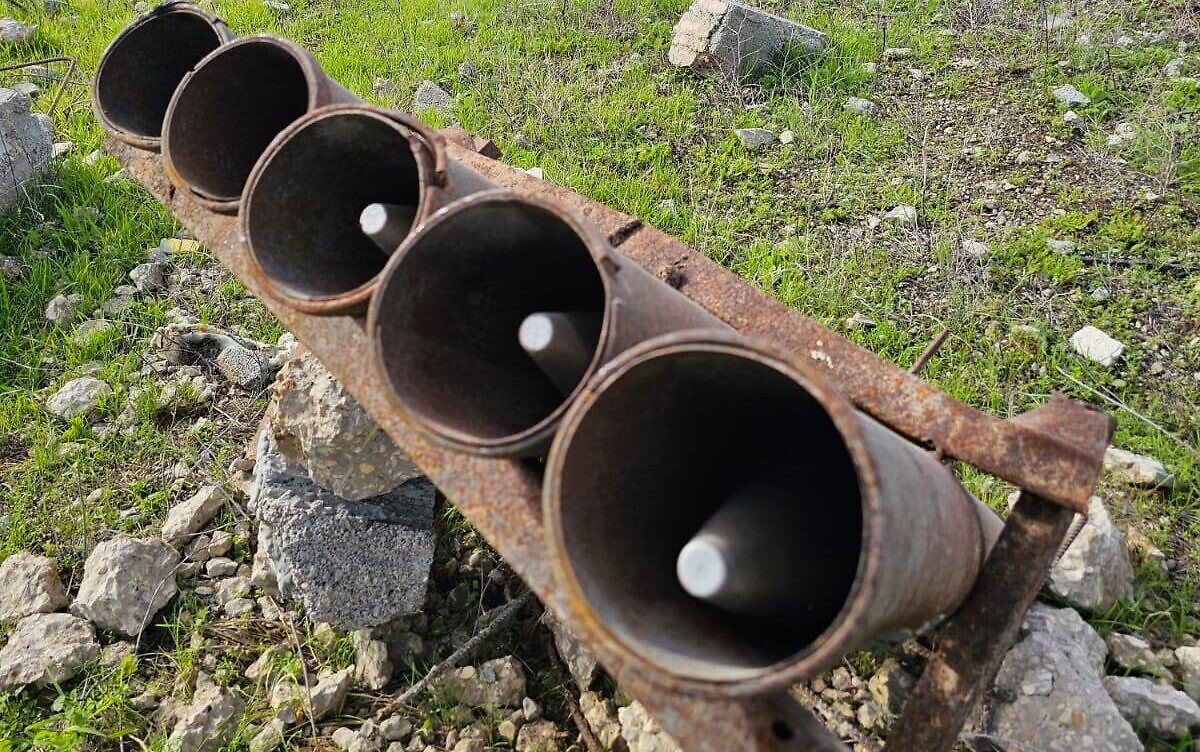
A rocket launcher discovered by IDF troops in north Gaza's Beit Hanoun area, December 31, 2025. (Israel Defense Forces)
The IDF says that troops operating in northern Gaza uncovered a loaded rocket launcher “ready to fire” toward Israel, during ongoing efforts to dismantle terror infrastructure in the area.
According to the military, combat teams from the Gaza Division’s Northern Brigade located the launcher during a weapons-search operation in the Beit Hanoun area, near the so-called Yellow Line. The launcher was found loaded with five rockets.
A security source notes that the launcher is likely an old one and is expected to be destroyed by troops in the coming hours.
The military says forces remain deployed in the area in accordance with the ceasefire framework and will continue acting to remove any “immediate threats.”
IDF to hold military drill in Eilat area tomorrow afternoon
The IDF says it will conduct a military exercise tomorrow afternoon in the Eilat area.
According to the army, residents may notice increased movement of security forces, as well as naval vessels and aircraft, and may hear sounds of explosions as part of the drill.
The military stresses that there is no concern of a security threat, adding that in the event of a real emergency, the public would be updated by security forces.
Ombudsman closes disciplinary case against top judge, rejecting right-wing push to undermine him
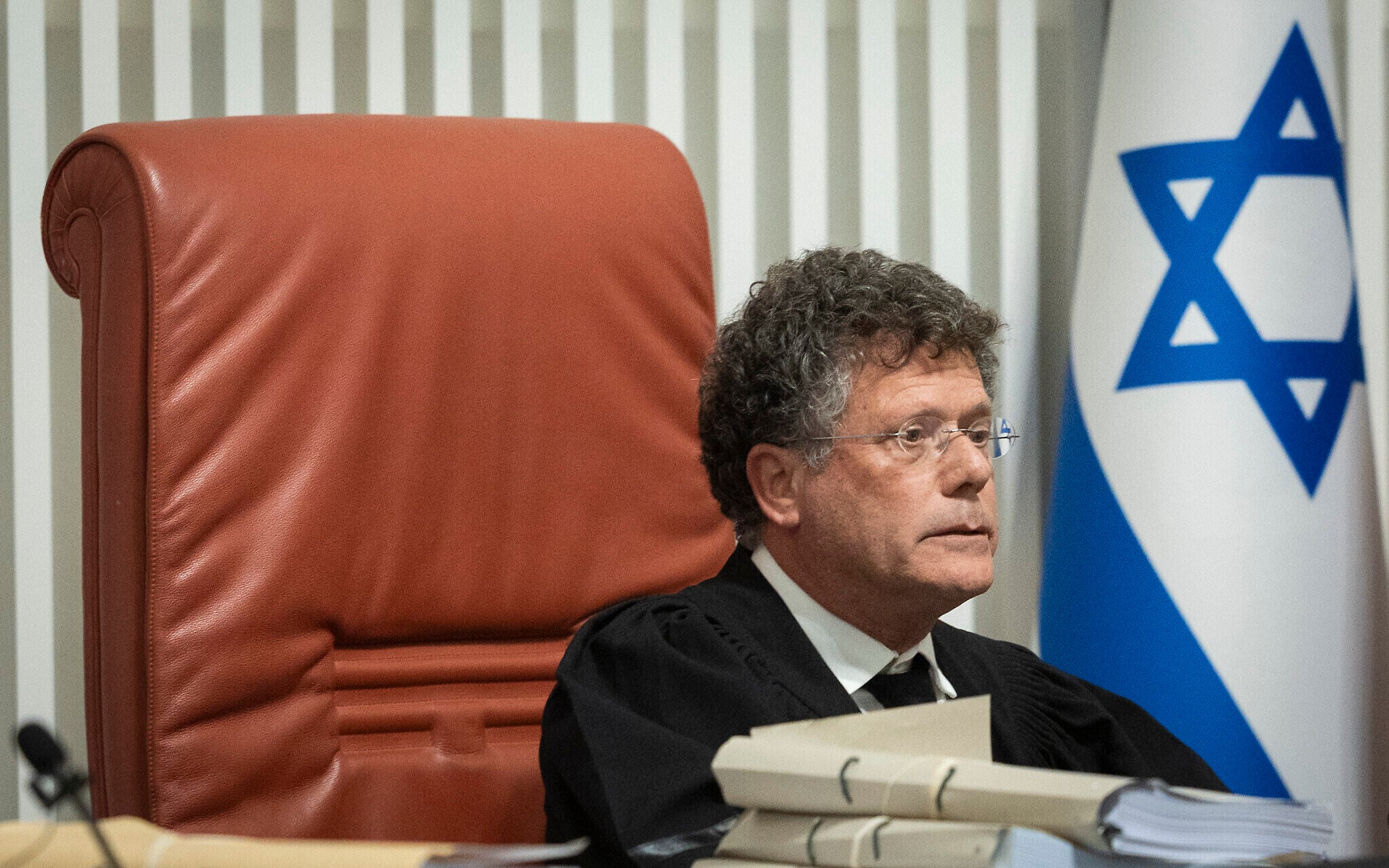
Supreme Court President Isaac Amit at the Supreme Court in Jerusalem, December 1, 2025. (Chaim Goldberg/ Flash90)
State Ombudsman for Judges Asher Kula closes a disciplinary case against Supreme Court President Isaac Amit after finding just one of the 10 ethics complaints against the top judge to be justified, but still not worthy of disciplinary action.
The lone complaint that was recognized argued that Amit should have recused himself from a case that had the potential to benefit his brother.
Kula dismissed nine other complaints against Amit, many of which were filed just before Amit was appointed president of the court in January 2025. The ombudsman says some of the complaints should never even have been submitted in the first place. The organization behind one of the complaints “simply threw claims with no substance out into the air,” Kula wrote.
In other cases, Kula said it would have been better for Amit to have taken certain actions to avoid the appearance of a conflict of interest, even if none actually existed.
Kula also rejects a much-publicized complaint against Amit regarding alleged building violations by the Supreme Court president and criticizes those who had labeled Amit “a construction criminal,” determining that the allegations were false and that such claims had done “a significant injustice” to Amit and his family.
The ombudsman also pointedly notes that the complaints against Amit were based on “reviews of thousands of judicial decisions he issued” as a lower court and Supreme Court judge.
The complaints were mostly submitted by right-wing legal advocacy organizations, and Amit himself had previously complained that the complaints were part of a concerted effort to delegitimize his candidacy for Supreme Court president.
From October 2023 until January 2025, Justice Minister Yariv Levin refused to call a vote in the Judicial Selection Committee on appointing a new Supreme Court President, because he opposed Amit but did not have the votes to elect his preferred candidate for president, Yosef Elron, to head the court.
When the High Court finally ordered Levin to hold the vote, numerous reports of ethics violations against Amit emerged in the press – which Kula has now adjudicated – leading Levin to further delay the committee vote on the president until the court insisted he hold the vote immediately.
Amit says in response that he respects Kula’s findings and will take them into account.
“The ombudsman’s decision was made after dozens of complaints were filed regarding President Amit – complaints that were filed after tens of thousands of decisions he made throughout his approximately 30-year tenure as a judge were examined,” Amit adds.
Levin nevertheless calls for Amit to resign, saying it was “unthinkable” that a Supreme Court judge had been found to have had a conflict of interest on a case he dealt with.
High Court bars transfer of NIS 1 billion to Haredi schools allegedly not teaching core curriculum
Ultra-Orthodox children dressed up in costumes at their cheder in Jerusalem, several days before the Jewish holiday of Purim, March 5, 2022. (Yonatan Sindel/Flash90)
The High Court of Justice has issued an order temporarily blocking the transfer of some NIS 1 billion ($314 million) to ultra-Orthodox schools that are accused of not teaching the core curriculum subjects to students as required by law.
The court’s interim injunction is in response to a petition against the transfer submitted by lawmakers from the opposition’s Yesh Atid party.
The transfer had been approved by the coalition-controlled Finance Committee of the Knesset last week.
The court injunction says that a panel of judges will hold a hearing on the petition by January 8, 2026. The Finance Committee, the Education Ministry and the Finance Ministry will have until then to submit a response to the petition justifying the transfer of funds to the Haredi schools in question.
Residents of Jewish Negev town cast doubt on police claim arson attack was nationalistically-motivated
Firefighters extinguish blazes in a parking lot in Lehavim, a Jewish town in the Negev, caused by an apparent arson attack overnight on December 31, 2025. (Fire and Rescue Service)
Police’s claim that disgruntled Bedouin residents from Tarabin al-Sana were behind last night’s arson attack in Lehavim, a nearby Jewish town, may not be accurate, according to residents of the latter who spoke to Walla.
“I can’t say unequivocally that it’s an act of revenge,” says a member of Lehavim’s local council to the outlet, claiming that there is a solid chance the incident had nothing to do with rising tensions between Jewish and Arab residents in the Negev.
“There has already been arson, break-ins [and] property damage at this gas station, but I don’t know what the motive is,” he says.
Last night, five cars went up in flames at a gas station parking lot near the entrance to Lehavim, an affluent Jewish town northeast of Tarabin al-Sana.
Police claimed soon after the news broke that the arson was a “price tag” attack directed at Jewish residents, as revenge for law enforcement’s ramped-up activity in the Bedouin town.
The incident brought National Security Minister Itamar Ben Gvir down to Tarabin al-Sana this morning, in what was his third visit within a week to the village as police continue a raid there.
The raid began Monday, several days after a similar arson incident occurred Friday night, when masked assailants caused damage and set fire to cars in Giv’ot Bar and Mishmar Hanegev.
Police claimed the vandals were residents of Tarabin al-Sana who sought to take revenge on their Jewish neighbors, in response to an even earlier operation in the town by law enforcement, in search of a stolen horse.
However, this particular gas station near Lehavim has seen four separate instances of vandalism in recent months, locals tell Walla.
One resident speculates that the arson may have been an attempt by criminals to extort the gas station owner by threatening him into forking over protection money.
“Something strange is going on there, maybe protection,” he tells the outlet. “There’s a conflict there between the gas station owner and some Bedouin, over a certain contract [between the two].”
Ultra-Orthodox parties accuse High Court of antisemitism, ‘war on Haredi public’ after blocking fund transfer to schools
Ultra-Orthodox parties accuse the High Court of “antisemitic harassment,” “holding the Haredi public hostage,” and “declaring war” on the entire community, following the court’s decision to temporarily block the transfer of some NIS 1 billion ($314 million) to ultra-Orthodox schools that are accused of not teaching the core curriculum subjects to students as required by law.
The Haredi Shas party likens the judges to “a dangerous band of arsonists who, in their desperate struggle to save their crumbling rule, have chosen to take the ultra-Orthodox public hostage.”
The party accuses the court of “stealing the daily bread of young children” and “calls on Jews around the world to raise an outcry against this antisemitic harassment.”
In a separate statement, Shas says its chairman, Aryeh Deri, held an urgent phone call with Prime Minister Benjamin Netanyahu to express his outrage over the court injunction.
Deri told Netanyahu that he expected the entire coalition to rally in support of the Haredi schools barred from funding, the Shas statement says, adding that the premier backed Deri’s stance.
The court’s interim injunction is in response to a petition submitted by lawmakers from the opposition’s Yesh Atid party against the transfer approved by the coalition-controlled Knesset Finance Committee last week.
Yesh Atid celebrates the decision, saying in a statement that the party expects the decision to”deepen the crisis within the coalition” amid the ongoing efforts to pass both a 2026 state budget and draft regulation law for yeshiva students.
“The ultra-Orthodox, too, are not exempt from the laws of the state,” says Yesh Atid chair Yair Lapid. “Anyone who wants to receive public funding will have to teach the core curriculum and submit to appropriate oversight. You will not take the money of reservists and taxpayers and use it to preach against enlistment and deny ultra-Orthodox young people the opportunity to acquire tools for the job market.
MK Moshe Gafni, who chairs the Degel Hatorah faction of the ultra-Orthodox party United Torah Judaism, insists that the funds were “transferred legally, in accordance with accepted procedure and the required approvals.”
“The court has declared war on the ultra-Orthodox public,” he says, referring to the judges and petitioners as “wicked” and “determined to harm the livelihood of teaching staff and the entire system.”
UTJ chair MK Rabbi Yitzhak Goldknopf again likens yeshiva students to hostages, saying that his party “will not accept making hundreds of thousands of [yeshiva] students into hostages to baseless petitions for propaganda purposes.”
“We will continue to fight with all the tools at our disposal to ensure equality for every child in Israel,” he says.
Netanyahu said refraining from weighing on in Iran protests so Tehran doesn’t deflect blame on Israel
Prime Minister Benjamin Netanyahu has decided not to publicly weigh in on the ongoing protests in Iran due to concern that this will offer the Islamic Republic an excuse to target Israel in order to distract from the country’s economic woes.
The network says that the decision came following a briefing Netanyahu held on the matter at his hotel in West Palm Beach.
“We’re watching dramatic domestic events in Iran, but it’s too early to tell what the ramifications will be,” a senior Israeli official tells Channel 12.
Report: Senior Netanyahu aide maintained contact with Feldstein amid downplaying of ties
A senior aide to Prime Minister Benjamin Netanyahu maintained ongoing contact in recent months with Eli Feldstein, a central figure in two high-profile scandals linked to the Prime Minister’s Office, despite official downplaying of any formal connection, Channel 12 reports.
According to the report, Feldstein – who has been implicated in both the so-called Bild affair and the Qatargate scandal – held at least two meetings over the past month with Topaz Luk, a former Netanyahu spokesman who currently serves as a senior adviser to the premier and is considered one of his closest confidants.
Channel 12 says the contact continued even after restrictions were imposed on Feldstein, with sources in the Prime Minister’s Office describing the relationship as personal rather than professional.
Last week, Netanyahu’s Likud party downplayed Feldstein’s ties to the premier, though he was widely known as Netanyahu’s spokesman for military affairs and regularly briefed reporters under that auspice throughout the war.
The report adds that the contact between Feldstein and Luk has recently been curtailed, amid public exchanges of accusations on social media. Requests for comment from the Prime Minister’s Office and from Luk were not answered, Channel 12 says.
Israel expected to reopen Rafah in coming days for both exit and entry of Gazans — US official

Demonstrators gather outside the Egyptian side of the Rafah border crossing with the Gaza Strip on January 31, 2025, to protest against a plan floated by US President Donald Trump to move Palestinians from the Gaza Strip to Egypt and Jordan. (Kerolos Salah/AFP)
The Trump administration expects that Israel will reopen the Rafah Crossing in the coming days to both the entry and exit of Gazans after US President Donald Trump and his aides raised the issue during their meetings on Monday with Prime Minister Benjamin Netanyahu, a US official told The Times of Israel yesterday.
While the Rafah Crossing was supposed to reopen as part of the October Gaza ceasefire agreement, Israel has only been willing to comply if the gate is used exclusively for the exit of Palestinians. Egypt, in turn, has kept the crossing closed, arguing that Jerusalem is still trying to dilute the Strip’s population by not letting anyone back in.
Coming under pressure from the Trump administration, Netanyahu raised the idea of reopening Rafah in both directions before his cabinet last week. However, he faced pushback from far-right ministers who have called for encouraging the migration of Gazans from the Strip throughout the war.
Channel 12 reports that Israel plans to move ahead with the full reopening of Rafah when Netanyahu returns from the US on Friday, with an Israeli official telling the network that Jerusalem doesn’t want to be seen as the party that is blocking the implementation of Trump’s Gaza peace plan.
Netanyahu meeting Jewish community leaders in Florida
Prime Minister Benjamin Netanyahu and his wife Sara arrive at a lunch meeting with elected officials and Jewish communal leaders at The Shul of Bal Harbour, Florida, on December 31, 2025. (Lazar Berman/The Times of Israel)
Prime Minister Benjamin Netanyahu and his wife Sara arrive at a lunch meeting with elected officials and Jewish communal leaders at The Shul of Bal Harbour, Florida.
Florida’s Lieutenant Governor Jay Collins is among the local dignitaries at the table.
Earlier today, Netanyahu held a meeting with Evangelical community leaders in West Palm Beach.
Report: Somaliland president planning to make official visit to Israel in near future

Presidential candidate Abdirahman Mohamed Abdullahi, center, casts his vote inside a polling station during the presidential election in Hargeisa, Somaliland, November 13, 2024. (AP/Abdirahman Aleeli)
Somaliland President Abdirahman Mohamed Abdullahi is reportedly planning to make an official visit to Israel in the near future following Jerusalem’s recognition of the autonomous region.
The Kan public broadcaster says that during his visit, Abdullahi will formally join the Abraham Accords and sign a series of bilateral agreements with Israel.
Abdullahi already made a secret visit to Israel in October in the lead-up to last week’s announcements of mutual recognition.
Iranian state media steals video statement on West Bank by anti-Israel NYC Congressional hopeful, candidate says
The Iranian state media outlet Press TV publishes footage of an anti-Israel New York City Congressional hopeful recounting his visit to the West Bank, without his permission.
Cameron Kasky is a Jewish survivor of the Parkland school shooting who is running to represent the 12th Congressional District in Manhattan. Longtime representative Jerry Nadler, also Jewish, is retiring.
Kasky is an anti-Israel activist who says his top priority is to “stop funding genocide.”
He recently visited the West Bank and took part in activism aimed at protecting vulnerable Palestinian villages from Israeli settler violence.
Press TV posts a video statement by Kasky discussing his trip to the outlet’s hundreds of thousands of followers on social media.
“American activist Cameron Kasky, who visited the occupied West Bank, recounts the horrors faced by Palestinians living there,” Press TV says in the posts.
“It is unfathomable, the horrors that we put them through,” Kasky says of the Palestinians in the video statement.
Kasky posted the video on social media several days ago, though, and says Press TV did not contact the campaign for permission to use the footage.
“Our campaign did not grant Iranian state media any permission to use this footage, nor would we have had they reached out in the first place,” the campaign says.
Kasky is one of several political candidates in New York City who are highlighting their anti-Israel positions after the anti-Zionist Zohran Mamdani won the race for New York City mayor.
The 12th Congressional District is home to a large Jewish population where many voters sided with the pro-Israel Andrew Cuomo over Mamdani in the mayoral race.
Kasky moved from Parkland, Florida, to New York City to attend Columbia University, where he later dropped out.
PM tells Evangelical leaders that Israel is working to protect Christians worldwide

Prime Minister Benjamin Netanyahu meets with Evangelical community leaders in Florida on December 31, 2025. (Amos Ben Gershom/GPO)
Israel is joining an emerging alliance of countries “that support Christian communities around the world, beleaguered communities who deserve our help,” Prime Minister Benjamin Netanyahu tells Evangelical Christian leaders in Palm Beach, Florida.
“In Africa, with intel, in the Middle East, with a lot of means that I won’t itemize each one,” he explains. “But this is what our agenda is, it’s a main part of our agenda, and it’s going to continue with greater force and greater might in this coming year.”
Netanyahu says regional rival Turkey is among the countries that persecute Christians: “We are conscious of the fact that Christians are being persecuted across the Middle East, in Syria, in Lebanon, in Nigeria, in Turkey and beyond.”
Netanyahu calls the fight for support among young conservatives in the US part of the “eighth front” in the war Israel is fighting.
“That’s the front for the hearts and minds of people, especially young people in the West, and for me, especially in the United States. And for me, especially on the Conservative wing of the United States,” he says.
“This is a theater that has to be engaged with great force.”
Later tonight, Netanyahu is expected to attend a New Year’s Eve party hosted by US President Donald Trump at the latter’s Mar-a-Lago resort.
IDF chief: Our determination to disarm Hamas is ‘absolute’
Israel is determined to disarm Palestinian terror group Hamas, the country’s military chief says, describing 2026 as a “decisive year” for Israel’s security.
“The year 2026 will be a decisive year in shaping the security reality of the state of Israel. Our determination to disarm Hamas of its weapons is absolute,” Lieutenant General Eyal Zamir tells troops during a visit to Gaza.
“We will not allow the Hamas terrorist organisation to rebuild its capabilities and threaten us,” he adds, speaking just days after Prime Minister Benjamin Netanyahu raised the issue of Hamas disarmament in talks with US President Donald Trump.
הרמטכ"ל בדרום רצועת עזה:
״הנחישות לפרז את חמאס ויתר ארגוני הטרור מנשקם מלאה. לא נאפשר להם לבנות כוחם מחדש"לכל הפרטים:https://t.co/6Zz7OB6F92 pic.twitter.com/pOyD9zgxLr
— צבא ההגנה לישראל (@idfonline) December 31, 2025
PM tells Florida Jews Israel fighting ‘8th front’ of antisemitism with same intensity as others

Prime Minister Benjamin Netanyahu speaks at The Shul of Bal Harbour, Florida, on December 31, 2025. (Lazar Berman/The Times of Israel)
Speaking at The Shul of Bal Harbour, Prime Minister Benjamin Netanyahu tells the parents of Master Sgt. Ran Gvili, the last slain hostage in Gaza, “we shall return him. He will be back.”
“President Trump has been unflinching; he never wavered” in his support of Israel, says Netanyahu at the Florida synagogue.
“When the president of the United States and the prime minister of Israel have no daylight between them, wondrous things can happen,” says Netanyahu. “And they did.”
He says that Israel is fighting the “eighth front” — the battle for truth and against antisemitism — with the same intensity it is the physical wars.
PA security forces again help extract Israeli woman from West Bank city
An Israeli woman who was extracted from the West Bank city of Jericho is seen next to an officer from the Civil Administration on December 31, 2025. (Courtesy)
Palestinian Authority security forces helped extract a 22-year-old Jewish Israeli woman who was seen wandering in the Palestinian city of Jericho in the West Bank, a spokesman for the Defense Ministry’s Civil Administration tells The Times of Israel.
The Civil Administration reached out to Ramallah upon receiving a report that the woman was stranded in Jericho and the PA forces helped locate her and hand her over to Israeli forces who then transferred her to the police for questioning.
A preliminary inquiry found that she had mistakenly “taken a wrong turn” into Jericho, the Civil Administration says, using the opportunity to remind Israelis that entry into the West Bank’s Area A is illegal.
PA forces have assisted in these extractions several times in the past month.
One security force member killed, 2 wounded in Aleppo suicide attack, Syria says
A suicide bomber targeted a police patrol in Aleppo, killing one person and wounding two members of the security forces, a Syrian government spokesperson says.
“The person who detonated an explosive belt within the patrol in Aleppo is believed to have an ideological or organizational background linked to Islamic State,” Interior Ministry spokesperson Nour al-Din al-Baba tells state-owned news agency Al Ekhbariya, adding that investigations were ongoing to determine the attacker’s identity.
The attacker detonated himself while being searched by the patrol after arousing suspicion, Ekhbariya TV reports, citing a security source.
No group has claimed responsibility for the attack.
Earlier this month, two US Army soldiers and a civilian interpreter were killed in Syria by a suspected Islamic State attacker who targeted a convoy of American and Syrian forces before being shot dead.
Trump says he’s pulling National Guard from Chicago, LA, Portland
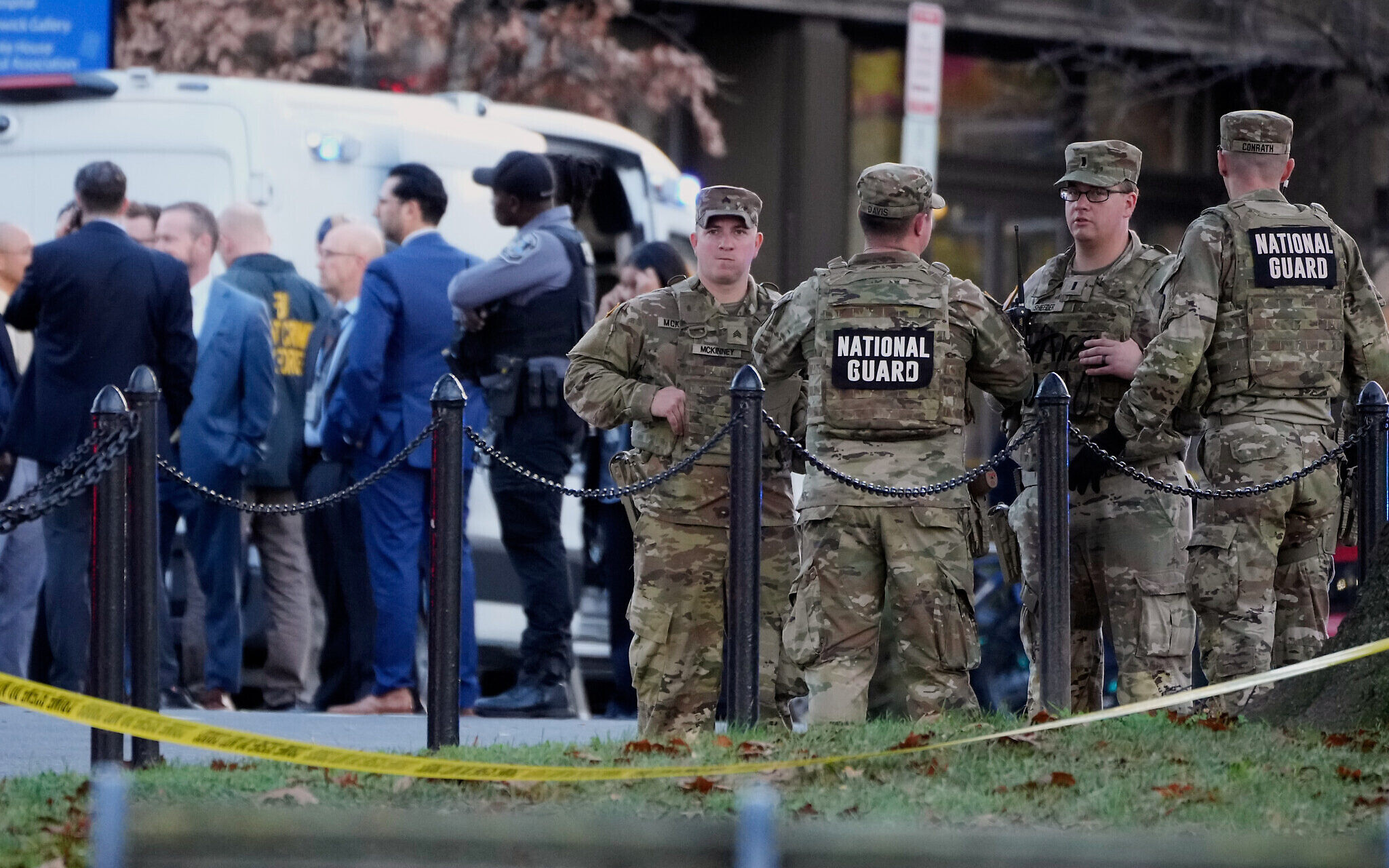
Emergency personnel gather in a cordoned off area where National Guard soldiers were shot near the White House in Washington, November 26, 2025. (AP Photo/Mark Schiefelbein)
President Donald Trump says he is withdrawing National Guard troops from Chicago, Los Angeles and Portland, following a series of legal setbacks over his military deployments in US cities.
The Republican president sent troops into the three cities run by Democrats for what he said was a crackdown on illegal immigration and crime in the first year of his second term in the White House.
Local leaders slammed the moves as authoritarian overreach and launched a string of legal challenges, with the US Supreme Court last week blocking the Chicago deployment.
“We are removing the National Guard from Chicago, Los Angeles, and Portland, despite the fact that CRIME has been greatly reduced by having these great Patriots in those cities, and ONLY by that fact,” Trump says on his Truth Social network.
Trump says the three cities “were GONE if it weren’t for the Federal Government stepping in.”
“We will come back, perhaps in a much different and stronger form, when crime begins to soar again – Only a question of time!” Trump adds.


read more: