

 From
From New bill seeks to give Israel authority over antiquities in West Bank’s areas A and B
 Add ToI as a Preferred Source on Google
Rossella Tercatin is The Times of Israel's archaeology and religions reporter.
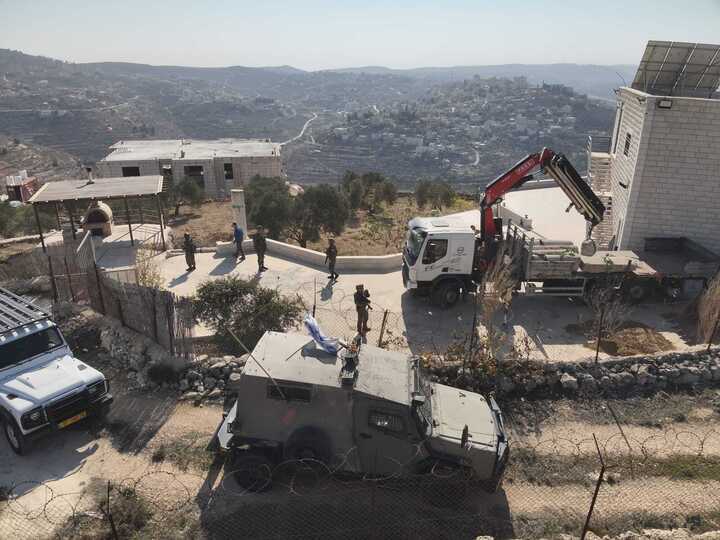
A new version of a bill seeks to give Israel power over antiquities and archaeological sites in the West Bank’s Areas A and B, which are governed to varying extents by the Palestinian Authority.
The bill’s lead sponsor, Likud MK Amit Halevy, also sought to include the Gaza Strip in the bill’s purview, according to a publicly available text of the bill.
The first clause of the bill states that “the purpose of this Law is to establish the direct responsibility of the State of Israel for the care of antiquities, heritage and archaeological sites in Judea and Samaria,” the biblical name of the West Bank.
The second clause describes the geographical scope of the law as “the Judea and Samaria area” and adds in parentheses that, “at this stage, the proposed law shall apply to Areas A, B, and C.”
Under the 1993 Oslo Accords, the PA was to have full security and civil control over Area A, and civil control over Area B. Area C — comprising the majority of the West Bank — is under full Israeli control.
The notes attached to the clause explain that “the proponent [Halevy] seeks to apply the authority under the proposed law also to the areas of the Gaza Strip.”
Under the Oslo Accords, Israel’s involvement in West Bank antiquities is only supposed to extend to Area C. Currently, the body responsible for antiquities is the Staff Officer of the Archaeology Unit of the Civil Administration, a branch of the Defense Ministry’s Coordinator for Government Activities in the Territories (COGAT).
At the moment, under a ceasefire signed in October, Israel has control over 53% of the Gaza Strip, which is mostly empty of civilians. The other half of the enclave is under de facto Hamas control.
The original version of the bill proposed that the Israel Antiquities Authority (IAA) oversee antiquities in the West Bank. The IAA, however, opposed the move, and as a result, the bill has been rewritten to create a new Israeli civilian body for the purpose.
During a meeting of the Education and Culture Committee to discuss the bill today, only the first clause was presented.










The Times of Israel Community.