

 From
From Yesh Atid accuses government of trying to delay court ruling on freeze of ultra-Orthodox school funds
 Add ToI as a Preferred Source on Google
Ariela Karmel is a political correspondent at The Times of Israel. She previously reported for Calcalist and Haaretz. She holds an MA in Middle Eastern and African History from Tel Aviv University and a BA in Political Science from the University of British Columbia.
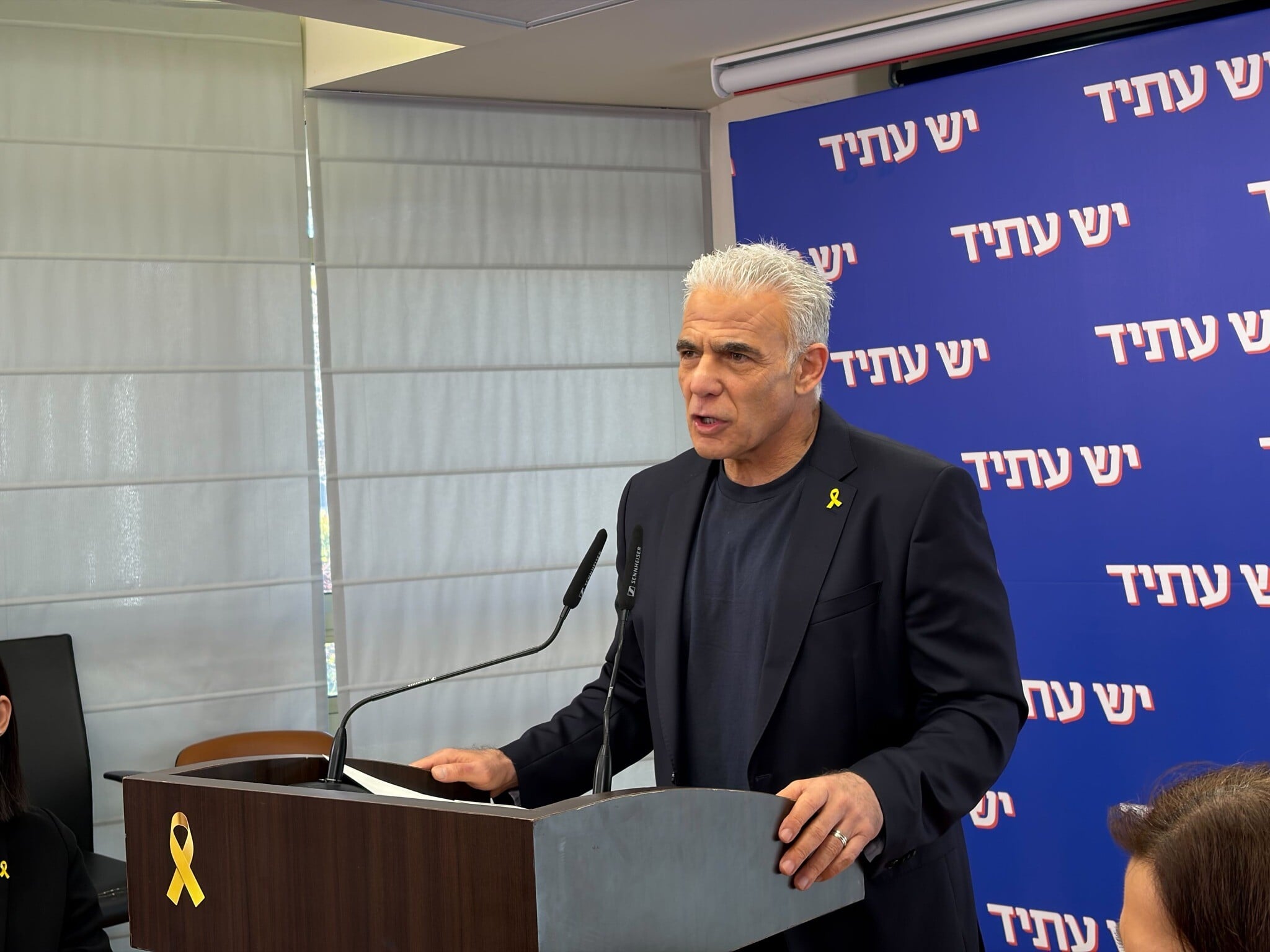
Yesh Atid accuses the government of purposely dragging out its response to the party’s High Court petition that sought to block the transfer of additional state funds to ultra-Orthodox schools.
The party, helmed by Opposition Leader Yair Lapid, claims the delay was geared toward enabling the government to move some of the funds before any judicial decision.
Yesh Atid’s petition had sought an “urgent interim injunction” against the transfer of roughly NIS 1 billion ($314 million) from the remainder of the 2025 state budget to ultra-Orthodox educational institutions.
The High Court of Justice gave the government until 8 a.m. today to respond to the petition.
The government requested an extension earlier today to respond to the petition and “committed that until a High Court ruling is issued, it would halt any further transfers of funds to Haredi educational institutions that are unsupervised and in violation of the law.”
Yesh Atid, however, says this response reflects a dishonest tactic: “While the petitioners were waiting for a response from the State, the latter acted to establish ‘facts on the ground,’ and some of the funding had already been transferred to ultra-Orthodox educational institutions,” the party says.
In response, the party says that it “requests that the High Court give its opinion regarding the state’s response to the petition.”
The petition addressed last week’s Knesset Finance Committee approval of NIS 786 million ($247 million) to school networks affiliated with the ultra-Orthodox Shas and United Torah Judaism parties, and NIS 136 million ($43 million) to so-called “recognized but unofficial” schools, which are supposed to teach 75 percent of the state-directed core curriculum but often do not.










The Times of Israel Community.