

‘We want to rebuild’: Kfar Aza, mourning and in limbo, marks 2 years since Oct. 7
Kibbutz residents gather at the local armory, where fierce fighting took place during the Hamas invasion, as they seek a path forward while hoping for their last two hostages’ release
 Add ToI as a Preferred Source on Google
Luke Tress is The Times of Israel's New York correspondent.
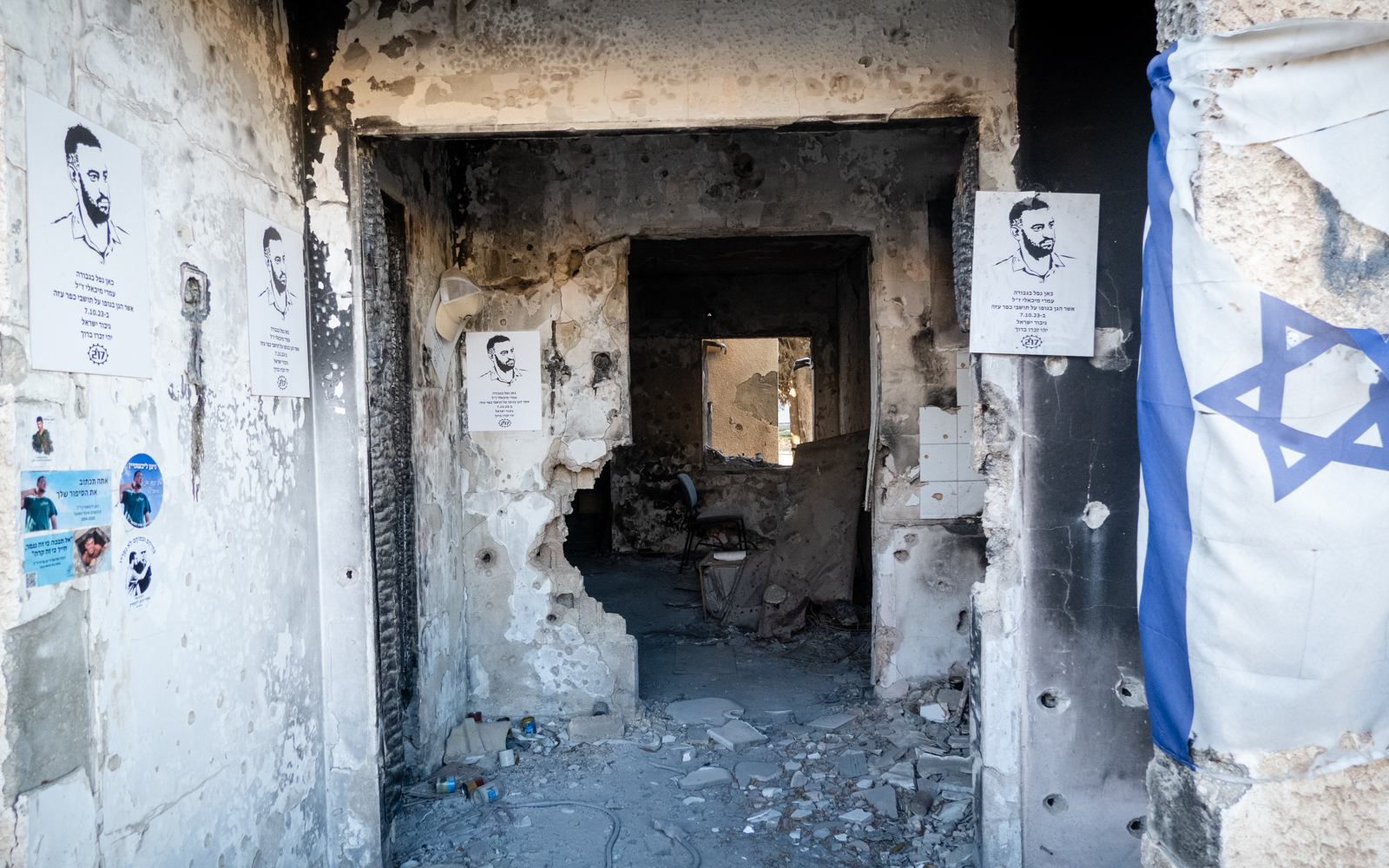

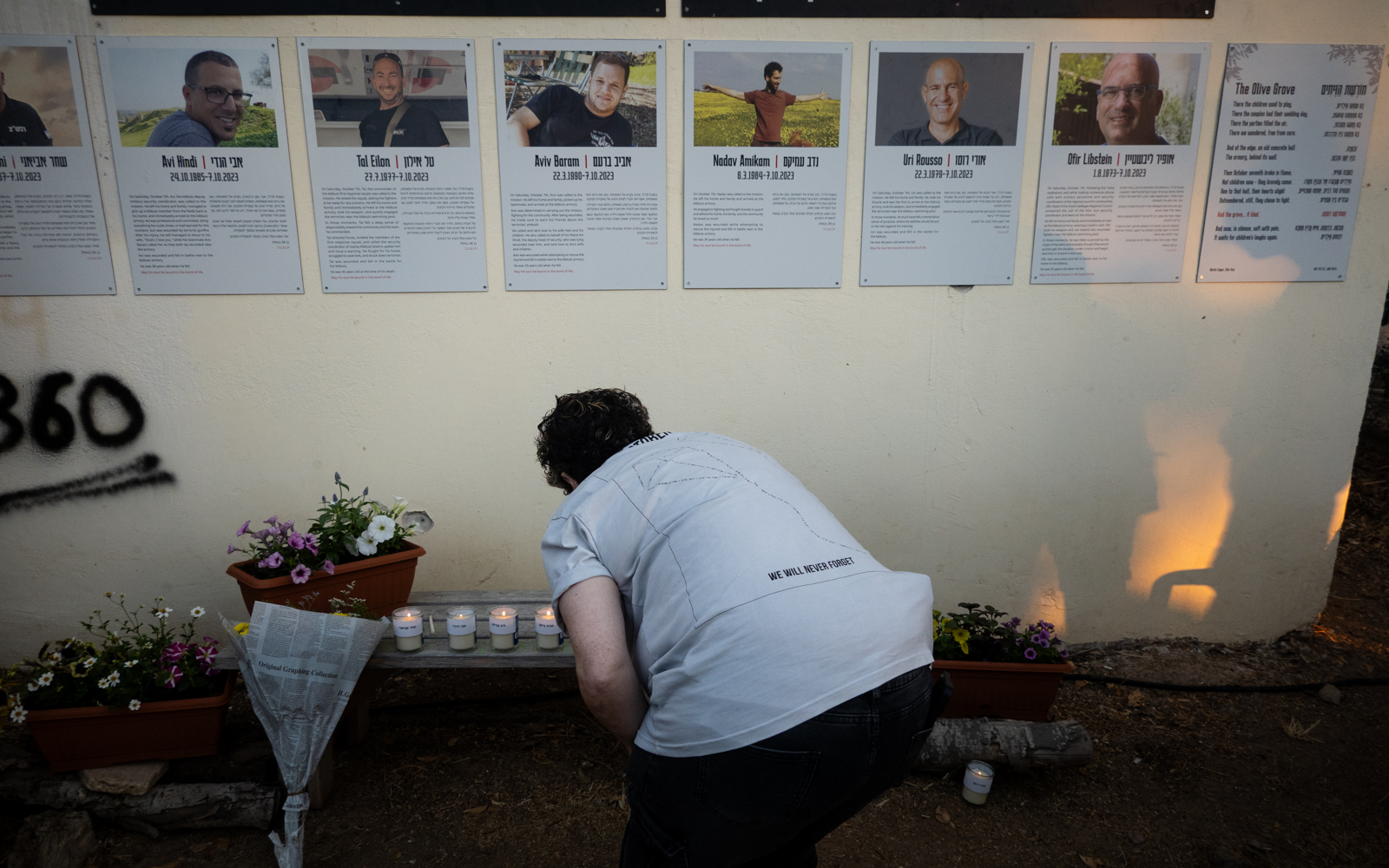
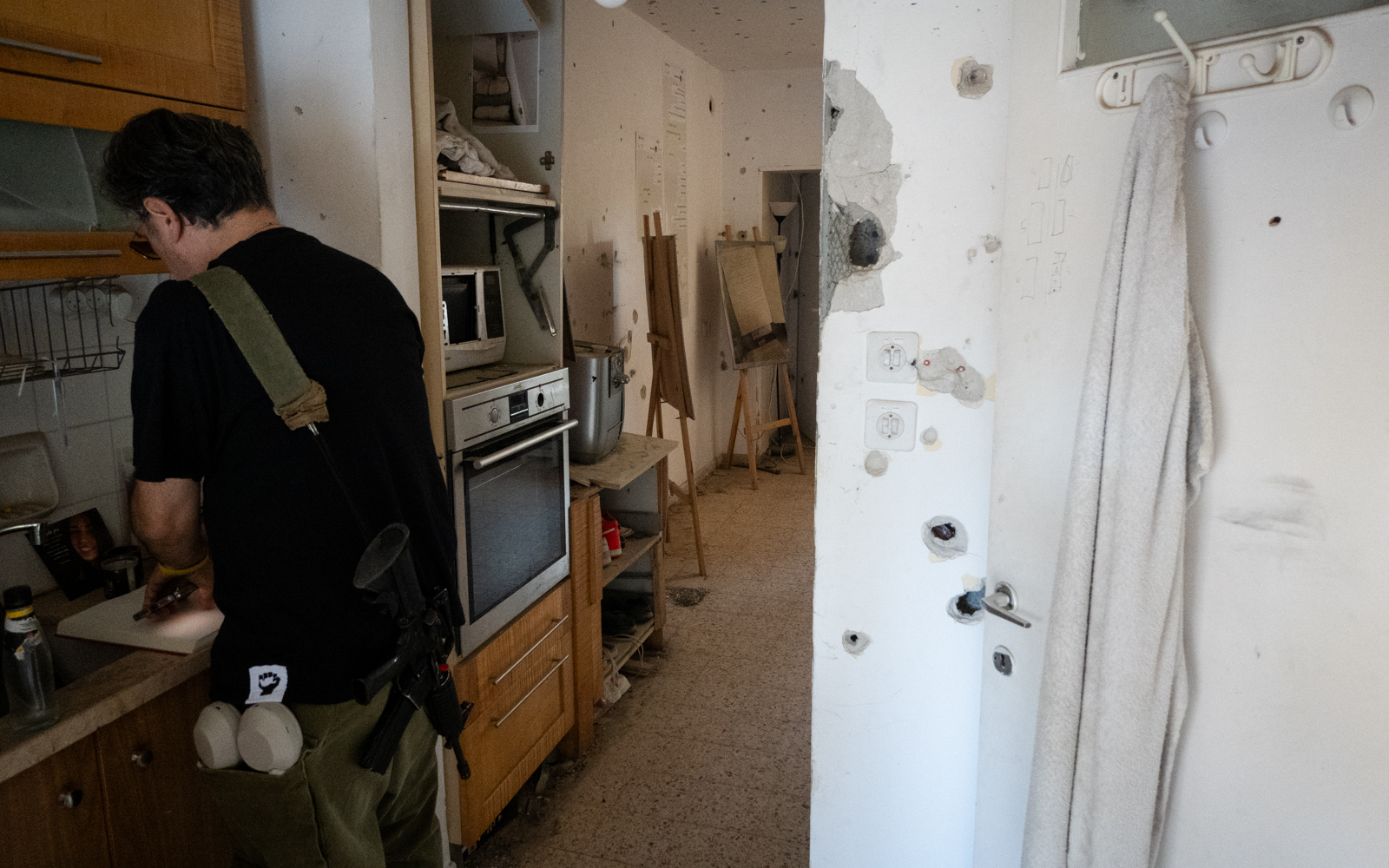
The faces of the dead and missing are on the walls of Kfar Aza. On some buildings, the images are surrounded by pockmarks from bullets and shrapnel. Others are framed by notes that first responders scrawled on the facades in the days after the October 7, 2023, massacre in the kibbutz.
Some of the messages note the date rescuers checked homes for bodies; at the entrance to one young couple’s apartment, someone wrote, “Human remains on the sofa” in black marker.
“We’re in no man’s land,” kibbutz resident Barbara Cohen said on Tuesday morning after a ceremony marking the second anniversary of the attack. “I don’t think a lot of people have actually absorbed what happened to us because we still feel like it’s not finished.”
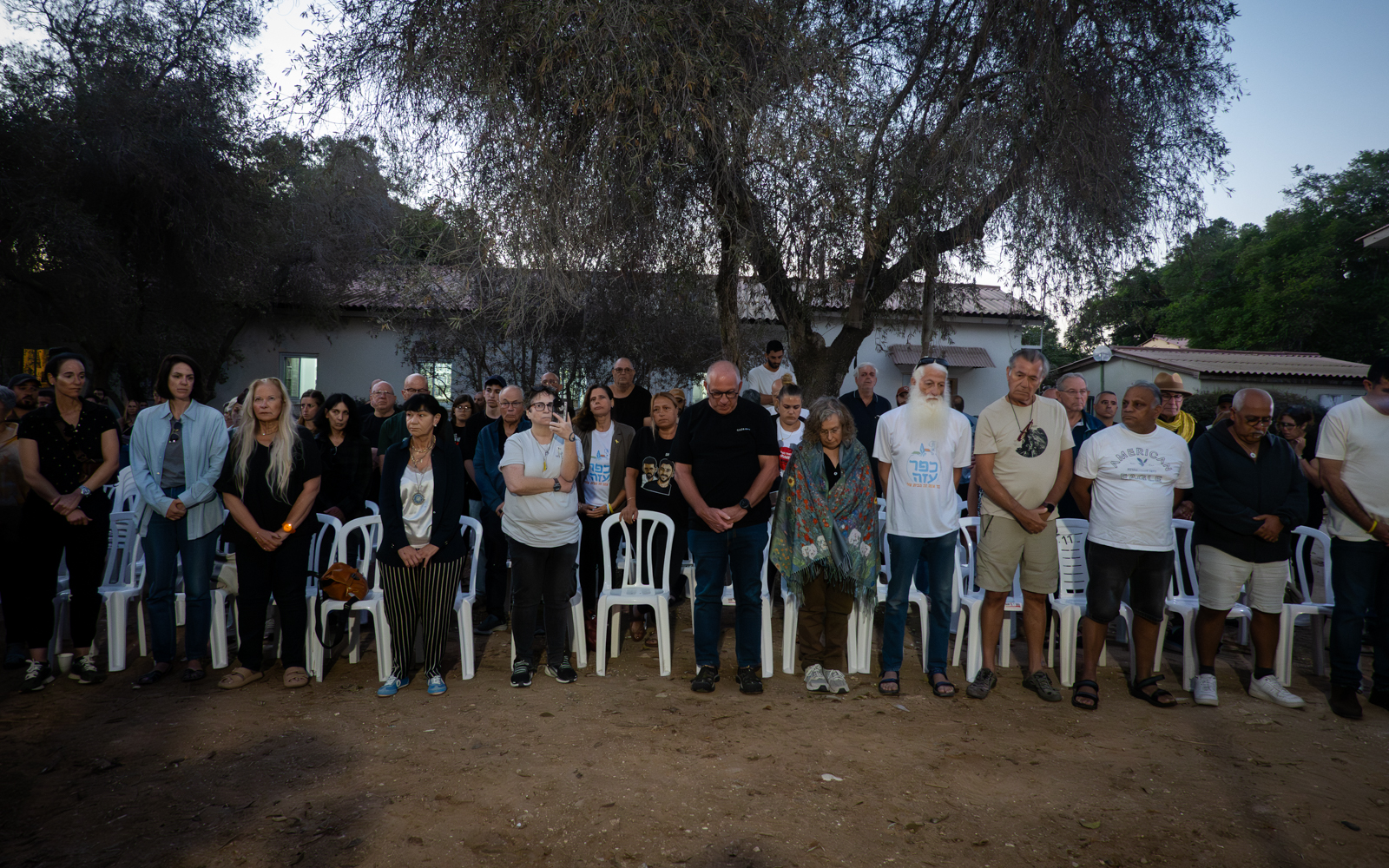
Residents of the kibbutz gathered for a ceremony on Tuesday morning, holding a moment of silence at 6:29 a.m., the time that a rocket barrage began the Hamas invasion. Explosions in Gaza and the buzzing of a military drone overhead were audible in the background.
Kfar Aza was one of the communities hit hardest in the onslaught. During the attack, some 250 terrorists swarmed the unsuspecting community of around 950 residents. The attackers took over the village in an hour, killing 62 residents and 18 security personnel, and taking 19 civilians hostage. Israeli forces struggled to reach the area for several hours, leaving residents to fend for themselves.
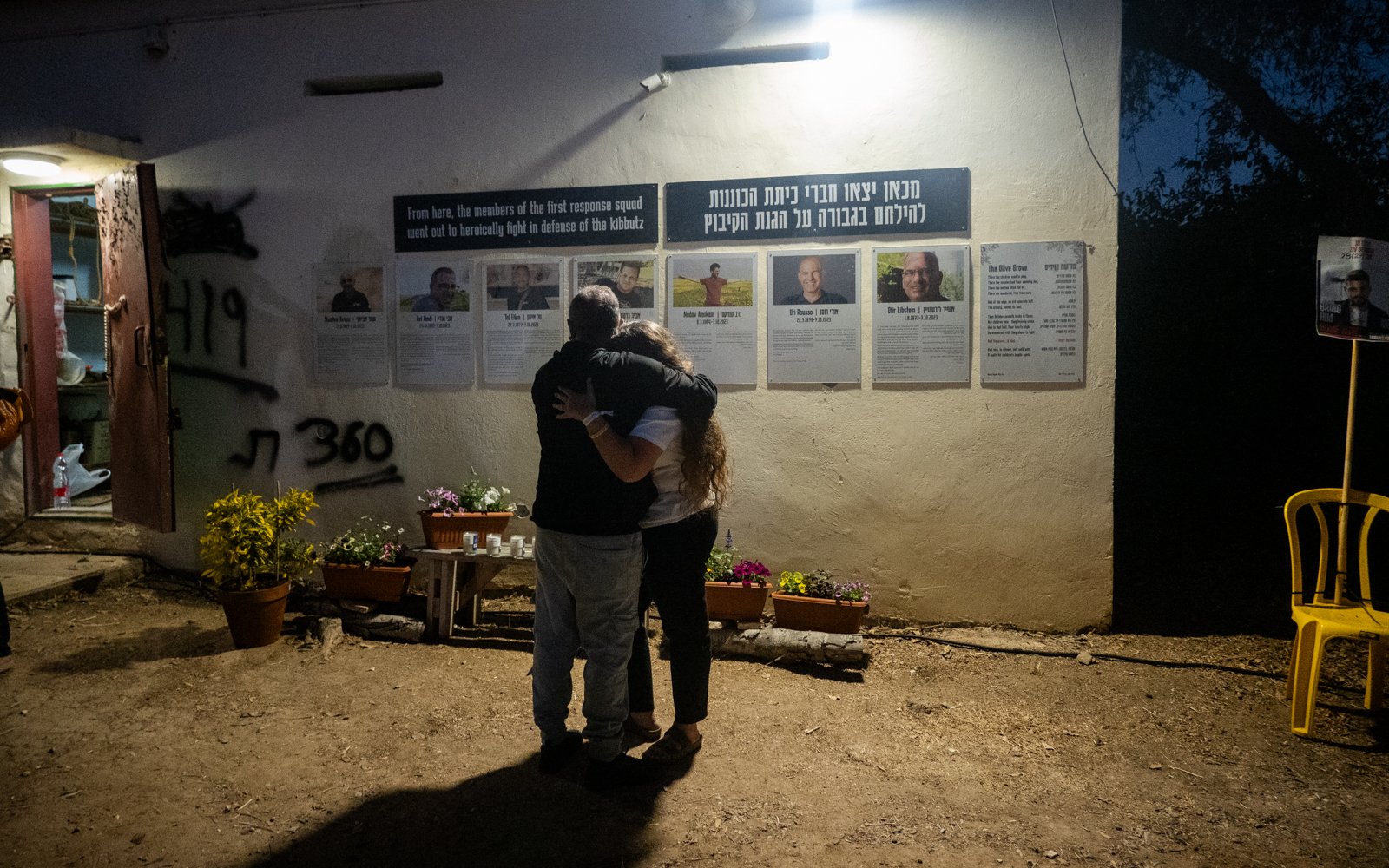
The ceremony, attended by kibbutz residents and military personnel, took place at Kfar Aza’s armory, the building that housed the weapons used by the community’s security team. Some of the fiercest fighting took place outside the building and seven members of the security team were killed. Their images, names and stories are on placards on the building’s wall, arrayed above a bench and a row of potted flowers. At Tuesday’s ceremony, kibbutz members embraced in front of their photos, lit memorial candles and left a bouquet of flowers.
After the brief ceremony, residents dispersed around the community to light memorial candles. Almost every home has a story. Here, terrorists killed two parents, leaving their infant twins alone for more than 12 hours. On this lawn, a son found his father’s body. Over there, a wounded member of the security team managed to call his wife before he succumbed to his injuries.
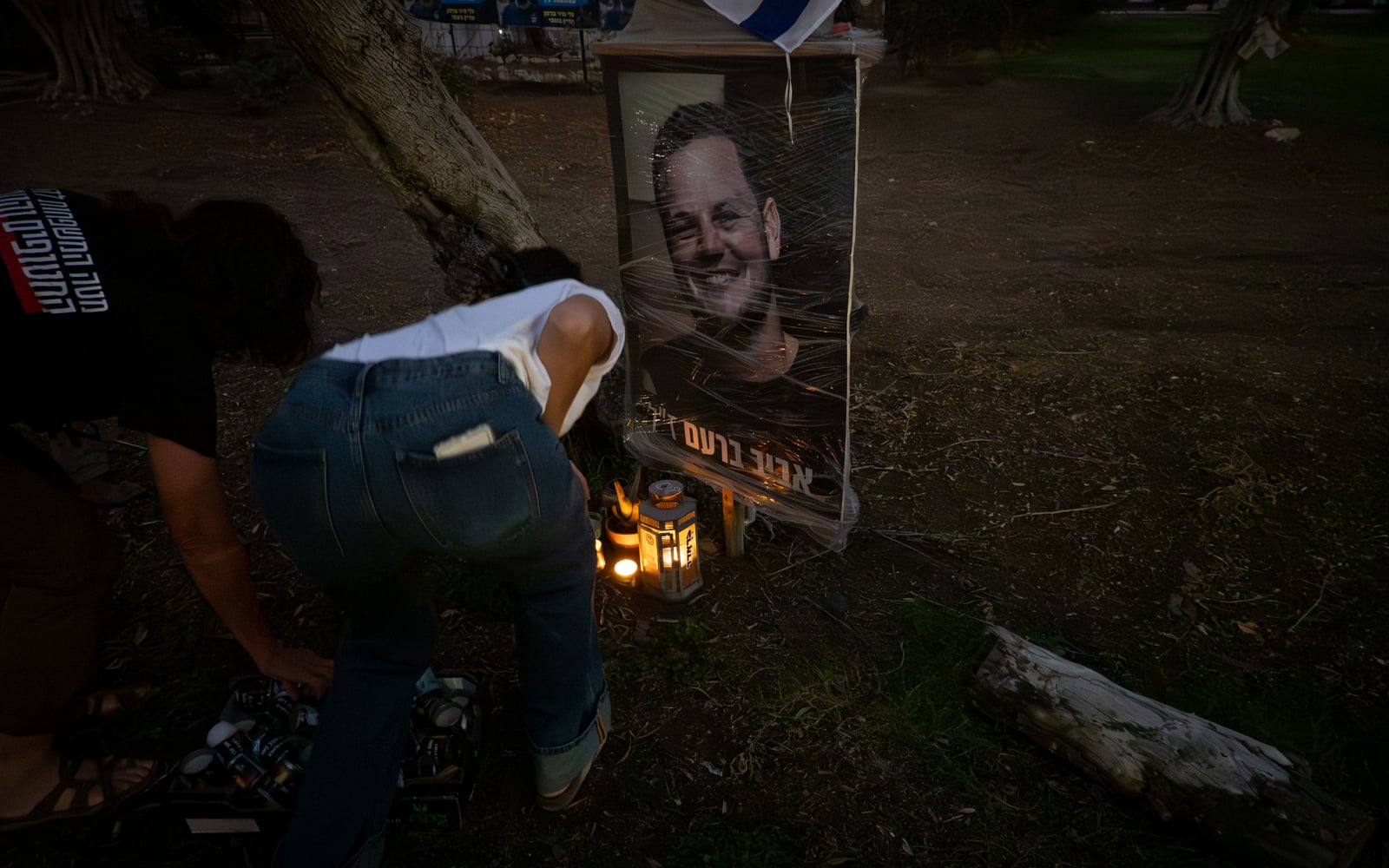
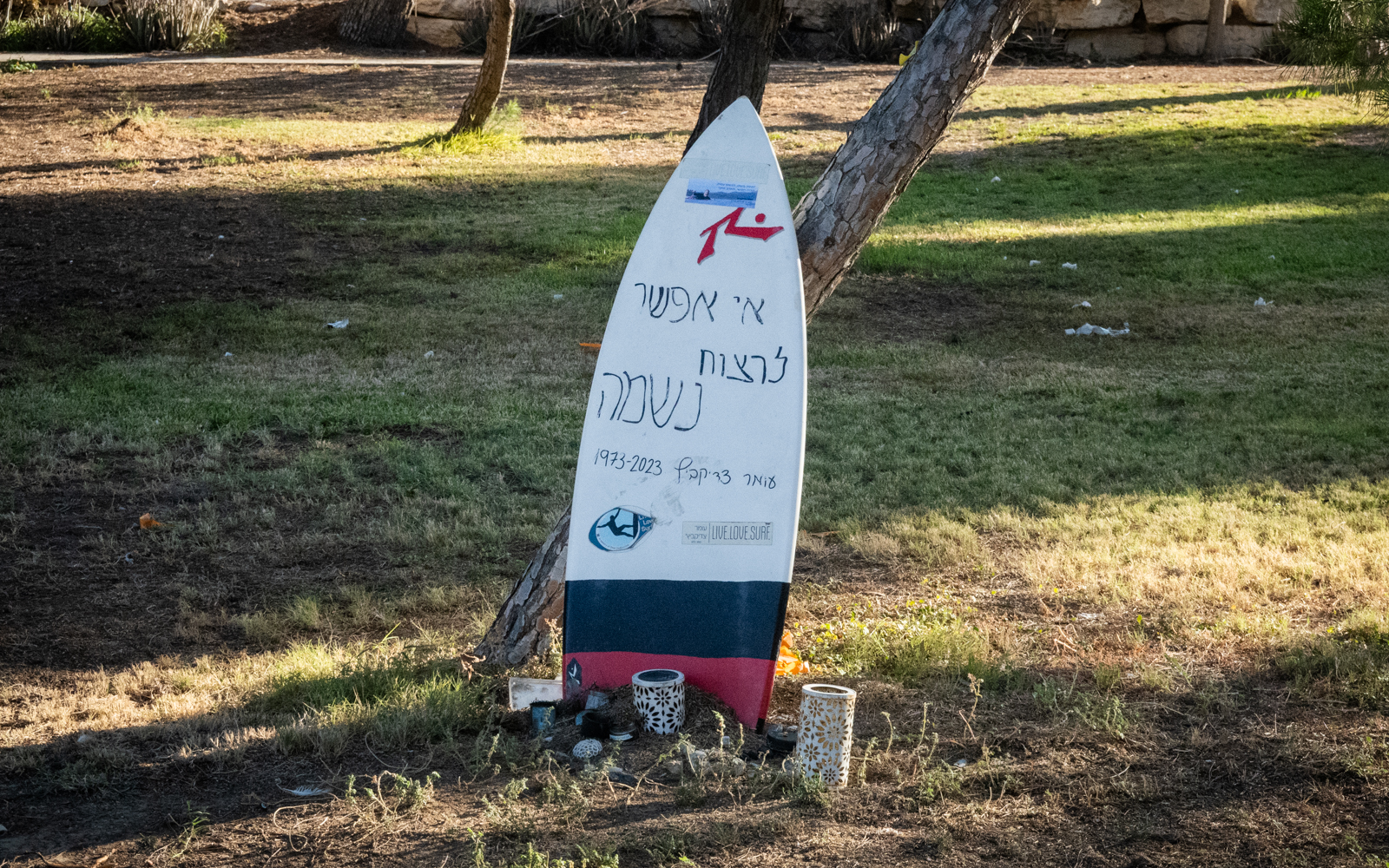
There are scattered, makeshift memorials to the dead. Where surfer Omer Zadikevitch was killed outside his home, there is a surfboard propped against a tree bearing his name and the handwritten message, “You cannot murder someone’s soul.”
Cohen, originally from the UK, lived in Kfar Aza for 37 years and was in charge of the community’s gardens. Her home was badly damaged on October 7 and she is staying in kibbutz Ruhama, a short drive to the east, where most of Kfar Aza’s refugees now live.
She said the community is in limbo, particularly because two of its members, the twin brothers Gali and Ziv Berman, remain hostage in Gaza. Their images are everywhere — on posters, on t-shirts, looming over the ceremony on a nearby tower.
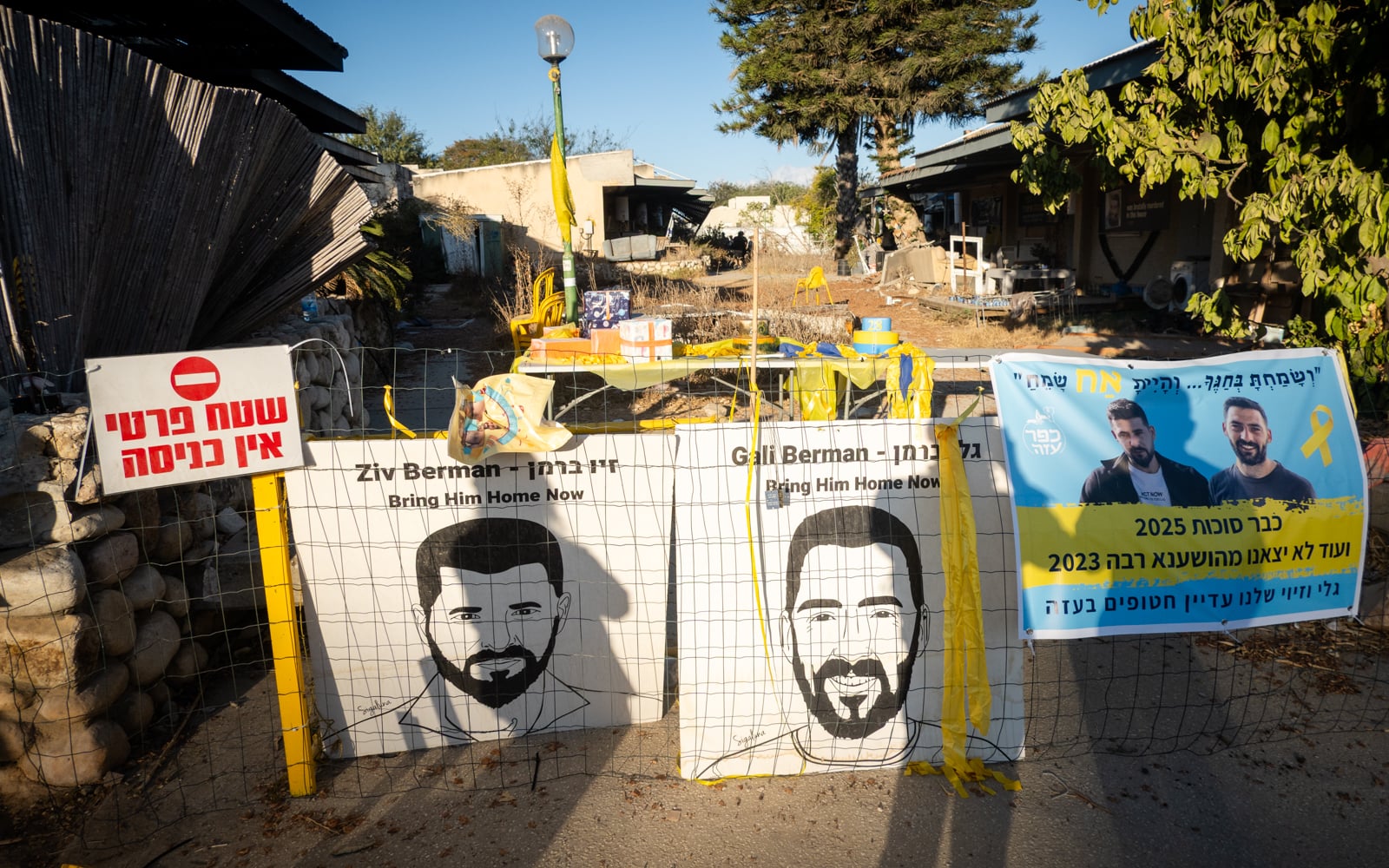
“Until they come back, people don’t feel they can move on,” Cohen said, while standing outside Kfar Aza’s “young generation” neighborhood, where the brothers lived. Out of 37 residents of that neighborhood, 11 people were murdered and seven were kidnapped and taken to the Gaza Strip.
“It’s hard to get your hopes up” for a hostage deal that would return the twins, Cohen said. “I don’t want to get my hopes up, but if they’re coming back at the end of the week, it’ll be a miracle. It really will, and then maybe we can start to move on.”
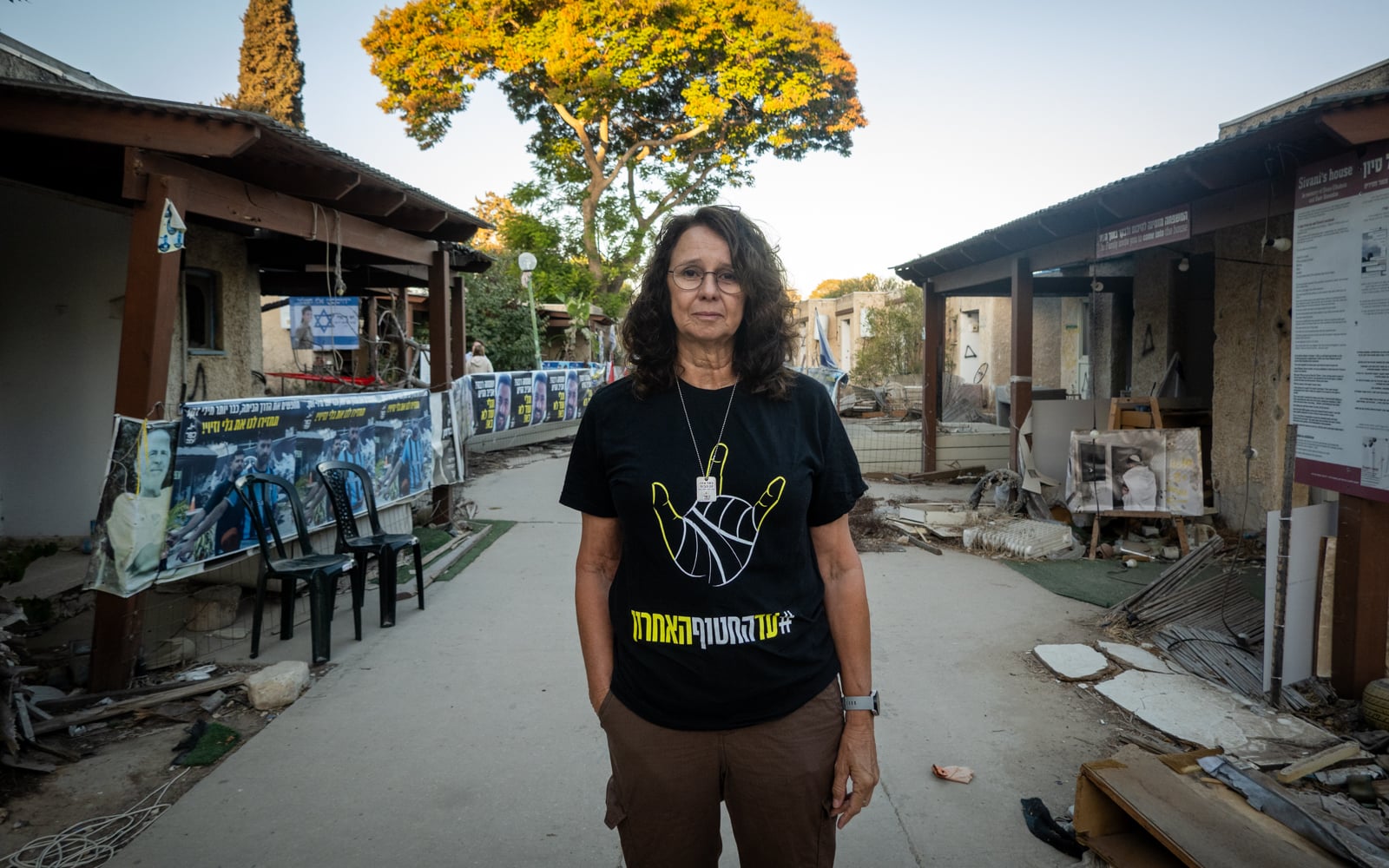
Debris is still piled outside the doors in the young generation neighborhood and signs at the apartment entrances say who was killed inside each home.
The family of Sivan Elkabets has turned her destroyed apartment into a “museum” commemorating their daughter and her boyfriend, Naor Hasidim, who was also killed. On the wall is a printed WhatsApp conversation between Elkabets and her parents, showing them grappling with the attack as it unfolded, speaking via text to remain quiet. In the first message, shortly after 7:00 a.m., Elkabets told her father to “lock all the doors.”
“We’re hearing lots of gunfire here what is happening?” she wrote after 9:00 a.m. A couple of hours later, she told her family she was hiding under her bed, that “they were at my window,” and asked if her parents were okay. By the afternoon, her parents’ messages to her went unanswered.
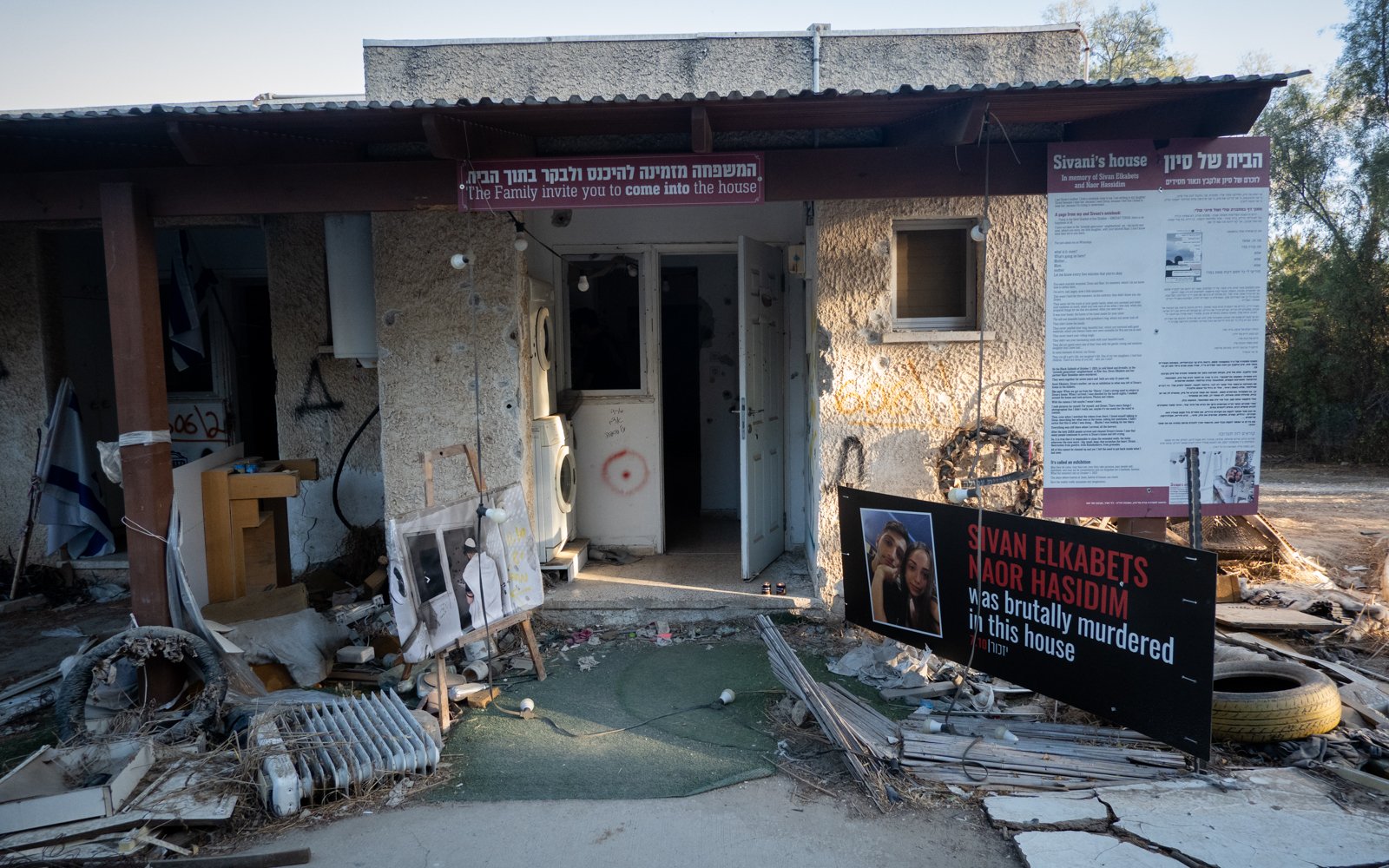
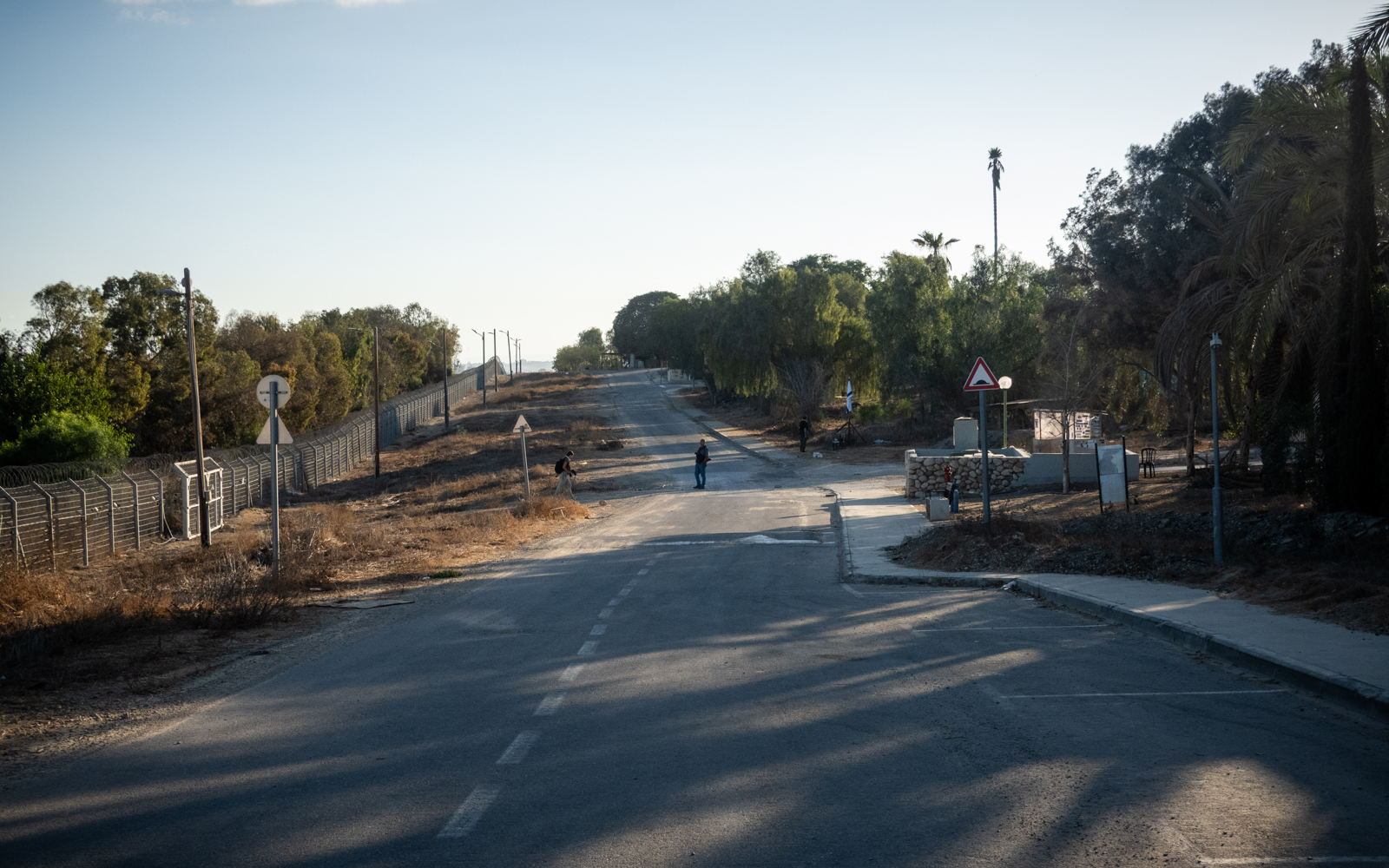
Just outside the apartment stood the gate that the terrorists used to haul their hostages back into Gaza, the Strip visible behind it. An explosion in Gaza sent a tower of smoke far into the sky.
The village was once an idyllic, tight-knit community, with bushes of flowers lining the sidewalks and colorful murals on its bomb shelters. It now bears the marks of its life interrupted and an uncertain future. A child’s bicycle stood next to a doorway, covered in dust, and a children’s trampoline was filled with dead leaves. Some homes are being renovated and construction materials are arrayed on lawns. Volunteers are helping the community rebuild.
In other ways, life continues. Flowers are still blooming and fruit grows on trees. As the memorial ceremony progressed, the sun rose, the darkness dissipated and the sky turned orange. The crowd, facing an Israeli flag at half-mast, sang Israel’s anthem, “Hatikvah,” or “The Hope,” as the event ended.
Residents of Kfar Aza sing Hatikvah shortly after 6:30 a.m. this morning at ceremony marking two years since October 7 pic.twitter.com/BdQ2jOEFdT
— Luke Tress (@luketress) October 7, 2025
Only a handful of families have moved back, and it’s unclear how many will return.
“We want to be able to come back here, but we have to be safe. We have to feel safe. Our bubble was burst. We believed everything that the army told us, that we were in a safe place, that we were protected, and that is damaged forever, and that needs to be repaired,” Cohen said.
Cohen is working to restore her gardens, coming to work on the kibbutz five days a week. Tanks drove through the community during the fighting, destroying many of the plants. Her damaged home is being renovated.
She said that on the first anniversary of the attack, “We were still so numb,” but for the second anniversary, “It’s not easier.”
“It’s not like, ‘Okay, it’s the second year. Come on, let’s get moving.’ It’s not. We’re stuck,” she said. “This one, things are starting slowly to bubble up, and I should think it’s probably going to be that way on the third one as well. But hopefully on the third one, we’ll be in a different place. We’ll be able to start rebuilding, start thinking about a future.”
“We’re a strong community, and we want to rebuild. We want to be able to come back here,” she said.





The Times of Israel Community.