

Diplomanic-depressive
Talks are on in Geneva, though some papers would rather focus on Israeli skepticism that a deal on Iran’s nukes can or should be made
 Add ToI as a Preferred Source on Google
Joshua Davidovich is The Times of Israel's Deputy Editor
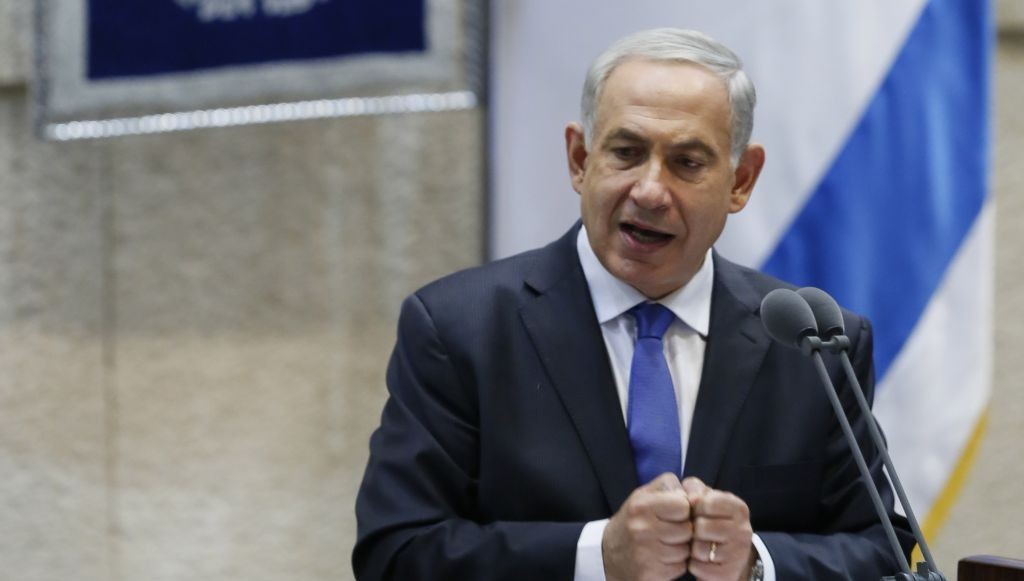
Israeli saber-rattling in the face of diplomatic overtures toward Iran may look incongruous on the world stage, but it is no less so on Israeli newsstands Wednesday, where each side of the story gets a star turn in Maariv and Haaretz respectively.
The other two papers, Israel Hayom and Yedioth Ahronoth, fill their front page real estate with domestic business stories, though they also face off inside on Iran, with Yedioth playing up diplomacy and Israel Hayom, perhaps the most hawkish of the tabloids, writing of Iranian refusal to take the talks seriously.
Haaretz leads off with the news of the day, that progress was made in diplomatic engagement in Geneva over Iran’s nuclear program. The paper’s Zvi Bar’el handicaps the risks and gains of the talks’ failure or success for each side, noting that Tehran will win even more regional influence if only it gives up its nuclear program.
“Until now, the phrase ‘Iran’s national interests’ was a euphemism for its nuclear program, which is based on enriching uranium to the point of a military threshold. But now it seems that Iran is willing to exchange that interest for another valuable one: leaving international isolation and gaining status as a worthy alternative to the Western countries, or at least as a possible partner for managing regional policy alongside the West,” he writes.
Maariv is a bit more downbeat, leading off with Iran’s claim that Israel is the only one still talking about war, and following that up with the proof, a la speech from Prime Minister Benjamin Netanyahu marking the Yom Kippur War anniversary in which he forbade putting the kibosh on a pre-emptive strike. However, it notes that the premier was far from unwavering in his commitment to the idea.
“Netanyahu admitted that a pre-emptive strike is one of the most difficult decisions a government must make, since afterward it is not able to prove what might have happened,” the story reads.
Yedioth runs a whole photo spread on Iranian Foreign Minister Javad Zarif’s back problems and the decision to cover up a carving of a naked guy in deference to the Iranian team. On the more serious side, the paper’s man in Geneva quotes an Iranian journalist (or many speaking in unison, if the reporter is to be believed) saying that this diplomatic push won’t be possible forever. “There’s been a definite change in Iran since [President Hassan] Rouhani was elected, but it won’t last without a change in sanctions and an improvement of the economic situation.”
Israel Hayom buries its Iran coverage on page 13, behind several pages on the State Comptroller’s report and other important stories, like a textile factory possibly closing. The paper’s tone is mostly dismissive of the diplomatic advances, noting that despite all the good feelings, Tehran still refuses to allow surprise inspection.
The paper’s Boaz Bismuth, parroting the official government line, which has already been repeated ad inifinitum, says that without sanctions, there will be no meaningful nuclear talks. You would think the logical conclusion would then be, since there are sanctions, very harsh ones in fact, the talks are very meaningful. But you would be wrong. “The question is, how far are the powers willing to go toward Iran. Today, it seems more like concessions are expected from the West and not from Iran. … The Iranian foreign minister said he didn’t come to Geneva to waste time… in the meantime, the only concession they have made is to speak in English.”
English cake
The Geneva talks aren’t the only thing with a little English on them. Yedioth reports that Teva, unable to spin its way out of the hullabaloo it kicked up by announcing mass layoffs, pulled a little body English and suspended the deal until further review.
Of course, the paper notes, Teva CEO Jeremy Levin didn’t come to the decision to re-rack on his own; he got a little help from labor boss Ofer Eini.
“Teva still doesn’t know how many Israeli workers will be laid off,” Eini said after a five-hour meeting with Teva bigwigs. “Once they know, we’ll have negotiations. There will be no firings in the restructuring without agreement from the Histadrut [national labor union].”
All the spin doctors in the world, though, won’t get Teva out of being cited in the State Comptroller’s report as one of several large firms given undue tax breaks by the government. The report, released Tuesday, accused the major companies of running roughshod over the Israeli economy with tax breaks, risky loans, trusts and getting unfair use of natural resources.
Hezi Shternlicht in Israel Hayom places much of the blame on the Finance Ministry, which it says fell down on the job in its work to oversee the country’s public finances.
“One predictable result of this sad conclusion is the way the Finance Ministry’s Capital Market division handles public pension funds. The regulator, responsible for supervision of hundreds of billions of dollars of public money, let it slip through their hands straight into the arms of tycoons, without performing adequate oversight.”
In Haaretz’s op-ed page Ravit Hecht says Israel should stop seeing Teva as Israel’s face in the world, but rather just another company looking for a buck.
“Teva doesn’t represent Israel, but itself and its shareholders, and it is no longer interested in the role of national icon, because that role no longer brings it any benefits. Just like that collection of foreign players known as the Maccabi Tel Aviv basketball team doesn’t represent Israel, the Jewish people or the descendants of the Maccabees, but instead efficiently services a strong global brand.”








The Times of Israel Community.