

Hamas said ready to accept PA forces on Gaza borders
Factions have yet to discuss implementation, but plan could pave way for opening of Egyptian crossing

 Add ToI as a Preferred Source on Google
Avi Issacharoff, The Times of Israel's Middle East analyst, fills the same role for Walla, the leading portal in Israel. He is also a guest commentator on many different radio shows and current affairs programs on television. Until 2012, he was a reporter and commentator on Arab affairs for the Haaretz newspaper. He also lectures on modern Palestinian history at Tel Aviv University, and is currently writing a script for an action-drama series for the Israeli satellite Television "YES." Born in Jerusalem, he graduated cum laude from Ben Gurion University with a B.A. in Middle Eastern studies and then earned his M.A. from Tel Aviv University on the same subject, also cum laude. A fluent Arabic speaker, Avi was the Middle East Affairs correspondent for Israeli Public Radio covering the Israeli-Palestinian conflict, the war in Iraq and the Arab countries between the years 2003-2006. Avi directed and edited short documentary films on Israeli television programs dealing with the Middle East. In 2002 he won the "best reporter" award for the "Israel Radio” for his coverage of the second intifada. In 2004, together with Amos Harel, he wrote "The Seventh War - How we won and why we lost the war with the Palestinians." A year later the book won an award from the Institute for Strategic Studies for containing the best research on security affairs in Israel. In 2008, Issacharoff and Harel published their second book, entitled "34 Days - The Story of the Second Lebanon War," which won the same prize.
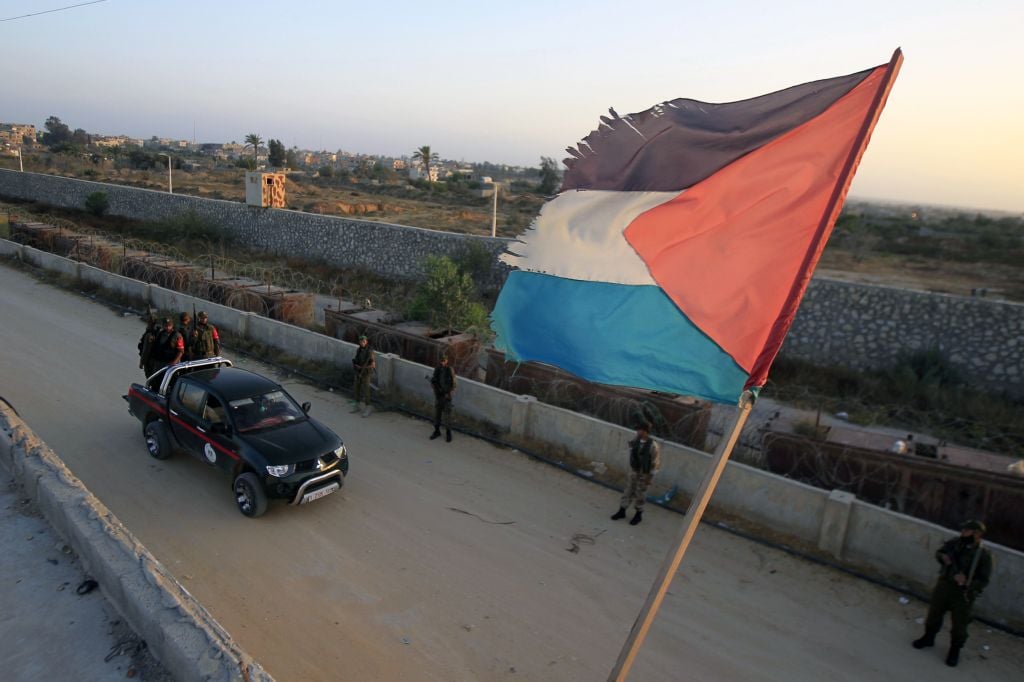
Palestinian factions Hamas and Fatah have agreed in principle that thousands of Palestinian Authority President Mahmoud Abbas’s troops will be deployed in the Gaza Strip, Palestinian officials told The Times of Israel on Sunday.
The move, coming as part of a reconciliation program between the two factions, would mark a significant return of Abbas’s forces to positions of authority in Gaza, seven years after Hamas seized the Strip from Fatah in a coup.
In theory, Abbas’s forces would be deployed on the borders and at crossings, but the officials stressed that the factions have only agreed in principle and have yet to discuss actual implementation, which would also require agreement from Israel in order to transfer the troops from the West Bank to Gaza.
Amid reports in July that Abbas was proposing the idea to Hamas as part of a ceasefire, Israeli sources said that Israel would not oppose the deployment of forces loyal to Abbas at a reopened Rafah crossing. Egypt has said it was not prepared to reopen the Rafah crossing unless forces loyal to Abbas were stationed there and along the border.
According to Abbas’s July proposal, PA forces loyal to him would deploy not only at the Rafah crossing, but all the way along the Philadelphi Corridor, the 14-kilometer stretch of Gaza-Egyptian border territory. The PA has set up a command force that would be transferred from the West Bank to Gaza to oversee the hundreds of personnel who would deploy.
The PA intends to build that wider Gaza force from the ranks of PA Presidential Guard and National Security members who live in Gaza and are paid by Ramallah, but have had nothing to do since Abbas’s forces were overthrown by Hamas in the 2007 coup in which the Islamist group seized power in the Strip. These potential recruits have already been informed of what may be ahead of them.
The factions announced that they had reached a “comprehensive” agreement Thursday for the return of their unity government in Gaza after two days of talks in Cairo.
The deal struck Thursday behind closed doors in the Egyptian capital is the sixth official accord between the two groups, but with major issues not yet resolved — including salaries for Hamas employees in Gaza and control over the coastal territory’s security forces — and concerns over possible new confrontations between the factions remain.
Outlining the deal’s provisions, senior Hamas official Moussa Abu Marzouk said the new unity government would start making some payments to government officials in Gaza, though the question of full salaries has been left to future negotiation.
He also said the government would jointly man border crossing points with Israel and Egypt and jointly administer a hoped-for Gaza reconstruction process, funded by donations from European and other western countries.
Hamas and Fatah have a long history of dashed hopes. The Palestinian rivals had set up a unity government of independents in June but it never took hold, with Abbas accusing Hamas of running a “parallel” administration as de facto ruler in the Gaza Strip.
Hamas in turn accuses Abbas’s Palestinian Authority, headquartered in Ramallah, of not paying its 45,000 employees in Gaza. The tensions appear to have spiked in recent weeks over Fatah claims that Hamas’s conduct of the recent Hamas-Israel war led to unacceptably high losses of life and damage to property.
AFP contributed to this report.









The Times of Israel Community.