

In the remote south, young Israelis and refugees celebrate Passover together
In event at Holot detention facility, participants draw parallels between Jews’ escape from bondage in Egypt and modern day asylum-seekers
 Add ToI as a Preferred Source on Google
Luke Tress is The Times of Israel's New York correspondent.
In a barren corner of the Negev desert, near the Egyptian border, dozens of young Israelis and African asylum-seekers danced to a drum beat, shielding their eyes from the blinding dust whipping through the crowd.
The Passover event, held outside the gates of the Holot detention center, sought to draw parallels between the conditions of asylum-seekers in Israel and the ancient Jews’ escape from Egypt.
“For Passover we mark the passage of the Jewish people from bondage in Egypt to freedom in Israel. Basically these refugees escape from bondage, and we, instead of giving them this freedom, that we say thank you for every Passover, we revoke it,” said Gal Shturm, one of the event’s organizers.
Israel is home to about 45,000 asylum-seekers, almost all from Eritrea and Sudan, according to ASSAF, the Aid Organization for Refugees and Asylum Seekers in Israel. The vast majority of African migrants living in Israel claim asylum-seeker status, but the state has recognized almost none of their claims since they began arriving in the mid-2000s.
According to the United Nation’s High Commissioner for Refugees, internationally, 84 percent of Eritreans and 56% of Sudanese asylum seekers received either refugee status or extended protection in 2014.
The government has fenced off the border with Egypt, preventing more refugees from entering, and in recent years very few have made it into Israel. The government tightened the border in 2012-3, because it feared a mass influx of migrants, who at one stage were crossing into Israel at a rate of several thousand per month.
Israel has also encouraged and paid for some asylum seekers to relocate to Uganda and Rwanda. Some of the refugees who left Israel drowned while trying to reach Europe, Shturm said. Israel contends most of the migrants who are currently in Israel came seeking new economic opportunities, not because they were fleeing danger at home.
The government detains asylum-seekers under the 1950s Prevention of Infiltration Law, originally aimed at prosecuting terrorist infiltrators entering the country, a legal interpretation that has been challenged by human rights groups.
The Holot detention center, about an hour’s drive southwest of Beersheba, houses around 2,000 asylum-seekers. They are required to check in during morning and evening hours but are free to leave during the day. The detention center, which is called an open facility, is operated by the Israeli Prison Service. They are usually confined to the facility for a year. The area is subject to extreme weather, there are no communities nearby and the inmates are left with little to do.
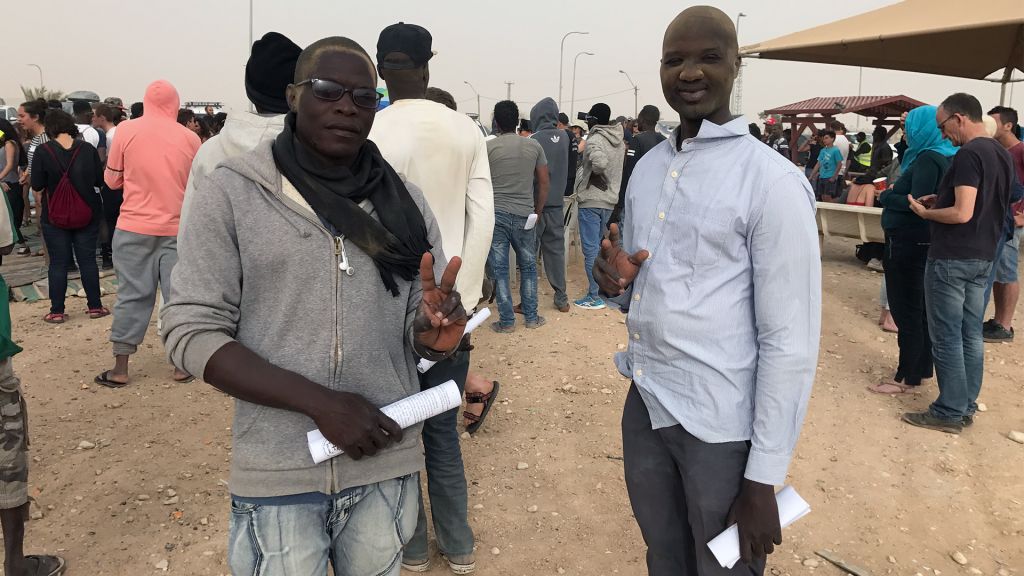
“The life in Holot is absolutely difficult, even the water that we’re using is not healthy. Surrounding us are cows and chickens, it’s smelling so bad. Also we need to educate ourselves but there’s not any school for education, so we’re just struggling,” said Ali Hassan Salih, from Darfur.
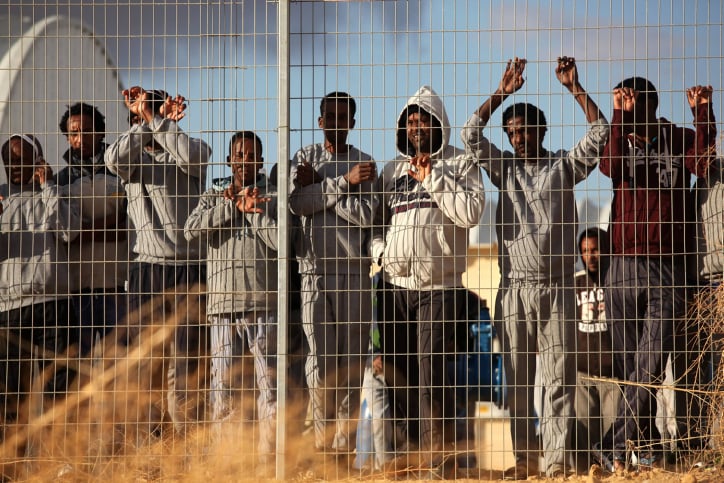
The facility cost around NIS 323 million to build, and costs roughly NIS 100 million to operate each year, according to Amnesty International.
The money could be put to better use integrating and caring for asylum-seekers, most of whom live in poor neighborhoods in south Tel Aviv, and many of whom suffer from psychological problems after suffering trauma in their home countries and during their journey to Israel, Shturm said.
Members of the Telem Mechina, a pre-army preparatory program located in Jaffa, visited the facility earlier this year. The 55 members of the mechina, which is meant to prepare them for leadership roles in the military and afterwards, do educational seminars on different areas of the country. They went to Holot during their first seminar, which included a tour of southern Israel.
“When we left there, almost the whole mechina left in shock from the situation the refugees were in,” said Shturm, who grew up in central Israel, near Netanya. “I’m angry, I’m also disappointed, because I see that this is the way that my country behaves. I’m ashamed first of all, because I feel part of the country,” Shturm said
Eight members of the mechina took a special interest, and began researching the subject and brainstorming ways they could take an active role in the issue, said Mika Friehmann, another member of the mechina and a childhood friend of Shturm’s.
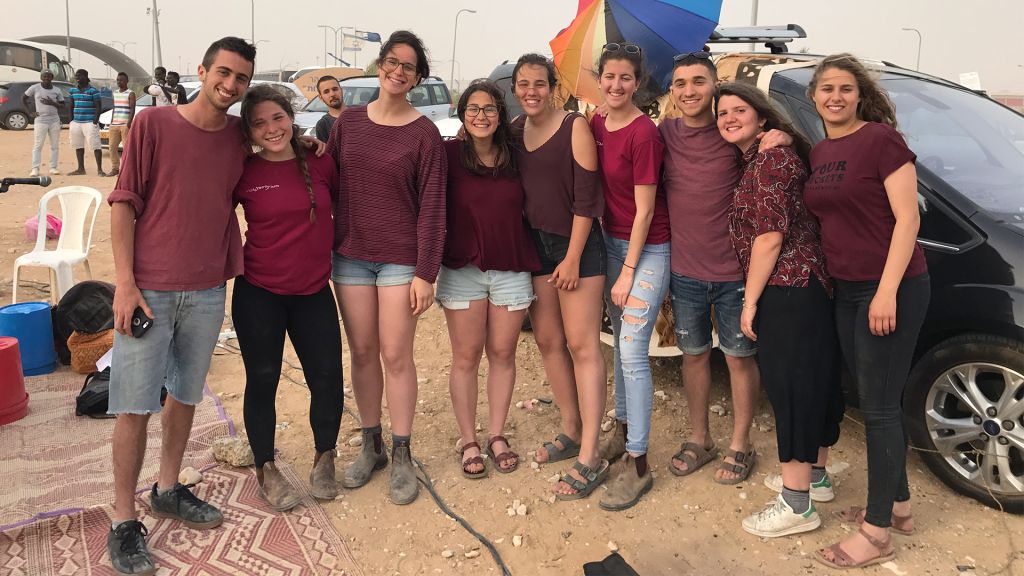
“We could be a lot more moral and just and considerate of the people who didn’t come here to ask for work, they really couldn’t stay in the places they came from, and I can relate to this story as a Jew. I feel really obligated to help,” Friehmann said.
They decided to organize a Passover celebration outside the detention center, together with inmates at Holot and with help from the nearby Bina Mechina and the advocacy group Rabbis for Human Rights. They opened a Facebook group to advertise the event and organized buses from Tel Aviv and Beersheba. The goal, Friehmann said, was to get people to Holot to see the conditions there and hear the stories of the residents.
“It’s really important, in my eyes, that people get to Holot themselves, and see the facility themselves, and hear the people talk and tell their stories, because it’s a subject that’s not talked about very much,” Friehmann said. “I really believe that the moment that people will get the information and meet the people, the situation will be different.”
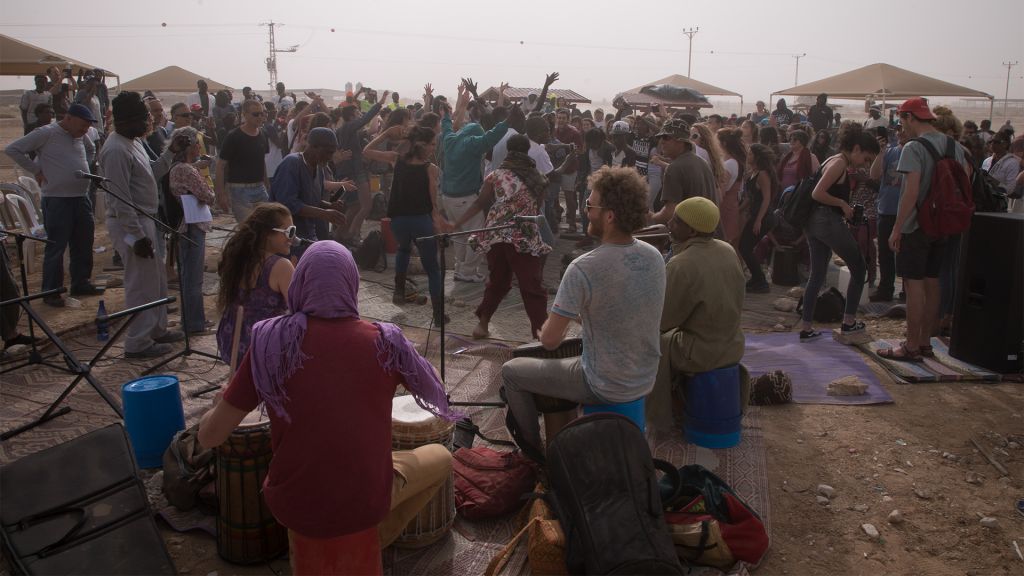
Around 250 people came to the event, held on Thursday evening, plus dozens of Holot inmates. The crowd listened to asylum-seekers and activists speak, read from a specially prepared Haggadah, ate and danced to reggae and live music performances. Spirits were high despite the fierce desert sun and the clouds of dust, which caked participants’ faces and sometimes obscured speakers from the view of the crowd.
“Today I feel good. I am really thanking the Israeli community,” said Hagos Takle, who fled military conscription in Eritrea and has been in Israel for six and a half years and at Holot for six months.
The Eritrean army forcibly recruits teenagers, who are kept in service indefinitely under brutal conditions.
“It’s not like national service like they say, you just stay there. You don’t get enough money, you’re lacking everything, you don’t have anything to eat,” Takle said.
Takle said he saw similarities between the story of Passover and the plight of Eritrean refugees.
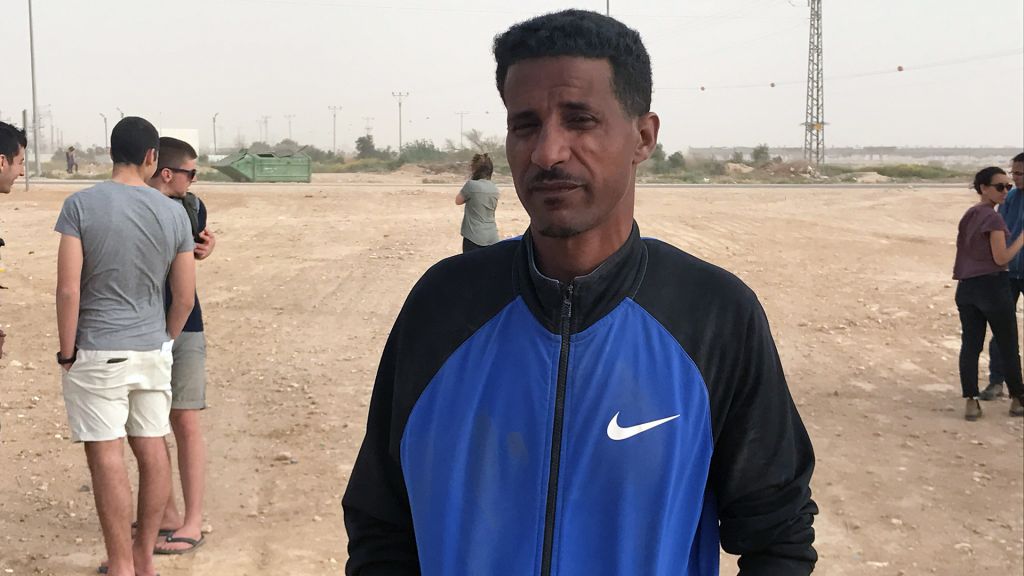
“They were slaves in Egypt for many years, and they passed this harsh life,” he said. “The Eritrean citizens are in the same situation. They are under dictatorship. They are prisoners inside the country,” he said.
Ali Hassan Salih, who fled genocide in Darfur and spoke to the crowd at the event, said he saw inspiration in the holiday.
“This is also telling me that I can struggle, because the Jews at that time, they’ve been suffering a lot, they struggled until they got their freedom,” Hassan Salih said.
Mohamed Yagoub, also from Darfur, has been at Holot for nine months. The Passover celebration gave him hope, he said, but he called on the Israeli government to address the problem and provide refugees with the opportunity to live and work in the country.
“We are so happy and glad to enjoy with all the Israelis, we feel like ‘whoa, there are some people that really care about us,'” Yagoub said. “Today I feel like there’s a hope, but we need implementation,” he said over the music, before returning to the dance circle.







The Times of Israel Community.