

Islamist candidate benefits from fresh anti-Mubarak sentiment following trial verdict
Egyptian public, seeking clean break from autocratic past, warm to Mohammed Morsi as alternative to former regime stalwart Ahmed Shafiq
 Add ToI as a Preferred Source on Google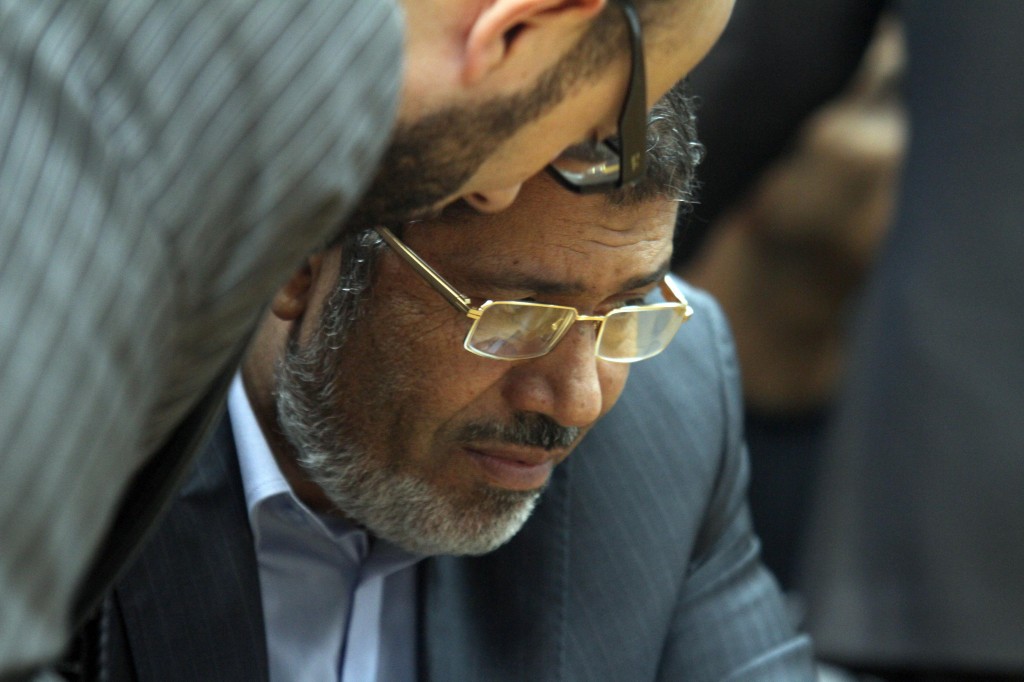
CAIRO (AP) — In a tight race for Egypt’s presidency, the Muslim Brotherhood is reaping an immediate benefit from public fury over the mixed verdict against former leader Hosni Mubarak and his aides. The outrage appears to have chipped away at some of the widespread skepticism among Egyptians who believe the Islamic group is as domineering as the old rulers.
Now some grudgingly are backing the Brotherhood’s candidate Mohammed Morsi as the only way to defeat the other hopeful in next month’s run-off, Mubarak’s last prime minister Ahmed Shafiq, who many fear would preserve a Mubarak-style autocratic regime.
After taking a more overtly Islamist stance in campaigning for the first round of elections, held last month, the Brotherhood has shifted gears to present itself as the voice of the “revolution” — playing off the fears of Shafiq.
“We no longer present Morsi as the candidate of the Islamic current but as the candidate of the revolution,” said Murad Mohammed Ali, spokesman for the Morsi campaign. “Thousands, ten of thousands (from former competition) are working with us on the ground to say don’t vote Shafiq.”
The Brotherhood’s strategy has divided the leftist and secular “revolutionary” leaders of last year’s uprising against Mubarak. While some have backed Morsi, others have called for a boycott of the June 16-17 run-off, saying the choice between a Mubarak stalwart and the Brotherhood is no real choice at all.
Others are trying to pressure the Brotherhood to accept the formation of a “presidential council” that would be give them a concrete role in governing alongside Morsi for a temporary period. The Brotherhood is reluctant to accept the proposal, which seems unlikely to get off the ground. If the group does reject the idea, it could open itself up to accusations by opponents that it seeks to monopolize power.
The campaign for the runoff is shaping up to be a cutthroat race. In the first round, Shafiq and Morsi each got around a quarter of the vote. In a sign of the widespread dissatisfaction with both of them, around 40 percent went to two other candidates — leftist Hamdeen Sabahi and moderate Islamist Abdel-Moneim Abolfotoh — whose main appeal was that they were neither part of the Brotherhood nor the former regime.
The first-round results were particularly a blow to Morsi. In parliamentary elections late last year, the Brotherhood won more than 10 million votes — gaining it nearly half of the legislature’s seats. In contrast, Morsi got 5.7 million votes.
Many see that drop in part as a backlash against its attempts to dominate policy making during the transition period, which fueled the group’s reputation as power-hungry and anti-revolutionary. Particularly, the group caused an uproar by insisting on Islamist domination of a panel tasked with drafting a new constitution. The panel was disbanded after liberals and leftists walked out, and negotiations to form a new one have been deadlocked. Now, advisers to the ruling military are suggesting the generals — rather than the Brotherhood-led parliament — form a new panel.
Now the Brotherhood has energized its powerful electoral machine in a bid to shed that image, approaching those who have been at odds with it to argue that it shares their goals, such as purging state institutions from Mubarak cronies or upholding a more equal social policy.
Its activists have reached out to local anti-Brotherhood groups to try to persuade them to back Morsi. They have even approached local campaign workers of Sabahi and Abolfotoh, asking them to campaign for Morsi.
They are also trying to tap into the anger over Saturday’s verdicts from the 10-month trial of Mubarak. The ousted leader and his ex-security chief Habib el-Adly were both convicted and sentenced to life in prison for failing to stop the killings of some 900 protesters during last year’s uprising. But six top police commanders were acquitted. And Mubarak and his two sons were acquitted of separate corruption charges.
The verdicts caused an uproar, sending thousands in the streets in Cairo and other cities, who saw them as failing to deliver justice. The crowds remained in Cairo’s Tahrir Square for a third day on Monday. The Brotherhood has backed the rally, unlike most other protests the past year.
Late Sunday, Morsi met with the relatives of some of the “martyrs” — protesters killed during last year’s uprising — and pledged that the Brotherhood would ensure new trials against Mubarak and new investigations into their loved ones’ deaths.
Ramadan Ahmed, the father of one martyr, said he will put aside his disappointment over the Brotherhood’s performance in the past months and will vote for Morsi.
“This is a critical moment and we must agree,” he said. “Later, we can hold the Brotherhood accountable (for their mistakes). Morsi is a good Muslim man. He is not Hosni Mubarak and is definitely better for us than Shafiq.”
Salah Radwan, a 36-year old protester who was only recently a staunch critic of the Brotherhood and supported Abolfotoh in the first round, has now been arguing in Tahrir in favor of backing Morsi. Aware of his strong speeches against the group in his downtown Cairo neighborhood of Abdeen, the Brotherhood approached Radwan before the Mubarak verdict and asked him to work on its side.
Radwan said he accepted grudgingly, reasoning the Brotherhood would balance out the military and elements from the old regime. He said he hopes that Brotherhood fears of eventually losing voter support at the ballot box would keep them in check.
“It was despite myself,” he said, of backing Morsi. “He would be better than another Mubarak.”
Radwan and others are also looking at the protests in the square as a way to pressure the Brotherhood into further concessions, such as the presidential council proposal. Sabahi, the third-place finisher in the first round, has emerged as a popular figure from the elections and has strong support among the Tahrir protesters which he has also used to promote the idea of the presidential council.
Morsi met Monday with both Sabahi and Abolfotoh, part of efforts to see if the rivals can work together in a front against Shafiq.
Sabahi and Abolfotoh are pushing for the creating of a presidential council instead of holding elections. They also want the enactment of a parliament-backed law that would ban former regime figures like Shafiq from running for office. The law is on hold, under review by the Supreme Constitutional Court.
The three agreed on backing demands for the law and called for mass protests Tuesday against Shafiq. But the Brotherhood balked at the presidential council idea, saying further discussions were needed.
Ali, Morsi’s campaign manager, challenged the “legality” of such a council and said the group instead offered to form a coalition government and create posts for vice presidents. He also raised concerns that the ruling military could delay handing over power to a council.
“We are walking a tightrope here,” he said.
Some of those who backed Morsi as the “lesser evil” in the race are now dialing back their support some, in hopes of a “third option” could materialize in the form of the presidential council.
Gigi Ibrahim, a member of the Revolutionary Socialists, a group that came under heat from other pro-revolutionary groups for initially supporting Morsi after the results, said the Brotherhood should make concessions to earn that support.
“They have to answer to sustain these gains. They have to give something, ” said Ibrahim. If Shafiq does win, “the street will be their only option.”
Copyright 2012 The Associated Press.


The Times of Israel Community.