

A 14-year-old flew to Israel to film a documentary about Oct. 7. It premieres on Sunday
Teaneck, NJ, teen Hillel Kornwasser found magnitude of Hamas atrocities so incomprehensible that he created the film ‘Forces of Resilience’ to process them
 Add ToI as a Preferred Source on Google
Reporter at The Times of Israel
NEW YORK — Hillel Kornwasser remembered feeling quite disoriented when he walked out of Newark Liberty International Airport this past February.
“It was like the temperature had shifted. Everything just felt so secondary. Everything I was doing just took a back seat,” Kornwasser said in an early morning video interview from his kitchen before heading off to school.
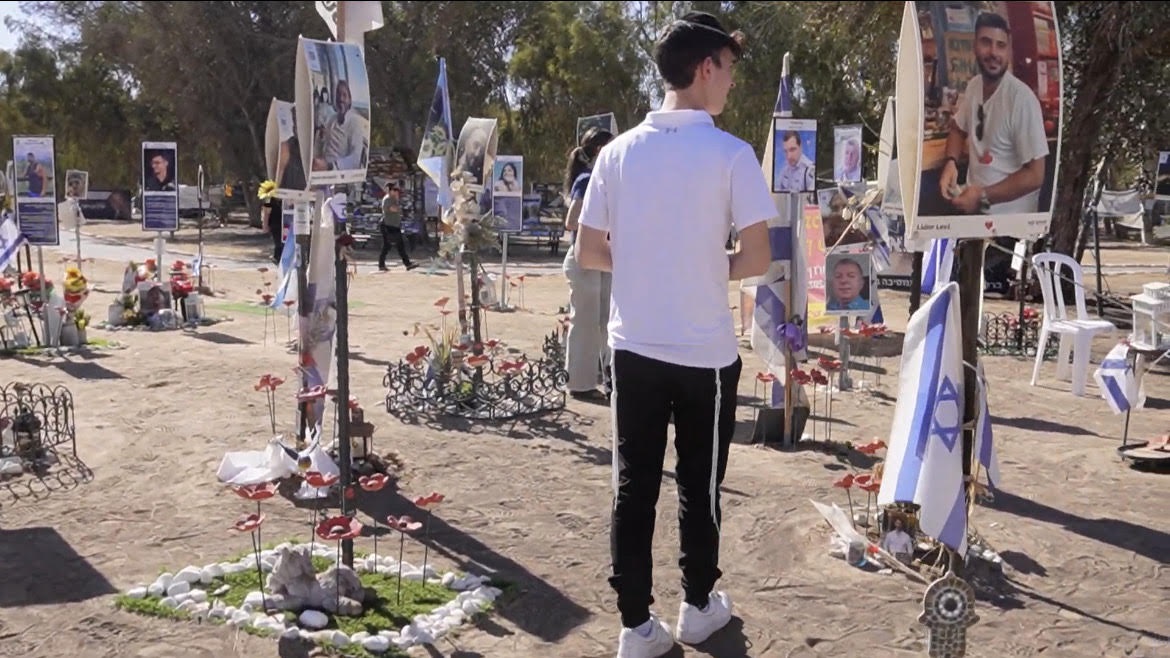
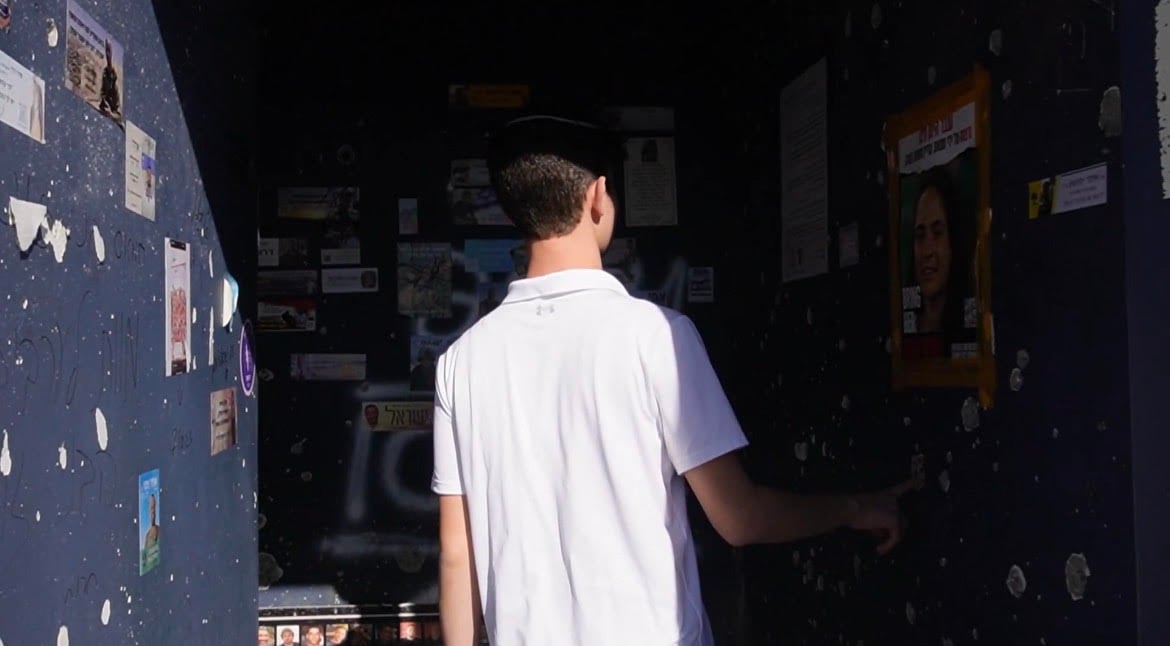
The then-13-year-old had just returned to the United States from a visit to Israel, where he had visited the site of the Supernova music festival where 364 people were murdered during the October 7, 2023, Hamas terror onslaught. The trip prompted him to return a few months later to film his documentary “Forces of Resilience.”
The film premieres in Kornwasser’s hometown of Teaneck, New Jersey, on December 22, and requires pre-registration to receive the location of the screening for safety reasons. It focuses on how various people are coping in the aftermath of the massacre in which 1,200 people in southern Israel were slaughtered and 251 taken hostage to the Gaza Strip.
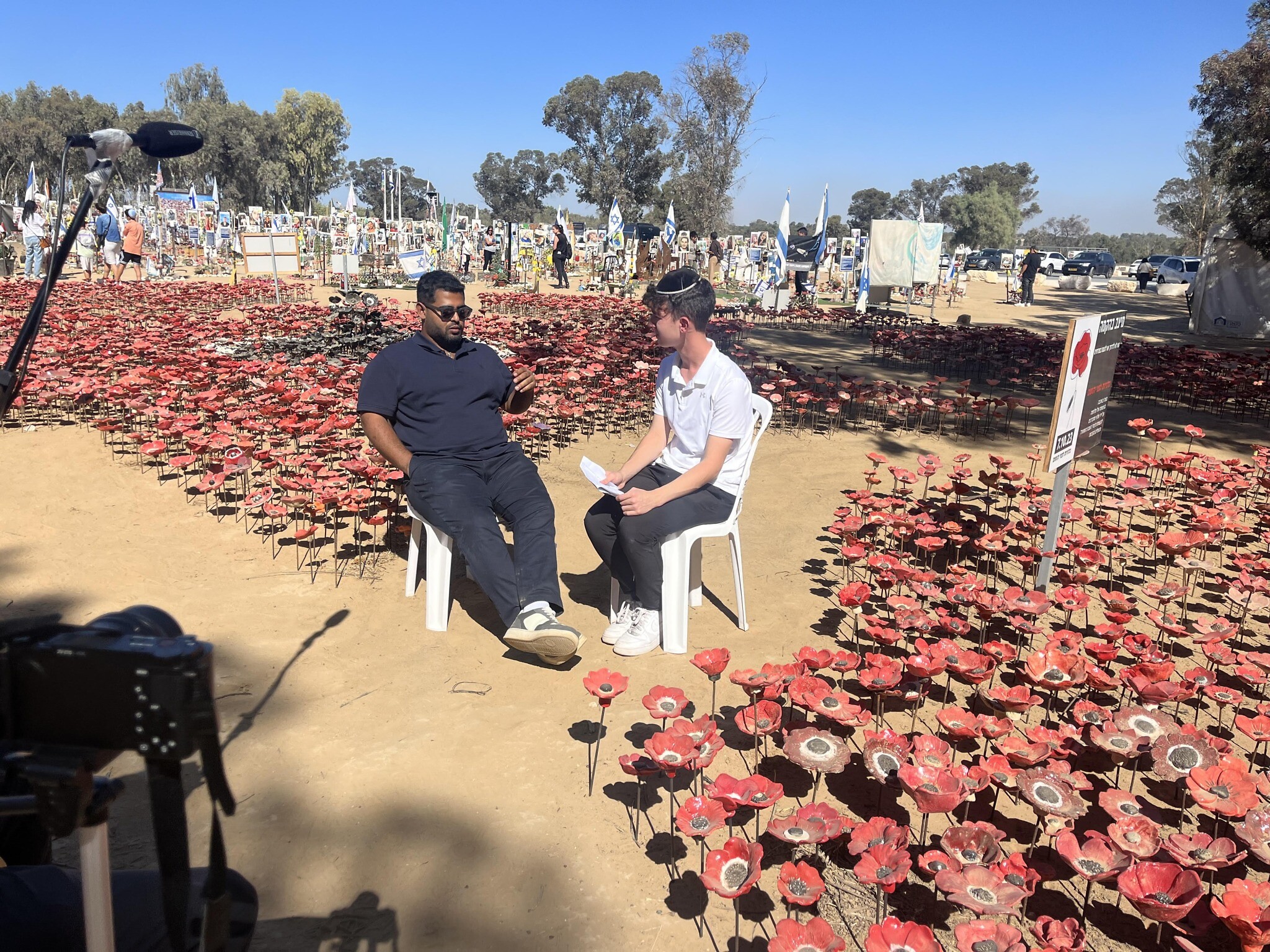
It features interviews with Supernova music festival survivors Daniel Sharabi and Amit Musaei, both of whom walk with Kornwasser through the festival site and talk about their friends who were murdered. It also features interviews with Shabbos Kestenbaum, a Harvard University alumnus and activist, as well as Jen Airley, who, after her son Binyamin was killed in battle in Gaza, started Beit Binyamin, a retreat in Safed for Israeli soldiers and bereaved and displaced families. Airley will speak at the premiere.
A freshman at the Orthodox Jewish yeshiva high school, Heichal HaTorah, in Teaneck, Kornwasser was in the synagogue on the Simhat Torah holiday when he first learned about the Hamas invasion. The news was coming in fits and starts, and so it wasn’t until later that day, when his friends came over to play basketball, that a fuller picture of the massacre emerged. Yet, even then, Kornwasser said it did not quite register.
“At that point, I still didn’t understand the magnitude of the attack. Part of me was thinking why are we so down? This is supposed to be Simhat Torah, a really happy, exciting day. I was confused. And that is partly why I decided to do this project,” he said.
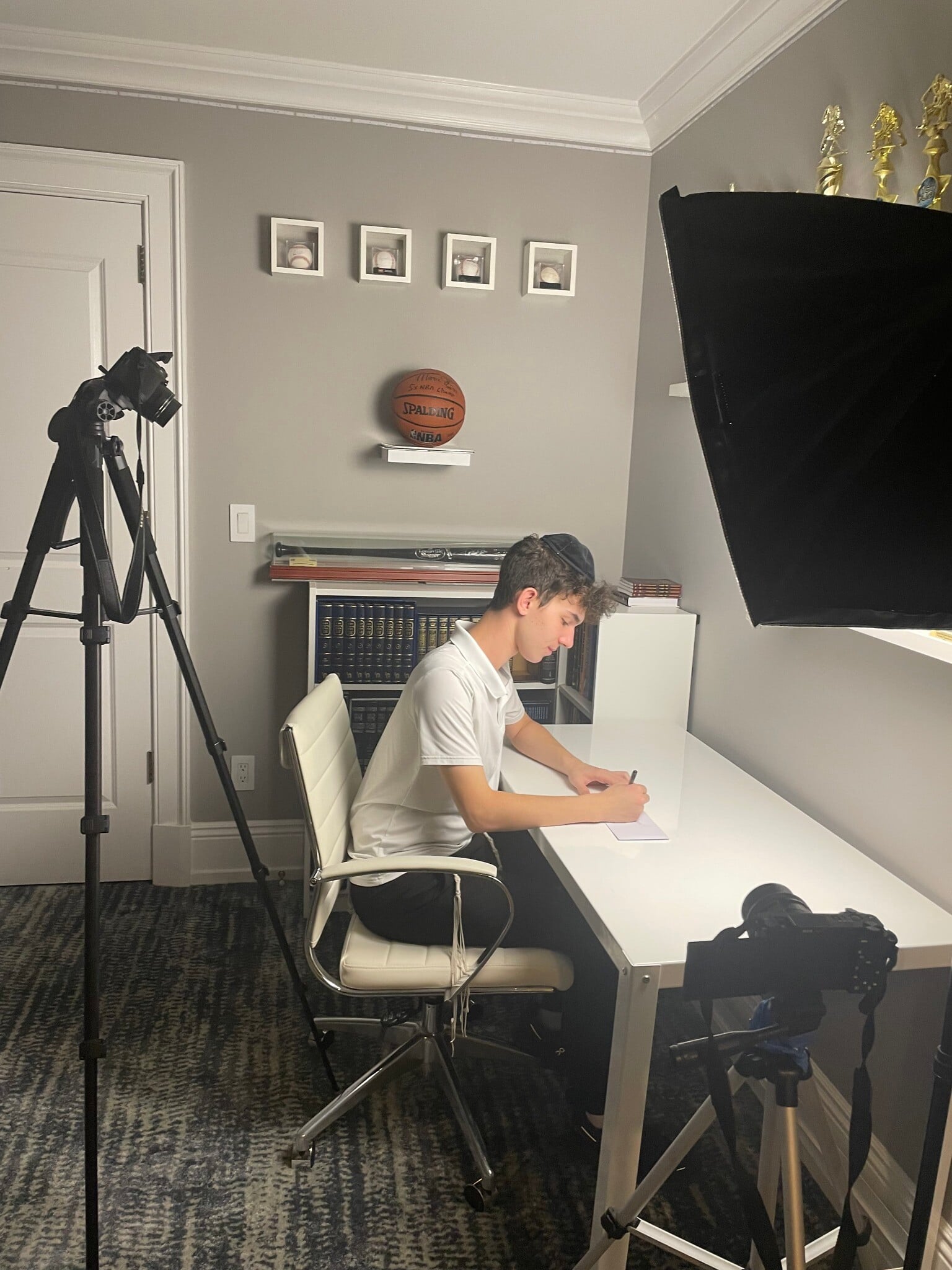
And so after that February visit, he got to work, purchasing professional-level equipment. He partnered with the Orthodox Union’s Jewish youth group NCSY, which helped him produce the 30-minute film.
“My goal is for people to connect to that day and think about what they can do,” Kornwasser said.
The following interview has been edited for clarity.
The Times of Israel: Can you tell us a little more about how you felt in the first days after your visit to Israel last year?
Hillel Kornwasser: I was kind of depressed. I wondered why is everybody not feeling the same feeling as me. I realized they don’t really understand that I was just at the Supernova festival site where 364 people were brutally murdered. They didn’t understand that I just had eaten BBQ with soldiers who an hour and a half before had been fighting in Gaza and lost five of their friends. These were things I wanted people to feel here in America.
You’ve said that your mission was to try to understand the attack. Do you think you achieved that mission?
I don’t think it’s possible to ever fully understand why people would do [such a thing]. So I’d say I got closer to understanding what happened on that day and understanding people like the Airleys, who I’ve gotten really close to, or Shabbos Kestenbaum, who is so impactful and inspiring.
In the film, you ask how we recover from the biggest massacre of the Jewish people since the Holocaust. Have you found an answer?
I would say that the word recover is a hard word to use. Resilience is probably the word I would use. The idea that you fall down and you get back up. You still have the bruises, you still have the cuts, and you still have the scars — but you keep standing back up. Otherwise, what is it all for? The soldiers on the front lines don’t want us falling down. If we did, there would be no reason to fight for us. People like the Airleys don’t want us falling down. It’s about resilience. We need to show pride in Am Yisrael [the Nation of Israel].
So I wouldn’t use the word recover, because there are people who were brutally murdered and you can’t recover from that. There is still Hamas out there and Hezbollah. There are still antisemites all around. So resilient is the word I would use because it’s about falling down, but getting back up.
There are few 14-year-olds who dive into such a tragic and brutal subject. How did you handle the emotional aspect of this project?
There were moments when I was going through footage to use for the film and I would see something graphic that I hadn’t planned on. Or there would be a heart-wrenching moment to watch. I would have to stop and go take a walk. Like, while I was working on the Jen Airley section, there was stuff that was just so hard I had to stop and go take a walk. My parents have been really helpful. My mom is a psychologist and my dad is in the medical field, so they have both been very helpful in understanding my feelings.
In the film, Jen Airley, who opened her bedroom door after a nap to find out that her son was killed in combat, talks about how her faith has actually gotten stronger since her tragedy. Has your faith also grown stronger while working on the film?
Yes, 100% my faith has grown. There were times when I asked myself, why? Why did God do this? Why did this happen? I think there are lots of ways you can look at [October 7]. So I choose to look at it from the idea not why did this happen, but what can I do.


The Times of Israel Community.