

As Italy’s citron crop fails, an archaeologist looks to fruit’s 2,500-year history in Israel
After a disastrous frost that looks to wipe out the majority of this year’s etrog yield, Chabad Jewry braces for a crisis ahead of the Feast of Tabernacles
 Add ToI as a Preferred Source on Google
Deputy Editor Amanda Borschel-Dan is the host of The Times of Israel's Daily Briefing, What Matters Now and The Reel Schmooze podcasts, and heads up The Times of Israel's features.

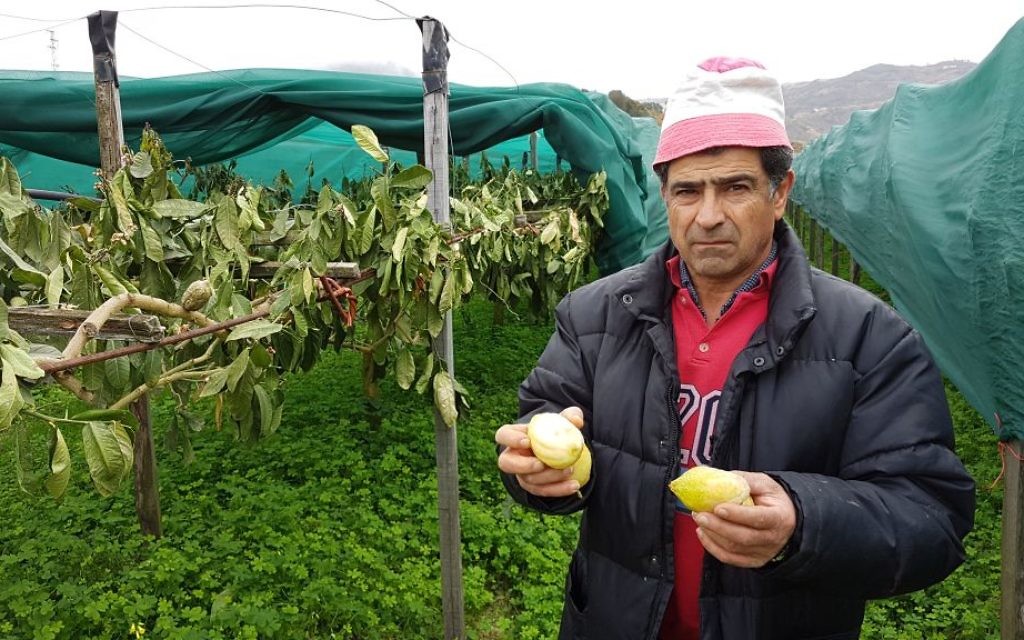
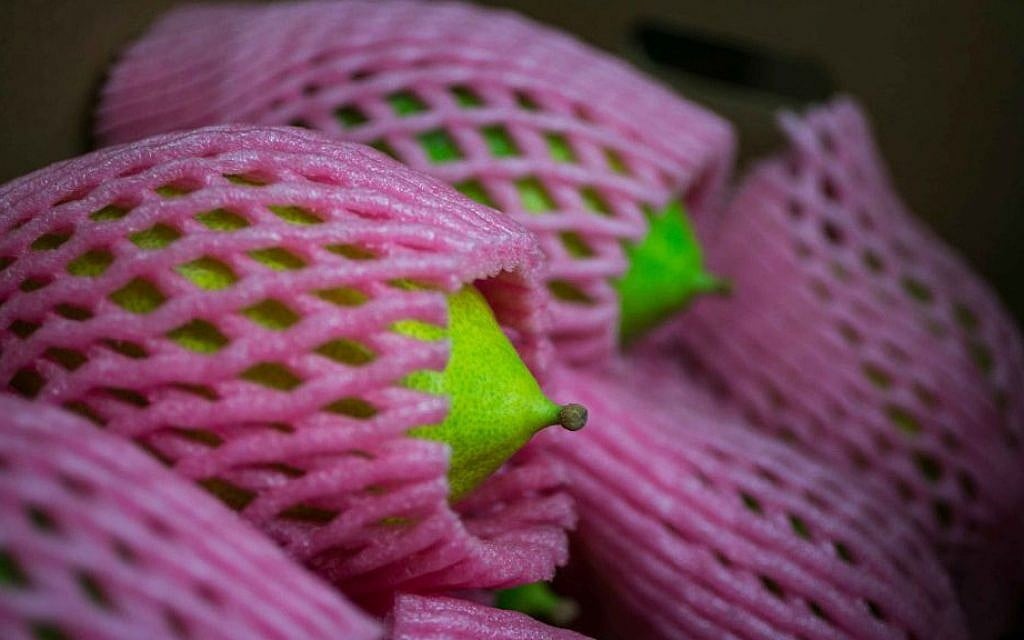
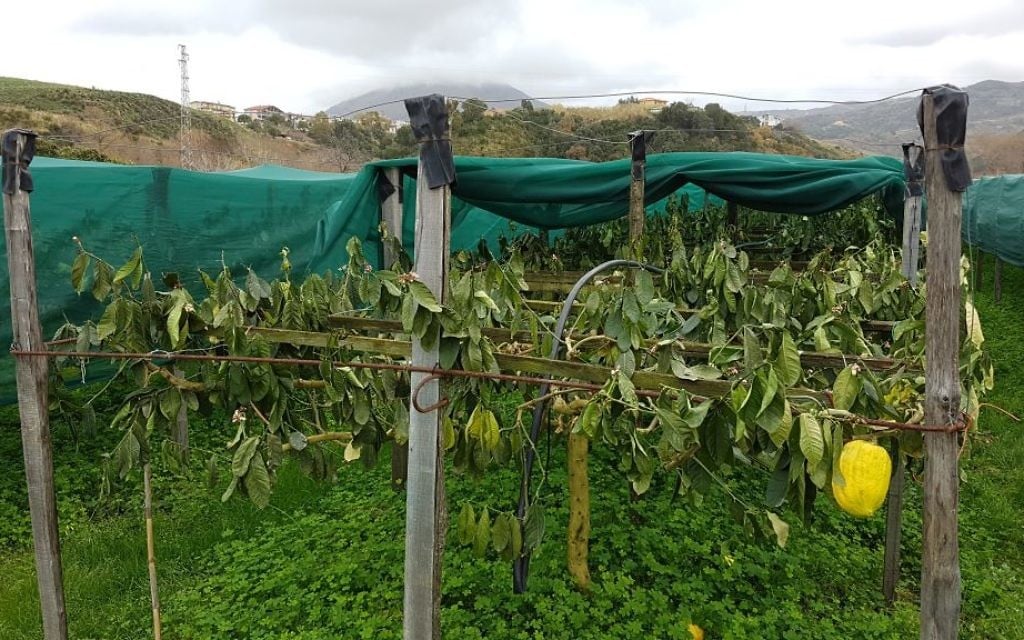
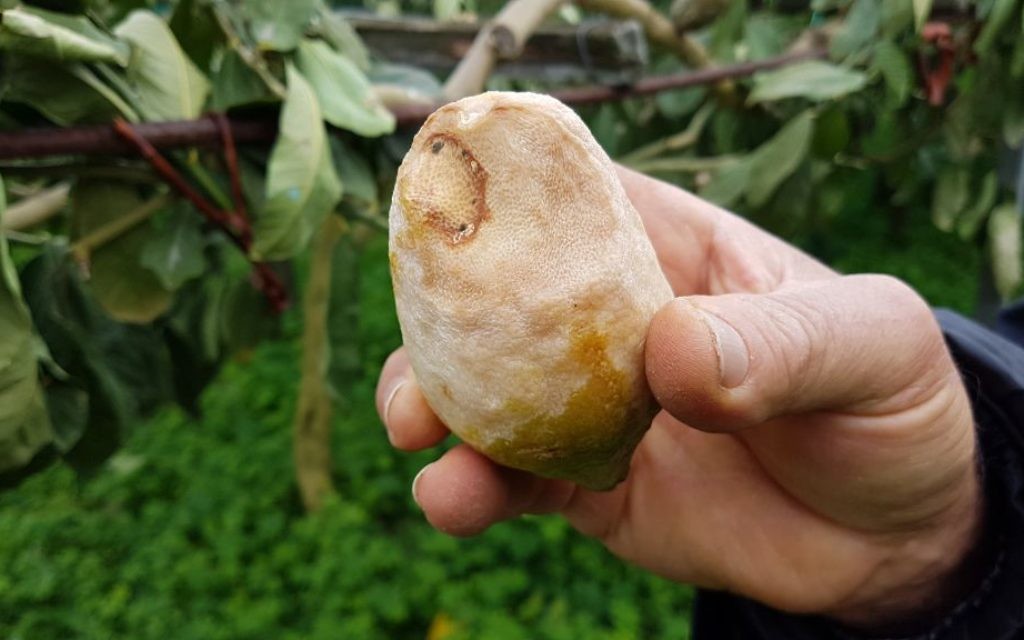
For the past 70 years, Lubavitcher Hasidim around the world have had only one choice for their citron — required for ritual use as one of the four species during the autumn pilgrimage holiday of Sukkot — the Calabrian or Yanover (Genoa) etrog. But due to an unexpectedly destructive January frost, it doesn’t look like there will be enough to go around this year.
There are some 12 strains of citron considered suitable for use in the eight-day Feast of Tabernacles celebration. However, at the bidding of the late Rebbe Menachem Mendel Schneerson, adherents of Chabad Hasidism from around the globe have only purchased the Calabrian fruit since the 1950s.
Chabad’s connection to the Calabrian citron goes back even further, to the movement’s foundation in the 18th century when Rabbi Schneur Zalman of Liadi (1745-1812) controversially taught that when God told Moses that the Jews should take an etrog for the Sukkot holiday, he sent messengers on clouds to gather them in Calabria, according to an article on Chabad.org.
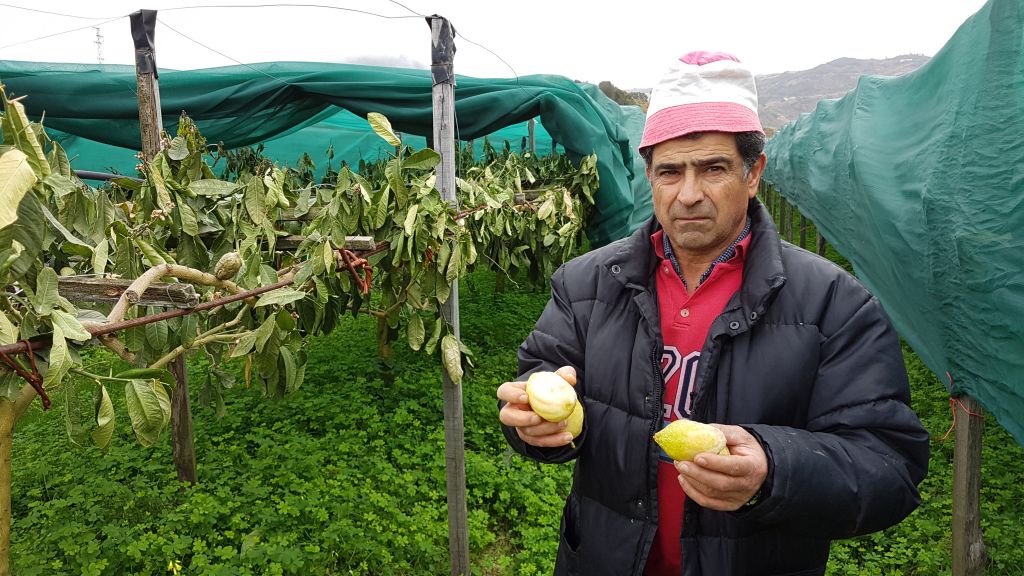
But that may be a problem as this year’s crop is in danger after four days of below-zero weather in the region has destroyed some 80 percent of the citron trees.
“I am just coming from the fields now; there is nothing to cut at all,” Rabbi Moshe Lazar, a Chabad-Lubavitch emissary in Milan, Italy, who has been traveling down to Calabria to oversee the kosher etrog harvest since the mid-1960s, told Chabad.org.
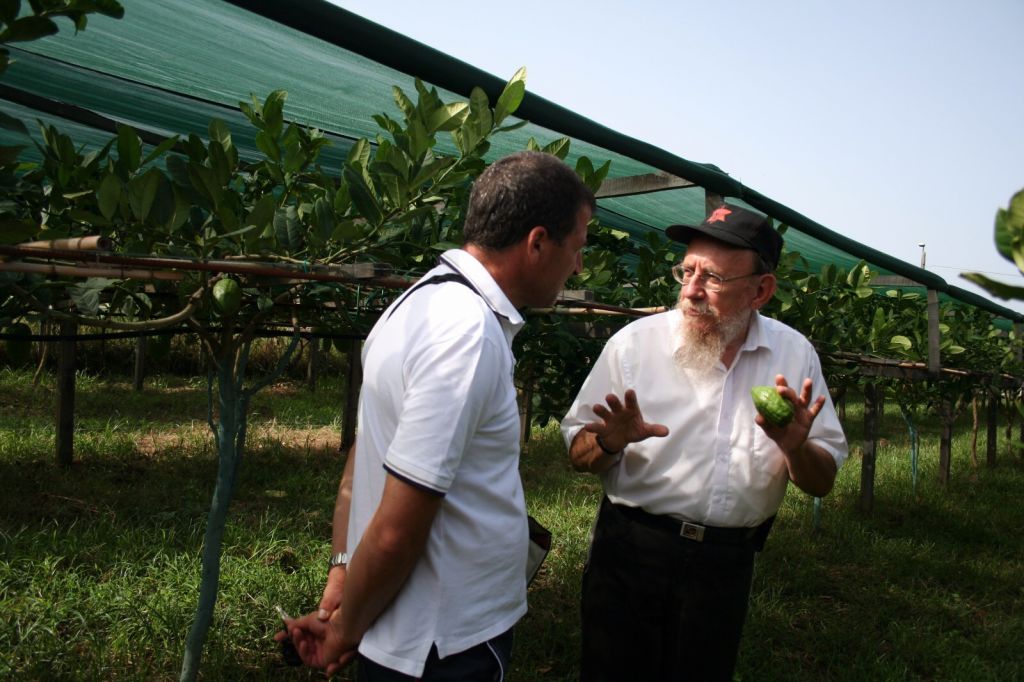
The natural disaster, alongside the closure of the small family citron farms to make way for tourism, make for a dim future for Chabad Jews reliant on this citron, which has been grown in the region for at least 2,000 years.
So perhaps they should look to a place where they have been cultivated for even longer — Israel.
A recent study of the migration of citrus fruit to the Mediterranean region by Tel Aviv University Prof. Dafna Langgut illustrates through archaeobotanical proof that the citron first appeared in Israel, and only about 500 years later in Italy.

Langgut’s discipline of archaeobotany involves the identification of botanical remains in archeological contexts. In the case of the citron (Citrus medica), she and her team discovered pollen from the fruit in a private garden in Jerusalem which dates back to the First Temple period.
“Several years ago I found the earliest archaeobotanical evidence of citrus within the Mediterranean, dated to circa 2,500 years ago in a royal Persian garden near Jerusalem,” said Langgut.
As recounted in a 2012 Haaretz article, Langgut and a team of archaeologists were excavating a private garden of a palace which dates from about 686 BCE unearthed on the property of today’s Kibbutz Ramat Rachel in Jerusalem. The archaeologists discovered citron pollen after peeling away layers of plaster on the garden’s walls.
The layer of plaster which garnered the citron pollen was dated to the Persian period, when Jews returned from the Babylonian exile, in 538 BCE. According to the Haaretz article, in addition to citron cultivation, “the garden at Ramat Rachel is also the first place in the country to yield evidence of the cultivation of myrtle and willow — two more of the four species used in Sukkot rituals.” (The fourth species mentioned in Leviticus 23:40 is a lulav, or palm frond.)
In contrast, according to the study, “The earliest western Mediterranean archaeobotanical evidence is from Pompeii from a context dated to the third and second centuries BC, where several mineralized seeds of C. medica [citron] were found.” Seeds, however, do not give direct evidence of cultivation, writes Langgut. That can only be proven after the Roman period — which dates to several hundred years following the royal Persian garden in Jerusalem.
From the foothills of the Himalayas
To accurately date the arrival of citron to the Holy Land, Langgut examined botanical remains of charcoals, seeds and other fruit remnants, in addition to philology, ancient texts (including the 1st century CE “Antiquities of the Jews” by Josephus Flavius), coins (such as those minted during the Bar Kochba Revolt in 132-136 CE), art and artifacts.
In her recent American Society for Horticultural Science paper, “The Citrus Route Revealed: From Southeast Asia into the Mediterranean,” Langgut elaborates on her findings and writes that the fruit’s origins and first domestication are in northeastern India or northern Southeast Asia, to the eastern Himalayan foothills.
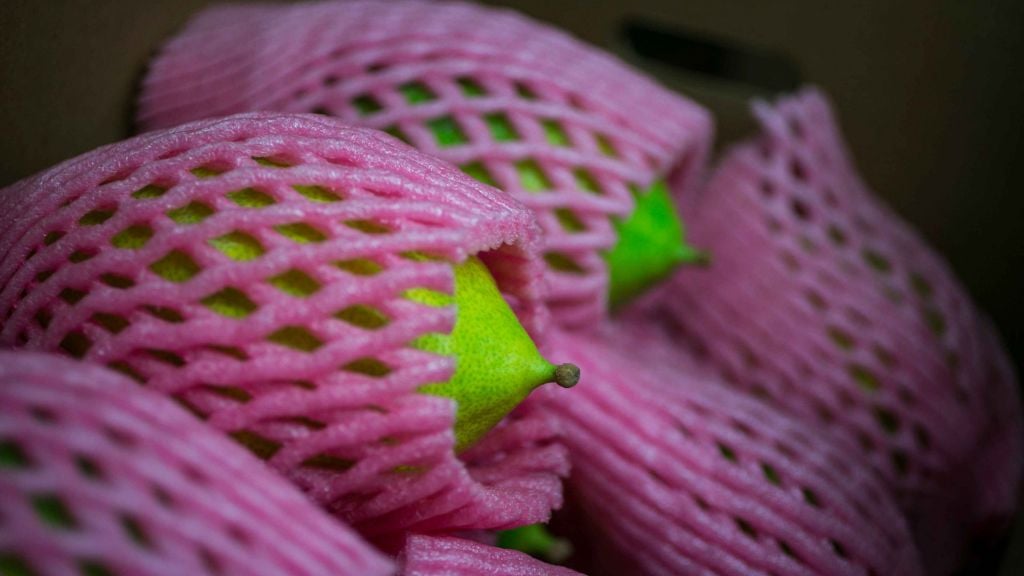
“My findings show that the first citrus fruits to arrive to the Mediterranean, citrus and lemon, were used as elite products (they were common in important gardens in antiquity), while all other citrus fruits most probably spread more than a millennium later, and for economic reasons,” said Langgut.
“Sour orange, lime and pummelo were introduced to the west by the Muslims probably via Sicily and the Iberian Peninsula, beginning in the 10th century CE,” said Langgut.
According to Langgut’s study, citron’s Hebrew name is a strong indication of its roots: The Hebrew “etrog” is similar to the Hindi “torange.” Even closer is the Persian “toronge,” which later became “etronge.”

The fruit also surfaces in ancient art and literature. According to the study, “it appears that the citron was considered a valuable commodity since ancient times because of its healing qualities, symbolic use and pleasant smell on the one hand and its rarity on the other, possibly making the citron known to the people in the region by reputation throughout antiquity.”
Due to its inedibility, yet long shelf life, Langgut hypothesizes it was used in antiquity “as a long-distance elite trading product.”
To any who have looked into the modern pricing of citrons — which can run to hundreds of dollars ahead of the Sukkot holiday — this idea of an elite, inedible product remains true. For the Chabad Jews affected by the Calabrian citron crop crisis, the price will likely be worthy of an ancient Persian treasure.










The Times of Israel Community.