

‘Bated breath’ in Israeli hospitals as US official says drug can block COVID-19
Some doctors want to start administering remdesivir — touted by Fauci — immediately, but others are more cautious
 Add ToI as a Preferred Source on Google
Nathan Jeffay is The Times of Israel's health and science correspondent
As many Israeli doctors shun the medicines championed by US President Donald Trump, hope is growing that one of his top health advisers is right, and there is a drug that can “block” coronavirus.
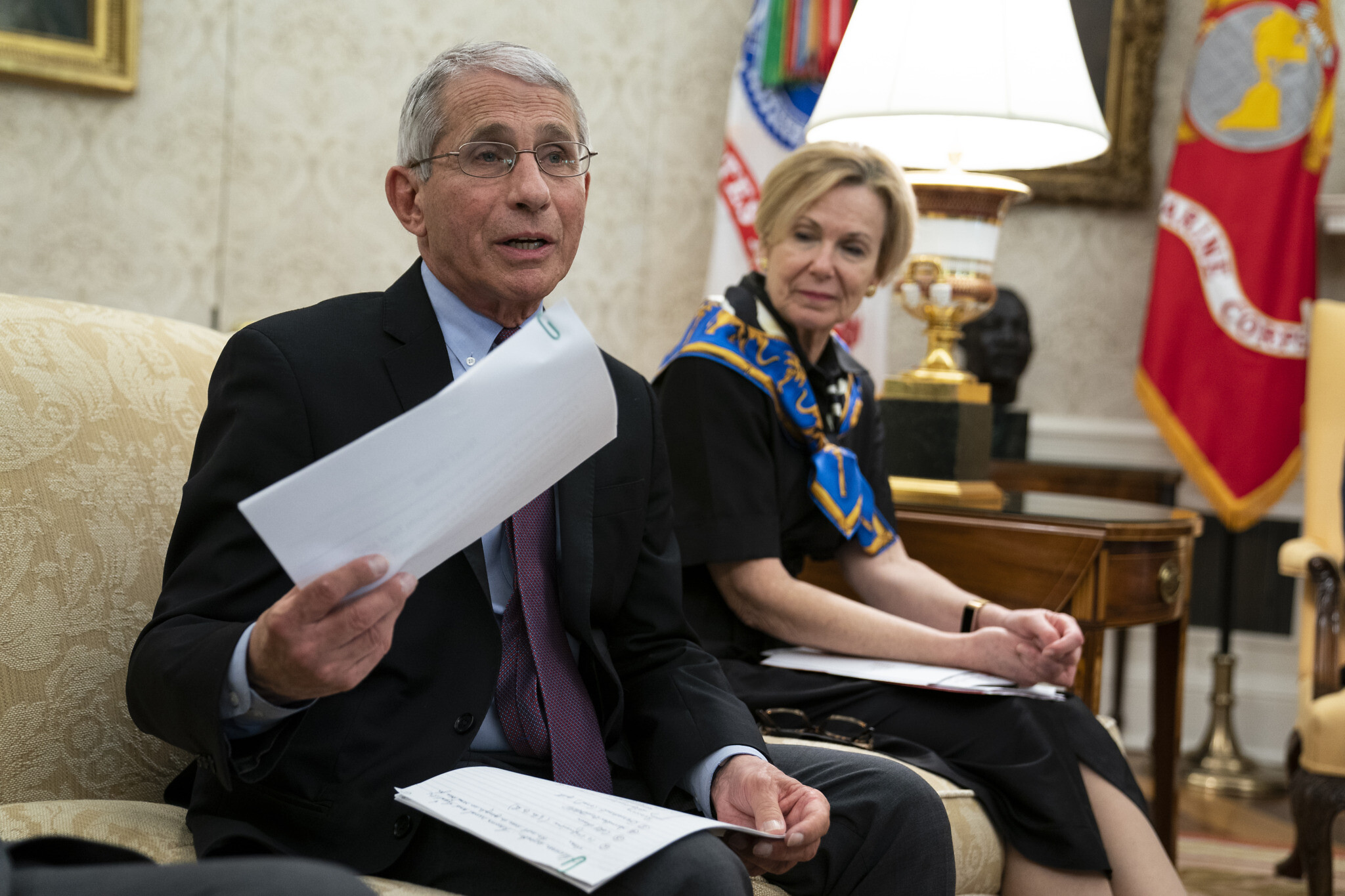
US leading infectious disease expert Dr. Anthony Fauci said at the Oval Office on Wednesday that he expects the antiviral drug remdesivir to become “the standard of care” for coronavirus patients, after seeing results of a government study.
He said data showed that the drug has a “clear cut, significant, positive effect in diminishing time to recovery,” and that the test offered a “very important proof of concept” that “a drug can block this virus.”
The study, led by Fauci’s National Institute of Allergy and Infectious Diseases, was conducted with more than 1,000 patients, some of them given placebos, but hasn’t yet been finalized or peer reviewed. In January, a working group of the World Health Organization said it considered remdesivir, which is produced by California-based Gilead Sciences, the “most promising” therapeutic option for coronavirus.
Israeli hospitals, in many cases shifting away from hydroxychloroquine and chloroquin, two drugs previously pushed by Trump, are now keen for more data on the treatment that his top adviser is championing. Doctors are “waiting with bated breath” to hear more about remdesivir, said Dr. Philip Levin, director of intensive care at Jerusalem’s Shaare Zedek Medical Center.
Dr. Margarita Mashavi of the Wolfson Medical Center in Holon was “excited” about the prospect.
Mashavi, who heads coronavirus treatment at her institution, wants to see the drug become standard issue immediately. “I think it’s sensible to give it, but we don’t have it,” she said. “It’s very hard to get a hold of it.”
She managed to obtain remdesivir for two patients and didn’t see any positive effects, but said large-scale testing like that performed in the US is far more reliable than her anecdotal impression, so she wants it to be given to patients.

Mashavi’s logic is that coronavirus treatment is a work in progress, and if a drug offers hope, it should be used. “None of us knows what the best medicine is, we’re learning,” she said.
At Hillel Yaffe Health Center in Hadera Dr. Michal Stein was “cautiously optimistic.” She said that the testing of remdesivir is “important but it’s not like the discovery of penicillin.”
Stein, director of Hillel Yaffe’s infectious diseases and infection control unit, said there are lots of factors related to the drug that are still unknown, adding it is too early to draw conclusions.
Earlier this month Israel imported huge quantities of hydroxychloroquine and chloroquine, anti-malaria drugs that Trump controversially touted as coronavirus treatments.
But the Food and Drug Administration warned last week of side effects and a nationwide US study showed no benefit in a large analysis of its use in American veterans hospitals. There were even more deaths among those given hydroxychloroquine versus standard care, researchers reported.
Millions of doses are now expected to stay in Israeli Health Ministry storehouses. “Everyone was giving them at the beginning,” said Levin, adding that doctors are far more cautious now.
His team is gearing up to perform a clinical trial for remdesivir, which will start in a few days. He declined to comment before the trial about his expectations for the drug, but said that if it does prove efficacious, it is anticipated to actually slam the brakes on the virus. “It’s an anti-viral drug that supposedly reduces replication of the virus,” he said.
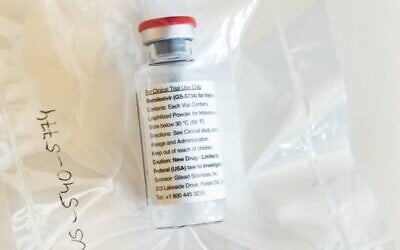
In Wednesday’s White House briefing Fauci reported that the as-yet unpublished results of a government trial show that patients who received remdesivir recovered 31 percent faster than patients who received a placebo. His office also reported a survival benefit, with a mortality rate of 8% for the group receiving remdesivir versus 11.6% for the placebo group.
However, a British medical journal, The Lancet, published results from a 237-patient Chinese study that presented a different picture, suggesting that remdesivir “was not associated with statistically significant clinical benefits.”
Some American doctors criticized what they considered a premature announcement by Fauci, and The New York Times quoted Steven Nissen, a cardiologist at the Cleveland Clinic, saying that the outcome of the remdesivir test is “too important to be handled in such a sloppy fashion.”









The Times of Israel Community.