

BBC says Trump threatening to sue for $1 billion over edit of Jan. 6 speech
After UK broadcaster’s director and news head resign, BBC’s chair apologizes for ‘error of judgment’ in ‘misleading’ edit of speech, maintains it does not hold systemic biases
 Add ToI as a Preferred Source on Google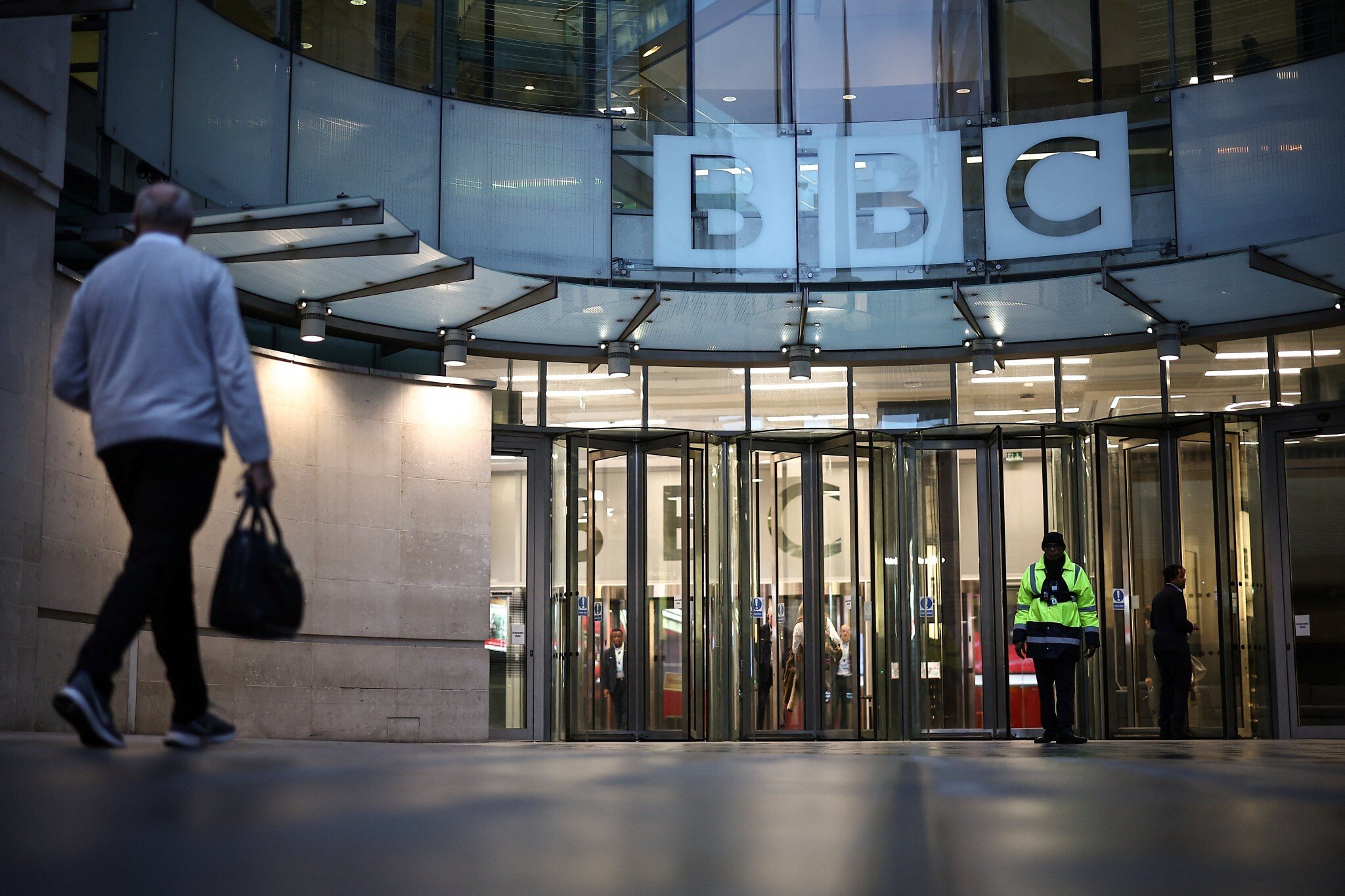
LONDON — The BBC reported Monday that US President Donald Trump has sent a letter threatening legal action over the way a speech he made was edited in a documentary aired by the British broadcaster.
Trump is seeking $1 billion in damages, a source close to the US president’s legal team told AFP on Monday, as a spokesman for the president’s counsel confirmed the report of the threatened suit.
“The BBC defamed President Trump by intentionally and deceitfully editing its documentary in order to try and interfere in the presidential election,” the spokesman said in a statement to AFP. “President Trump will continue to hold accountable those who traffic in lies, deception, and fake news.”
The BBC’s top executive and its head of news both quit Sunday over accusations of bias and misleading editing of a speech Trump delivered on January 6, 2021, before a crowd of his supporters stormed the Capitol in Washington.
Asked about a letter from Trump threatening legal action over the incident, the BBC said in a statement on Monday that “we will review the letter and respond directly in due course.” It did not provide further details.
The hourlong documentary — titled “Trump: A Second Chance?” — was broadcast as part of the BBC’s “Panorama” series days before the 2024 US presidential election.
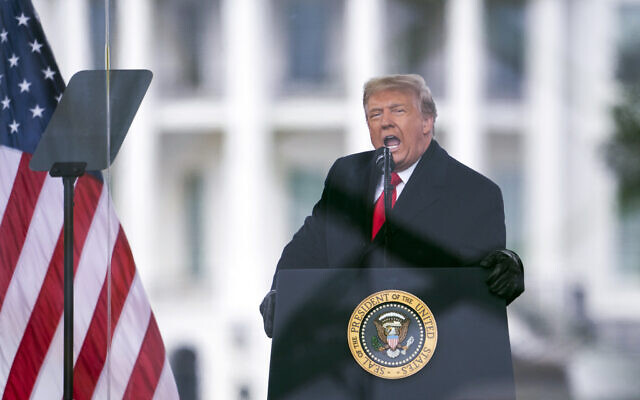
It spliced together three quotes from two sections of the 2021 speech, delivered almost an hour apart, into what appeared to be one quote in which Trump urged supporters to march with him and “fight like hell.”
Among the parts cut out was a section where Trump said he wanted supporters to demonstrate peacefully.
BBC chair apologizes for ‘error of judgment’
Also on Monday, BBC Chair Samir Shah apologized for an “error of judgment” in the editing of the speech, but he rejected claims of systemic bias in the broadcaster’s news reporting.
Shah said the edit was “misleading” and should have been handled more carefully.
The broadcaster’s chairman said the BBC accepted that the way the speech was edited did “give the impression of a direct call for violent action.”
“The BBC would like to apologize for that error of judgment,” he said in a letter to lawmakers.
But while he accepted the criticism of the Trump edit, he hit back at suggestions the BBC had sought to “bury” any of the allegations, or failed to tackle any problems.
Asked if the charges of systemic bias were wrong, Shah said “yes.”
He said there were cases of individual errors and there were issues that pointed to underlying problems, but the notion of systemic bias or institutional bias did not hold true.
“I’ve worked in BBC News,” he told the BBC. “I know that BBC News’ DNA and culture is to be impartial. It’s to provide the best news we can and the most trustworthy news.”
He told lawmakers that the BBC was committed to restoring public trust and ensuring its journalism meets the highest standards of fairness.
“It is absolutely clear the BBC must champion impartiality,” he said.
Regarding the report that Trump threatened the BBC with legal action over the edit, Shah said the broadcaster was “considering” how to respond.
Earlier, BBC Director-General Tim Davie and news chief Deborah Turness both resigned from their posts over the scandal.
In a resignation letter to staff, Davie said: “There have been some mistakes made and as director-general I have to take ultimate responsibility.”
Turness said the controversy was damaging the BBC, and she quit “because the buck stops with me.”
Turness defended the organization’s journalists against allegations of bias.
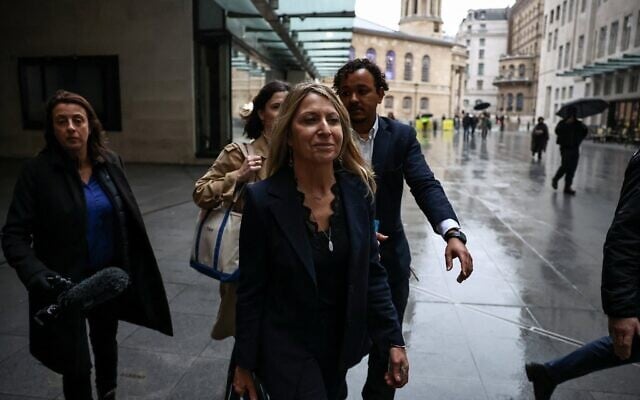
“Our journalists are hardworking people who strive for impartiality, and I will stand by their journalism,” she said Monday. “There is no institutional bias. Mistakes are made, but there’s no institutional bias.”
‘Fight like hell’
Pressure on the broadcaster’s top executives has been growing since the right-leaning Daily Telegraph published parts of a dossier compiled by Michael Prescott, who had been hired to advise the BBC on standards and guidelines.
As well as the Trump edit, it criticized the BBC’s coverage of transgender issues and raised concerns of anti-Israel bias in the BBC’s Arabic service.
The “Panorama” episode showed an edited clip from the January 2021 speech in which Trump claimed the 2020 presidential election had been rigged. Trump is shown saying: “We’re going to walk down to the Capitol and I’ll be there with you. And we fight. We fight like hell.”
According to video and a transcript from Trump’s comments that day, he said: “I’ll be there with you, we’re going to walk down, we’re going to walk down. Anyone you want, but I think right here, we’re going to walk down to the Capitol, and we’re going to cheer on our brave senators and congressmen and women, and we’re probably not going to be cheering so much for some of them.
“Because you’ll never take back our country with weakness. You have to show strength and you have to be strong. We have come to demand that Congress do the right thing and only count the electors who have been lawfully slated, lawfully slated.
NEW: BBC to apologize for deceptively editing President Trump’s January 6 speech in an effort to make it look like he encouraged violence at the Capitol.
The apology letter is reportedly expected to come early next week.
“Samir Shah, the BBC’s chairman, will write to the… pic.twitter.com/cJixU8mSDD
— Collin Rugg (@CollinRugg) November 9, 2025
“I know that everyone here will soon be marching over to the Capitol building to peacefully and patriotically make your voices heard.”
Trump used the “fight like hell” phrase toward the end of the speech, but without referencing the Capitol.
“We fight like hell. And if you don’t fight like hell, you’re not going to have a country anymore,” Trump said.
In a letter to Parliament’s Culture, Media and Sport Committee, Shah said the purpose of editing Trump’s words had been “to convey the message of the speech” so that viewers could understand how it had been received by Trump’s supporters and what was happening on the ground.
He said the program had not attracted “significant audience feedback” when it first aired, but had drawn more than 500 complaints since Prescott’s dossier was made public.
Shah acknowledged in a BBC interview that “it would have been better to have acted earlier. But we didn’t.”
A national institution
The 103-year-old BBC faces greater scrutiny than other broadcasters — and criticism from its commercial rivals — because of its status as a national institution funded through an annual license fee of 174.50 pounds ($230) paid by all households who watch live TV or any BBC content.
The broadcaster is bound by the terms of its charter to be impartial, and critics are quick to point out when they think it has failed. It’s frequently a political football, with conservatives seeing a leftist slant in its news output and some liberals accusing it of having a conservative bias.
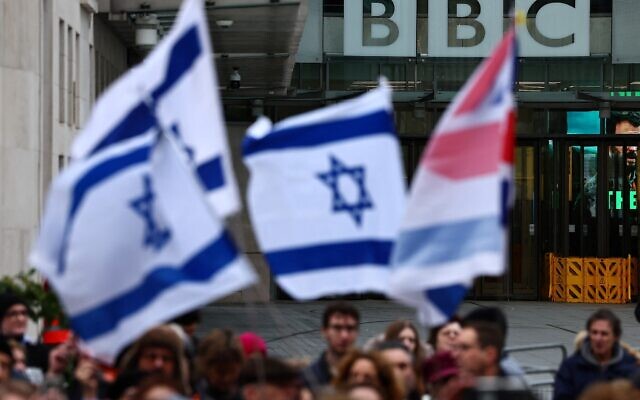
It has also been criticized from all angles over its coverage of the Israel-Hamas war in Gaza. In February, the BBC removed a documentary about Gaza from its streaming service after it emerged that the child narrator was the son of an official in the Hamas-led government.
Prescott’s report said several contributors to the BBC’s Arabic service had selectively covered stories critical of Israel. On one occasion, it said, the BBC’s main English-language news site published 19 separate articles about the hostages taken by Hamas on the day of the October 7 attack in 2023, while BBC Arabic published none. By contrast, every article critical of Israel that appeared on the BBC News website was also featured on BBC Arabic.
The memo also highlighted that, while BBC Arabic often ran the same stories as the BBC’s English-language website, there were significant differences in tone, headlines, and emphasis, with coverage generally more critical of Israel.
Prescott also criticized the BBC for allegedly misreporting the proportion of Palestinian women and children killed by Israeli military actions, as well as for inaccurately portraying the likelihood of children facing starvation under Israel’s aid blockade.
Governments of both left and right have long been accused of meddling with the broadcaster, which is overseen by a board that includes both BBC nominees and government appointees.
Some defenders of the BBC allege that members of the board appointed under previous Conservative governments have been undermining the corporation from within.
Prime Minister Keir Starmer’s spokesman, Tom Wells, said the center-left Labour Party government supports “a strong, independent BBC” and doesn’t think the broadcaster is biased.
“But it is important that the BBC acts to maintain trust and corrects mistakes quickly when they occur,” he said.




The Times of Israel Community.