

‘Bring back hope’: Rally to push for hostage deal after negotiators finish Doha talks
Hostage families, anti-government protesters set to urge government to secure release of captives held since Oct. 7; event to mark 24th birthday of Romi Gonen, seized at Nova rave
 Add ToI as a Preferred Source on Google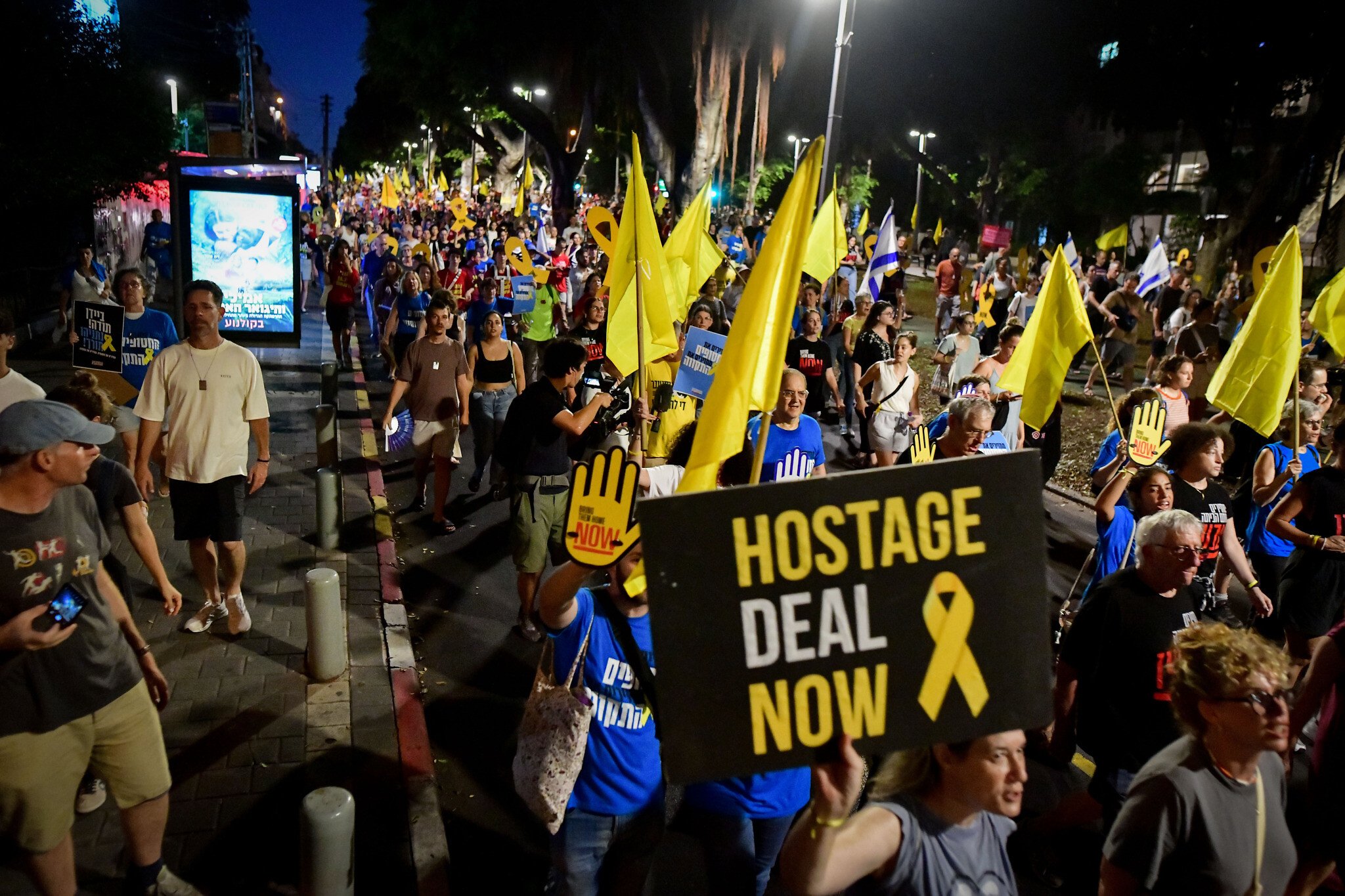
Relatives of hostages held by Hamas in the Gaza Strip and anti-government activists were set to hold rallies on Saturday night to urge Prime Minister Benjamin Netanyahu to secure the captives’ release, after two days of negotiations in Doha for a ceasefire-hostage deal between Israel and Hamas that were said to be the most constructive that mediators had seen in months.
A senior Biden administration official told reporters on Friday that the United States, Egypt and Qatar — who have been leading the negotiations — believe the final bridging proposal submitted by Washington closes just about all remaining gaps between Israel and the Palestinian terror group.
The Hostages and Missing Families Forum urged the public to join its weekly demonstration at 8 p.m. on Saturday at the so-called Hostages Square outside the Tel Aviv Museum, under the banner, “Bring Back the Hostages – Bring Back Hope.”
Relatives of some of the 111 hostages held by Hamas since October 7 were scheduled to speak at the event, including Yarden Gonen, whose sister Romi Gonen will turn 24 in captivity in Gaza on Sunday; Eli Albag, whose daughter Liri Albag, 19, was kidnapped from the IDF’s Nahal Oz base during the onslaught; and Mor Korngold, whose brother Tal Shoham was abducted along with his wife and children, who were released in November, from their home in Kibbutz Be’eri.
The Hostages Forum noted that the rally would be held per Home Front Command guidelines, which are currently unchanged though the IDF is on “peak alert” for potential reprisal attacks from Iran or Hezbollah in Lebanon. Both the Islamic Republic and its proxy in Lebanon have threatened major attacks on Israel after the killings of Hebzollah’s top commander Fuad Shukr in Beirut and Hamas leader Ismail Haniyeh in Tehran in late July.
Nearby at the intersection of Begin and Kaplan Street, dubbed Democracy Square, anti-government protesters including some hostage families called a rally for 8:30 p.m on Saturday.
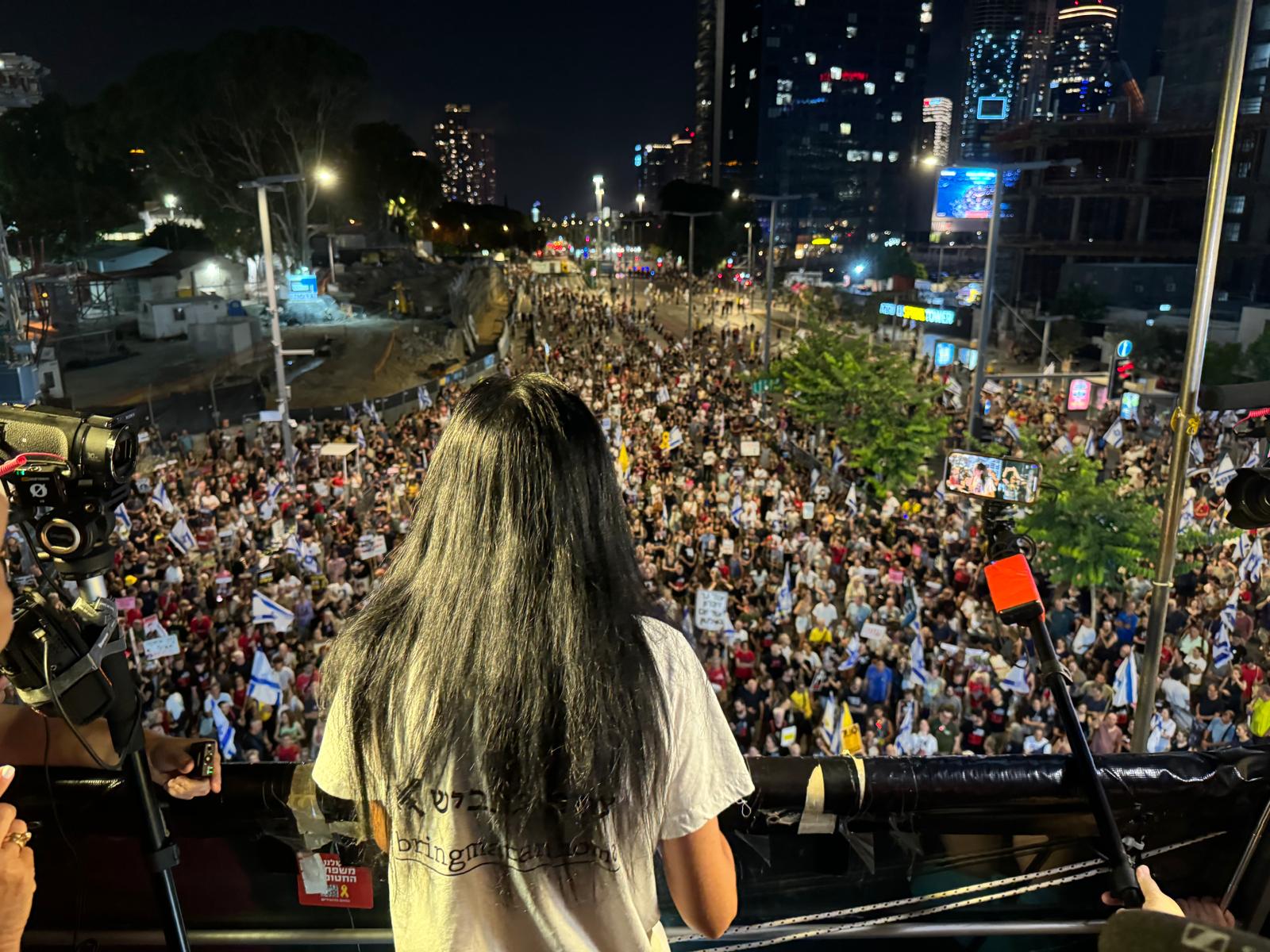
In an invitation to the public posted to social media on Friday evening, organizers cited a Channel 12 poll which found that 63 percent of Israelis support a hostage deal, compared to only 12% who opposed it and 25% who said they didn’t know.
“The nation wants the hostages home,” the “Kulanu Hatufim” (“We are all hostages”) group of around a dozen hostage families posted on X.
Kulanu Hatufim is known for fiery protests outside IDF headquarters in Tel Aviv and for blocking the Ayalon Highway every Saturday night, often after joining the official Hostages Forum demonstration.
Protests in Tel Aviv, at the intersection of Begin and Kaplan Street, have been held every Saturday night since the movement against the government’s planned judicial overhaul began in January of last year — except for a few-months-long hiatus following the Hamas terror onslaught on October 7.
Last week, alongside the weekly demonstrations, activists blocked roads and held “protest picnics” outside the homes of coalition members.
The anti-government group Moked Caesarea on Saturday invited the public to join its weekly rally near Prime Minister Benjamin Netanyahu’s private residence in Caesarea at 7:30 p.m.
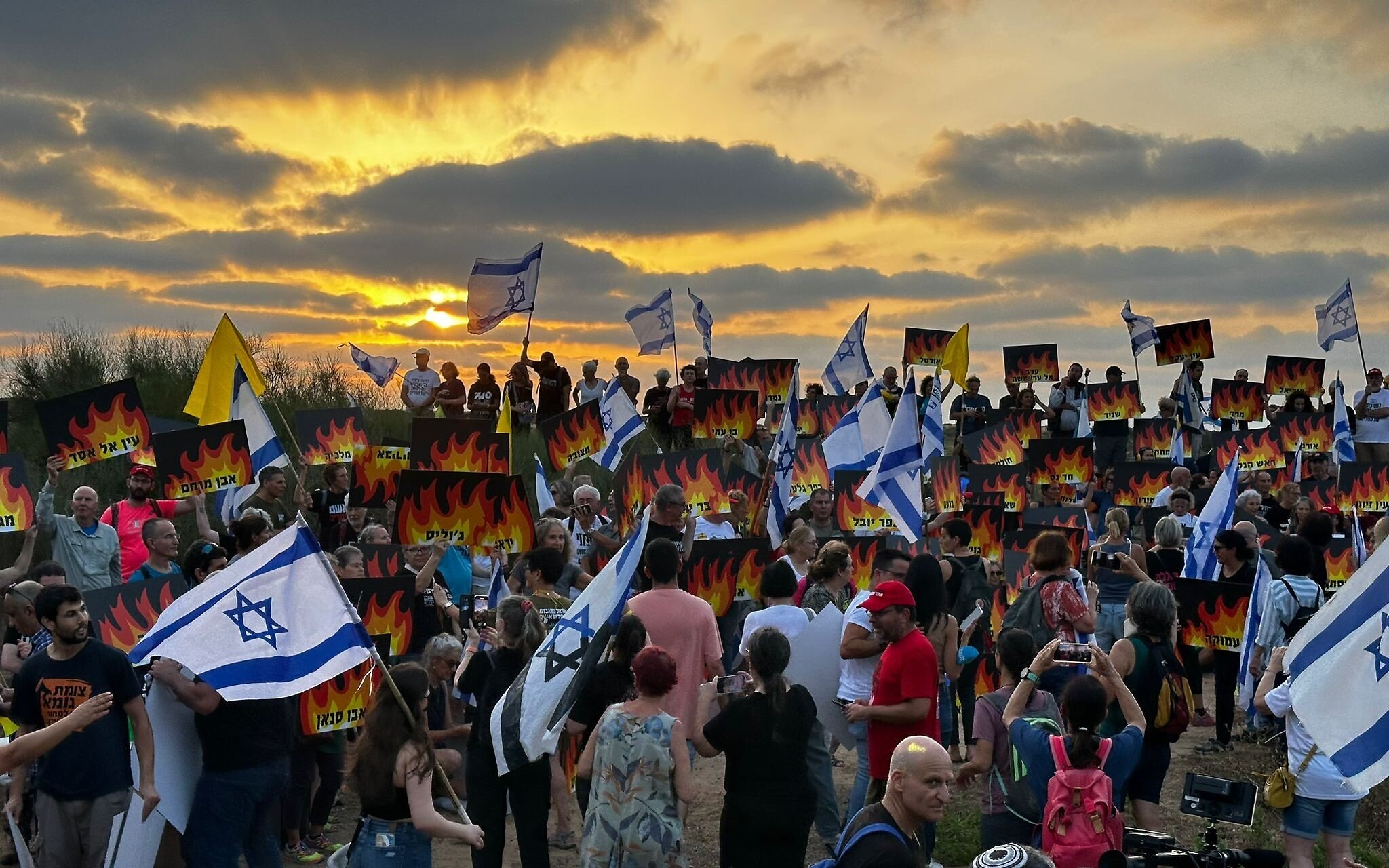
Most weeks, parallel anti-government demonstrations are also held on Saturday evenings, in dozens of towns and cities across Israel including Jerusalem, Haifa, Eilat, Beersheba, Herzliya, Netanya, Modiin and Ra’anana.
By contrast, on Friday, Tzvika Mor, father of Eitan Mor, who was kidnapped to Gaza when working as a security guard at the Nova festival, urged opposition to the deal, which he said “could kill my child” and the other young men who will remain in Gaza after the first stage. “Only victory will free them all,” wrote Mor, a member of the Tikva Forum of Hostages’ Families.
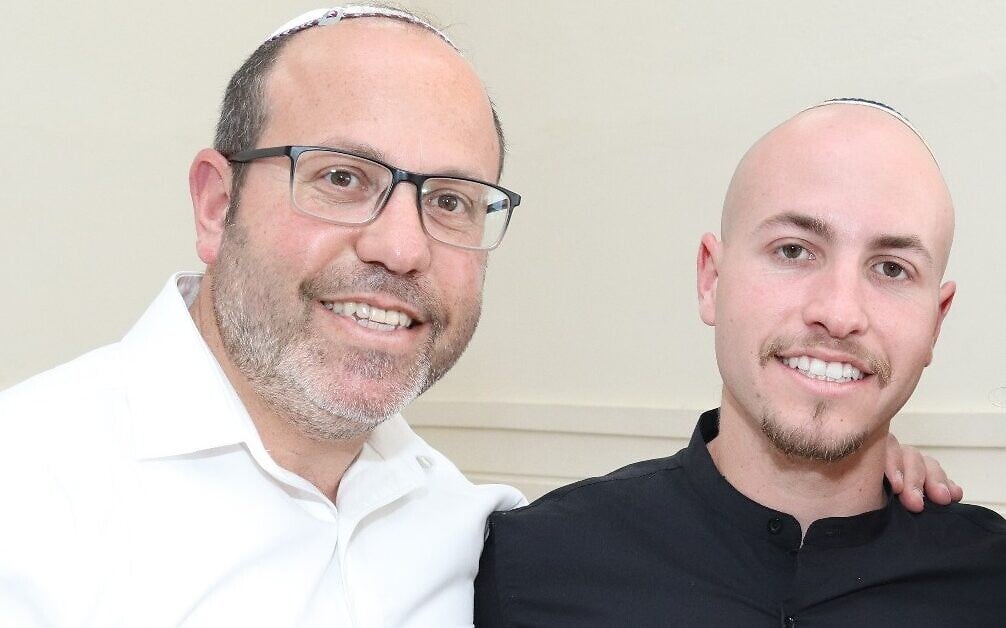
“What reason will the senior Hamas officials have to release the young men in the next stages, when they know that as soon as they release these human shields, Israel will immediately eliminate the Hamas leadership?” he asked in a statement. “I am desperately worried that this deal could kill my beloved child Eitan, along with the other hostages left behind in Gaza after the first stage.”
Mor instead advocated increased military pressure on Hamas. “Only winning this war will free everyone — only a crushing victory that leads to the disintegration of Hamas will free the 115 hostages from the clutches of the terrorists.”
He urged a pause in humanitarian aid, “which actually provides oxygen for Hamas,” as a means of securing the hostages’ release. “We must stay strong and deal with the devil with a strong hand, not with appeasement and weakness,” he said.
On Sunday, meanwhile, the Hostages Families Forum is planning an event in Jaffa to commemorate Romi Gonen’s 24th birthday, inviting attendees to wear leopard print or yellow attire to embody the young abductee’s vibrant spirit.
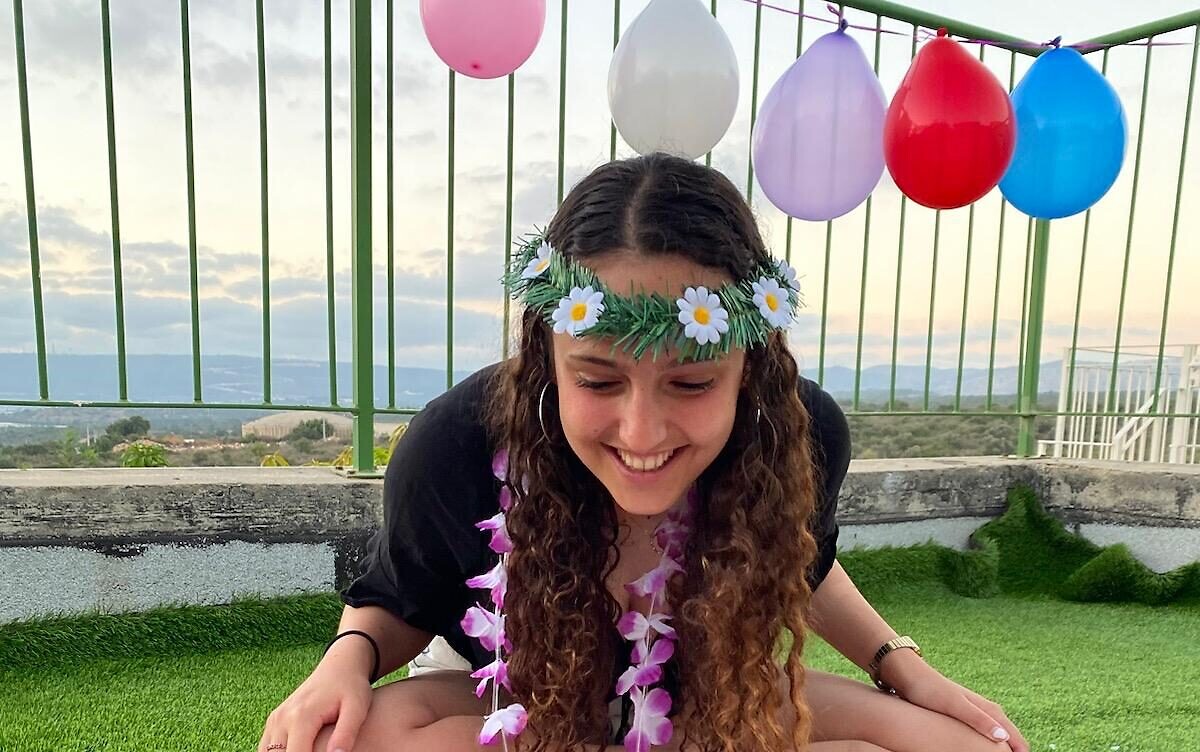
Gonen was abducted from the Supernova music festival near Kibbutz Re’im on October 7, when some 3,000 terrorists burst across the border into Israel by land, air and sea, killing some 1,200 people and seizing 251 hostages, mostly civilians, many amid acts of brutality and sexual assault.
It is believed that 111 of the 251 hostages abducted by Hamas on October 7 remain in Gaza, including the bodies of 39 confirmed dead by the IDF.
Hamas released 105 civilians during a weeklong truce in late November, and four hostages were released before that. Seven hostages have been rescued by troops alive, and the bodies of 24 hostages have also been recovered, including three abductees mistakenly killed by the military as they tried to escape their captors.
Hamas is also holding two Israeli civilians who entered the Strip in 2014 and 2015, as well as the bodies of two IDF soldiers who were killed in 2014.






The Times of Israel Community.