

Lion roars, and other snap takeaways from local election results
Elkin down and out as four become two in Jerusalem, while Tel Aviv’s Huldai fights off insurgent challenge and Haifa sees first female mayor of major Israeli city

 Add ToI as a Preferred Source on Google
Raoul Wootliff is a former Times of Israel political correspondent and Daily Briefing podcast producer.
Having heard the results of the exit polls for the 2015 national elections, Israelis went to bed thinking that the Likud and Zionist Union were neck and neck. Polls on two television channels showed the country’s two largest parties tied at 27 Knesset seats each. A third showed the Likud leading the Zionist Union by one seat, 28-27.
It was a whole other story, however, when citizens awoke the next day to learn that with 99 percent of the ballots counted, Likud and Benjamin Netanyahu had actually won 30 seats and the Zionist Union only 24. Isaac Herzog, who had promised hope and change, conceded defeat.
In contrast, overnight Tuesday and early Wednesday, as results started to trickle in from the municipal elections in the 251 towns and regional councils where citizens cast votes nationwide, predictions — including of a Haifa upset, a Jerusalem runoff and an incumbent win in Tel Aviv — were largely borne out, albeit with some surprises.
1. Voter turnout up, but only just
For the first time, under a new Knesset law, Israelis were given the day off to vote for their local officials, a change that was geared to jolt voters out of their traditional indifference toward municipal polls.
Initial voter turnout figures showed that it worked, but not by much.
According to the Interior Ministry, 3.6 million people voted out of 6.6 million eligible voters in 251 cities, towns, and local councils, representing an increase of some 10 percent points over the rate when the last municipal elections were held five years ago.
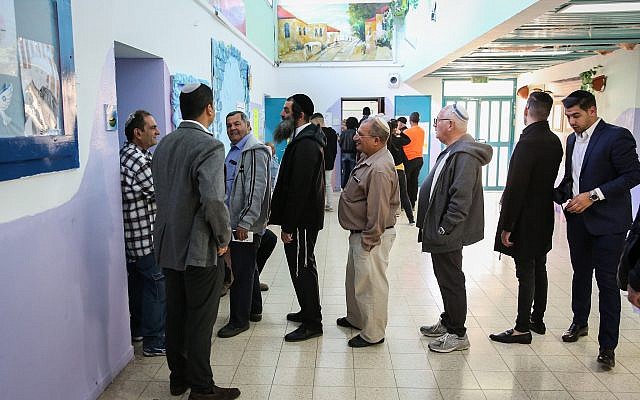
The voting turnout rates in 2013 stood at a national average of 51.9%, with just 28.7% in Tel Aviv-Jaffa; 39.4% in Jerusalem, where Arab residents of East Jerusalem boycott the vote; and 32.7% in Haifa.
This time around they came in at 61% nationally: 44.7% in Tel Aviv-Jaffa, 35% in Jerusalem, and 47% in Haifa.
The overall increase is certainly a significant boost, with over 400,000 more votes this time around than in 2013. But the result still slightly underwhelmed, after voter turnout throughout the day was reportedly hovering at a what looked like a 10-15% increase
Interior Minister Aryeh Deri nonetheless praised the first-tested reform, saying he was “proud of the ministry’s success in improving the voter turnout and the professional way in which it ran the largest-ever elections in Israel’s history.”
But at an estimated cost to the economy of nearly NIS 2 billion ($500 million), it is unclear whether the costly experiment quite paid off.
2. Jerusalem: Likud’s Elkin down and out as four become two
None of the local battles were more hotly contested than in the capital, where four contenders vied for the two top spots ahead of an expected second round; nobody thought they’d clear the 40% threshold and win outright at first time of asking.
The final result handed a stunning defeat to Jerusalem Affairs Minister Ze’ev Elkin, long regarded as the likeliest front-runner in the hard-fought race. Despite being backed by Prime Minister Benjamin Netanyahu and current mayor Nir Barkat, Elkin dropped to a third-place finish.
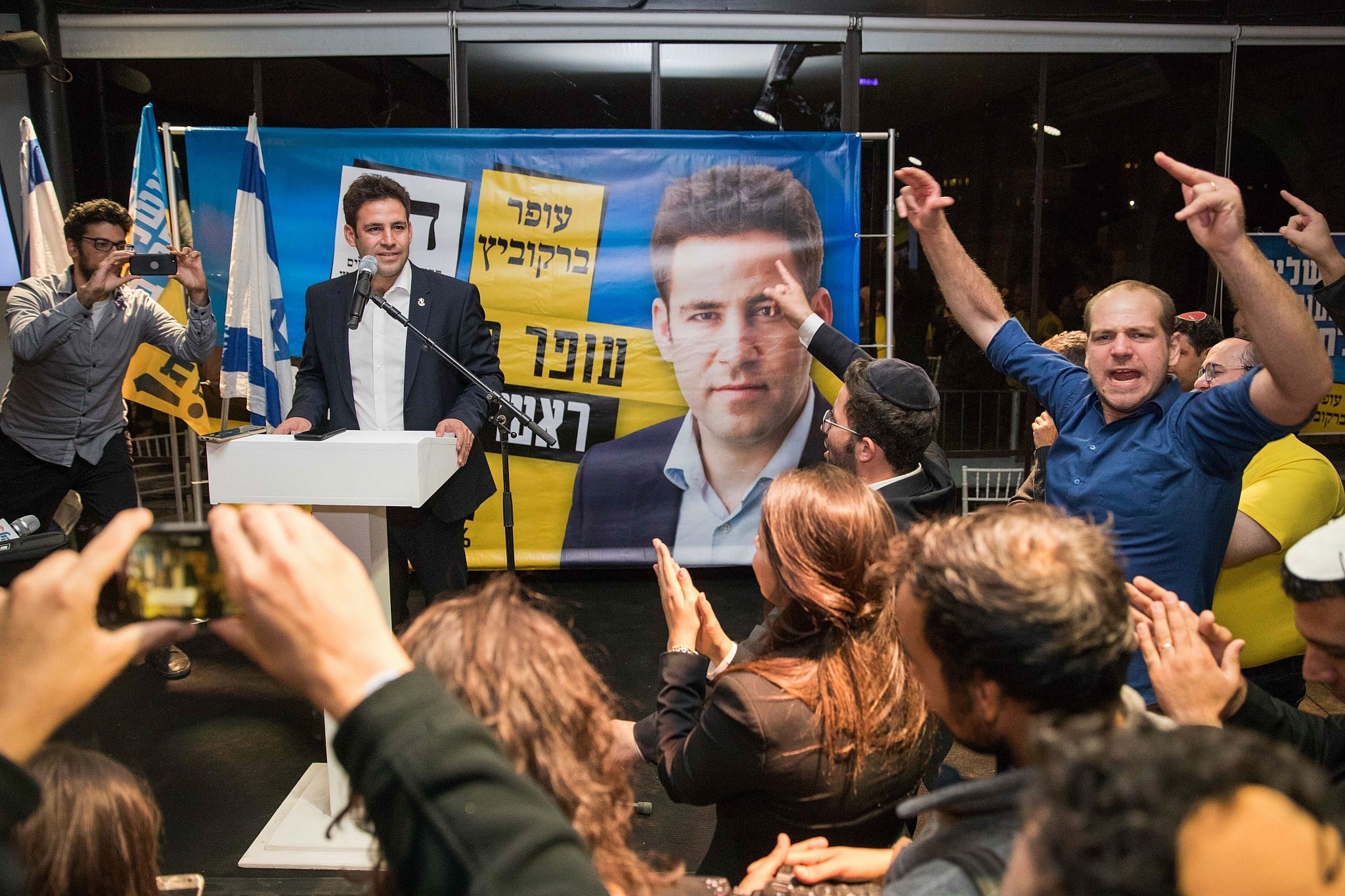
It was businessman Moshe Lion and upstart activist Ofer Berkovitch who made it to the November 13 runoff, with Lion at 30% and Berkovitch on 29%, compared to Elkin’s underwhelming 19% as the vote count neared its conclusion.
An hour before stations closed, Hadashot TV news reported high voter turnout in the secular and ultra-Orthodox neighborhoods of Jerusalem, but low turnout in the national religious and traditionally religious neighborhoods, spelling trouble for Elkin.
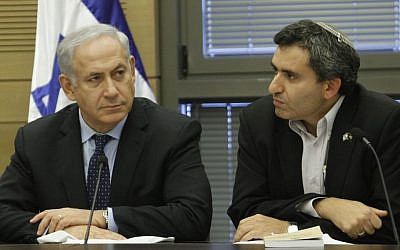
That prompted Netanyahu to issue a recorded statement calling on Jerusalemites who had not voted to support Elkin, a member of his Likud party and current minister of Jerusalem affairs. “Go and vote. The battle is tight. I say this as a Jerusalemite. You need a person like Minister Ze’ev Elkin, a very talented man who has done a lot for Jerusalem and will do more,” Netanyahu said.
Elkin’s decision to join the municipal race and possibly give up his ministerial role had come as something of a surprise given his steady national political ascent since he was first elected to the Knesset in 2006.
Before being appointed a minister in 2015, Elkin served as deputy foreign minister and coalition chairman, as well as chairman of the powerful Foreign Affairs and Defense Committee. Considered a close Likud ally of Netanyahu, he has also served as acting deputy prime minister when the premier was abroad.
But disappointing several senior Likud members, Netanyahu has refrained from appointing a permanent deputy, and repeatedly handed some of the most powerful ministerial portfolios to junior coalition parties. The prime minister’s attitude toward potential Likud rivals has over the years led to an exodus of some of his most prominent possible successors.
Elkin’s municipal bid, initially against Netanyahu’s wishes, may have signaled a similar dissatisfaction, which he will now have to swallow as he returns to his regular ministerial and Knesset work.
3. Tel Aviv: Veteran mayor shows mettle against upstart deputy
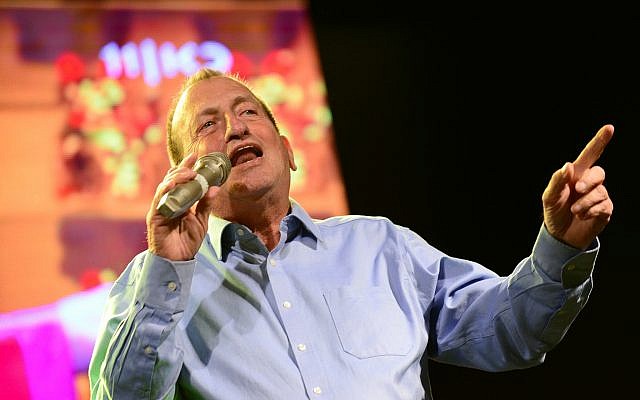
Tel Aviv Mayor Ron Huldai fended off an 11th-hour surge from upstart deputy-turned-rival Assaf Zamir and secured a fifth term leading the country’s economic hub.
With the final results in, Huldai held a 46% to 34% lead over Zamir, who had appeared to nearly pull even with the incumbent in polling over recent weeks.
Early on Wednesday, Zamir conceded defeat in a speech to supporters, saying he was “proud of the clean campaign” and vowing to continue working to influence policy in the city.
The popular Huldai, 74, has been mayor since 1998 and has never faced a serious challenge to his rule.
Founder and chairman of the Tel Aviv party Ha’Ir, Zamir had risen from near-obscurity in recent months since announcing his unlikely mayoral bid, and looked set to at least force Huldai into a runoff.
But Zamir, 38, had been accused of “crony capitalism” due to his marriage to actress Maya Wertheimer, and his connection to her grandfather Stef Wertheimer, a billionaire who founded tool fabrication companies and a number of industrial parks, and is personally bankrolling part of the mayoral campaign.
Huldai, 74, has won the past four mayoral campaigns by a large margin, receiving between 51% and 62% of the votes. The biggest challenge to Huldai’s mayoral position came in 2008, when MK Dov Khenin (Hadash) ran on a platform focused on social and environmental issues, and managed to capture 34% of the votes. Huldai took 51% of the votes.
Under law, he will have to step down after the next term ends in 2023.
Zamir, rather than the stunning victory that a continued surge in support may have brought, will have to wait until then to try his luck another time.
4. Haifa: Labor candidate storms to massive upset
In a major upset, Labor candidate Einat Kalisch Rotem roundly defeated the incumbent, three-term mayor of Haifa to become the first female mayor of the northern coastal city, according to the initial results based on nearly half of all votes.
Kalisch Rotem clinched 55% of the city vote, unseating Kulanu’s Yona Yahav — who won just 38% — after 15 years in office.
The results mark the first time a woman has been elected at the helm of one of Israel’s three largest cities — Haifa, Jerusalem and Tel Aviv — in the 70 years since the state’s founding.
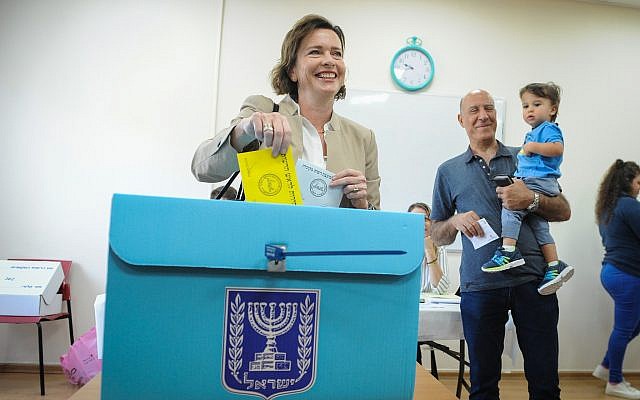
A city council member since 2013, Kalisch Rotem previously ran for mayor of the city five years ago, when she received just 15% of the vote and three seats on the city council.
Kalisch Rotem’s campaign saw a boost following an 11th-hour political drama in which she was disqualified from running by the Interior Ministry and the Haifa District Court days before the race, only to later be reinstated by the High Court of Justice.
She had briefly been removed from the running after her Labor party lawyer submitted two candidates, including Kalisch Rotem, to the race, in violation of the election rules.
5. Mayors under investigation: Probes fail to make any dents
Initial results show that a series of corruption probes against incumbent mayors have made little impact on voters, with all incumbent municipal heads under criminal investigation looking likely to retain their seats.
The mayor of the coastal city of Netanya, Miriam Feirberg-Ikar, seeking a fifth term at the helm of the city after 20 years in office, won with 47% of the vote, despite an ongoing graft investigation against her dating back to 2016.
Rishon Lezion Mayor Dov Zur is clinging to his seat, winning 31% to his rival’s 21% and forcing a second round of voting, despite a string of allegations against him in a high-profile corruption probe that saw him suspended for 45 days. He was arrested in early December for alleged involvement in a bribery case involving Likud MK David Bitan — a former Rishon Lezion deputy mayor — and senior figures in the Rishon Lezion and Tel Aviv municipalities.
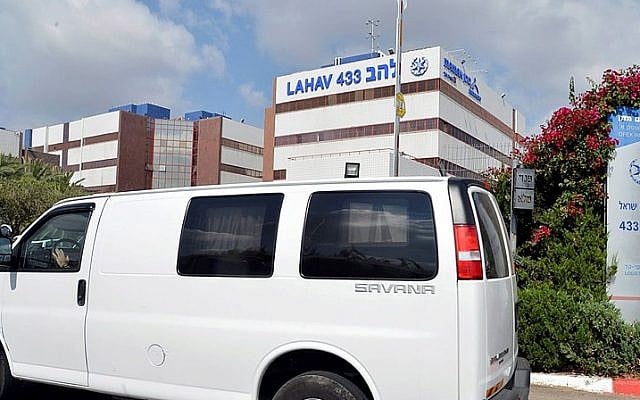
In Hadera, Mayor Zvi “Zvika” Gendelman, suspected of bribery, corruption and tax-related offenses and remanded for a week in custody in June, scored 40% of the vote, despite the centrist Yesh Atid party, which champions clean politics, having suspended him from its ranks.
And head of the Tur’an council in northern Israel, Imad Dahla, who is suspected of promising political appointments in exchange for support in the 2013 local elections, retained his seat with a whopping 75% majority.
Nationally, the success of incumbent mayors facing criminal investigation may bode well for Netanyahu, whom police have recommended be charged for bribery in two separate cases while the force is expected to make recommendations in a third in the coming months.
Times of Israel staff contributed to this report.







The Times of Israel Community.