

Ethiopian Israelis rally in Jerusalem, seeking increased immigration quota
Protest is part of the push to bring in thousands of Falasha, descendants of Jews who converted to Christianity
 Add ToI as a Preferred Source on Google
Canaan Lidor is a former Jewish World reporter at The Times of Israel
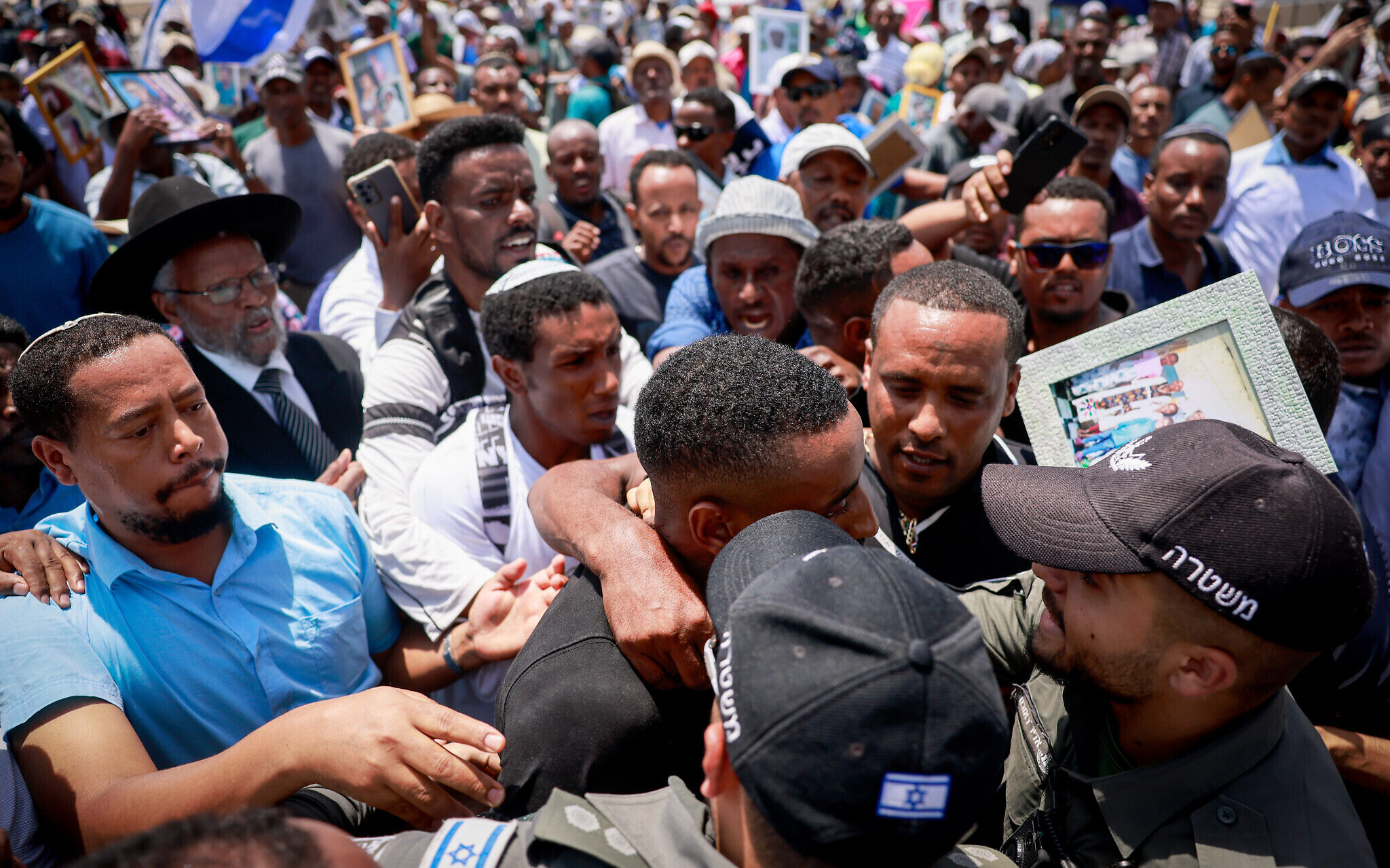
Hundreds of protesters rallied in Jerusalem Sunday to demand that the government bring in immigrants from Ethiopia, where thousands of people with Jewish roots are at risk from an armed conflict between rival factions.
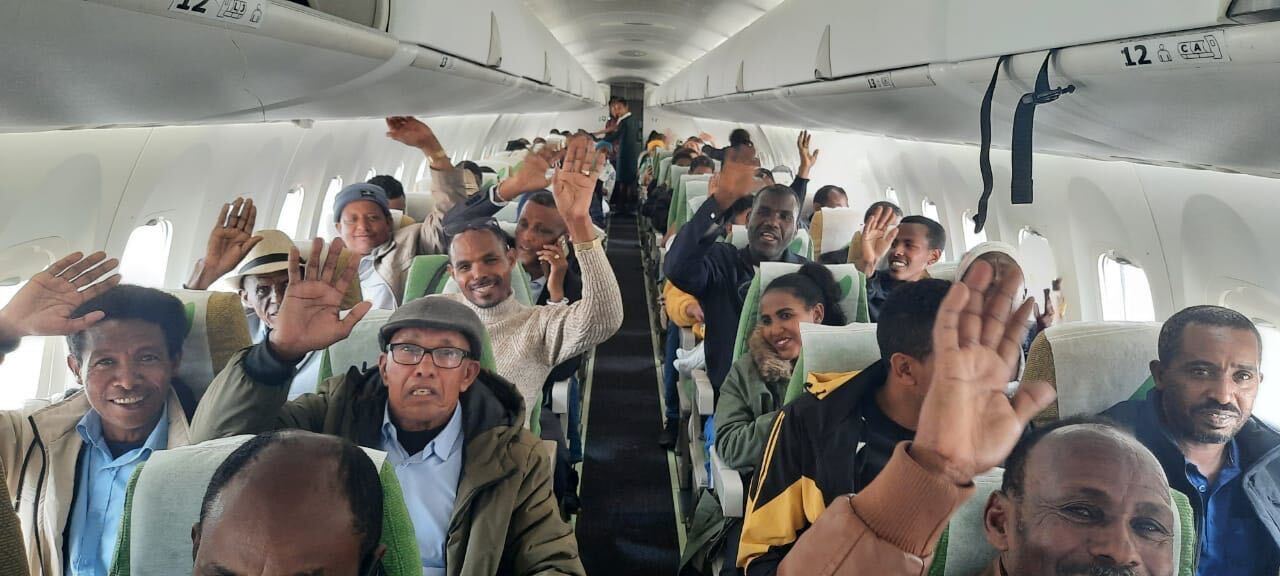
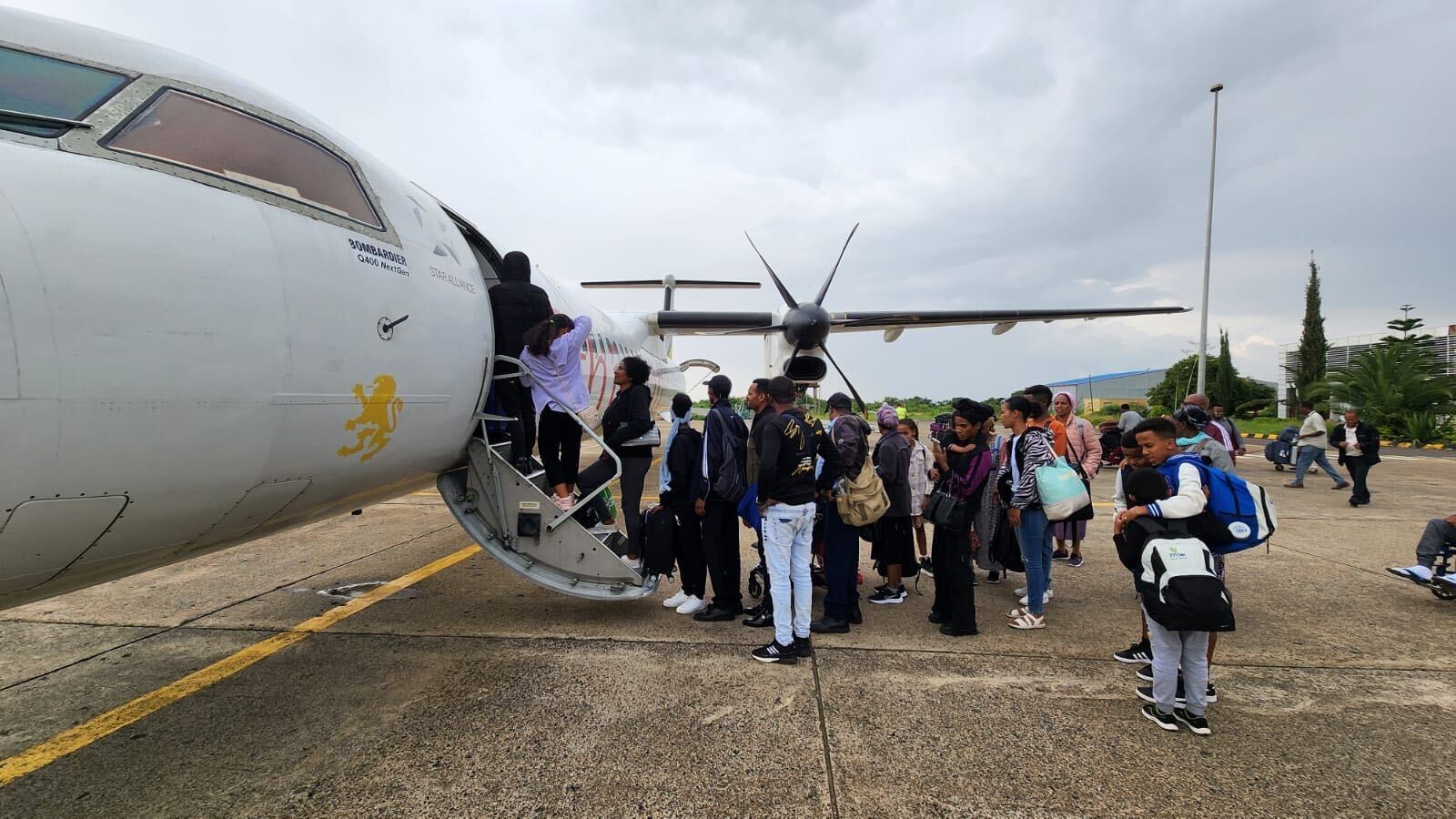
The protest outside the Prime Minister’s Office follows Israel’s extraction last week of more than 200 people from Gondar in northern Ethiopia to Israel. The protesters demanded further flights amid what they described as life-threatening conditions for thousands of people with Jewish roots in northern Ethiopia.
The gathering was the latest in a longstanding effort to bring to Israel descendants of Ethiopian Jews who had converted to Christianity in the 19th century, and some of their relatives. The minority is known in Hebrew as Falasha, and in English as Falash Mura, a term some regard as derogatory.
The Falasha split off from what many consider the main body of Ethiopian Jewry, known as Beta Israel, whose immigration to Israel was completed under the Law of Return for Jews and their relatives.
The Falasha are not eligible to immigrate under that law. About 25,000 have arrived since the 2000s under government decrees on the condition they undergo Orthodox conversion to Judaism. Only Falasha whose parents or children live in Israel may immigrate and only if the new arrivals are unmarried and have no children. Each wave of immigration by Falasha has prompted demands for allowing in relatives they had left behind.
One protester, Almo Desash, came to the rally with her mother, who has many family members in Ethiopia, she told Ynet. “My mother has lived in heartbreak for 20 years,” she said. Her family wants to see Falasha immigrate under the Law of Return.
Asersech Yosef, another woman who attended the rally, came for her nephew, Habtamo. His mother and younger brother immigrated to Israel more than a decade ago but Habtamo, 35, is still waiting to be let into Israel, she told Ynet.
Israel has about 160,000 people with Ethiopian roots, of whom about 95,000 were born in Ethiopia. Of the immigrants, about 75,000 are Beta Israel, and the rest are Falasha. Thousands more Falasha are waiting in Ethiopia to immigrate to Israel.
Some Falasha in Ethiopia have come together to preserve their Jewish heritage, including at what is now known as the Hatikvah Synagogue, which was built for the Falasha with money from Jewish American donors and the Jewish Agency.
Many Ethiopian Jews support the campaign to bring to Israel more Falasha, whose immigration they say is blocked because of racism against Black people. The government has rejected this claim.
A statement from the Office of the Struggle to Bring Ethiopian Jews to Israel, an umbrella group of activists, about Sunday’s protest reads: “The Jews of Gondar are under fire. Help save them before it’s too late. What applies to Ukraine applies to Gondar and Addis Ababa.”
Thousands of Ukrainians have immigrated to Israel under the Law of Return since last year’s Russian invasion of Ukraine and subsequent war.
Other prominent Ethiopian Jews, including community activist Ayanawo Fereda Senebato, oppose the campaign, which they say results in immigration by non-Jews to Israel, diluting the Jewish character of Ethiopian Jewry.
“This is an attempt by a small group of interested parties to bring non-Jews to Israel with false claims of racism. Jews from Ukraine are coming under the Law of Return; Ethiopians are not, so there’s no parallel,” Fereda Senebato told The Times of Israel.








The Times of Israel Community.