

Ex-mobster: first reformed, now modern Orthodox
Former Gambino family associate Louis Ferrante recounts his transformation from violent criminal to observant Jew
 Add ToI as a Preferred Source on Google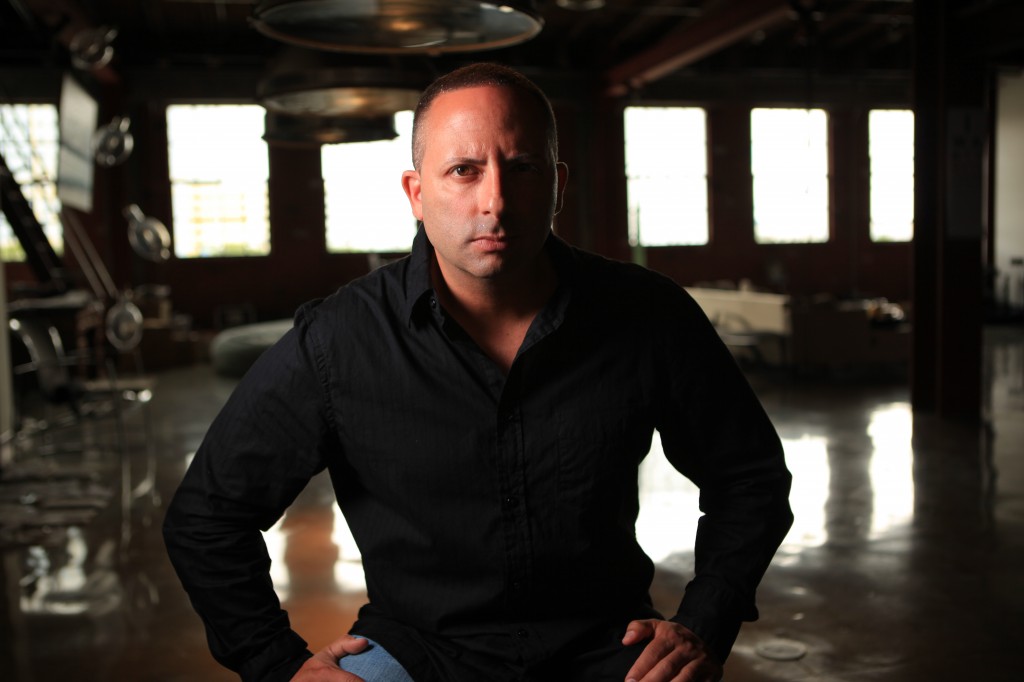
Most ex-mobsters don’t keep kosher or observe Shabbat — but then, most ex-mobsters don’t convert to Judaism in prison, or go on to donate their time speaking to Jewish educators.
Louis Ferrante, clearly, isn’t your typical ex-mobster. After years of criminal activity and nearly a decade in prison, the former associate of the Gambino crime family is now living what he calls “the right way” — a lifestyle that includes quality time each day with his siddur and tefillin, and writing books about his past. The transformation appears to have paid off — Ferrante’s most recent book, “Mob Rules,” has been translated into 11 languages, netting him appearances on “The Daily Show” and earning him shared speaking engagements with Nobel Prize winners and the dean of Harvard Business School.
“I didn’t know what I was going to say as I was walking out on the stage,” Ferrante says of last year’s Human Potential conference in New York City, organized by the Economist. “There are Nobel laureates, CEOs of major companies, and I have to turn my mafia experiences into something that will go well in front an Economist audience.”
“But,” he recalls, “I reminded myself of what God told Moses: ‘I will be thy words.’”
Whoever did the speaking that day, the performance appears to have been a hit, for the same reasons Ferrante’s story has proven irresistible to book buyers and an ever-widening set of audiences at his speaking engagements.
Born and raised in Queens, Ferrante, now 42, entered organized crime as a teenager, a story he tells in his first book, “Unlocked,” which recounts his years “sticking guns in people’s mouths and hijacking trucks” for the Gambino family.
Although the book is full of mafia-style color — characters named Bobby Butterballs and Tony Porkchop, for example — it doesn’t glamorize Ferrante’s violent history or glorify his work in organized crime. Subtitled “A Journey From Prison to Proust,” the book instead focuses mostly on Ferrante’s jailhouse discovery of literature, philosophy and music, a revelation that led him to abandon his earlier life of violence and theft.
Capping off the redemption story is Ferrante’s unlikely embrace of Judaism, the result of a lengthy exploration of the major religions.
“I read the Gospels, the Koran, the Bhagavad Gita, and studied Buddhism,” he writes. “But the Old Testament (the Torah) was the book for me.”
“I decided to take a close look at the Jewish people… the first to receive the Bible,” he goes on. “After all, could God have picked the wrong horse?”
The answer, Ferrante ultimately concludes, was no, leading him to intensively study the religion and adopt its customs, despite early skepticism from prison chaplains.
Fourteen years later, and nearly a decade since his release, Ferrante describes himself as “modern Orthodox or ultra-Conservative.”
“I keep Shabbos like an Orthodox person,” he says. “I keep kosher, I daven, I lay tefillin. I read Torah in the morning and at night.”
Speaking by phone from the Catskills — where he lives partly to avoid running into old Gambino family associates — Ferrante discusses Judaism with the zeal of the convert he is. “You’re a Jew when you wake up in the morning, regardless of if you pick up a Torah or not,” he says, referring to those born into the religion. In an echo of Hillel, he asks, “But if I don’t do that, what am I?”
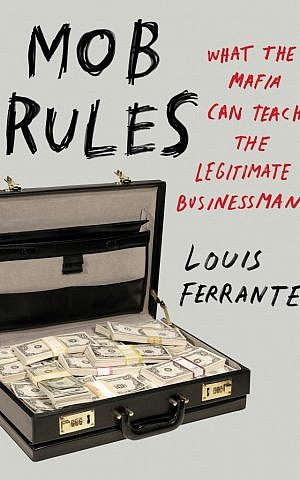
In the past year, Ferrante’s professional focus has switched to “Mob Rules,” a follow-up memoir released in 2011. Subtitled “What the Mafia Can Teach the Legitimate Businessman,” the book offers 90 short chapters that humorously find lessons in his unusual past. (“Lesson 62: The Mafia Spends Very Little on Office Supplies: Cutting Overhead.”) Though the book is primarily geared toward a business audience, it contains enough surprising asides to make it fun for a wider readership. A running theme, even if it’s not explicitly emphasized, is the mafia’s flexibility and even occasional progressiveness, on issues ranging from race to “green” energy, which he argues can all be good for the bottom line.
With its pithy packaging and unconventional author, “Mob Rules” has earned notice in a variety of venues. In addition to Ferrante’s participation in the Economist conference — where fellow speakers included another ex-con, Martha Stewart — the book has earned him a pair of appearances on “The Daily Show,” which used his criminal bona fides to satirize certain policies at Bank of America.
Ferrante now commands significant fees for most speaking engagements, but says he makes an exception for Jewish audiences, addressing them for free or for just the cost of expenses. A speech at a Jewish summer camp, of all places, led to his appearance last month at Limmud NY, a four-day gathering focused on Jewish learning. “I get paid pretty well for speaking now and swore to myself that I wouldn’t do any more freebies,” the ex-gangster says, “but I figured it’s a mitzva.”
Ferrante acknowledges the possibility that some may dismiss his jailhouse transformation as a “gimmick,” but says the feedback from “Unlocked” was positive. The acknowledgements section of “Mob Rules” thanks Arthur Rulnick, the Conservative rabbi who converted him, as well as the man who sent him his “first complete edition” of the Babylonian Talmud. (The acknowledgements close by expressing gratitude to “Almighty God.”)
While probation officers initially warned him against meeting with criminals from his past, he’s not being hunted, and isn’t risking trouble by writing. On the rare occasions when he crosses paths with an old colleague during a visit to Queens, “I say hello and goodbye, but I keep moving because I don’t have anything in common with them anymore,” he says. “They don’t like me writing books, but that’s not enough to send a hit team after me — I never gave up anyone for crimes.”
That’s not ordinary talk from a “modern Orthodox or ultra-Conservative” Jew, but Ferrante says his religious devotion is what has made his new life possible. “It’s important to me to get that across to any Jews I talk to,” he says. “I do know some who are very religious, and many more who aren’t, and sometimes it pains me because they’re missing a lot.”







The Times of Israel Community.