

Barely a minyan, but official recognition
Since last week Judaism is one of four official religions in Montenegro, a nation of 625,000. Now all the country needs is Jews who actually live there
 Add ToI as a Preferred Source on Google
Raphael Ahren is a former diplomatic correspondent at The Times of Israel.
There are probably more professing Jehovah’s Witnesses than Jews living in this southeastern European country of roughly 625,000 citizens, but at least the latter are now officially recognized as one of the country’s minority groups.
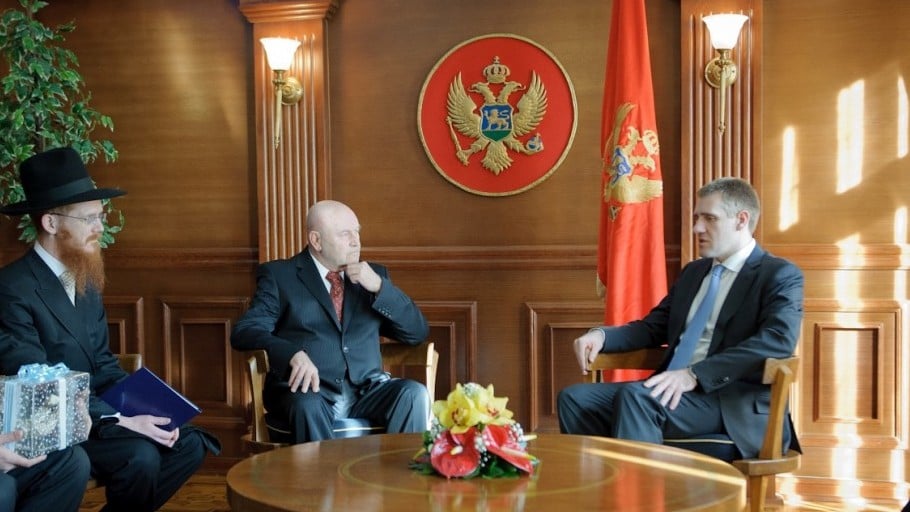
Earlier this month, Montenegrin Prime Minister Igor Lukšić signed an agreement with Jewish leaders officially recognizing the local Jewish community.
The document was signed during a ceremony attended by the community’s president, Jasha Alfandri, and Chief Rabbi Yoel Kaplan. A member of the Hasidic Chabad movement, Kaplan is also the chief rabbi of neighboring Albania and serves the Jewish community of Thessaloniki, Greece.
“There is no doubt that this is an historic day and an important milestone for the future of Montenegro Jewry,” said Lukšić, according to a statement released by the Rabbinical Center of Europe, or RCE, which together with the Israeli Chief Rabbinate was instrumental in arranging the recognition.
The agreement also concerns “issues of property and education,” the statement added.
Alfandri, the community’s president, thanked the government in his speech and remarked that Montenegro is one of the few places in Europe not affected by the Holocaust.
“During the Second World War, over 300 Jews with families were hiding in Montenegro and in safeness reached the end of the war,” Alfandri told The Times of Israel. “Our community is made [up of] the children of those refugees.”
Until last week, Montenegro had only three officially recognized religions: Roman Catholicism, Orthodox Christianity and Islam. According to the RCE, “around 1,000 Jews” live in Montenegro. Alfandri said he knows of about 200, “but it’s a very long process to activate all [of] them. Our community has today about 80 active members.”
The Montenegrin government last year published a report that lists the population’s religious beliefs according to more than 10 categories – including agnostic, atheist and Jehovah’s Witnesses – but does not mention Judaism.
“Creating a Jewish communal structure in Montenegro is a great challenge but a vital one,” said Rabbi Aryeh Goldberg, the RCE’s deputy director. “There is a thirst for being part of a wider Jewish community, not just in their own country, but being connected to the European Jewish community and the RCE is always willing to assist these communities regardless of size.”
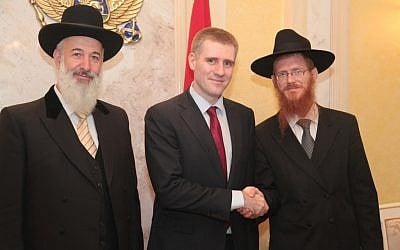
The recognition, signed on February 2, followed a visit in the capital city of Podgorica last September during which an RCE delegation and Israel’s Ashkenazi chief rabbi, Yona Metzger, met with the Montenegrin president and prime minister and discussed the issue of official recognition.




The Times of Israel Community.