

Iceland becomes fifth country to quit Eurovision in protest of Israel’s inclusion
Country’s RUV broadcaster says allowing Israel to stay in contest has ’caused disunity’ as it follows Spain, Ireland, Slovenia and Netherlands in withdrawing
 Add ToI as a Preferred Source on Google
Amy Spiro is a reporter and writer with The Times of Israel

Iceland announced on Wednesday that it will pull out of next year’s Eurovision Song Contest, following through on its threat to boycott the competition if Israel participates.
The Nordic country has become the 5th nation to quit the contest over Israel’s inclusion, following announcements last week from Spain, Ireland, Slovenia and the Netherlands.
The withdrawals came in the wake of a decision last week by the European Broadcasting Union allowing Israel to take part, after an overwhelming majority of members voted to accept a package of reforms aimed at assuaging concerns over Israel’s participation.
RUV, Iceland’s public broadcaster, issued a statement following a vote by its board that it will back out of the 2026 competition because Israel’s inclusion has “caused disunity” among both the general public and members of the EBU.
“Given the public debate in this country and the reactions to the decision of the EBU that was taken last week, it is clear that neither joy nor peace will prevail regarding the participation of RUV in Eurovision,” the broadcaster added in explaining its decision.
RUV said that it does not believe the changes voted on by the EBU “are enough,” and that it asked the union to kick out Kan, Israel’s public broadcaster, which it refused to do.

In response, Israel’s Embassy in Norway — which also manages the country’s relations with Iceland — said it was “disappointed” by the move, and that RUV’s decision “goes entirely against the spirit of the contest.”
The decision by Iceland was largely expected, after it was among those most vocally calling for Israel to be removed from the contest over the past two years.
When the contest was hosted in Tel Aviv in 2019, RUV had threatened to back out, but ultimately took part. Its Eurovision act that year, Hatari, held up Palestinian flags during the live broadcast in a statement of protest, and was fined by the EBU for violating its rules.
Iceland, which has been competing in the Eurovision since 1986, has never won the contest. Israel, which debuted in 1973, has won four times — in 1978 with “A-ba-ni-bi” by Izhar Cohen; 1979 with Gali Atari’s “Hallelujah,” 1998 when Dana International won with “Diva” and in 2018, when Netta Barzilai’s “Toy” took the top spot.
The Eurovision is extremely popular in Iceland, with more than 95% of the TV viewing public tuning in each year to the competition’s grand final.
Following the statement from RUV on Wednesday, only Armenia has yet to confirm its intentions regarding next year’s Eurovision in Vienna in May, though it is widely expected to take part.
If it does, 35 countries are slated to compete in the 2026 competition, down from 37 that took part in this year’s contest in Basel, Switzerland. While five countries have now backed out, Bulgaria, Moldova and Romania — who had been absent due to financial considerations — announced they would return this year.
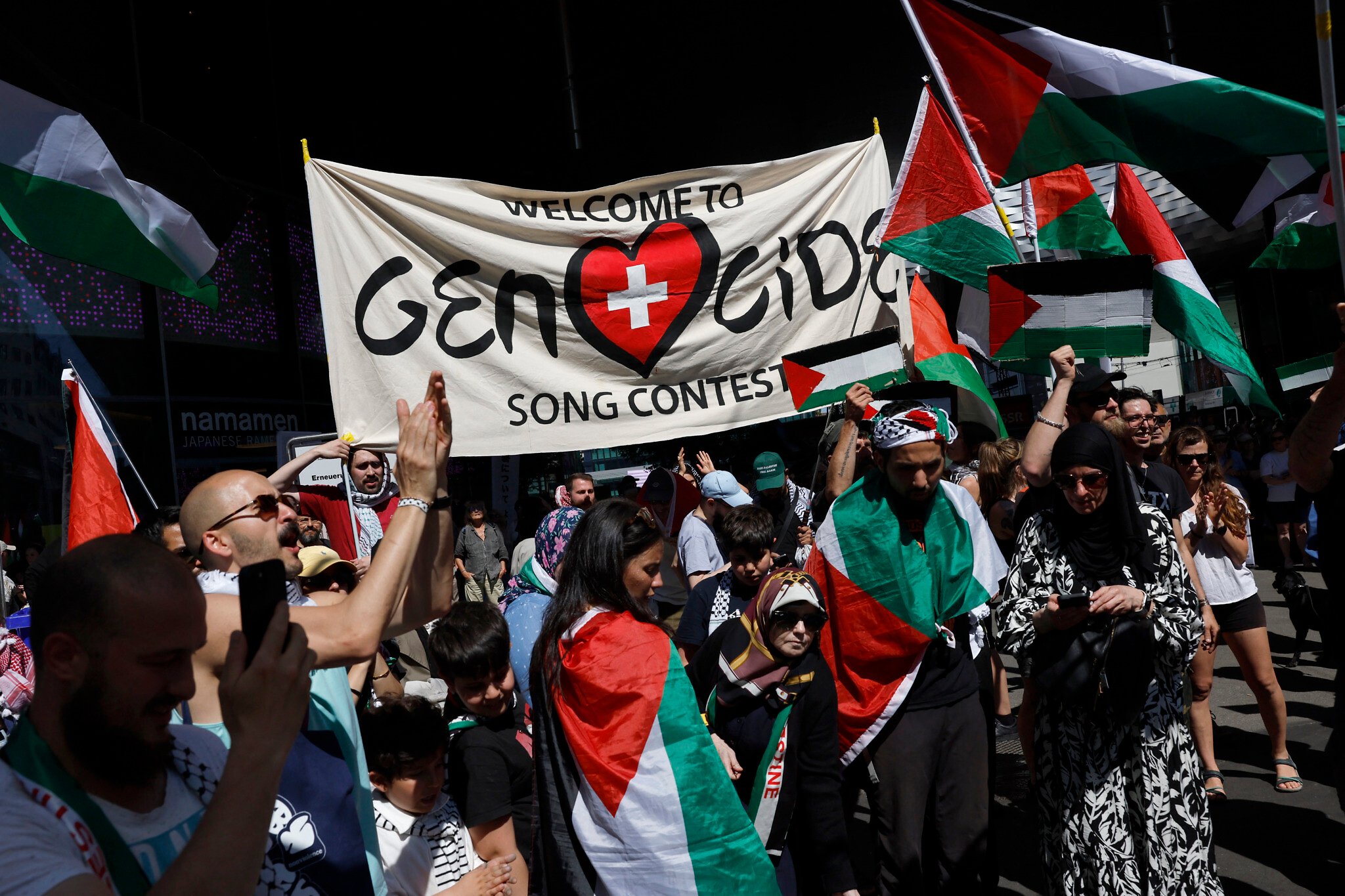
Earlier Wednesday, Poland’s public broadcaster TVP confirmed that it would take part in next year’s contest, one of the last to announce its intentions.
In a statement, TVP said that while it is “aware of the scale of tension surrounding the upcoming edition,” it believes that “Eurovision still has a chance to once again become a space filled with music. And only music.”
Spain, Ireland, Iceland, Belgium, Slovenia and the Netherlands led the call over the past two years for Israel to be kicked out of the contest, citing its prosecution of the war in Gaza and also accusing Kan of violating Eurovision rules — charges that the EBU has dismissed.
Belgium, however, is represented in Eurovision by two alternating public broadcasters, the Flemish VRT and French RTBF. While VRT was vociferously against Israel’s inclusion, RTBF, which is in charge of Belgium’s performance in next year’s Eurovision, said last week that it would remain in the contest.
A number of countries expressed outrage and suspicion after Israel did exceedingly well in the popular vote the past two years, with Eden Golan finishing 2nd in the televote in 2024 and Yuval Raphael topping the popular vote this year.
The EBU’s slate of reforms caps the number of votes per individual at 10 instead of 20; brings back professional juries alongside the televote in the semifinals; discourages “disproportionate promotion campaigns” and bars broadcasters or artists from supporting any such third-party campaigns.








The Times of Israel Community.