

In the Negev, a fake fence prepares troops for fighting Gaza from the outside
As Israel’s strategy for the Strip shifts away from readying for ground incursions, a training barrier teaches infantry and special forces how to deal with enemies at the gates
 Add ToI as a Preferred Source on Google
Emanuel (Mannie) Fabian is The Times of Israel's military correspondent
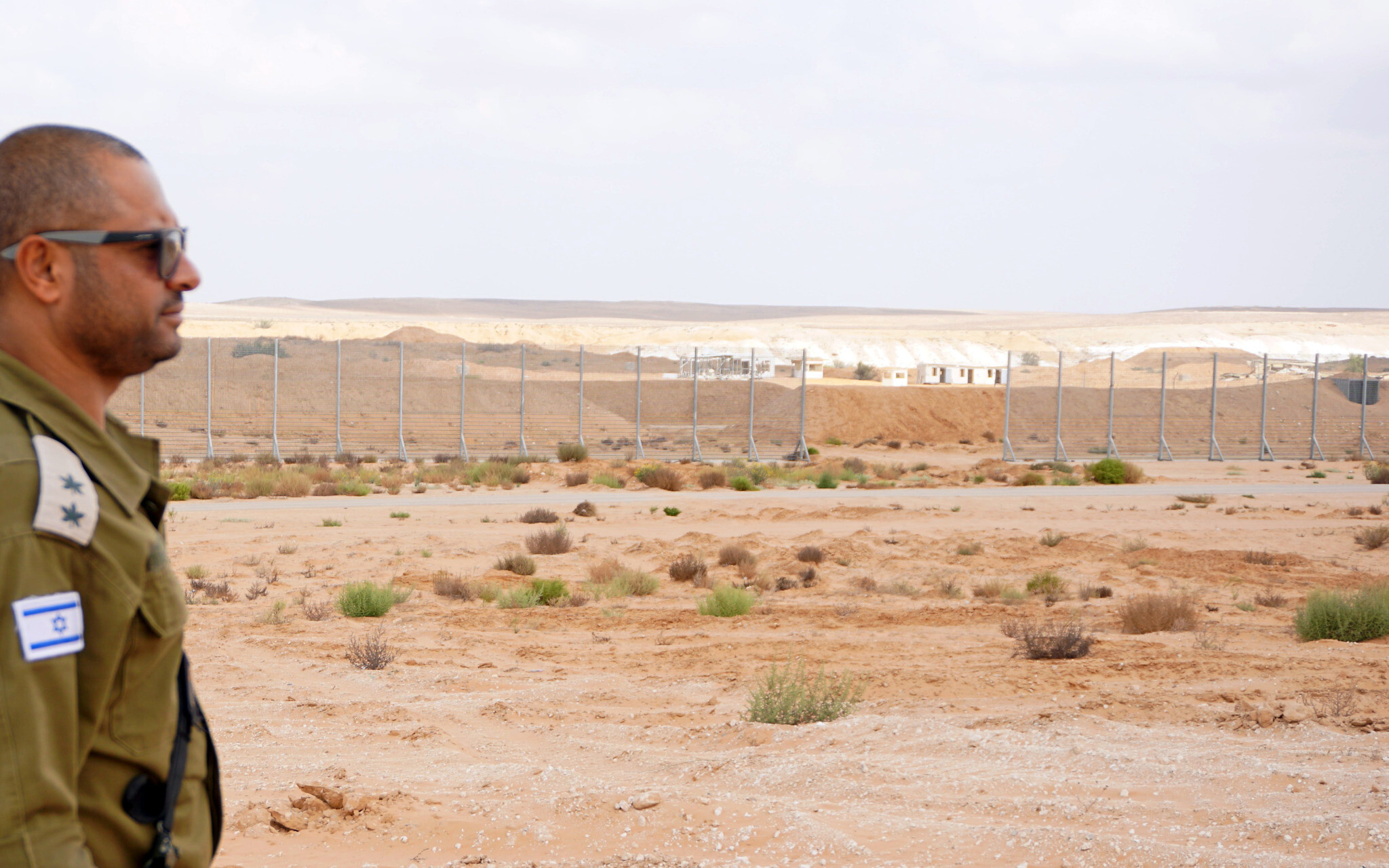
In the middle of the Negev desert, a nearly 500-meter-long 20-foot steel fence divides mounds of dirt, sand and scrubby bushes from more mounds of dirt, sand and scrubby bushes.
The metal barrier is not intended to make good neighbors, but better soldiers. Identical to a portion of the much longer fence some 20 kilometers (12 miles) away, it serves as a training facility for threats the military anticipates along the border with the Gaza Strip.
The Israel Defense Forces only recently completed construction of the real upgraded barrier surrounding the Gaza Strip, which also includes a concrete wall section. At the same time, it built a replica at the Southern Command Training Base, known in the army by the Hebrew acronym Baf Darom.
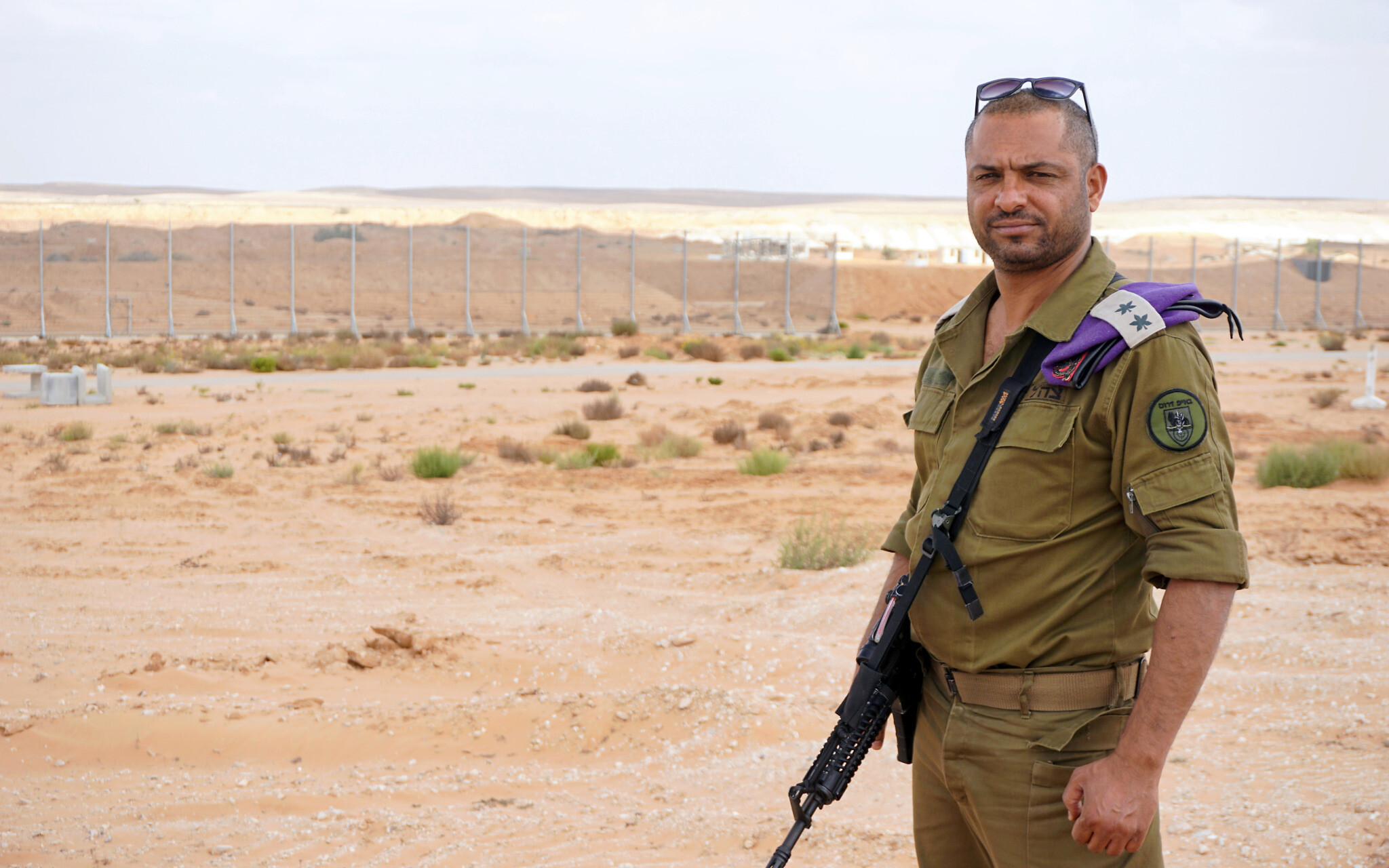
“It’s a one-to-one of Gaza,” Lt. Col. Itamar Gadir, the commander of Baf Darom, told The Times of Israel during a tour of the base in September.
Gadir, a father of five from the Arab town of Bir Maksur near Haifa, is one of the most senior Bedouin officers in the Israeli army.
Much of his military career has been focused on southern Israel and particularly the Gaza area. He formerly commanded the Bedouin Desert Reconnaissance Battalion, which is part of the IDF’s Gaza Division.
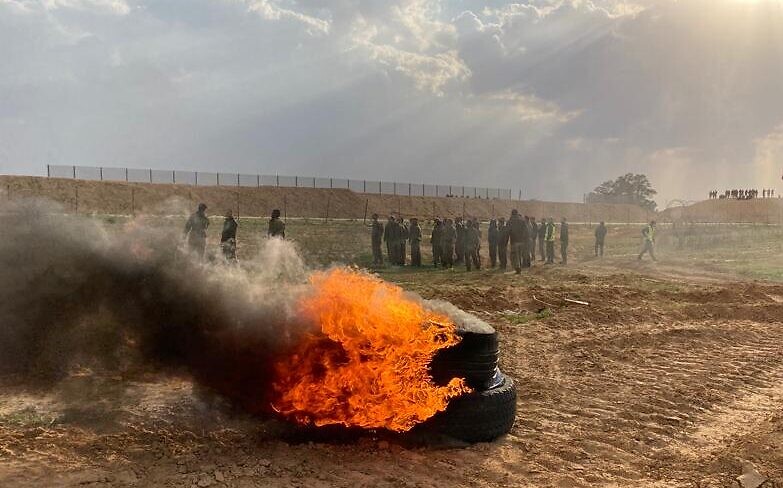
The training site at Baf Darom is meant to simulate the exact conditions of operating on the Gaza border barrier. The site includes tank and sniper positions on the “Israeli” side, while the “Gaza” side features a mock set of homes several hundred meters from the fence and posts belonging to simulated terror groups.
Baf Darom itself mimics what could be an Israeli town adjacent to the Gaza border, such as Nahal Oz or Kibbutz Kerem Shalom, Gadir said.
The facility is located across the Route 222 highway from the better-known Tzeelim base, which contains a mock Palestinian city used for urban combat training.
But training troops for operating inside Gaza has become less relevant in recent years. Since pulling out of Gaza in 2005, Israel has only sent in troops twice, in 2009 and 2014, both times reluctantly. Most rounds of fighting between Israel and Palestinian terror groups only escalate to the level of airstrikes or artillery fire from the border.
While plans exist to enable the IDF Southern Command to take control of the entire Gaza Strip from the Hamas terror group with a major ground offensive, few believe the government will ever order such a move.
Instead, Israeli soldiers are learning to deal with threats from the outside; infantry units and special forces undergo intensive training at Baf Darom to practice for every scenario they may face when deployed at the de facto border.
“We are constantly updated on the new assessments and threats,” Gadir said. “I can’t talk about the next threat, but we’re ready for it.”

The threats involved in fighting on and around the fence itself can be myriad.
According to recent military assessments, Israeli towns close to the border are no longer under threat of tunnels from the Gaza Strip, thanks to a high-tech underground wall blocking such paths from being dug.
But Hamas and other terror groups in the Gaza Strip have been determined with their tunnel projects, digging them right up to the new barrier. One such tunnel with two branches was sealed by the IDF in August, and another dug by the Islamic Jihad was struck during a round of fighting in the same month.
Israel maintains a buffer zone meant to alert it to any threat nearing the fence from the Gaza side, but the IDF fears Palestinian tunnellers will pop up to the surface at the fence and attempt to either damage it or attack troops in the area.
Additional threats the IDF is preparing for include terrorists opening fire with anti-tank guided missiles at troops along the border, sniper fire, as well as rioting.
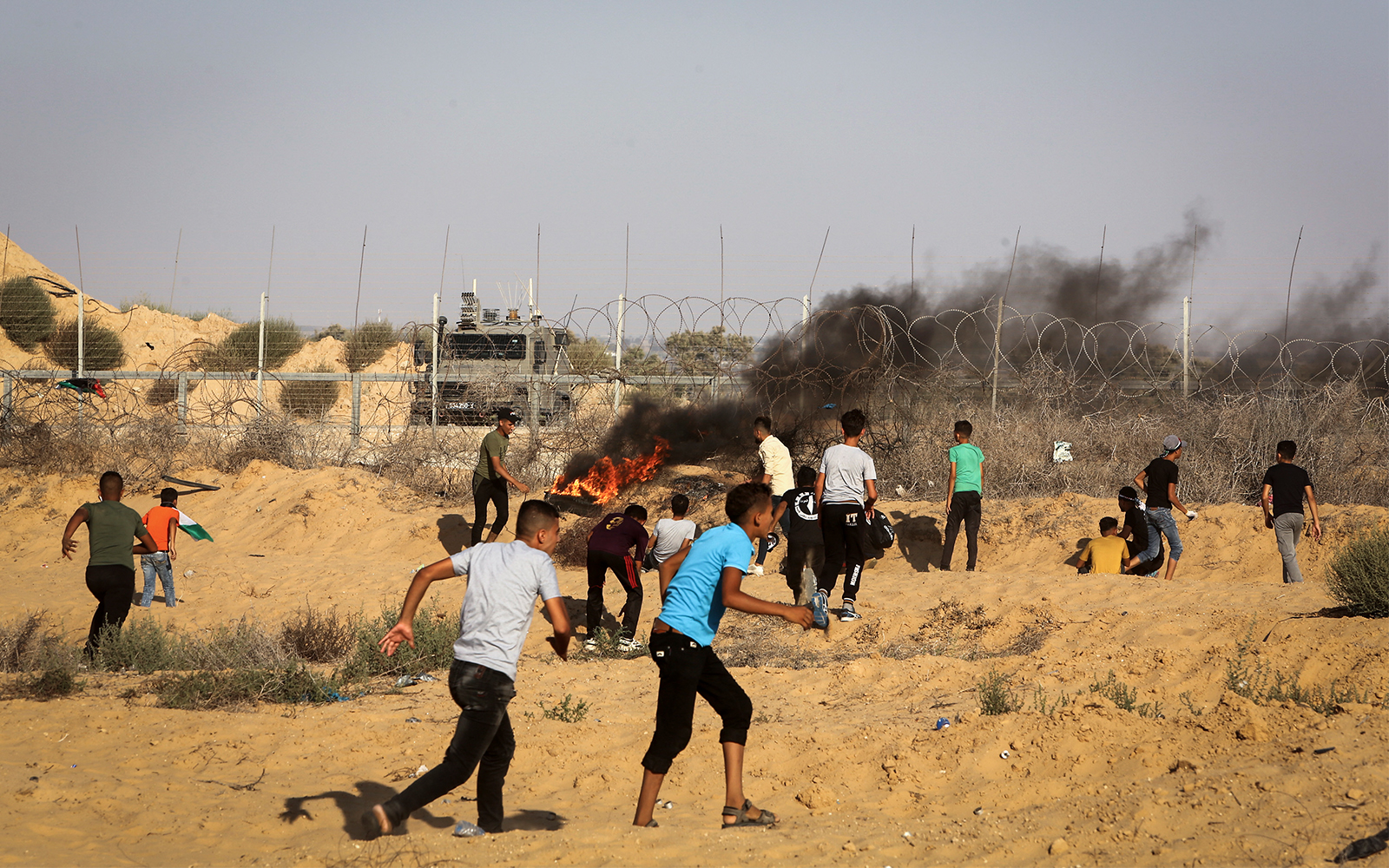
Between 2018 and 2019, Hamas staged mass near-weekly protests along the Gaza border which included attempts to attack troops in the area.
Last year, a Border Police officer was shot dead by a Palestinian gunman during a similar riot along the fence. In that incident, rioters rushed the barrier, running up to a hole in the concrete wall that was being used by Israeli snipers as a firing position. One man, armed with a pistol, approached the hole in the wall, stuck the gun through it and fired three times.
An investigation found that troops should have moved back from the fence for better protection and a clearer view, underlining the importance of training for familiarity with the barrier and the role it can play in different threat scenarios.
The mock fence is large enough for two infantry platoons — 100-200 troops — supported by several tanks, to hold an exercise simulating fighting on the border, controlling a violent riot, protecting towns from an attack, or routine operations that require troops to cross the new barrier into the so-called buffer zone — an area that stretches a few hundred meters until a barbed wire fence that marks the recognized border between Israel and Gaza.
The barrier at Baf Darom itself is heavily damaged in some areas, which Gadir blamed on a recent Combat Engineering Corps exercise. “We’ll fix it up soon,” he vowed.
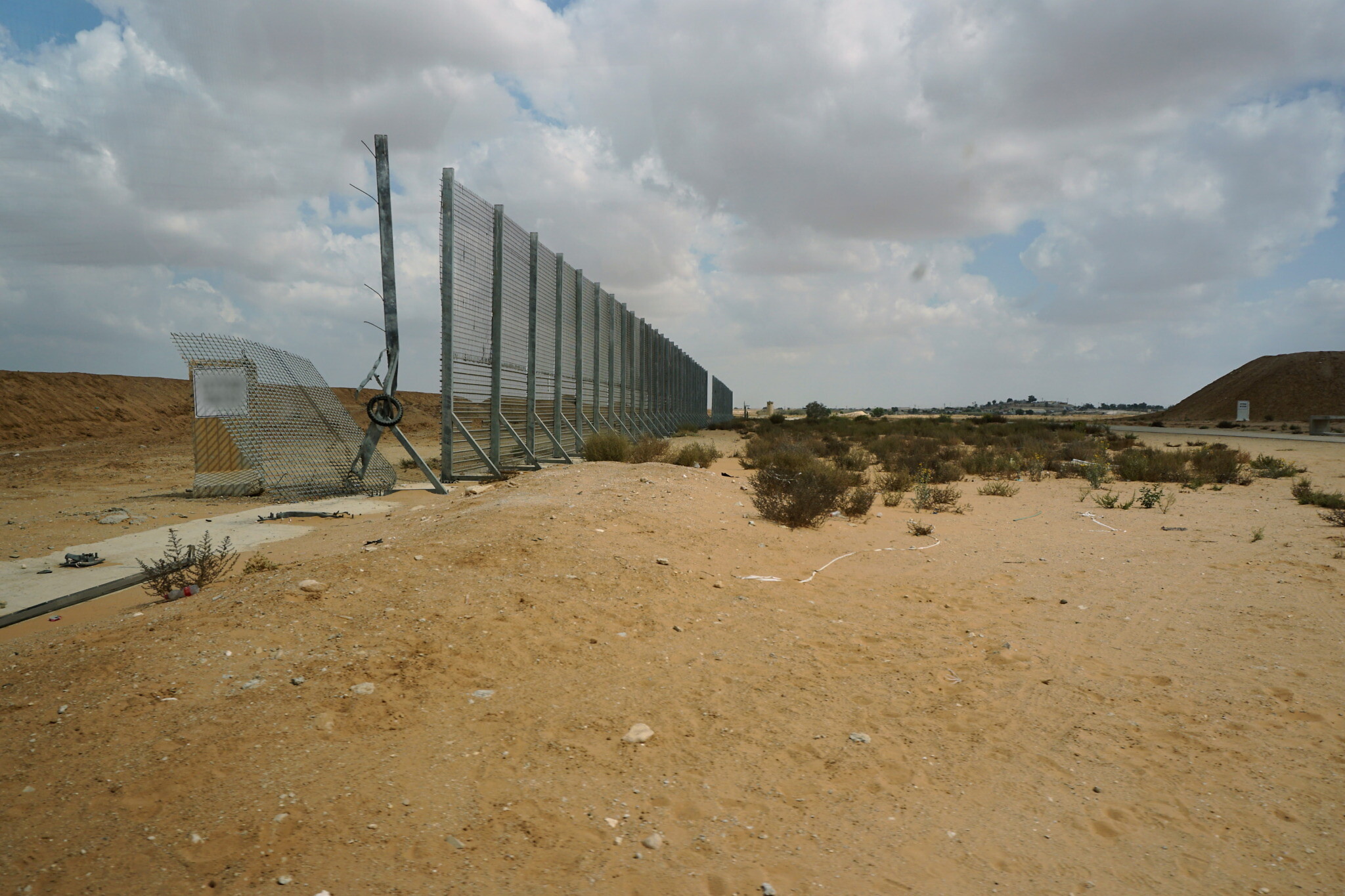
On the other side of the barrier, there is a replica road of the one that runs along the real Gaza border, and a barbed wire fence marking the internationally recognized border between Israel and the Hamas-run territory. Several “Hamas posts” dot the area, near some structures that simulate where the first line of Palestinian homes would be.
Gadir said that units, mainly special forces, come to his base for week-long intensive training on the fence. A reservist paratrooper unit had recently completed its turn in the area.
During The Times of Israel’s visit, a light infantry battalion was preparing to begin an exercise at the base.
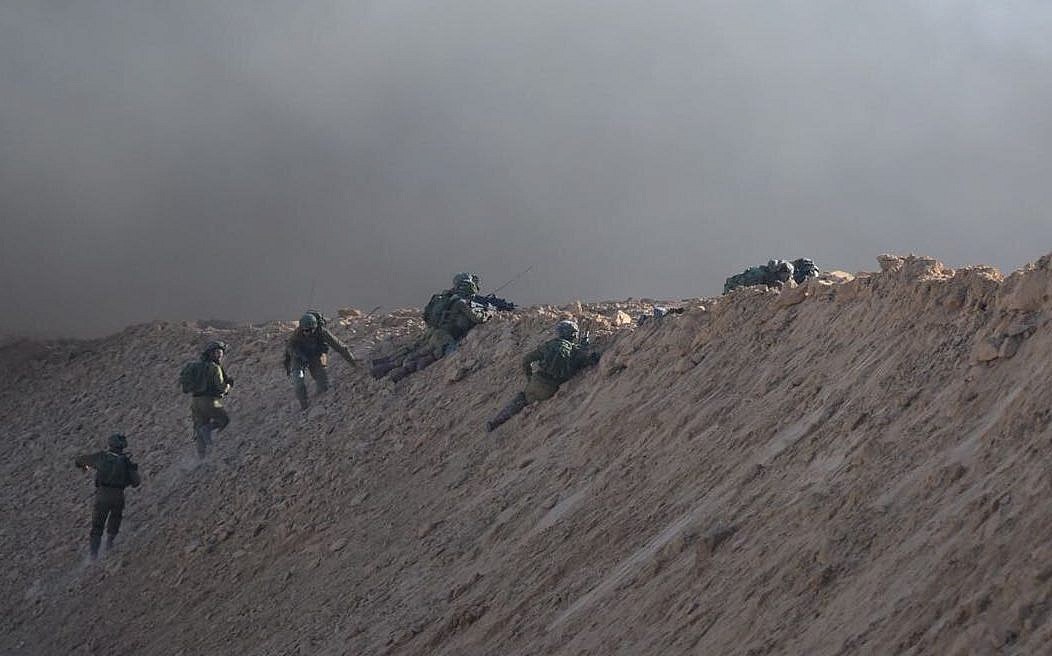
Lt. Col. Guy Basson, the commander of Caracal, one of the IDF’s mixed-gender light infantry battalions, told The Times of Israel that he would be sending different platoons to train at the site each week, an extra component to their routine activity, in order for them to better learn how to protect their area.
Caracal, which for now permanently operates along the Egyptian border near the community of Nitzana, also uses the mock Gaza fence for training.
Basson’s unit, part of the IDF’s Border Defense Corps, defends against attempts to smuggle arms and drugs into Israel from Egypt, which are occasionally violent. The battalion includes both infantry troops and a tank squad, a rarity in the military.
“Soldiers love training, it takes them out of their routine. But it is also much more challenging, and I want them to learn from their mistakes, what they can’t do in the field,” Basson said.
“In an actual incident, the soldiers can’t make mistakes,” he said.






The Times of Israel Community.