

Israeli entrepreneurs tire of Chinese ‘tourist investors,’ says expert
Vadi Ventures think it can help bridge the gap between nervous Sino businesspeople and sabra tech companies
 Add ToI as a Preferred Source on Google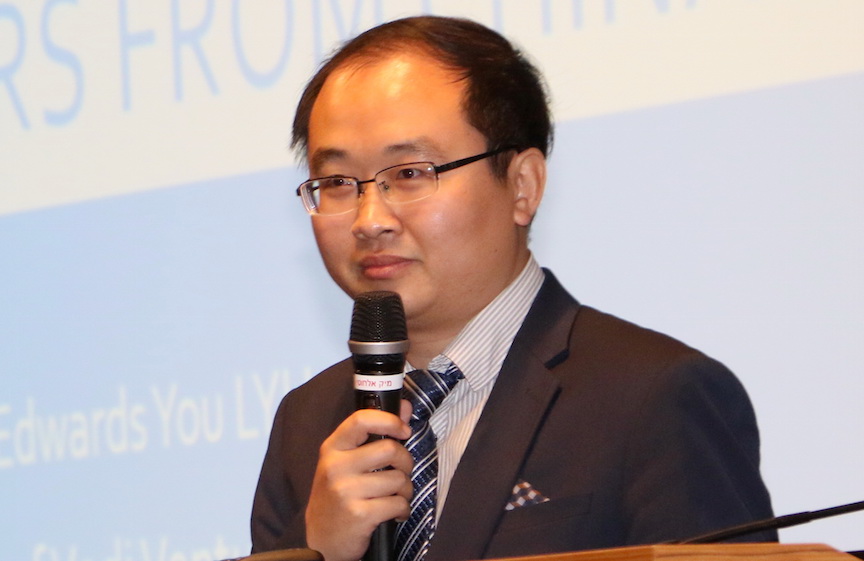
In any given week, there are dozens, if not hundreds, of Chinese entrepreneurs, investors, and government officials in Israel, touring companies, attending tech and medical events, and examining potential business deals with start-ups.
But for most, that’s where it ends, according to LYU You Edwards, CEO of Vadi Ventures, who believes that there is a significant “trust gap” between Israelis and Chinese showing up most prominently in the business activity between the two countries.
Israeli start-ups, he said, are “getting a little tired of all these supposed Chinese investors traipsing through their offices. The visitors come, look, ask questions, and take pictures – and then they leave, without investing anything.”
In fact, said Edwards, many of the Chinese “investor trips” to Israel these days are organized not by venture capital funds or other investment-oriented organizations, but by travel agents.
“Organizing ‘start-up nation’ tours is a big business in China these days,” said Edwards. “But there are no criteria for who goes on these trips other than how much they can pay for it. They are certainly not investor-only events.”
The reluctance of Chinese investors to take their commitment to the next level is due to several factors, such as a lack of understanding of how Israel works, and fear that they are not getting an accurate picture of the industry or the prospects of a technology’s success, said Edwards.
“We aim to change that with Vadi, a new firm that we developed dedicated to gathering data about Israeli companies for Chinese investors, and giving them the information they want and need in order to invest – such as the funding, the background of the team, the state of the industry they are working in, etc.,” said Edwards.
Edwards’ account of the growing lack of enthusiasm for Chinese visitors was confirmed by several entrepreneurs who expressed their opinion on the matter.
“We are always polite when they come by, and we usually book the visit when we are asked to,” said the chief marketing officer of a Tel Aviv start-up who asked to remain anonymous in order not to alienate potential Chinese partners. “You never know if there are going to be authentic investors in a group, and even if there aren’t, it doesn’t hurt to have your name known among the Chinese, because someone who visited us might tell a friend who knows a real investor. But we have come to the point where we aren’t expecting too much when these groups come by.”
As a result, Israeli entrepreneurs are less enthusiastic about receiving Chinese visitors than they were two or three years ago; investment money they were led to believe would materialize just hasn’t – and it’s doubtful that the signing of the free trade agreement between the two countries will change things substantially, at least when it comes to start-up investments. “There are issues on both sides, but mostly on the Chinese side – which doesn’t feel comfortable with investing outside the country,” said Edwards.
Israeli entrepreneurs tend to suspect China of being a difficult environment to work in – especially when it comes to their intellectual property. Despite the best efforts of the Chinese government, the country is seen by Israelis and many other Westerners as a death trap for IP, a place where ideas and technology are likely to be ripped off inside a broader system they suspect tacitly approves of IP theft in order to build up China’s tech capability.
But the Chinese have their concerns, too, said Edwards.
“Chinese investors of course don’t know Hebrew, and they don’t know how to find start-ups, so they rely on ‘handlers,’ both Israeli and Chinese, to point them in the right direction,” said Edwards. “But there have been several instances in which investors got burned when a company that was portrayed as having good prospects turned out to be a bad investment. The bottom line is that investors don’t know whom to trust, so they end up trusting no one.”
With the database Vadi is developing, Edwards hopes to pull the veil off the mysterious world of Israeli start-ups.
“You have to be above board and very clear and objective about companies and industries if you want Chinese investors to trust you,” he said. “Chinese in general are ‘holistic’ thinkers and want to see the whole picture – where a company came from and where it is going, and how it fits into an industry – before making their move. We believe that by supplying that kind of information, we will be able to attract many more investors, especially medium sized ones – the backbone of China’s market economy – to invest in Israel.”
Many of those potential investors are “economic immigrants” – middle-aged and older people who as children were inculcated with the “purist” Communist principles of Mao, and then some 20 years ago set about building China into the world economic power it is today.
“They know one thing – that they worked night and day to make their fortune, and they are not going to part with a nickel of it unless they understand where it is going and what their prospects for success is. The more we can allay the fears, the more we will be able to encourage Chinese investors to take the next step.”









The Times of Israel Community.