

Katz says Israel will hold ‘security zone’ in Lebanon until Hezbollah threat removed
Defense minister says Israel to maintain control up to Litani River, Lebanese residents won’t return until security ensured; France criticizes plan, Hezbollah vows to fight it
 Add ToI as a Preferred Source on Google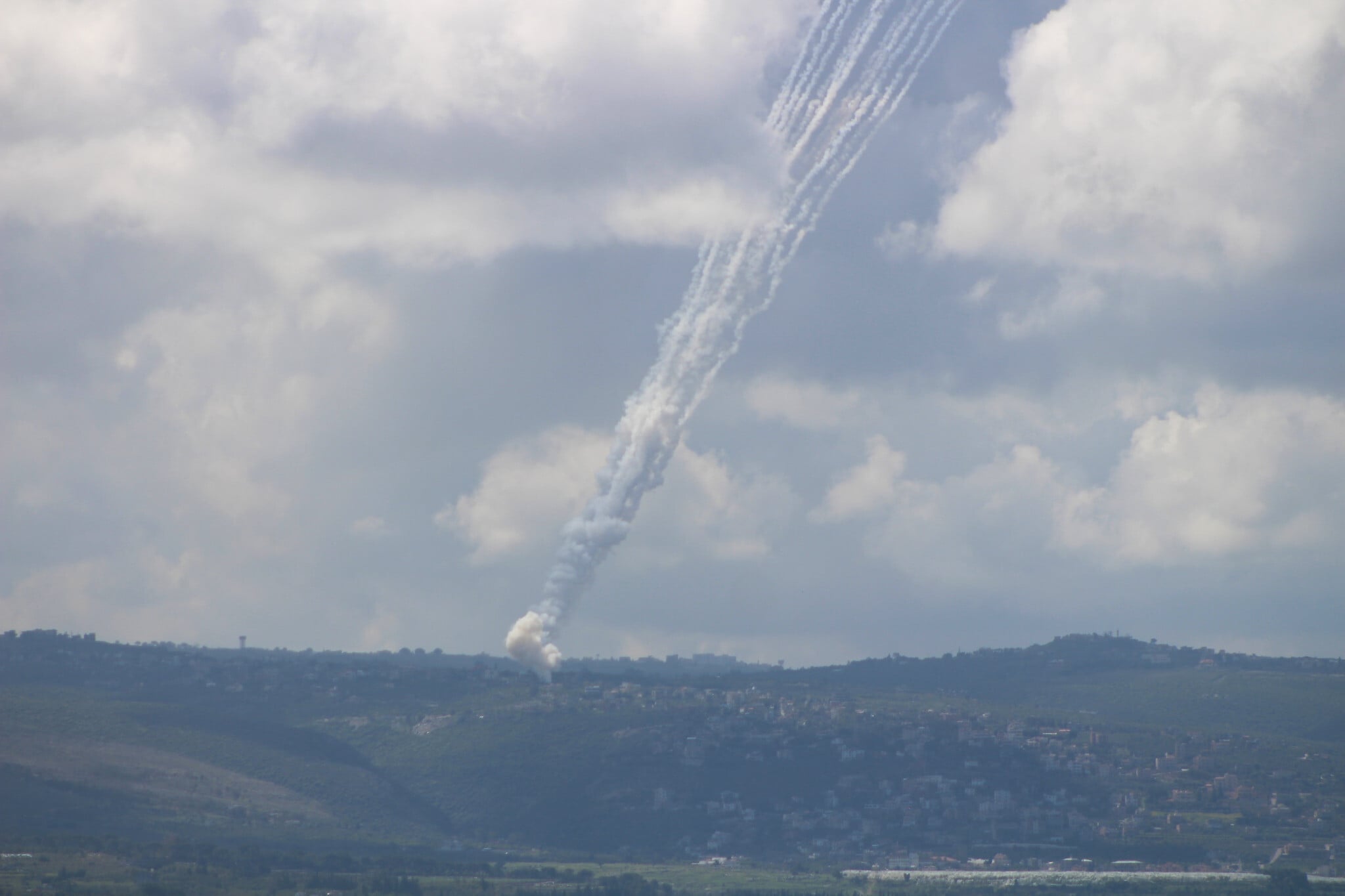
Defense Minister Israel Katz said on Tuesday that Israel will maintain control of a “security zone” in southern Lebanon, up to the Litani River, until the threat of Hezbollah is removed, as the Air Force continued to pound targets belonging to the Iran-backed terror group, which kept up its rocket barrages on northern Israel.
“The IDF will continue to operate in Lebanon with full force against Hezbollah. Hundreds of thousands of residents of southern Lebanon who evacuated northward will not [be allowed to] return south of the Litani River until security for the residents of the north [of Israel] is ensured,” he said during an assessment with IDF Chief of Staff Lt. Gen. Eyal Zamir and other top officers.
Katz said that all bridges over the Litani River that had been used by Hezbollah to move operatives and weapons into southern Lebanon “have been blown up, and the IDF will control the remaining bridges and the security zone up to the Litani.”
“The principle is clear: Where there is terror and missiles, there will be no homes and no residents, and the IDF will be inside [Lebanon],” he added.
The IDF said Tuesday that it had struck another bridge on the Litani that it said was a “key” crossing used by Hezbollah to move operatives and weapons into southern Lebanon.
The al-Dalafa Bridge, located on the eastern portion of the river, was struck on Monday following a warning by the military.
צה"ל תקף מעבר מרכזי נוסף בנהר הליטאני ששימש את מחבלי ארגון הטרור חיזבאללה
צה"ל תקף במהלך הלילה מעבר מרכזי נוסף ששימש את מחבלי ארגון הטרור חיזבאללה לנוע מצפון לדרום נהר הליטאני.
מחבלי ארגון הטרור חיזבאללה השתמשו במעבר שהותקף להעברת אמצעי לחימה, רקטות ומשגרים במטרה לקדם ולהוציא… pic.twitter.com/zLGacFzuow
— צבא ההגנה לישראל (@idfonline) March 24, 2026
On Monday, Finance Minister Bezalel Smotrich suggested Israel go further and move its border with Lebanon up to the Litani River.
Israel ran a costly occupation of Lebanon’s south in 1982-2000.
A November 2024 ceasefire agreement obligated the Lebanese national government to ensure there were no weapons held by non-state bodies in the area of south Lebanon between Israel and the Litani. A 2006 UN Security Council resolution had already barred Hezbollah from operating in the region, but it was consistently violated.
The terror group, which has resisted international and internal calls to disarm and halt its attacks on the Jewish state, reacted to Katz’s announcement by saying it would fight to prevent Israeli troops from occupying southern Lebanon. One of the group’s top lawmakers, Hassan Fadlallah, told Reuters that such an occupation would pose an “existential threat” to Lebanon as a state.
The Israeli remarks were also criticized by France’s foreign minister, who told AFP Jerusalem should “refrain” from seizing the buffer zone and argued that such a move would have “major humanitarian consequences.”
“We urge the Israeli authorities to refrain from such ground operations, which would have major humanitarian consequences and would exacerbate the country’s already dire situation,” Jean-Noel Barrot said.
Meanwhile, the IDF said Tuesday that troops of the Golani Brigade had killed eight Hezbollah operatives during a raid last week in southern Lebanon.
According to the military, the operatives were killed during an exchange of fire with troops and in airstrikes. One of the eight was a member of the sniper unit of Hezbollah elite Radwan Force.
The military did not report any injuries in the incident.
The IDF said the Golani soldiers had also located a tunnel used by the operatives, inside which numerous weapons were found. The tunnel was then destroyed.
The IDF also said Tuesday that troops operating on the Lebanese side of Mount Dov recently located a Hezbollah tunnel shaft, in addition to demolishing other structures used by the terror group.
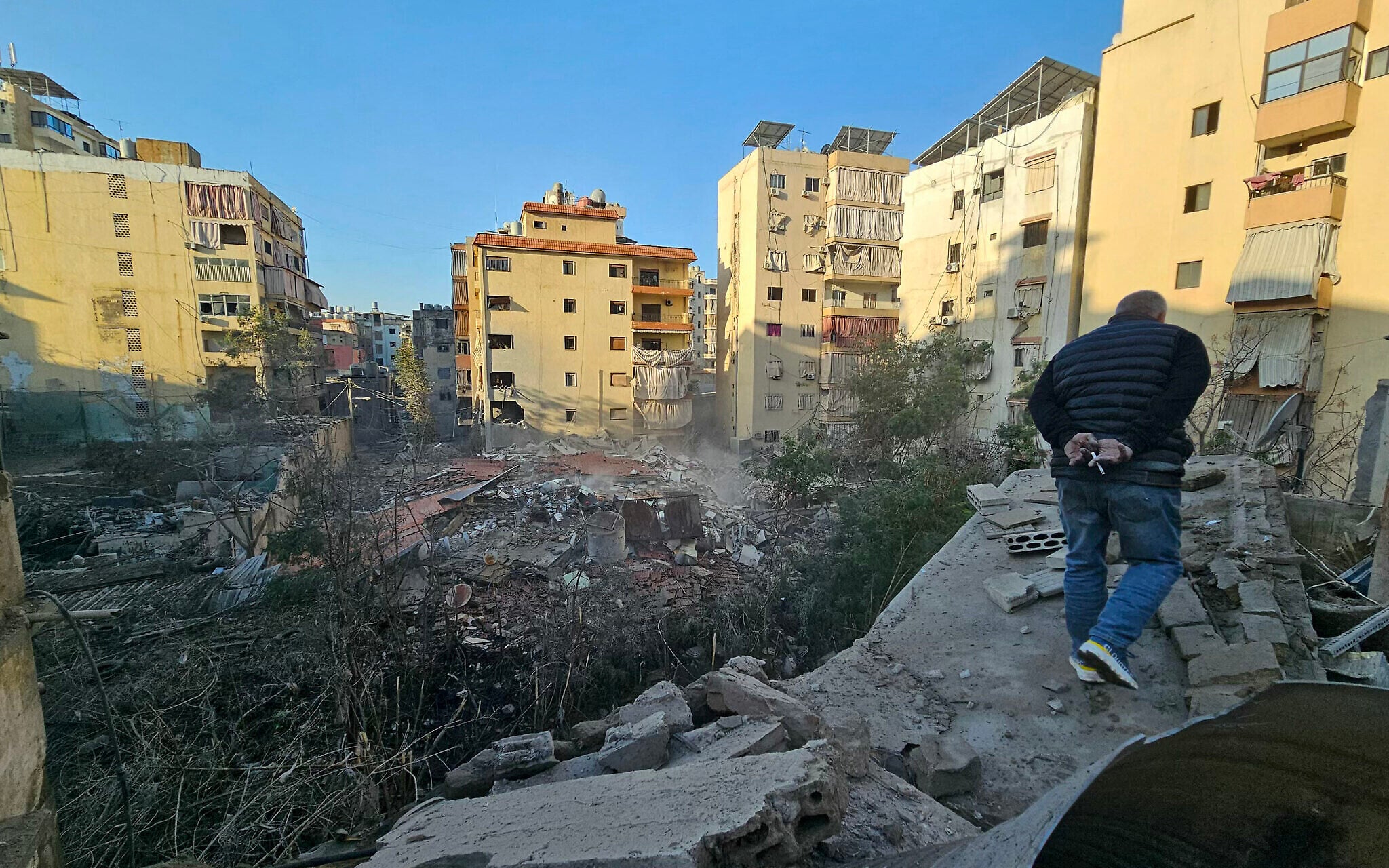
The Israeli Air Force also leveled a multistory building and struck other structures in Beirut overnight Monday-Tuesday that the military said were being used by Hezbollah as command centers.
According to the IDF, the strikes in the Lebanese capital targeted Hezbollah headquarters, including one belonging to the elite Radwan Force and another of the terror group’s intelligence division.
Another overnight strike in the southern Lebanon town of at-Tiri targeted a Hezbollah command center that had been embedded within a studio of the terror group’s Al-Nour radio station, according to the IDF.
The military said the headquarters was struck while Hezbollah operatives were operating at the site.
On Monday night, the IDF reiterated an evacuation warning for Beirut’s southern suburbs, a Hezbollah stronghold, ahead of strikes on the terror group’s sites.
Lebanon’s state-run National News Agency reported that Israel’s overnight attacks had targeted seven areas.
צפו בתיעודים מהלילה: צה"ל תקף תחנת שידור הפועלת בחסות חיזבאללה ומפקדות של יחידת 'כוח רדואן'
לאורך הלילה, צה"ל תקף תשתיות של ארגון הטרור חיזבאללה בביירות ובמרחבים נוספים בלבנון.
בתקיפות שבוצעו בביירות, הותקפו מפקדות של ארגון הטרור, בהן מפקדה של יחידת 'כוח רדואן', ממנה פעלו מחבלי… pic.twitter.com/0PTCNeutAz
— צבא ההגנה לישראל (@idfonline) March 24, 2026
“Enemy warplanes launched seven raids overnight on the southern suburbs, targeting the areas of: Bir al-Abed, Al-Ruwais — outskirts of Al-Manshiyya, Haret Hreik, Sayyed Hadi Nasrallah Highway, Saint Therese, Burj al-Barajneh and Al-Kafaat,” NNA said on Tuesday.
Separately, Lebanon’s health ministry said an Israeli strike on Bshamoun, south of Beirut, killed two people on Tuesday.
“The Israeli enemy raid on the town of Bshamoun in the Aley district resulted, in a preliminary toll, in the martyrdom of two citizens and the injury of five others,” the ministry said in a statement, without specifying if the casualties were civilians or combatants.
Located in the mountainous, Druze-majority Aley district southeast of Beirut, Bshamoun lies outside of Hezbollah’s traditional strongholds.
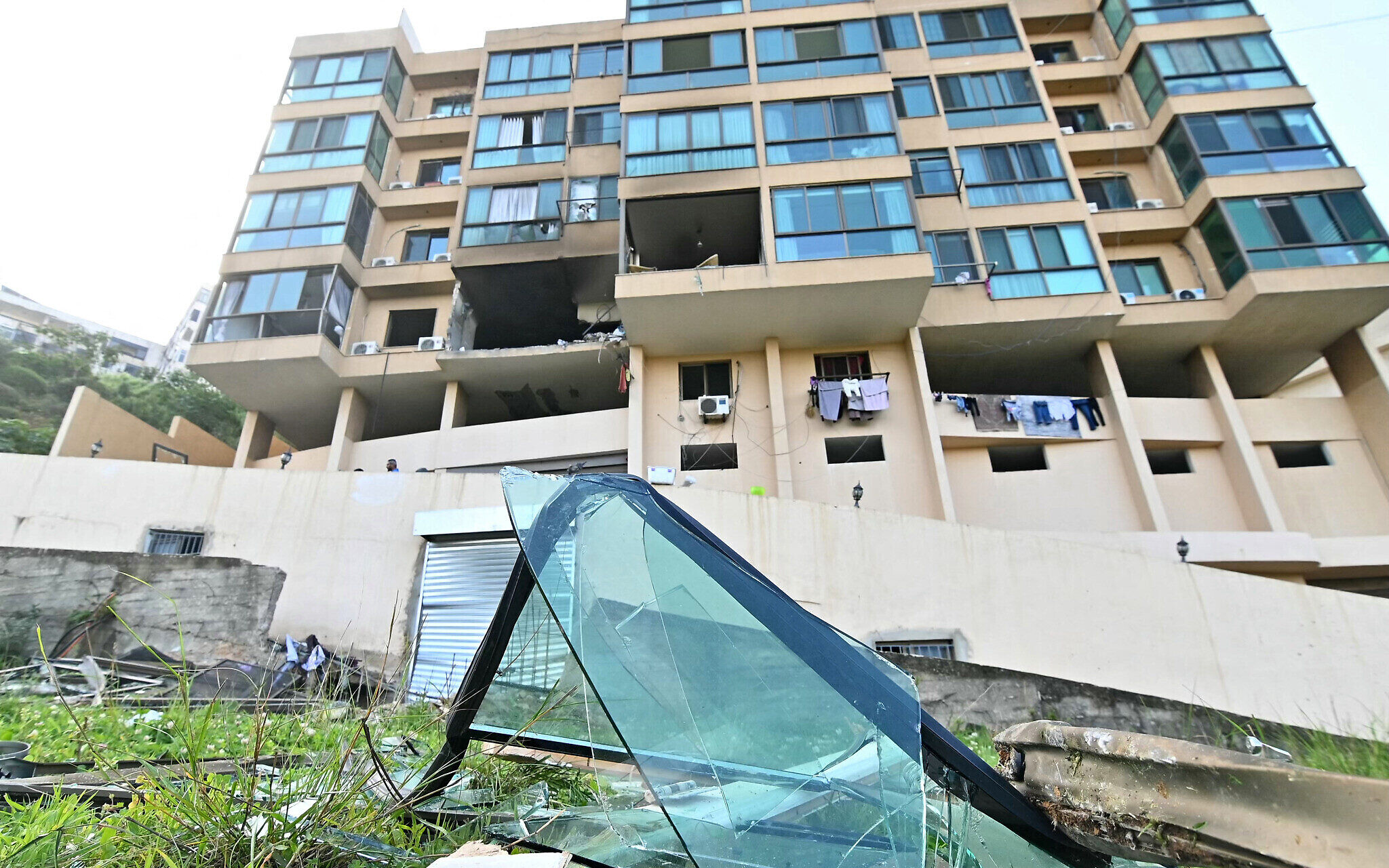
Another wave of strikes by the Air Force targeted gas stations in Lebanon that the IDF said are owned by Hezbollah.
Al-Amana, a fuel distribution company that is owned by the terror group, has been under US sanctions since February 2020. The IDF said the company “serves as a significant economic infrastructure for [Hezbollah’s] terror activity” and is used by the terror group to “refuel trucks transporting weapons and terrorists.”
The IDF struck a series of Al-Amana gas stations in Lebanon last week as well.
חיל-האוויר השלים גל תקיפות נוסף ברחבי לבנון לעבר תחנות דלק הממנות את פעילות ארגון הטרור חיזבאללה:https://t.co/GiWy1k586X pic.twitter.com/4suVlL6Nhf
— Israeli Air Force (@IAFsite) March 24, 2026
The army also said an IDF soldier was moderately hurt in an “operational accident” during military operations in southern Lebanon on Tuesday, adding that he was taken to a hospital and his family was notified. According to an initial IDF probe, the soldier was hit by shrapnel and not by enemy fire.
Also on Tuesday, Hezbollah fired a barrage of some 30 rockets from Lebanon at the Haifa Bay area, in addition to frequent smaller salvos targeting northern Israel.
According to the military, most of the rockets were intercepted by air defenses, and there were no reports of impacts in residential areas or injuries.
Since it resumed its attacks on March 2, Hezbollah has been firing an average of about 150 rockets per day, according to the IDF. Roughly two-thirds of the daily rocket fire has been directed at Israeli forces operating in southern Lebanon and along the border, with the remaining third aimed at Israel.
The Israeli military has said that it has killed around 600 Hezbollah operatives, including over 220 members of the terror group’s elite Radwan Force, since then.
More than 2,000 Hezbollah targets in Lebanon have also been struck, including 120 command centers, 100 weapon depots, and 130 missile launchers, according to the IDF.
The IDF believes Hezbollah still possesses thousands of short-range rockets, along with hundreds of longer-range projectiles. The IDF has said that Hezbollah is launching most of its attacks from deeper within southern Lebanon, and not from close to the border.






The Times of Israel Community.