

Likud MK pens anguished account of culture of fear in Netanyahu’s coalition
Yehudah Glick says coalition chair David Bitan insults and mocks colleagues to force them to toe the party line, and PM does nothing to stop him
 Add ToI as a Preferred Source on Google
Raoul Wootliff is a former Times of Israel political correspondent and Daily Briefing podcast producer.
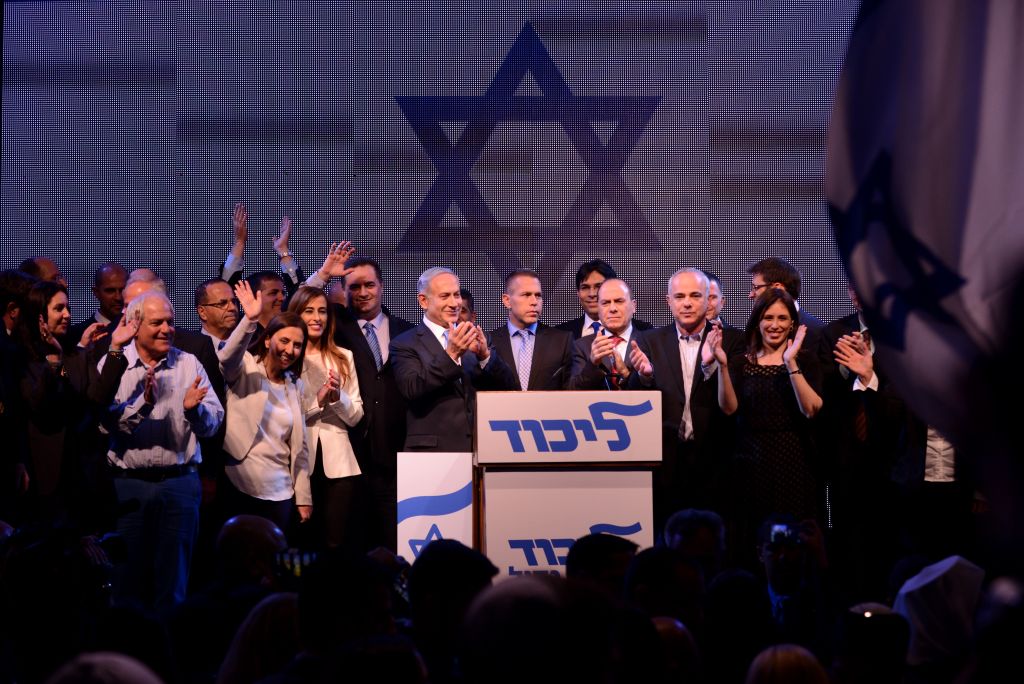
As Benjamin Netanyahu bounded towards the stage at the Tel Aviv Exhibition hall to give a speech officially launching his party’s election campaign in January 2015, he stopped just before he reached the podium to embrace one person in the crowd.
On stage were the top 30 members of the Likud party list, eagerly awaiting the handshake of the prime minister as they stood in front of bright lights and dozens of television cameras covering the event. But at the foot of the stairs to the raised platform sat the 33rd highest ranking candidate on the list, who had just missed the cut in the decision on how many potential future Knesset members would flank Netanyahu.
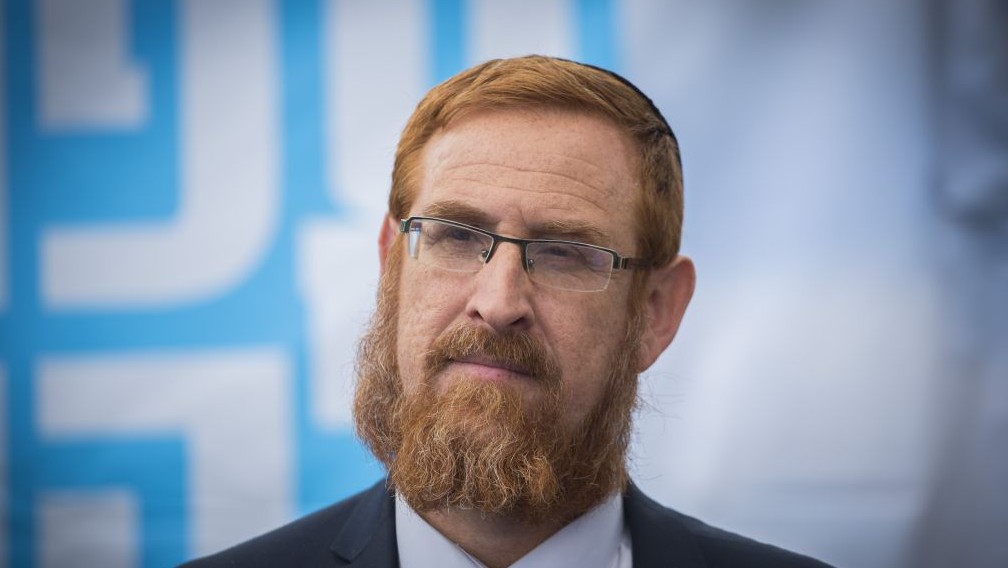
Two months and two days earlier, Yehudah Glick had survived an assassination attempt when a Palestinian shot him four times at point-blank range for his vocal advocacy on behalf of Jews’ rights on the Temple Mount. Still on an array of drugs to treat both the pain and the symptoms of the numerous surgeries he had undergone since the attack, Glick was in a wheelchair as his body continued to recuperate. But as Netanyahu approached, Glick stood up. Touched, the prime minister paused and hugged the wannabe lawmaker.
“We want to give a special welcome to our good friend Yehudah Glick,” Netanyahu said at the start of his speech, gesturing in Glick’s direction. “We are so glad you are with us.”
Two years and two months later, after an unexpected Likud landslide victory which gave the party 30 seats in parliament and eventually allowed Glick to become an MK when several others resigned, the now-Knesset member wrote a heartfelt and brutally honest Facebook post Thursday night that expressed anything but a feeling of acceptance and camaraderie.
Following a coalition “team building” event which appeared to create rather than mend rifts, Glick described his despair and misery as a member of the Likud-led bloc that he says is governed by a poisonous culture of fear, imposed by coalition chair David Bitan and overseen by Netanyahu himself.
“The following is written from a place of both great pain and great love and respect for the current government and its leader,” Glick said at the opening of his 700-word treatise [Hebrew] in a sign of the thin line he was treading by publicly airing critique of the party echelon.
“It’s written by a person who hopes that this government will last until the end of its term, a person who believes in the direction of this government and who thinks that it, and the man who heads it, should be leading our country at this time. By a person who despises conflict and strives for peace with all his might — in the hope that it will act as constructive criticism.”
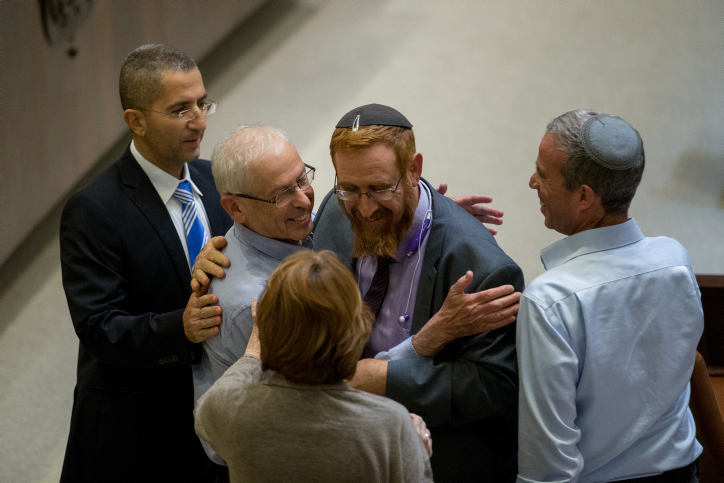
Glick recounted how on Wednesday, MKs and their parliamentary aides from the six parties that make up the coalition were invited to the Likud gathering in the northern city of Hadera. The evening, Glick said, was supposed to be an opportunity for lawmakers and their staff to unwind at the end of a grueling Knesset winter session of hard legislative work, to get to know each other outside of the fraught halls of parliament, and give thanks to the many people from across the various parties that don’t normally get recognition. “What a great idea, I thought to myself,” Glick wrote.
But his hopes for the event were bitterly crushed as the evening got underway and he was “slapped in the face by reality.” Far from team building, it quickly became clear that the evening would instead be dedicated solely to the man who had organized the event.
According to Glick, one after the other, sycophantic MKs shamelessly lavished coalition chair Bitan with accolades and adoration, praising him as “the most aggressive coalition chair in history.”
Bitan, a long-time Likud activist who served as Rishon Lezion deputy mayor from 2005 to 2015, was appointed coalition chair shortly after he first entered the Knesset following the 2015 election. Despite being a freshman lawmaker, he quickly made a name for himself as a tough coalition chair — Israel’s equivalent of a party whip — gaining the nickname “the bulldozer” for his belligerent enforcement of the government’s legislative agenda.
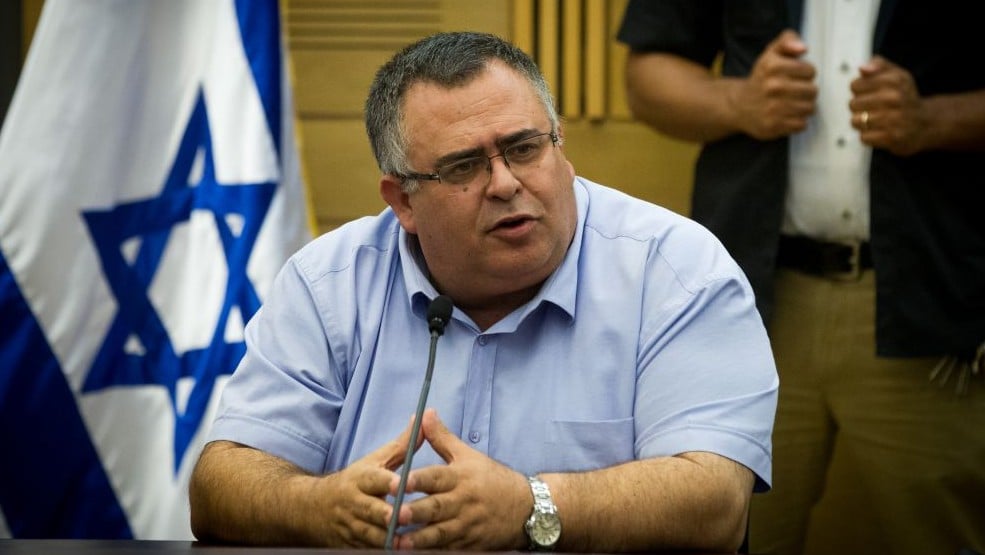
But according to Glick, the compliments and applause directed at Bitan on Wednesday were empty examples of political “duplicity.”
“We are speaking about a coalition head who has fought with so many members of his own coalition throughout the entire legislative session. This is a man who causes every coalition member to dread Saturday nights when we will have to twist and turn to defend his latest outrageous comment,” Glick said, referring to a number of controversies caused by Bitan during his appearances at “Shabatarbut” — cultural events held on Saturdays in towns and cities across the country.
Bitan has sparked outrage at these events by saying, among other things, that he would prefer that the Arab-Israeli population not vote in elections, that former prime minister Yitzhak Rabin’s assassination was “not a political murder,” that he was tracking the Facebook posts of journalists critical of the government, and that the head of a left-wing NGO should be stripped of Israeli citizenship.
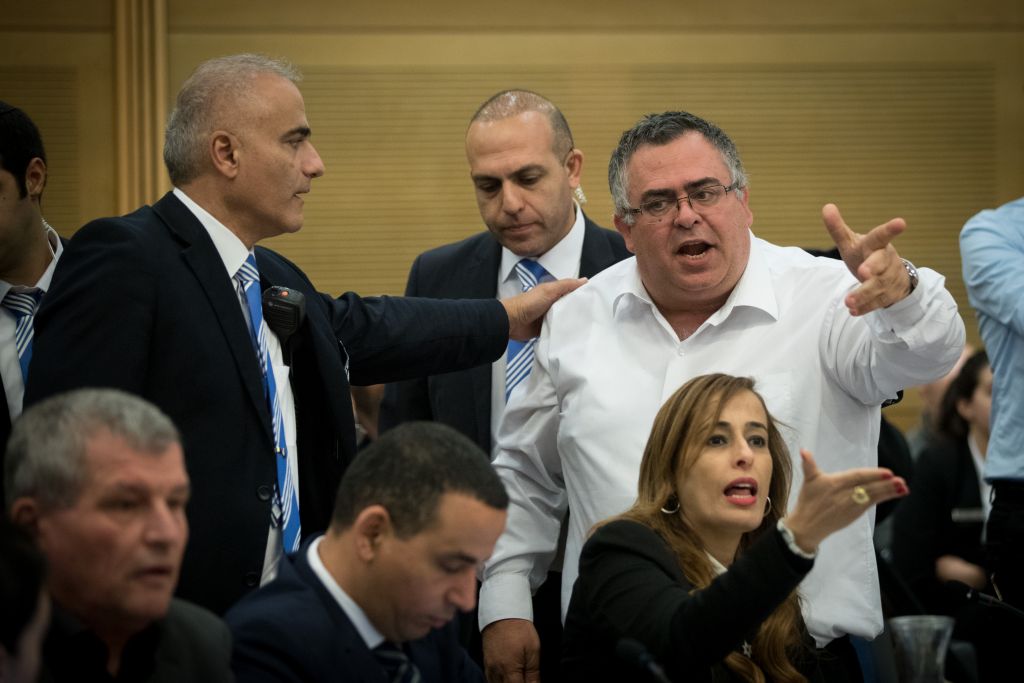
That same antagonism and aggressiveness, Glick said, was also employed by Bitan to bully lawmakers to vote with the coalition, even if they disagreed. “If you do not vote the way I tell you, I will make sure that the 65 million shekels supposed to go to the West Bank will not get there,” Glick said Bitan had told him once. “He mocks, he abuses, he hurts.”
A spokesperson for Bitan declined to comment on the allegations made in the post.
Glick, who has spoken out against a number of key government proposals, described an oppressive culture in the Likud faction that prevents open discussion on policy and forces MKs to toe the party line without any ability to influence it.
“There are so many issues on the agenda that we should hold discussions on within the faction but we can’t because in our party, our leaders tell us what to think,” he wrote, citing examples of the proposal to ban the Muslim Muezzin call, the outpost legalization law, the efforts to remove MK Bassel Ghattas for smuggling phones to Palestinian prisoners and more.
“There are open meetings of ministers and faction heads, but the Knesset members of the largest party must be disciplined soldiers,” Glick said. “Their opinion is of no interest, and if they do not stand in line and salute, they are punished and threatened.”
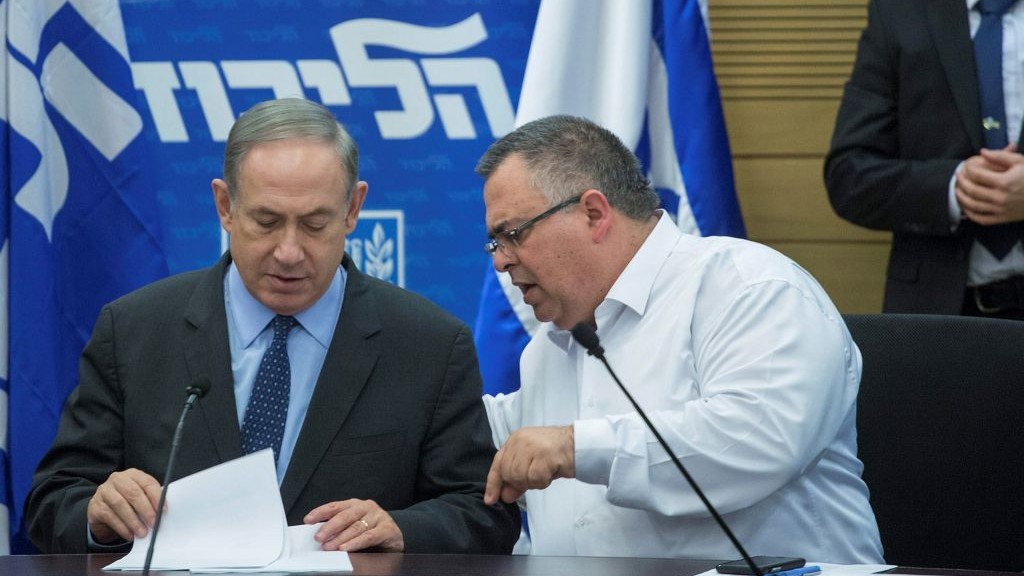
Glick said he has tried to speak to Netanyahu about the situation but the prime minister has refused a meeting with him because of his long-held stance on changing the Temple Mount status quo. Instead, he dispatches Bitan.
Saying that the frustration felt by him and his colleagues could “lead to the break up of the coalition,” Glick finished his text with a plea to Netanyahu.
“Mr. Prime Minister, you said yesterday [at the team building event] that ‘things can still be fixed’… Well, things can still be fixed. Sweeping things under the rug will not get us anywhere.”








The Times of Israel Community.