

 From the Liveblog of
Tuesday, November 11, 2025
From the Liveblog of
Tuesday, November 11, 2025
Gaza families still without electricity despite ceasefire
 Add ToI as a Preferred Source on Google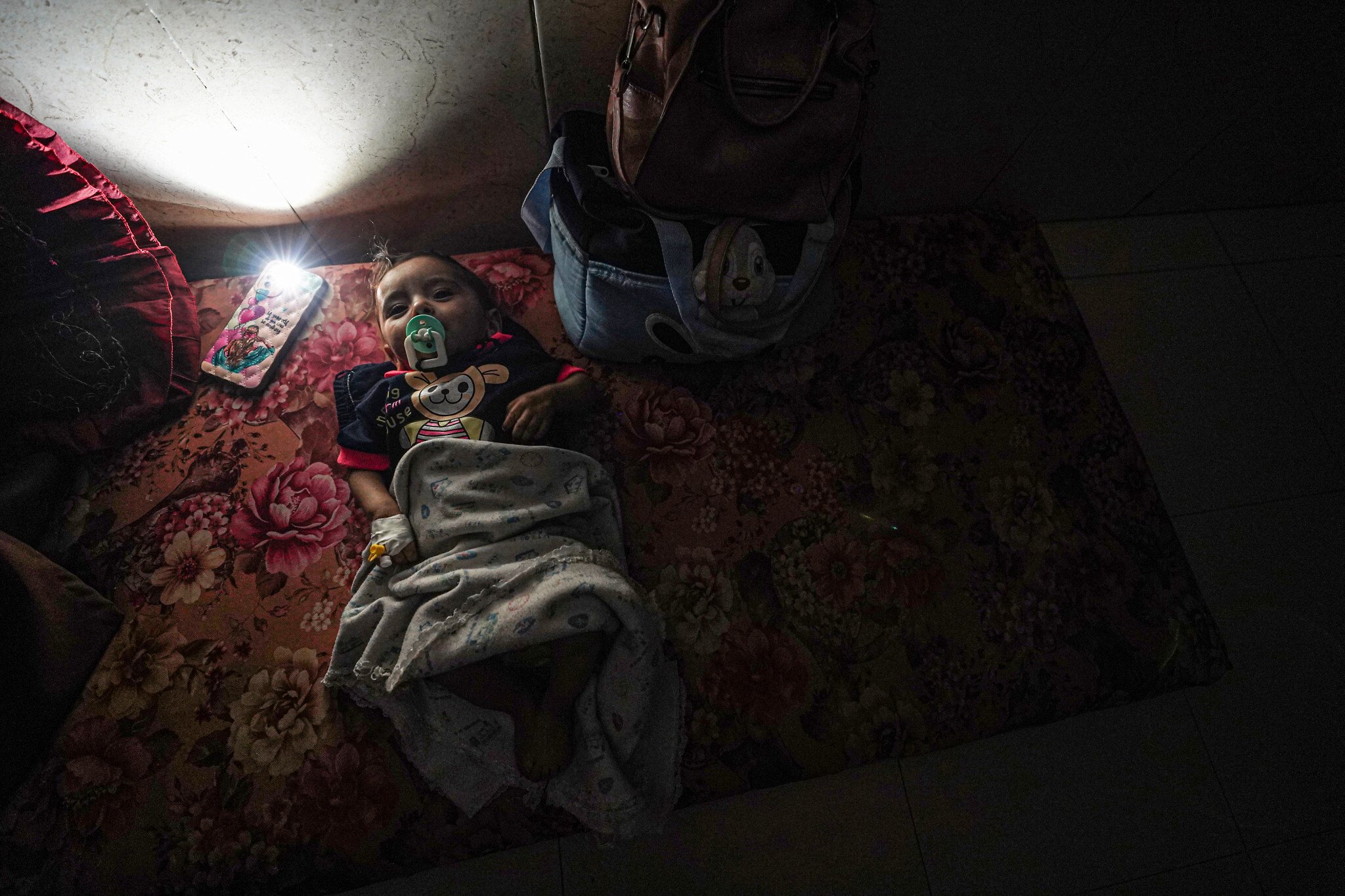
Palestinian mother Hanan al-Joujou, 31, has to feed her three children in the dark with a flashlight as there is no electricity in Gaza even after last month’s Israel-Hamas ceasefire.
When they cannot afford to charge the flashlight, they go without food.
“We stay in the darkness — once the sun sets and the Maghrib prayer is called,” al-Joujou says, referring to the Muslim sunset devotion. “If the light of the flashlight is available, we light it. If not, we go to sleep without dinner or light.”
Her family has been without electricity since war broke out more than two years ago, relying on candles when first displaced to the city of Rafah in the south of the Palestinian enclave.
Eventually they gave up even that, fearing a fire hazard in their tent. “We tried a simple LED light, but it broke. We do not have the money to fix it. We tried to get a battery, but it’s expensive and unavailable,” al-Joujou says.
Before the war, Gaza mainly depended on imported electricity from Israel, though supplies were shaky. It received 120 megawatts from Israel while the enclave’s lone power plant supplied another 60 MW, according to Gaza officials.
Now in a displacement camp in central Gaza’s Nuseirat neighborhood, most family activities end when the sun goes down. Al-Joujou’s children also use a flashlight for homework when possible to charge it.
“We barely have enough money to get by in our daily lives,” adds Hanan’s husband Ahmed, 35.
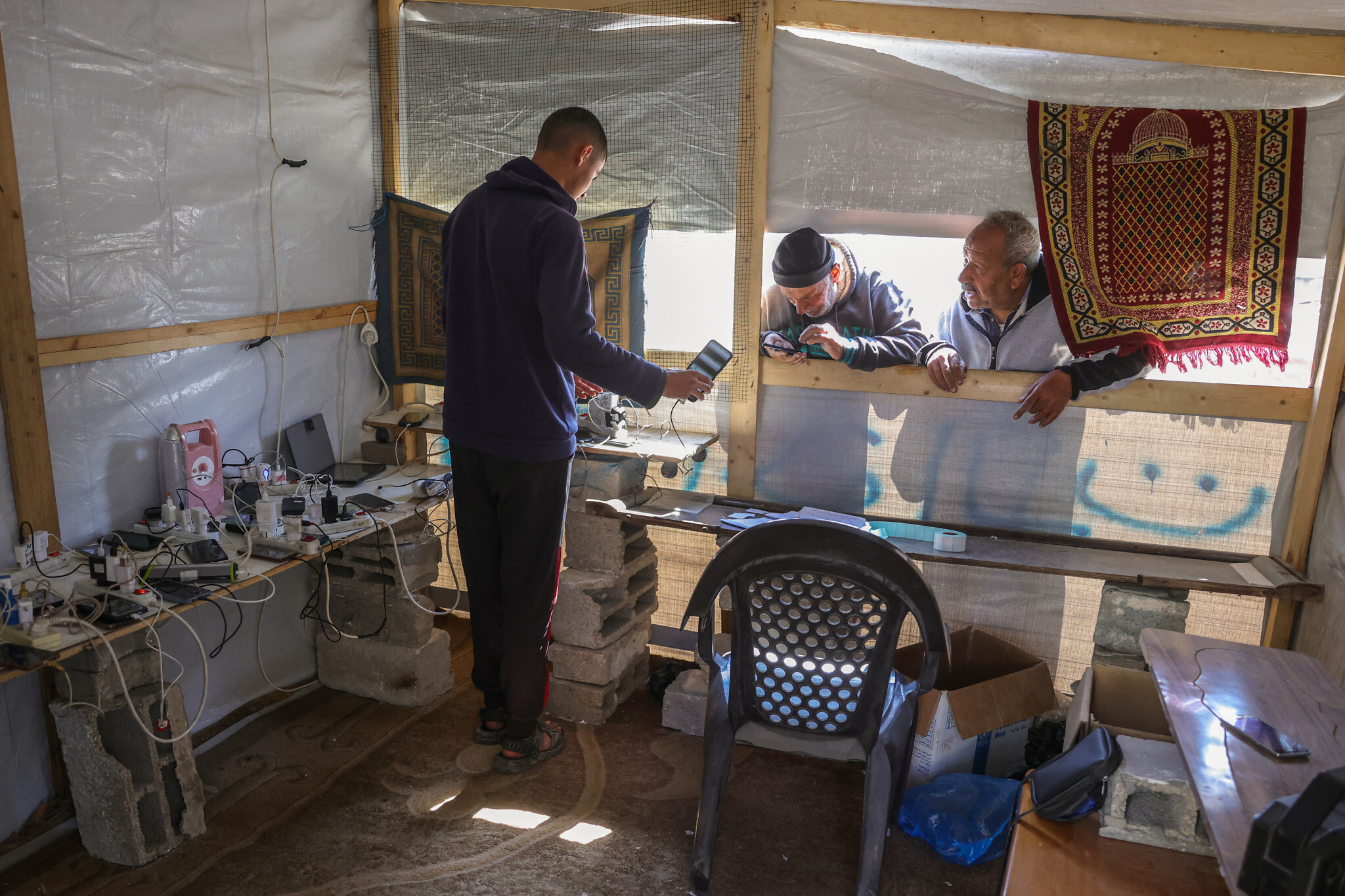
Some residents run charging points, supplied by solar power or private generators given how the war has destroyed Gaza’s electrical grid and cables.
Mohammed al-Hor’s family has run one such charging business using solar power. They set it up at their own home, which was hit by an Israeli strike. “The charging point was also bombed, and my brother was martyred inside,” the 32-year-old says.









The Times of Israel Community.