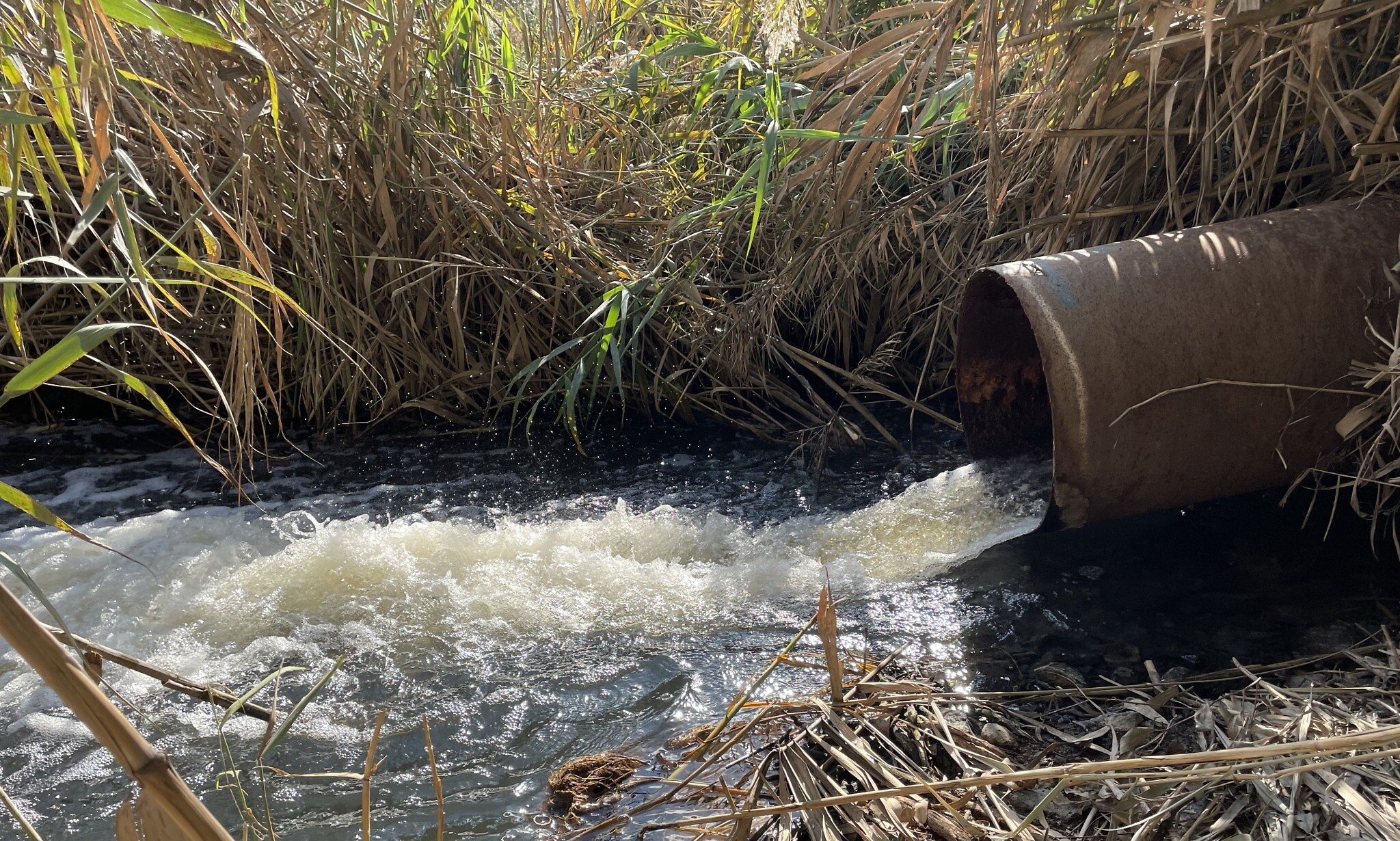
Israel is a world leader in the quantity of wastewater it recycles for use in agriculture, yet most of the wastewater is treated in facilities that have reached their capacity, the state comptroller says in his annual report.
About a third of the treated wastewater does not meet quality regulations. As it is used for irrigation, it could endanger the environment and public health, the report warns.
The increase in wastewater alongside the slow development of wastewater treatment plants has resulted in sewage being discharged into streams without proper treatment, causing environmental and sanitary hazards.
Furthermore, 40 percent of the wastewater in 2021 (the most recent year for which the state comptroller found data) had not received a level of treatment that would enable it to be used on all fruit and vegetables.
The report notes that recent years have seen a rise in the number of malfunctions in the sewage treatment system that were not reported to the public.
Help us report truthfully on social media

As a multimedia journalist, my job is to take the quality, fact-based journalism produced by The Times of Israel newsroom and make it accessible across every platform — from Instagram posts to podcasts to short-form videos.
This is how many, especially young people, consume news these days. But misinformation is rampant on social media. Our team at ToI produces accurate, responsible short-form reporting on Israel and the Jewish world.
If you believe in the importance of factual social media journalism, please consider joining our reader support group, The Times of Israel Community. Your financial support is essential to sustain responsible multimedia reporting.
— Gabriella Jacobs, multimedia journalist
Support our work
Support our work
Already a member? Sign in to stop seeing this
You're a dedicated reader

We’re really pleased that you’ve read X Times of Israel articles in the past month.
That’s why we started the Times of Israel - to provide discerning readers like you with must-read coverage of Israel and the Jewish world.
So now we have a request. Unlike other news outlets, we haven’t put up a paywall. But as the journalism we do is costly, we invite readers for whom The Times of Israel has become important to help support our work by joining The Times of Israel Community.
For as little as $6 a month you can help support our quality journalism while enjoying The Times of Israel AD-FREE, as well as accessing exclusive content available only to Times of Israel Community members.
Thank you,
David Horovitz, Founding Editor of The Times of Israel
Join Our Community
Join Our Community
Already a member? Sign in to stop seeing this


 From the Liveblog of
Monday, January 15, 2024
From the Liveblog of
Monday, January 15, 2024
 Add ToI as a Preferred Source on Google