

 From the Liveblog of
Tuesday, September 15, 2026
From the Liveblog of
Tuesday, September 15, 2026
‘NAZA’ co-director accuses Israeli media of ignoring Gaza civilian casualties over 3 years of war
 Add ToI as a Preferred Source on Google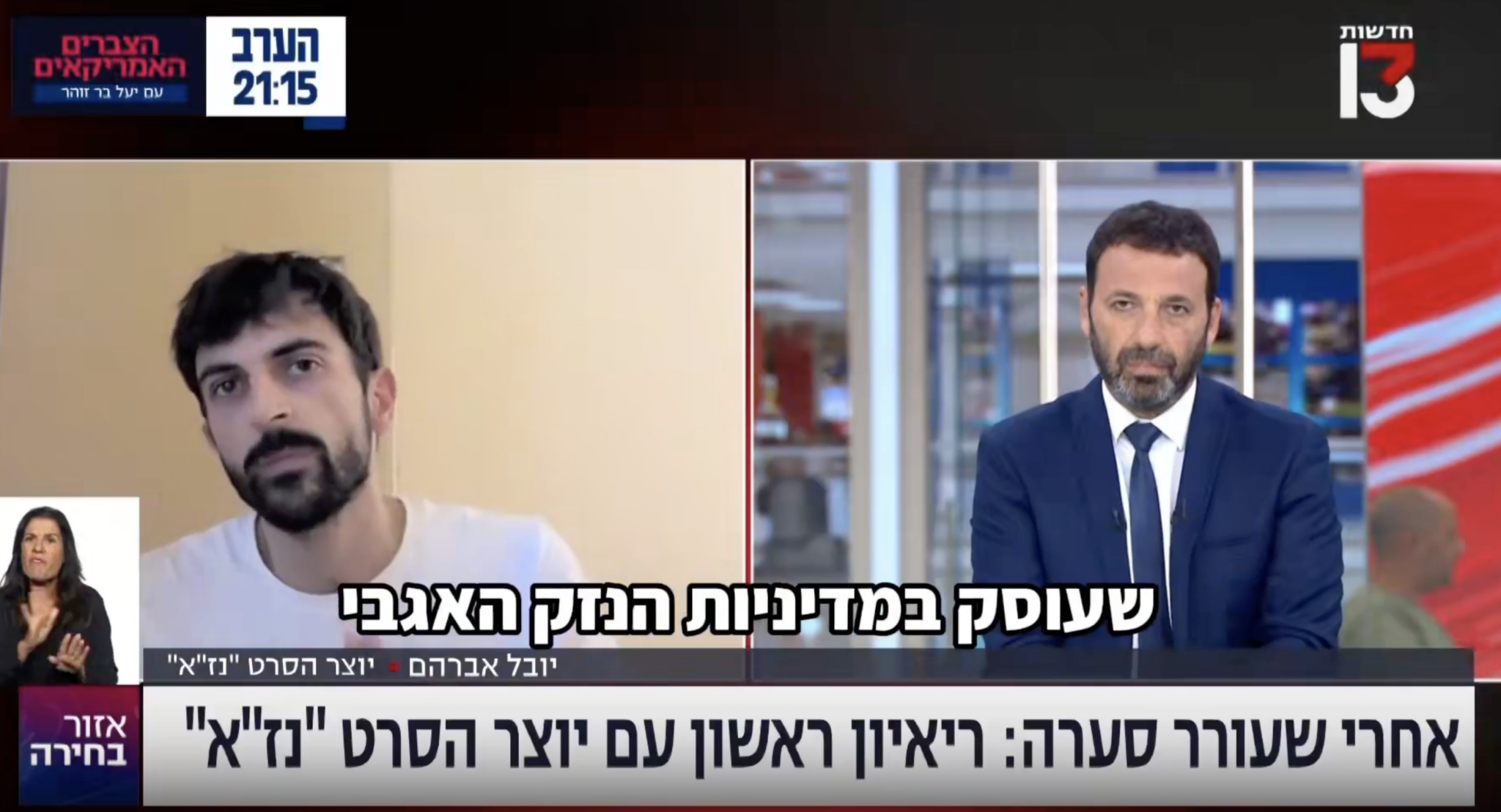
Yuval Abraham, the Israeli co-director of the documentary ‘NAZA,’ which alleges that Israel used AI-powered strikes to kill civilians in Gaza, defends the film’s claims and its framing in an interview on Israeli Channel 13.
He also says that he is working to screen the film in Israel and that he hopes to return there.
In the interview, which frequently turns tense, journalist Raviv Drucker repeatedly casts doubt on how Abraham and co-director Rachel Szor could have verified the film’s allegations, made by 24 anonymous IDF Intelligence Corps soldiers.
Drucker is one of the few Israelis to have seen the film in its entirety. The IDF has denied claims contained in the film’s promotional materials, and has requested a screening, but its leaders have not seen the film.
Drucker casts doubt on allegations including IDF approvals of strikes killing hundreds of civilians, or that the IDF killed hundreds of noncombatants who did not evacuate their neighborhoods, even in the absence of a Hamas target. He says that on multiple occasions, when he would report on soldiers’ testimonies, he found himself unable to verify them or discovered they were inaccurate.
Abraham says the allegations were verified, noting that he produced the film in partnership with the British publication, “The Guardian,” and that the film’s creators had to take steps to protect the identities of the soldiers.
“This is a ‘Guardian’ film, made in cooperation with a leading publication, with a staff of editors who had access to the raw materials,” Abraham says. “The identities of the people were verified, the cases they discussed were verified.”
Asked why the film does not spend more time on the Hamas-led October 7, 2023, attack that launched the war, or the mistreatment of the Israeli hostages held in Gaza, Abraham responds that it did include those topics, and repeatedly challenges Drucker to do more investigative journalism about Gaza.
“Why didn’t you broadcast?” he asks Drucker. “Three years, in the [Israeli TV news] investigative programs, there wasn’t even one item, if I’m not mistaken, that dealt with the rules of engagement in Gaza, that dealt with the collateral damage policy, that researched in-depth the damage to innocent Palestinians’ lives in the Strip.”
He continues, “You say, ‘It wasn’t complex enough. Okay. So why didn’t you broadcast something complex yourself?”
Asked whether he hopes to screen the movie in Israel, Abraham says, “That’s the goal. We really want to. We’ll do everything possible so that it’s broadcast as widely as possible in Israel.”
Abraham and Szor now face threats of legal action in Israel, including a threat to have their citizenship revoked, and condemnation across the political spectrum. But Abraham says he still considers Israel his home.
“Israel is my home, it’s the place where I want to live, the place that’s so important to me,” he says. “So of course I’m scared that I won’t be able to return. Like, what will I do here, abroad?”









The Times of Israel Community.