

 From the Liveblog of
Thursday, October 13, 2022
From the Liveblog of
Thursday, October 13, 2022
Netanyahu blames Jerusalem unrest on maritime border deal with Lebanon
 Add ToI as a Preferred Source on Google
Carrie Keller-Lynn is a former political and legal correspondent for The Times of Israel
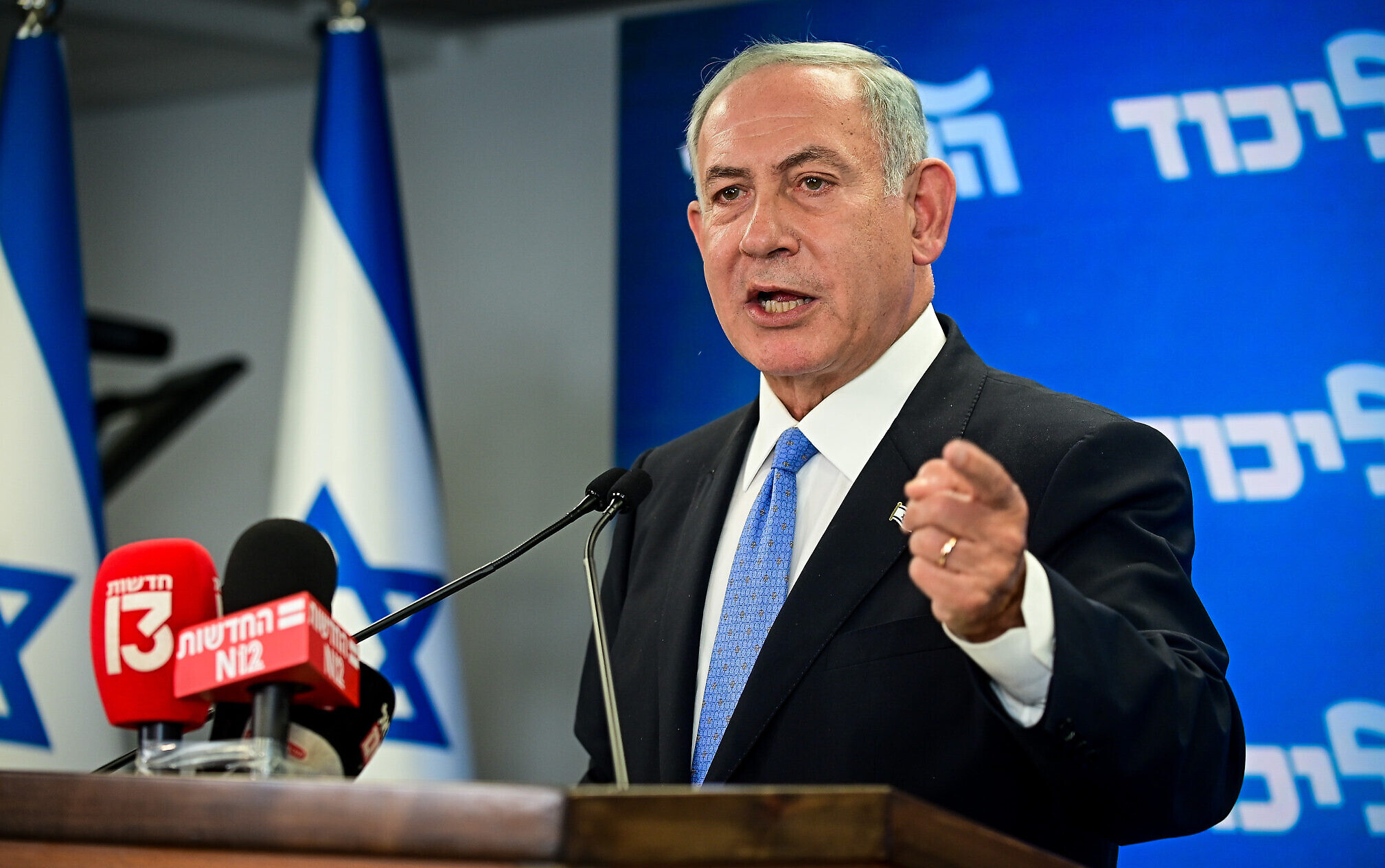
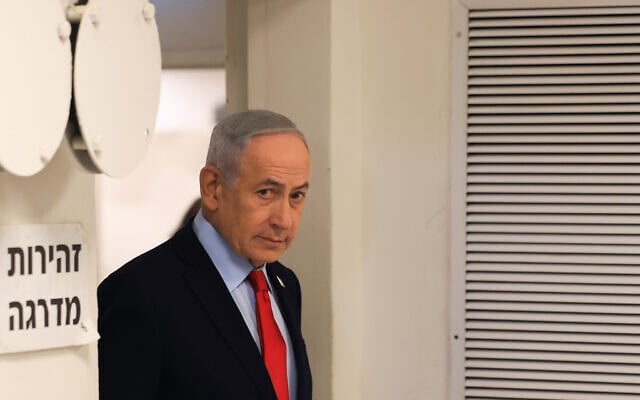
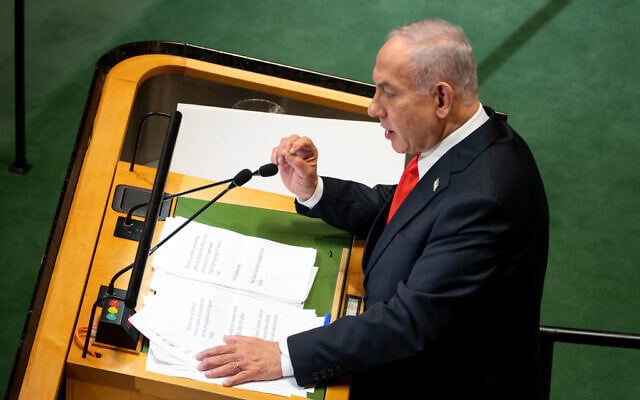
Likud leader Benjamin Netanyahu claims that Prime Minister Yair Lapid is redefining democracy by failing to obtain Knesset approval for the impending maritime border agreement with Lebanon.
“Lapid defined democracy differently,” says Netanyahu, adding that the premier “said he doesn’t want to bring the agreement to Knesset because the opposition is against it.”
Yesterday, the Lapid-led government decided to send the agreement to Knesset for a two-week review period, after which the cabinet itself will vote on its final approval.
Netanyahu has charged that Lapid, a caretaker prime minister on the eve of elections, does not have the authority to make the deal and said he will not consider himself bound by the agreement if he returns to power. Earlier this week, the attorney general said Knesset approval was not necessary to finalize the agreement, although it would be worthwhile to be obtain given the political flux.
Railing against the deal, which would concede Israeli rights to the deep-sea Qana gas field in exchange for recognition of its maritime border with Lebanon and a percentage of revenue from Qana, Netanyahu denounces it as a “surrender to terror” that emboldens Israel’s enemies.
The deal, he says, “creates a dangerous equation” in which the party who threatens ultimately receives a benefit.
“When you surrender to terror, you get terror,” he says.
As the talks neared the finish line in recent months, Hezbollah terror chief Hassan Nasrallah threatened Israel over the Karish gas field, which remains in Israeli control under the agreement.
Tying what he has previously alleged to be a causal relationship to the current unrest in East Jerusalem, Netanyahu charges that “When you surrender to Nasrallah in Lebanon, you get riots in Jerusalem.”




The Times of Israel Community.