

 From the Liveblog of
Wednesday, May 21, 2025
From the Liveblog of
Wednesday, May 21, 2025
PA chief visits Lebanon; leaders agree Palestinian factions won’t attack Israel from country
 Add ToI as a Preferred Source on Google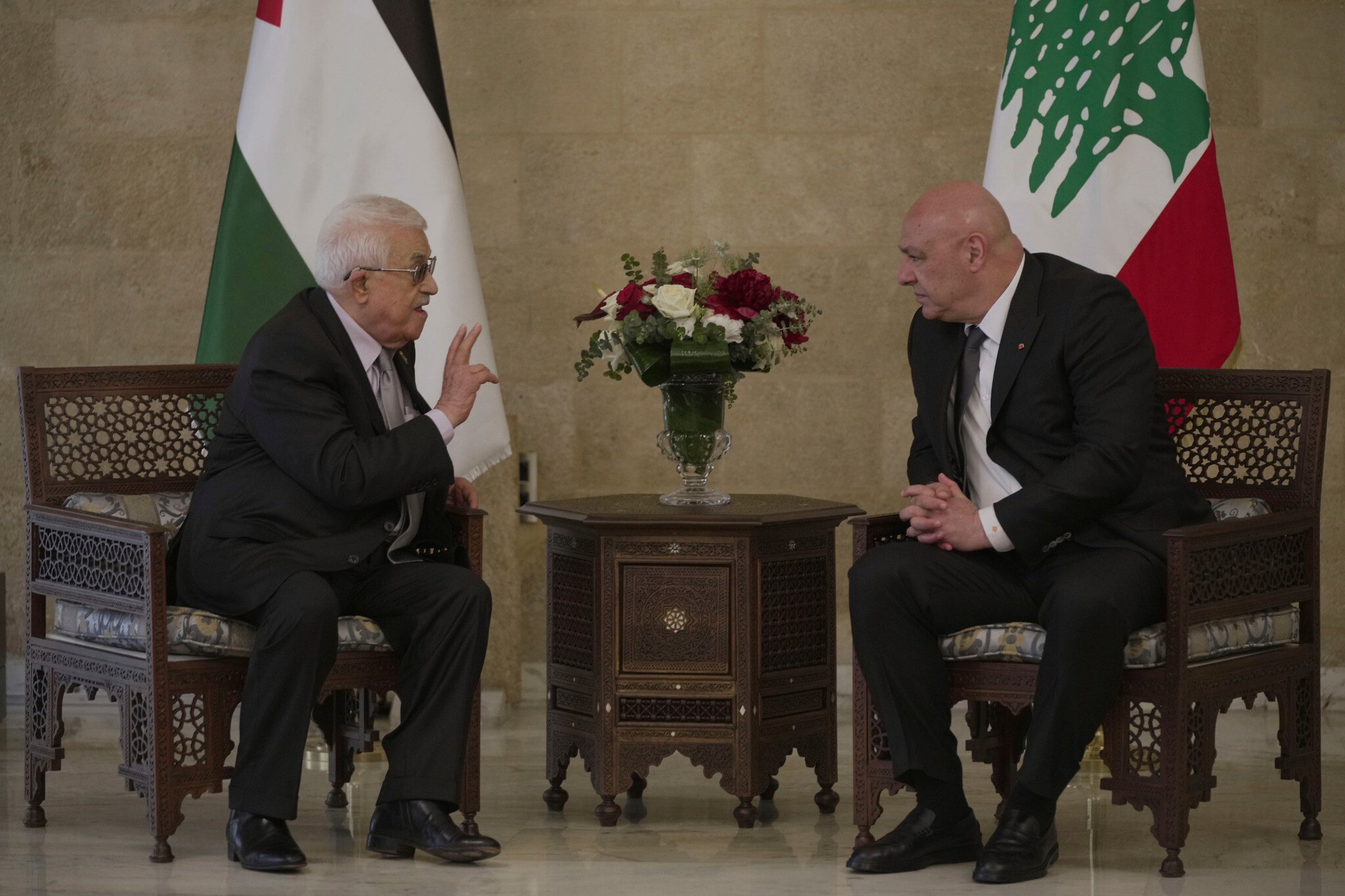
The Lebanese and Palestinian Authority presidents agree that Palestinian factions won’t use Lebanon as a launchpad for any attacks against Israel, and that all weapons will be only under the authority of the Lebanese state.
The announcement is made during a meeting between Lebanese President Joseph Aoun and Palestinian Authority President Mahmoud Abbas, who arrived earlier in the day, beginning a three-day visit to Lebanon, his first in seven years.
A joint statement read by the Lebanese presidency’s spokeswoman, Najat Sharafeddine, says that both sides have agreed that the existence of “weapons outside the control of the Lebanese state has ended.”
The statement says that both sides have agreed that Palestinian camps in Lebanon aren’t “safe havens for extremist groups.” It adds that “the Palestinian side confirms its commitment to not use Lebanese territories to launch any military operations.”
Lebanon’s government is seeking to establish authority throughout the country, mainly in the south near the border with Israel, after the 14-month Israel-Hezbollah war that ended in late November with a US-brokered ceasefire. The Hezbollah terror group had entrenched itself near Israel’s border, violating a 2006 UN Security Council resolution that is yet to be fully implemented.
The 12 camps in Lebanon that house Palestinian refugees and their descendants aren’t under the control of the Lebanese state, and Palestinian factions in the camps have different types of weapons. Rival groups have clashed inside the camps in recent years, inflicting casualties and affecting nearby areas.
It isn’t immediately clear how the weapons will be removed from the camps, which are home to tens of thousands of Palestinians, many of them descendants of families that fled to Lebanon after Israel was created in 1948.
Abbas’s Fatah movement and the Hamas terror group are the main factions in the camps. Smaller groups, including some jihadi factions, also have a presence in the camps — mainly in Ein el-Hilweh, which is Lebanon’s largest such camp and is located near the southern port city of Sidon.



The Times of Israel Community.