

 From the Liveblog of
Sunday, June 21, 2026
From the Liveblog of
Sunday, June 21, 2026
Supreme Court president: New law to appoint judges will embed ‘political chip’ in Supreme Court justices
 Add ToI as a Preferred Source on Google
Jeremy Sharon is The Times of Israel’s legal affairs and settlements reporter
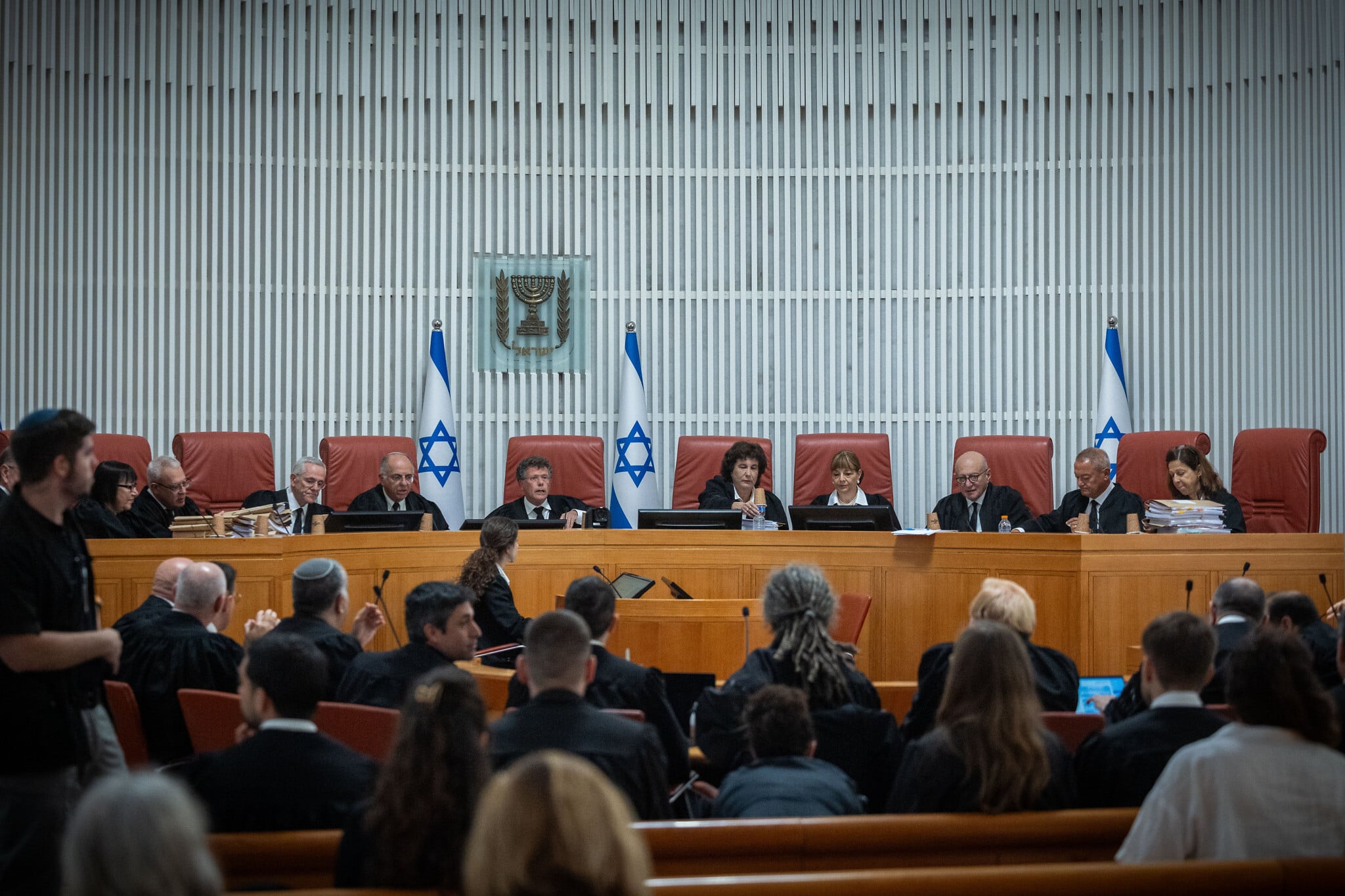
Supreme Court President Isaac Amit says that the new system for appointing judges created by the law passed by the government last year will “implant a political chip” in every Supreme Court judge and create judges who have “written on their foreheads” that they were appointed by the coalition or opposition.
Amit makes his comments during the hearing currently being held on the law, which will greatly increase the influence of politicians in the judicial selection process in general and gives politicians total control over the selection of Supreme Court judges without any professional input. It will come into effect after the next election.
“Every year we will have judges who are elected only by a political party. The benches of the Supreme Court will fill up – so that within 15 years the judicial system in Israel will change completely… and a political chip will be implanted in the body of every judge whether he wants it or not,” says Amit. He demands to know if this will not harm the independence of the judicial system.
“Within a year of the [next] Knesset being elected, two judges will be elected [to the Supreme Court] who will have written on their foreheads ‘one of us was elected by the opposition and one by the coalition.’ The judges will be politically identifiable. Even if they don’t want to be,” Amit continues.
Amit, a liberal, is one of numerous justices among the 11 judges on the panel hearing the case who tear into the law, including ardent conservatives.
Justice Alex Stein asserts that the new law will incentivize district court judges to “write rulings that politicians like.” Justice Noam Sohlberg, one of the two strongest conservatives on the court, made similar comments.
Justice Yael Wilner, a moderate conservative, lambastes certain provisions of the law that would enable the coalition and opposition to appoint judges to the Supreme Court without a Judicial Selection Committee vote, which she says would be an unprecedented situation in Israel and even around the world.
“The politicians know that if there is no agreement, then they can chose their own candidate. Do you understand what [great] incentive there is to get to this dark corner,” she demands of the attorney representing the Knesset who is arguing for the law not to be struck down.
Wilner, together with Justice Yechiel Kasher, also asserts that the judges getting elected to the Supreme Court under the new system will be the most extreme candidates possible, since for either side to appoint a moderate would be to risk their power on the court.
“The coalition will put up three candidates who will be the most extreme… the opposition will do the same… You don’t want someone who’s a centrist, that’s no good. No one will gamble on someone who is in the middle because then you’ve wasted your power,” warns Kasher.









The Times of Israel Community.