

Ministers back bill letting new governments clean house from army chief to AG
Legislation allowing incoming political leaders to fire top officials at will would ‘lead to the complete politicization of the most senior positions,’ warns Attorney General’s Office
 Add ToI as a Preferred Source on Google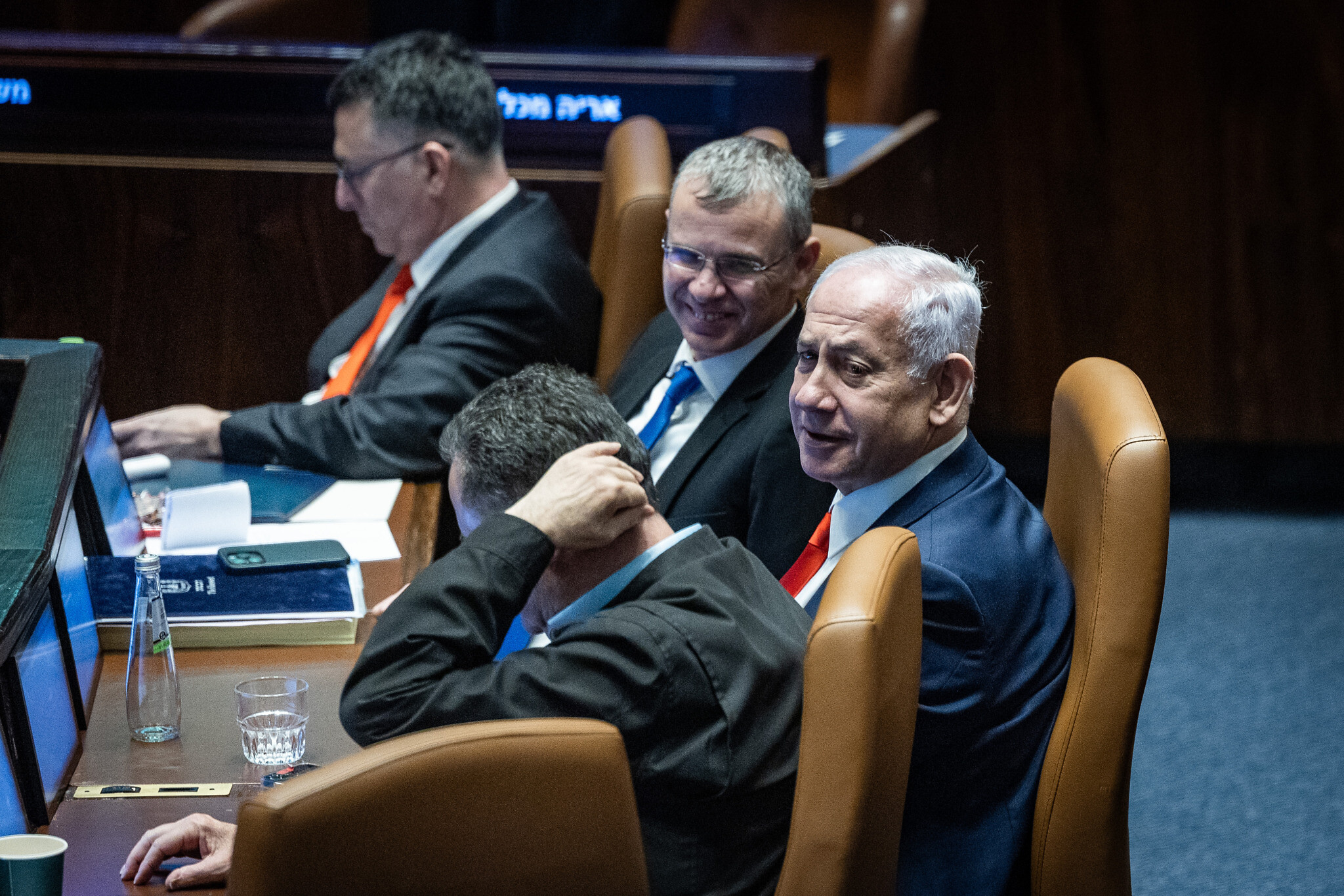
The Ministerial Committee for Legislation on Sunday voted to back a highly controversial bill allowing an incoming government to fire senior security officials and public officers within its first 100 days in office.
The committee’s backing for the legislation marks the latest in a string of moves by the coalition to concentrate power in the hands of the government, in this case by bypassing established procedures protecting the tenure of some of the country’s most senior officials from the whims of politicians. The deputy attorney general warned that the legislation, if approved, would give the political echelon powers that profoundly violate “the core foundations of Israel’s democratic governance.”
The advancement of the bill comes as the government is working to fire Attorney General Gali Baharav-Miara, with a special five-member ministerial committee slated to hold a hearing on her dismissal on Monday, after the High Court said Sunday it would not intervene at this point.
It also comes a week after the committee gave its backing to a measure aimed at removing Baharav-Miara’s authority over the legal advisers to government ministries.
Under the terms of the bill, sponsored by far-right Otzma Yehudit MK Zvika Fogel, a government in the first 100 days after taking office would be able to dismiss the attorney general, IDF chief of staff, head of the Shin Bet, head of the Mossad, police commissioner, head of the Israel Prison Service, Civil Service commissioner, and head of the budget department in the Finance Ministry.
Any of those officeholders could be dismissed from office without cause if they served more than two-thirds of their legally mandated time in office.
But the bill would also allow the government to dismiss such officials before they reach that period under “special circumstances,” including “substantive differences of opinion between the office holder and the government.”

Currently, special procedures are in place requiring the government to show proper cause for firing all of those officials, and such moves are subject to judicial review by the court to ensure that these senior officer holders are not fired for arbitrary, political, or otherwise ulterior motives.
The backing of the committee means the bill will now enjoy the endorsement of the coalition, likely easing its way through the Knesset.
The legislation is slated to go to the Knesset plenum for a preliminary reading before being referred to committee for further discussion.
Both Fogel and National Security Minister Itamar Ben Gvir, who leads Otzma Yehudit, welcomed the bill’s advancement, with Fogel declaring it “a small and welcome step by the committee and a significant step in preserving democracy.”
“The government cannot continue to be shackled by the chains of senior officials who are appointed by previous governments but block every initiative of the current government,” stated Ben Gvir, likening the bill to “what is happening in Trump’s United States.”
“From now on, an elected government will be able, for a limited period of time and under clear conditions, to ensure alignment between the elected echelon and the executive echelon.”
‘Complete politicization’
The Attorney General’s Office harshly criticized the bill on Sunday, arguing that its passage would “lead to the complete politicization of the most senior positions in the public service and the security establishment.”
The bill would seriously impair the ability of senior officials, including defense officials, “to present a true picture and objective professional assessments without fear,” the Attorney General’s Office said in a statement.
In a letter to Justice Minister Yariv Levin, Deputy Attorney General Gil Limon argued that the coalition has been making a concerted push to change the civil service from an independent and nonpolitical entity “to one that is subject to the full control of the political echelon” — a move he warned would harm the rule of law and human rights.
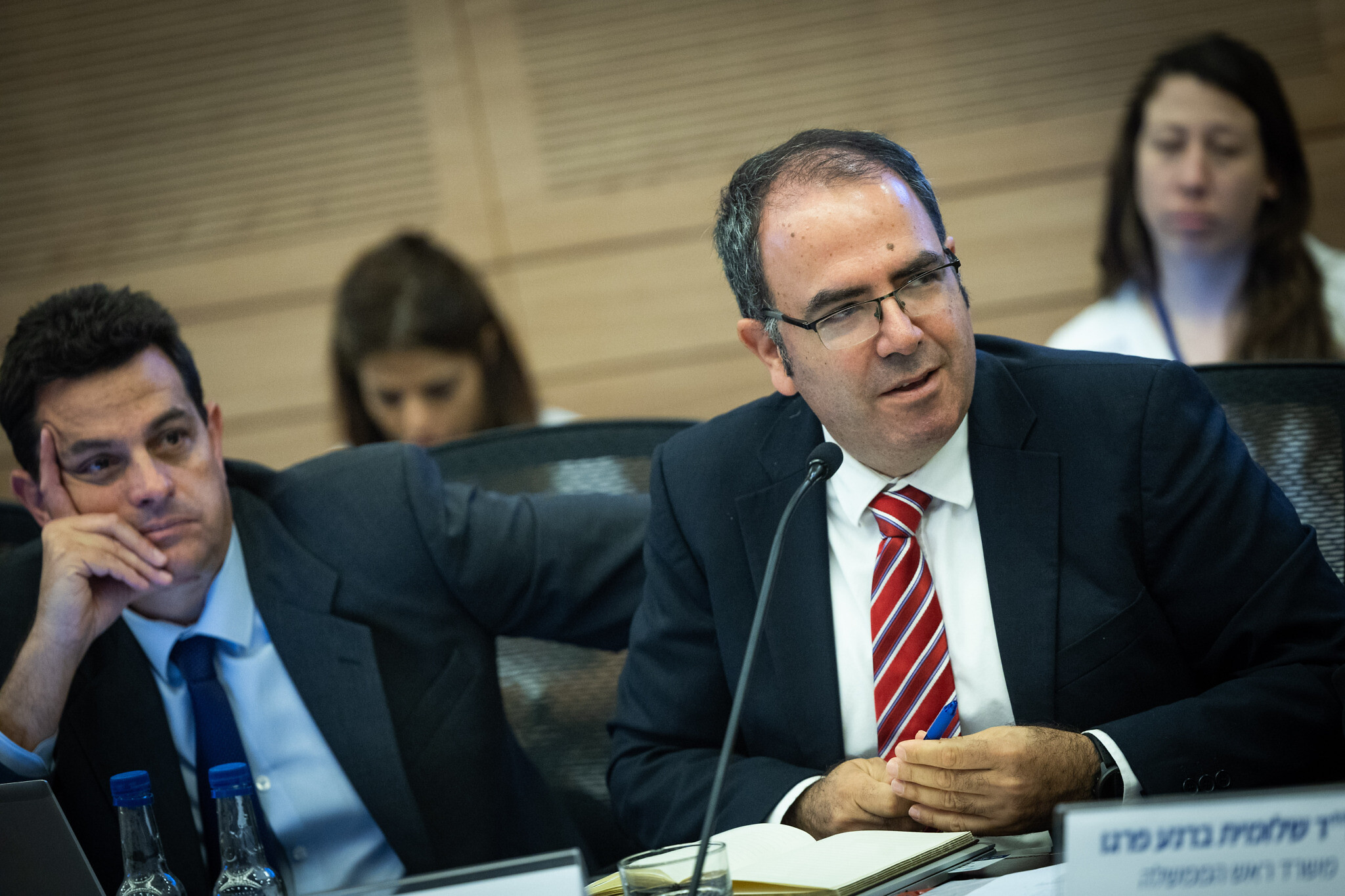
In addition to allowing the government to fire senior officials, it would also under certain circumstances allow it to retroactively change some of these officials’ decisions, creating a situation in which “the government would effectively become the attorney general, the head of the Shin Bet security service, the police commissioner, the [IDF] chief of staff, and so on” and is therefore “a profound violation of the country’s core democratic political foundations,” he wrote.
While the bill is somewhat vague on the procedure, it does stipulate that under certain conditions, the decisions of terminated officials will be able to be retroactively changed by a newly installed government.
Levin pushed back harshly against Limon’s criticism during Sunday’s ministerial committee meeting, dismissing his assertion that he had no conflict of interest regarding the proposed law.
“You are the ministering angels… a conflict of interest is just for the rabble elected by the people,” Levin told him, according to a recording published by national broadcaster Kan.
Edna Harel Fisher, the head of the Israel Democracy Institute’s Public Corruption Program, called the bill “a serious threat to Israeli democracy.”

“Given that Israel has only one legislative chamber and the government always holds a parliamentary majority, there are few effective checks and balances. In this context, the judiciary and professional civil service are critical safeguards — weakening them erodes democratic resilience and opens the door to the possibility of irregularities and unprofessional conduct,” Harel Fisher told The Times of Israel on Sunday.
“The lack of a formal constitution and bill of rights coupled with the transformation of Israel’s top officials into political loyalists would inevitably harm individual and civil rights,” she argued.
She noted that the US had “robust institutional checks” not present in Israel.
“Applying a US-style patronage model in Israel without equivalent safeguards risks politicizing governance and hollowing out state capacity and the rule of law,” she said.









The Times of Israel Community.