

Newly elected Jewish Democrat wants Biden to take tougher line on Iran nuke deal
In wide-ranging interview, former Jewish Federations chair Kathy Manning outlines goals on key Foreign Affairs Committee, including stepping up protection for Jewish institutions
 Add ToI as a Preferred Source on Google
Jacob Magid is The Times of Israel's US bureau chief
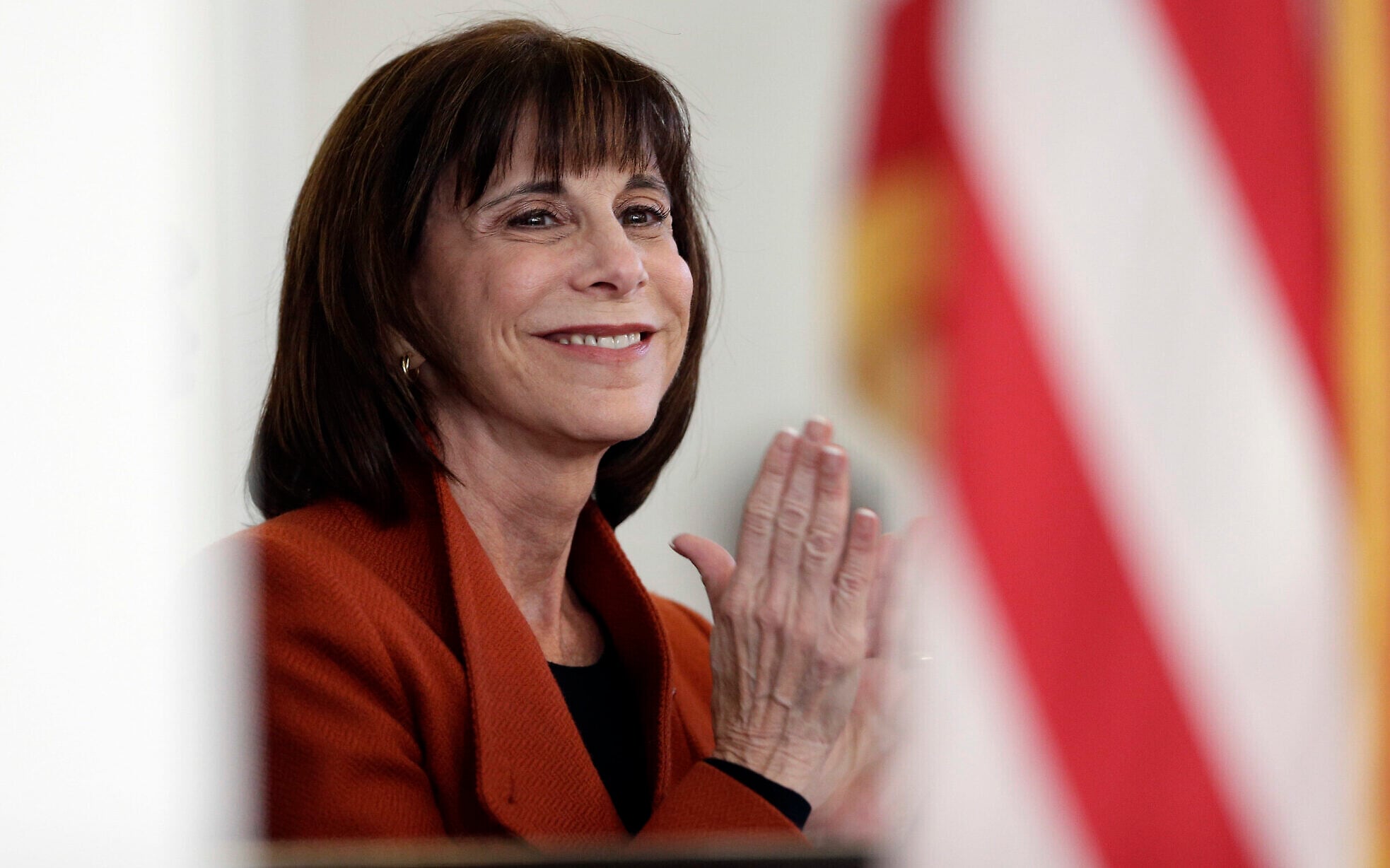
A freshman Democratic congresswoman who sits on the key House Foreign Affairs Committee has come out against the Biden administration’s plans to return to the existing Iran nuclear agreement.
Rep. Kathy Manning (NC-7) said in a Wednesday interview with The Times of Israel that too much has changed since former president Donald Trump left the Joint Comprehensive Plan of Action (JCPOA) in 2018 and that the accord is now “outdated.”
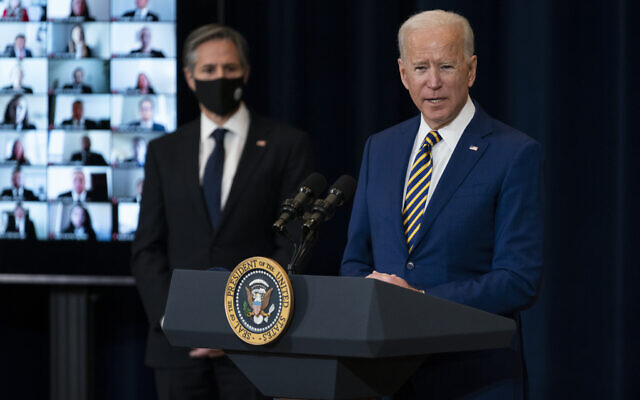
The Biden administration has said it is prepared to reenter the JCPOA if Iran first returns to compliance with its terms. From there, the White House says it wants to negotiate a “longer and stronger” follow-up agreement to address Iran’s “malign influence” in the region as well as its ballistic missile program.
But Manning, a former board chair of the Jewish Federations of North America, disagreed with the strategy, noting Iran’s ongoing enrichment of uranium in violation of the deal and the fact that some of the accord’s sunset provisions will soon expire.
“I don’t believe it makes sense to get back into the [JCPOA] 1.0,” she said. “There needs to be some rethinking about it, and I’m hoping that the [Foreign Affairs] Committee will study the current situation and be able to express to the Biden administration what we think should be taken into consideration before reentering the deal.”

Pressed as to whether demanding, all at once, improvements to the nuclear deal, in addition to curbs on Iran’s missile program and activities in the region, may not be a viable starting point for the US, Manning pushed back.
“I’m not sure I’m asking for everything to be loaded onto the apple cart at once. What I don’t think we can do is assume that the apples are all in place, and that we’re just going to start pushing forward,” she said.
The North Carolina representative noted that Iran is in dire need of economic relief from the sanctions imposed by Trump, and “I don’t want to see the US give up its leverage without getting something in return.”
However, she did not go so far as crediting the former president for creating that leverage, saying Trump had left the JCPOA promising to negotiate a better one but failed to deliver. “What we’re left with today is a situation where Iran is more dangerous than it was when Trump got out of the deal.”
At the same time, Manning acknowledged that there was something to be learned from the aftermath of the US withdrawal, when major international companies were initially hesitant to interact with Iran due to fears of pushback from Washington.
Protecting Jews at home and abroad
Despite entering Congress less than two months ago, Manning has already been named vice-chair of the Foreign Affairs Subcommittee on the Middle East, North Africa and International Terrorism.
She said she hopes to use her position on the committee to strengthen US-Israel ties and noted that her nine years on the board of JFNA gave her the exposure — through regular trips to Israel — to better understand the relationship.
“We visited bomb shelters in Nahariya when Katyusha rockets were coming over the northern border. I had the chance to be in Sderot when Katyusha rockets were coming from Gaza and we had to run to bomb shelters there, so I had the full experience,” Manning said.
She also recalled trips to Jewish communities abroad where she was exposed to the challenges they face due to rising anti-Semitism and white supremacy. “I’ve seen with my own eyes what this far-right extremism does, the impact it’s had on Jewish communities.”
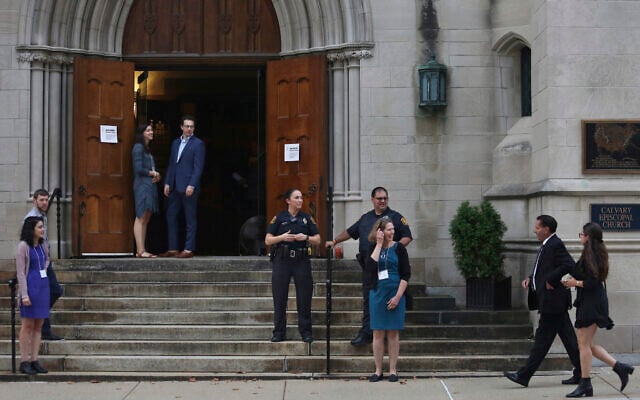
Manning said she was taken aback at the level of security needed outside synagogues around the world and lamented that such precautions have now become common in the US. “Things that seemed unimaginable years ago are a reality today.”
She said the Democratic congressional delegation was in the process of drafting legislation to address the rise of white nationalism and said her committee would be holding hearings on the matter.
Supports two-states, tolerates settlement building within the blocs
Delving into her positions on the Israeli-Palestinian conflict, Manning expressed her support for the two-state solution, saying that it’s the only way Israel can remain both Democratic and Jewish.
She speculated that the Biden administration would likely avoid taking “big, grand gestures” on the matter, and would rather work “behind the scenes to try and get parties back to the negotiating table.”
On settlements, she took a more nuanced stance than many of her Democratic colleagues.
On the one hand, Manning said, “I would like to see Israel not take steps that make it more difficult for the Palestinians to come back to the negotiation table. I’d hate to see them do annexations, particularly in areas that haven’t always been contemplated to be areas of negotiation.”
However, the congresswoman gave a nod to construction “in the major settlements that Israel is unlikely ever to relinquish,” saying, “I don’t think that’s such a disaster.”
“Expanding beyond the large settlements is problematic,” she said, differentiating communities by their size, rather than their location.

Manning called the recent normalization deals Israel has inked with neighboring Arab countries an “enormous opportunity,” expressing her desire for the US to continue advancing such agreements
As for the Palestinians, Manning said she was comfortable with Biden’s plan to renew bilateral relations with Ramallah.
“If part of what he thinks needs to be done is to offer some humanitarian assistance to Palestinians who are suffering, I can understand his desire to do that,” she said, adding that she was confident the president would not allow the move to come at Israel’s expense.
Manning offered tepid support for the recently announced Palestinian elections, noting that the last such vote in 2005 led to the rise of Hamas in Gaza.
“Clearly the Palestinians have issues with their leaders, and I can understand them wanting leaders in place who are duly elected and who can help them grow their economy and help them improve their daily lives,” she said.
No time to sleep
Reflecting on her first months in Congress, Manning said what has struck her “is how enormous this undertaking is.”
She recalled a recent meeting on the other panel she sits on, the Education and Labor Committee, which had been scheduled to run from 3 p.m. to 5 p.m. to discuss the allocation of $357 billion of the $1.9 trillion in the government’s coronavirus relief package.
“It started on time but lasted until 4:30 in the morning,” Manning said. “I was shocked that as we approached midnight, someone didn’t say we’re going to take a recess and resume in the morning, but we did not let up until we had gone through every last piece of business.”
The representative did not deny that other issues have taken a back seat as Congress focuses on economic relief, but she noted that other bills to address the climate crisis, immigration, racial injustice and LGBT inequality were also being advanced.
“President Biden has set his priorities right and the Democratic leadership is in lockstep about getting control of the virus and getting relief for people who are struggling, but we’re lining things up to make sure we can take action on these other important issues as well,” she said.










The Times of Israel Community.