

‘No reason’ for Israel not to trust Corbyn, says his Jewish spokesman
Speaking with The Times of Israel, an optimistic Fabian Hamilton claims his party’s leader isn’t anti-Semitic and if elected PM, the UK-Israel relationship won’t change
 Add ToI as a Preferred Source on Google
Robert Philpot is a writer and journalist. He is the former editor of Progress magazine and the author of “Margaret Thatcher: The Honorary Jew.”
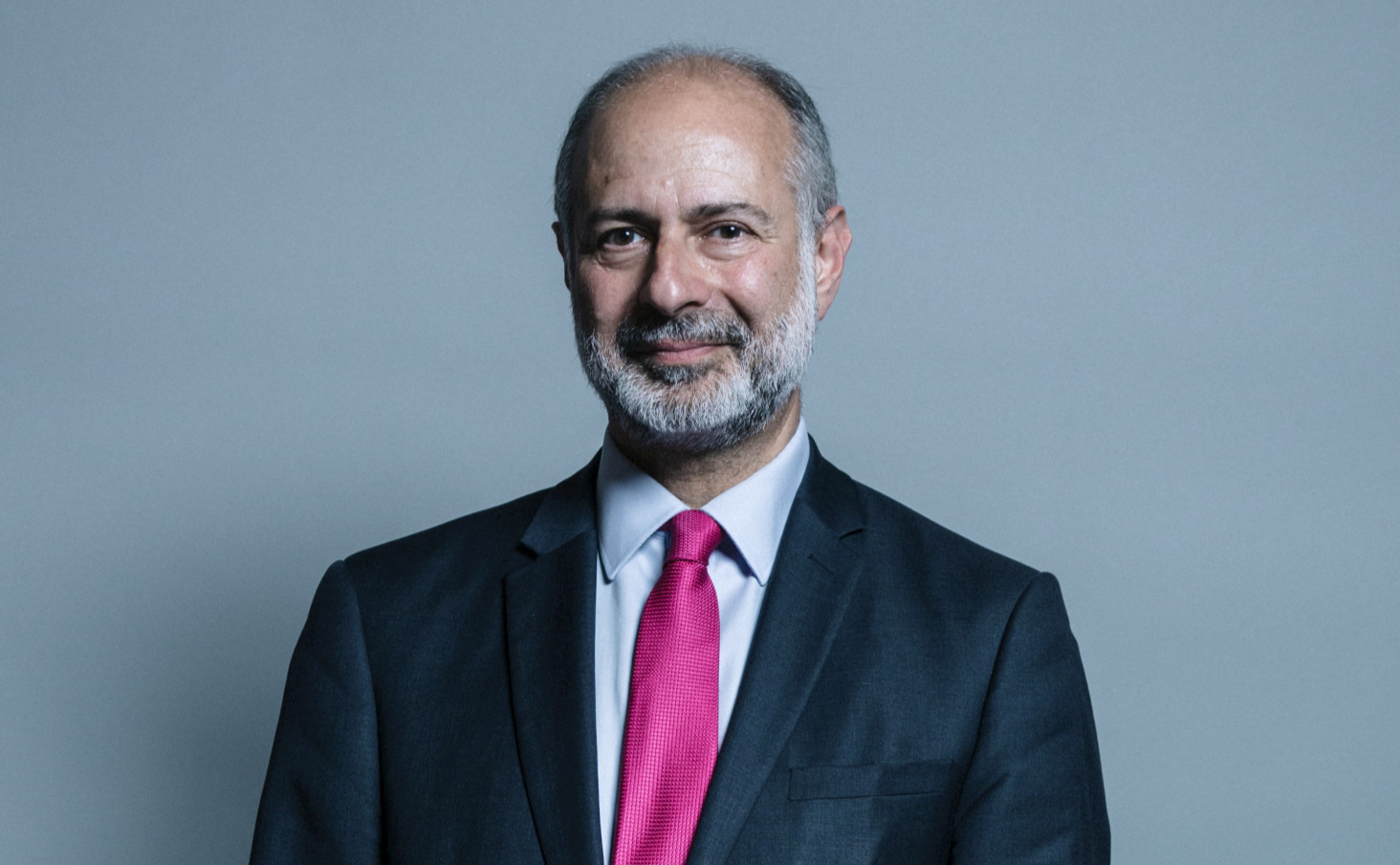
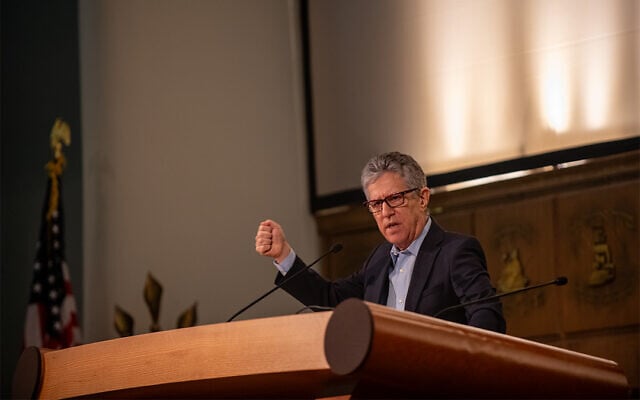
LONDON — Britain’s relationship with Israel will not change under a future Labour government, the party’s Middle East spokesman has suggested.
In a wide-ranging interview with The Times of Israel, Fabian Hamilton sought to allay fears about Britain’s attitude towards the Jewish state if Jeremy Corbyn becomes prime minister.
Corbyn, a long-time anti-Israel campaigner, refused to attend a gala dinner Thursday in London celebrating the centenary of the Balfour Declaration.
“I don’t think there’s any reason not to trust him,” Hamilton said of his party’s leader. “Yes, he has his own strong personal views, but we work collectively.”
The shadow minister termed Corbyn “a realist” and said that “he understands that whilst he may have his own strong beliefs, and could talk about them at length from the back benches, it’s very different if you’re the head of a government, very different.”
“I don’t think there’ll be any change in the relationship between the UK and the State of Israel,” he said.
However, Hamilton, a parliamentary supporter of Labour Friends of Israel, also pointedly noted that “there’s the whole tiers of the civil service that would be there to try and ensure you don’t do anything crazy.” He argued that a heavy domestic agenda would prevent Corbyn from fixating on Israel. He also vowed that he would fight any move by a Labour government to back the BDS movement.
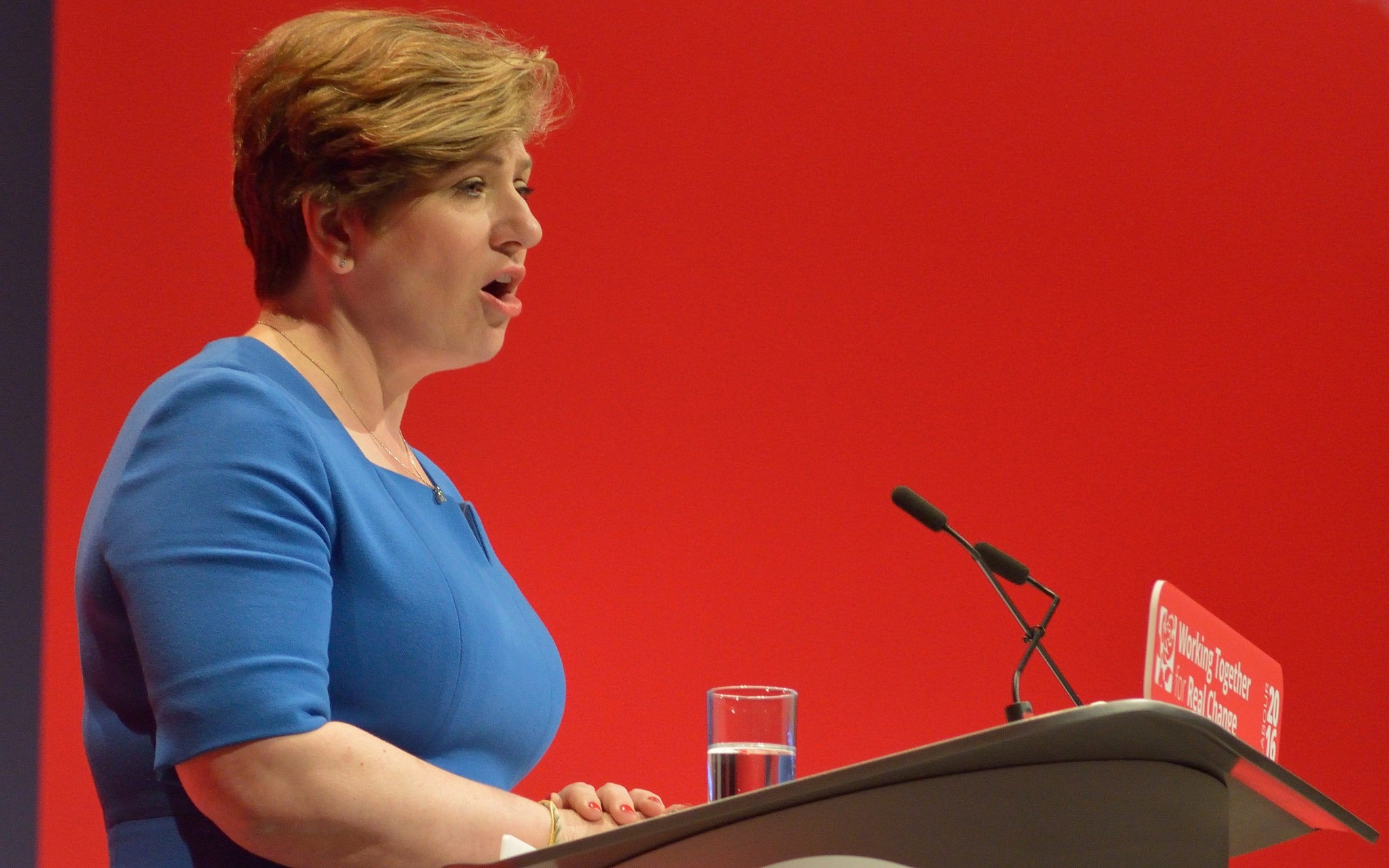
Hamilton arrives in Israel next week on a four-day trip with the Shadow Foreign Secretary, Emily Thornberry, which will also include time in the West Bank.
With allegations of anti-Semitism continuing to dog Labour, Hamilton defended Corbyn from his critics.
“It doesn’t give me any joy that he’s being vilified,” he said. “I think the perceptions of Jeremy Corbyn’s views are wrong. He certainly doesn’t hate the Jewish people.”
He nonetheless conceded that, “We know what his past record is on support for Israel, and it’s not good.”
Corbyn has repeatedly turned down requests from the Israeli Labor party to visit Israel. Hamilton said he would “love” the Labour leader to travel to the Jewish state, not least because he believes it might reassure Israelis.
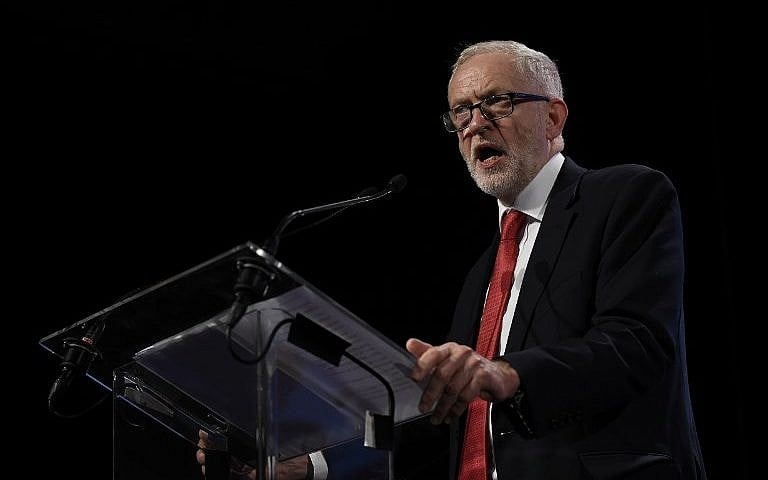
“I know when people meet him… whatever the perceptions of him, those perceptions are changed when they meet him. You have to take him at face value. There’s no side to the man: He does not lie, he does not say things just to please people. He says what he thinks, but he’s sincere,” Hamilton said.
Hamilton said he did not know why Corbyn decided to snub the Balfour dinner, which was attended by Prime Minister Benjamin Netanyahu and his British counterpart, Theresa May.
“I don’t think we should read into this that he’s boycotting Netanyahu,” Hamilton argued, while also recalling that, when he was leader of the opposition, former prime minister Tony Blair chose not to attend dinners where he was not invited to speak.
This week, Thornberry, who attended Thursday’s Balfour dinner in Corbyn’s place, suggested that the centenary of Britain’s commitment to support the creation of a Jewish homeland in Palestine should not be celebrated. The most appropriate way to mark the event, she told the Middle East Eye website, was “to recognize Palestine.”
Hamilton, who is Jewish and has family in Israel, adopted a more conciliatory tone.

“I think what she’s trying to get over is that this is unfinished business, that we can only truly celebrate the creation of the marvelous and wonderful State of Israel and the self-determination of the Jewish people, if the other main group in the area, the Palestinians … can find its own self-determination through statehood sooner rather than later,” he said.
In 2014, Labour pushed a motion advocating unilateral recognition of a Palestinian state through the House of Commons. The British government has said it will only make such a move when it feels it would best help the peace process, but Thornberry has promised that a Corbyn administration would do so immediately.
Hamilton said he was “pretty angry” about the actions of the party’s leadership at the time and, defying the whip, stayed away from the vote. He remains cautious about any precipitous move, suggesting “the timing has to be right.”
He still believes that Britain should not act unilaterally but said that “at some stage” it should join with its European allies to recognize a Palestinian state and then support state-building efforts.
Hamilton would prefer, though, that Israel takes the first step.
“Actually, my own view is that that should be the job of an Israeli government. I’d love to see an Israeli government say, ‘Right, we’re going to help you build the Palestinian state.’”
He was nonetheless adamant that “the only future for a strong, secure State of Israel is a state of Palestine, because you cannot carry on in permanent conflict.”
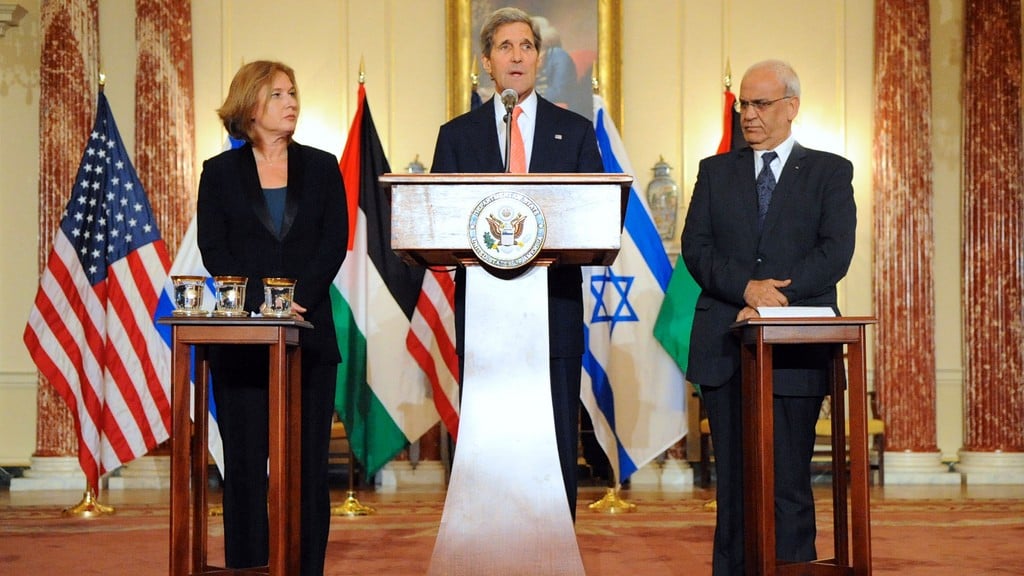
If Labour is elected, Hamilton is expected to be appointed to a new Cabinet-level post of Secretary of State for Peace and Disarmament, carved out of the Foreign Office and Ministry of Defense.
Suggesting that he believes “very strongly in the power of personal dialogue,” he pledged to prioritize bringing an end to the Israeli-Palestinian conflict and says he will lead a peace mission to the region.
“I’d get our best peacemakers, our best people — we have some brilliant diplomats in the Foreign Office,” said Hamilton. “And I’d do it obviously in conjunction with other countries, and say: ‘Look, can we all get together and just get this resolved?’”
I think the Arab League realizes that its enemy is not Israel… in fact, Israel can help them as a bulwark against IS
Hamilton praised the Arab Peace Initiative and believes that it is evidence that Israel’s erstwhile enemies “want a solution” and that “the dynamics of the peace process are changing.”
“I think the Arab League realizes that its enemy is not Israel. Its enemy, or the enemies of the Arab states, are countries like Iran and obviously Islamic State, and that, in fact, Israel can help them as a bulwark against IS… I think there’s new alliances being created and we would want to encourage that very strongly,” he said.
Hamilton rejected Israel’s suggestion that it lacks a credible Palestinian partner for peace as “an excuse not to do anything” and said he would deliver a strong message to Jerusalem: “There are people out there that you can negotiate with… If you can’t talk to [Palestinian Authority President Mahmoud] Abbas, there are other people there. He’s not the only leader.”

He accepted that the PA president is “getting slightly past it,” deeming him “an honorable chap [who] hasn’t delivered,” and cited “a new generation” of leaders such as Yasser Arafat’s former Gaza security chief, Mohammed Dahlan.
Hamilton believes the Trump administration will achieve nothing in terms of pushing the peace process forward and wishes the UN could play a stronger role. He recognizes, however, that its bias against Israel makes that difficult.
The UN feels that the entire blame for the world’s ills should be heaped upon the State of Israel
“I just ask myself why is it that it’s always Israel that’s the whipping boy here, that… the UN feels that the entire blame for the world’s ills should be heaped upon the State of Israel, and, of course, you can’t help thinking there is a bit of racism in this,” he said.
But however well-intentioned Hamilton’s planned peace-making efforts, perhaps his biggest challenge will be convincing skeptical Israelis that a Britain led by Jeremy Corbyn won’t simply become another voice in the international arena angrily railing against the supposed sins of the Jewish state.








The Times of Israel Community.