

Palestinian hunger striker could die at ‘any moment’ — lawyer
Mohammed al-Qiq, 33, held since November 21 for alleged involvement with Hamas, has been refusing food for two months
 Add ToI as a Preferred Source on Google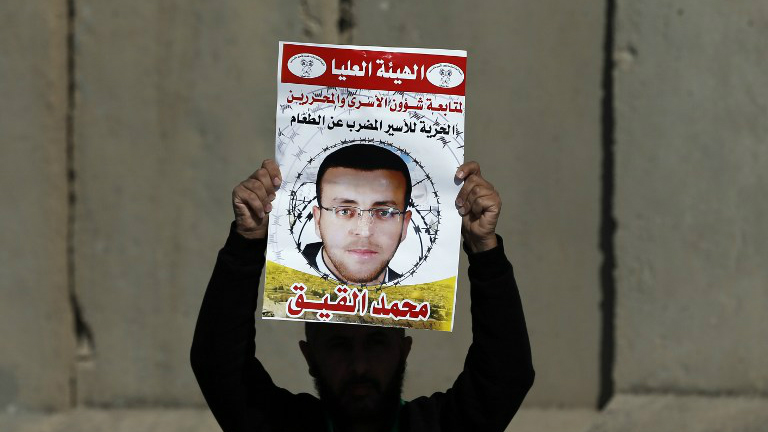
A Palestinian journalist on a two-month-long hunger strike in an Israeli jail could die at any minute, his attorney warned on Monday.
Mohammed al-Qiq’s health is “very, very bad,” lawyer Jawad Boulus told AFP after a visit on Sunday. “He faces the possibility of death at any moment.”
Qiq, a 33-year-old father of two and a correspondent for Saudi Arabia’s Almajd TV network, was arrested on November 21 of last year at his home in the West Bank city of Ramallah and is being held under Israel’s controversial administrative detention measure, which allows indefinite detention without trial for terror suspects.
Detainees can appeal their detention to the High Court of Justice, but do not receive due-process trials. Several hundred Palestinian terror suspects are believed to be held by Israel, along with a handful of Israeli Jewish suspects arrested in recent months for suspected anti-Arab terror activity.
Qiq has been refusing food since November 25 in protest over the “torture and ill-treatment that he was subjected to during interrogation,” according to Addameer, a Palestinian rights group.
After 61 days since his strike began, Qiq’s organs are said to be at risk of failure.
The Shin Bet, Israel’s domestic security service, alleges Qiq is an active member of the Islamist terror group Hamas, which controls the Gaza Strip.
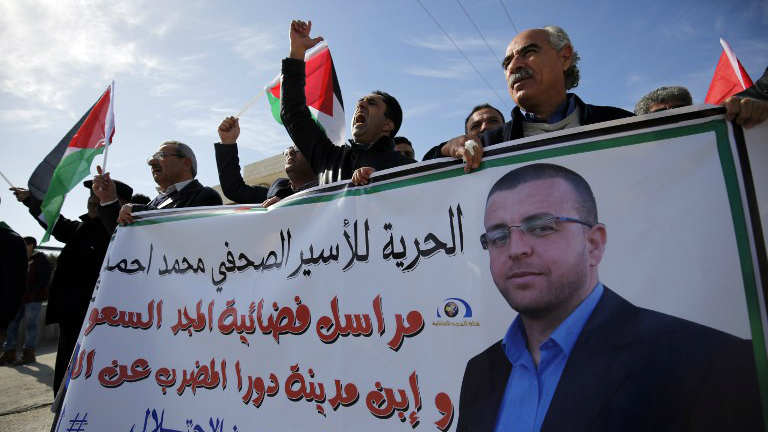
“We refuse to accept the purported security excuses for keeping the reasons for his administrative detention secret,” said MK Osama Sa’adi, of the Joint (Arab) List, of Qiq’s continued incarceration.
“It’s inconceivable that a television reporter and a normative person can sit in prison without trial or [proof of] guilt. Those who decided to jail Mohammed al-Qiq will be responsible for his death. If we reach that point, there will be chaos here. That’s why I demand he be released immediately and unconditionally,” Sa’adi said in a statement Monday.
The administrative detention policy has been condemned by human rights advocates abroad, and more recently by right-wing Israeli groups, which railed at the incarceration without charges of far-right activists.
Qiq was transferred to hospital in the Israeli city of Afula about a month ago, said a spokeswoman of the Israel Prisons Service.
His family has said they expect Israel to feed him intravenously if he loses consciousness, though Israeli authorities have denied they will force-feed him.
A controversial Israeli law passed in July allows the force-feeding of prisoners in certain circumstances, though it has yet to be invoked.
Top Palestinian Authority official Saeb Erekat told AFP that Prime Minister Benjamin Netanyahu “personally bears responsibility for al-Qiq’s life.”
Qiq was jailed for a month in 2003 and then for 13 months in 2004.
In 2008, he was sentenced to 16 months on charges linked to his activities on the student council at the West Bank’s Birzeit University.
Mohammed Allan, a 31-year-old prisoner whom Israel accuses of being a leader of the Islamic Jihad terror group, ended a two-month hunger strike in August 2015 after his detention without charges was suspended.







The Times of Israel Community.