

Poland set to vote on Holocaust bill despite agreeing with Israel to hold off
Polish Senate adds controversial legislation to Wednesday’s agenda, as Jerusalem continues to raise concerns
 Add ToI as a Preferred Source on Google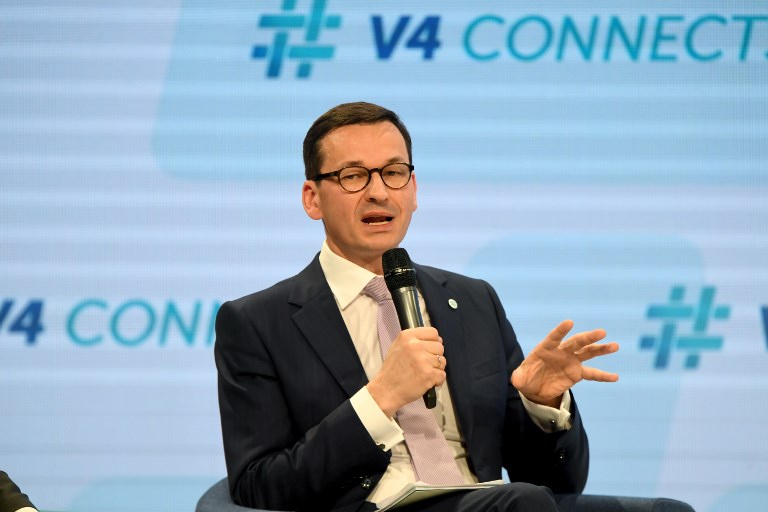
The Polish Senate said it would vote Wednesday on a controversial Holocaust bill, despite assurances from the country’s prime minister that Israeli concerns would be addressed before steps were taken to pass it into law.
The Polish Senate confirmed in a post to its official Twitter account that the bill, which criminalizes the blaming of the Polish state or nation for Nazi atrocities committed on Polish soil during the Holocaust, was on the agenda.
Prime Minister Benjamin Netanyahu spoke to his Polish counterpart, Mateusz Morawiecki, Sunday night, as the two attempted to set aside a diplomatic spat over the legislation.
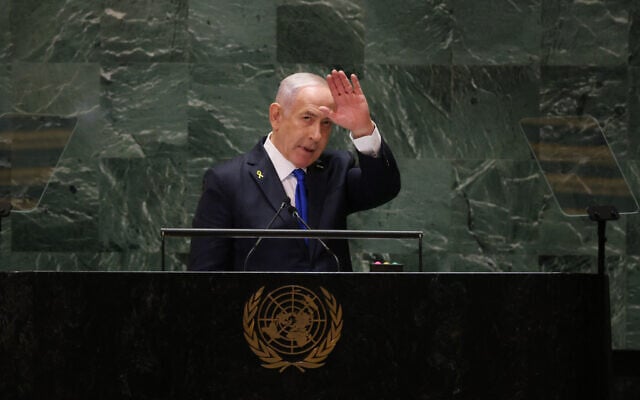
Netanyahu has pilloried the law — which prescribes prison time for referring to “Polish death camps” and forbids any mention of Polish complicity in Nazi crimes — as “distortion of the truth, the rewriting of history and the denial of the Holocaust.”
#SenatRP zebrał się na 55. posiedzeniu. Marszałek zapowiedział, że porządek obrad zostanie uzupełniony o nowelizację ustawy o #IPN. #Senatorowie rozpatrzą także projekt zmian w regulaminie znoszący #głosowanie tajne https://t.co/GqMejvSWGx. w sprawach personalnych. pic.twitter.com/PLX3Sy0jwZ
— Senat RP ???????? (@PolskiSenat) January 31, 2018
Netanyahu and Morawiecki “agreed to immediately open a dialogue between staffs of the two countries, in order to try and reach an understanding over the legislation,” a statement from Netanyahu’s office read on Sunday.
The bill, passed by the lower house of the Polish parliament last week, still needs approval from Poland’s Senate and the country’s president, Andrzej Duda.
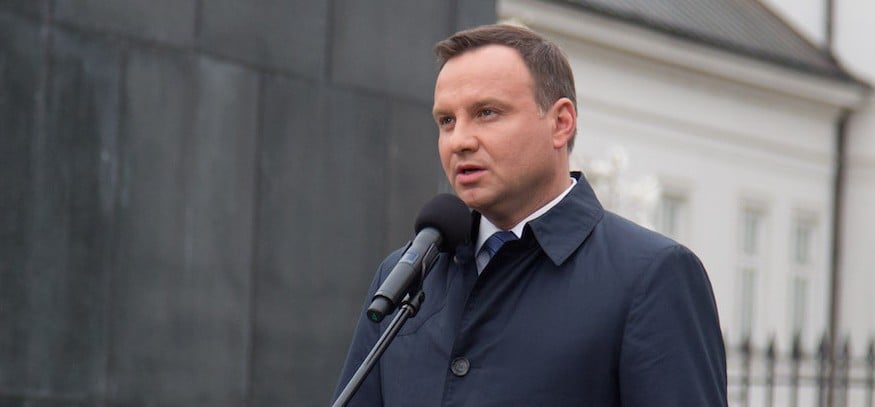
Duda on Sunday sought to defuse the crisis by promising “a careful analysis of the final shape of the act” focused on provisions that have alarmed Israel.
However, the next day Duda told public broadcaster TVP that he was “flabbergasted” by Israel’s “violent and very unfavorable reaction” to the bill.
“We absolutely can’t back down, we have the right to defend the historical truth,” he said.
Poland’s ruling Law and Justice party says the law is meant to fight expressions like “Polish death camps” to refer to the wartime camps that Nazi Germany operated in occupied Poland, but its provisions are wider, criminalizing talk of Polish complicity in the Holocaust.
Poles were among those imprisoned, tortured and killed in the camps, and many today feel that Poles are being unfairly depicted as perpetrators of the Holocaust.
Germany occupied Poland in 1939, annexing part of it to Germany and directly governing the rest. Unlike other countries occupied by Germany at the time, there was no collaborationist government in Poland. The prewar Polish government and military fled into exile, except for an underground resistance army that fought the Nazis inside the country.

However, there were many cases of Poles killing Jews or denouncing them to the Germans, with deadly anti-Semitic pogroms continuing during and in one case even after World War II.
The Israeli government in the past has supported the campaign against the phrase “Polish death camps,” but it has strongly criticized the new legislation.
Israel, along with several international Holocaust organizations and many critics in Poland, argues that the law could have a chilling effect on debating history, harming freedom of expression and leading to a whitewashing of Poland’s wartime history.
On Wednesday, the Foreign Ministry said it was increasingly concerned about a spate of anti-Semitic expressions in Polish media amid the disagreement between the two governments.
“The Foreign Ministry is monitoring with concern the rising anti-Semitic feelings expressed through the Polish media and we are considering making an appeal via our embassy in Warsaw,” the ministry said.
In one instance, the head of a state-run channel suggested referring to Auschwitz as a “Jewish death camp,” in response to an outcry over use of the term “Polish death camp” to describe the Nazi killing site in German-occupied Poland.
The director of the state-run television station TVP 2, Marcin Wolski, said Monday on air that the Nazi death camps should be called Jewish. “Who managed the crematoria there?” he asked — a reference to the fact that death camp prisoners, usually Jews, were forced to help dispose of gas chamber victims.







The Times of Israel Community.