

Police ask Gantz not to return terrorists’ bodies; Shin Bet, IDF disagree – report
Remains of 5 attackers are still in Israeli custody; officials concerned about legal ramifications of not allowing burial of terrorists who were Israeli citizens
 Add ToI as a Preferred Source on Google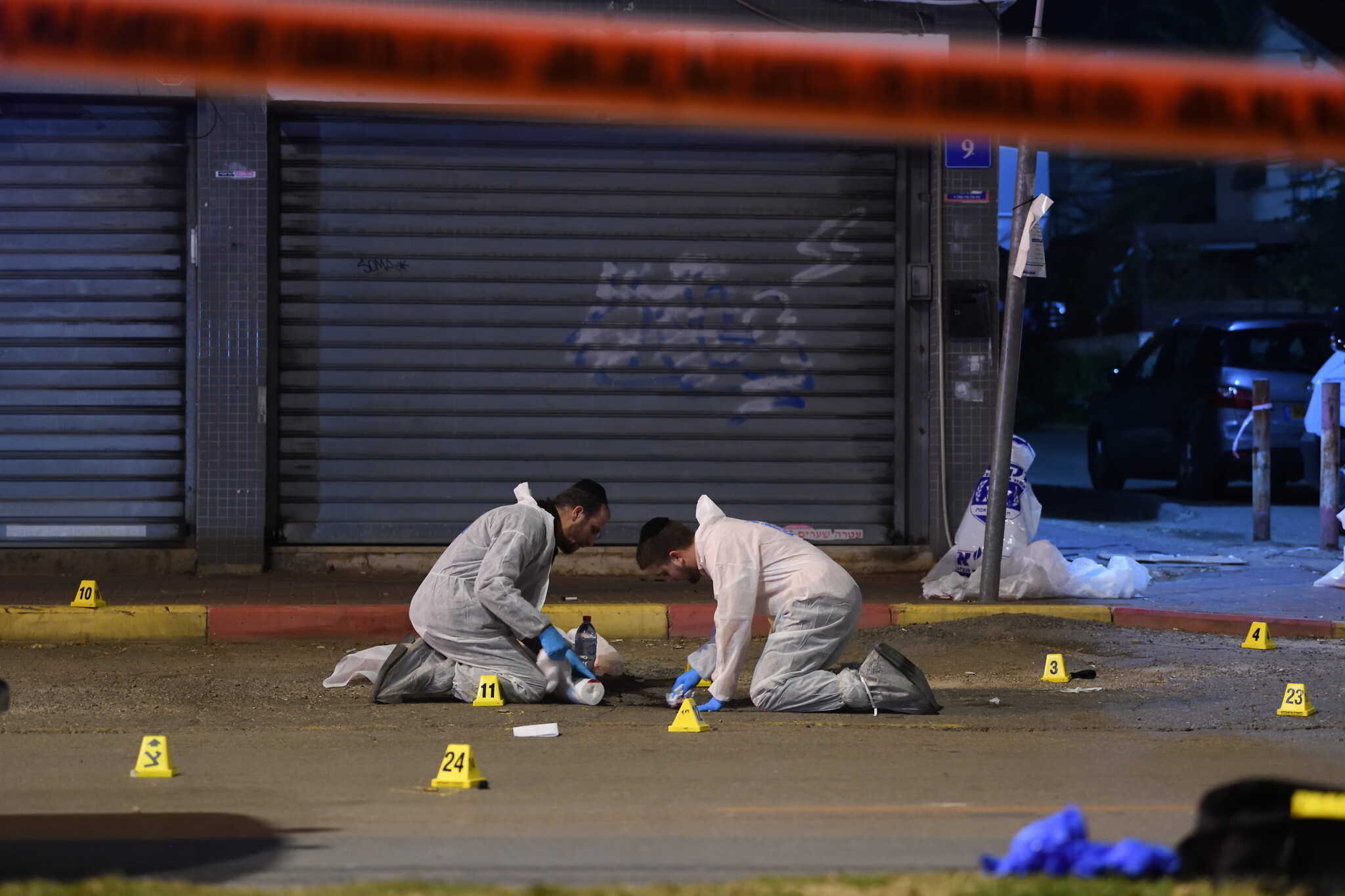
Police have recommended to Defense Minister Benny Gantz that the bodies of five terrorists who carried out recent attacks in Beersheba, Hadera, Bnei Brak and Jerusalem not be returned to their families for burial.
The defense minister is expected to make a decision on the matter shortly, the Ynet news site reported Monday.
Unnamed defense officials, presumably from the police, told the outlet that there is a fear that the funerals could become rallying sites for terror.
However, the report said, the Shin Bet security agency and the Israel Defense Forces have both told Gantz that they believe the bodies should be returned, particularly those of the Beersheba and Hadera attackers, who were Israeli citizens.
While Bnei Brak terrorist Diaa Hamarsheh was a Palestinian from the West Bank village of Ya’abad near Jenin, Hadera attackers Ayman and Ibrahim Ighbariah were residents of the central Arab city of Umm al-Fahm, and Beersheba terrorist Mohammad Ghalib Abu al-Qi’an was an Arab Israeli from the southern town of Hura.
In addition, officials were debating whether to return the body of a 19-year-old Palestinian assailant who stabbed two police officers in the Old City last month before he was shot dead.

Police were said to be particularly concerned about returning the bodies of the Hadera terrorists. recalling the thousands who attended the funerals of two Umm al-Fahm residents who carried out a deadly shooting attack in Jerusalem’s Old City in 2017 that killed two police officers.
Whether holding the bodies of attackers is an effective policy is a subject of debate within the security establishment.
Some believe that it gives Israel additional leverage in negotiations with terror groups, mainly Hamas, as well as acting as a deterrent against attacks. Others see it as ineffective and based on shaky legal ground.
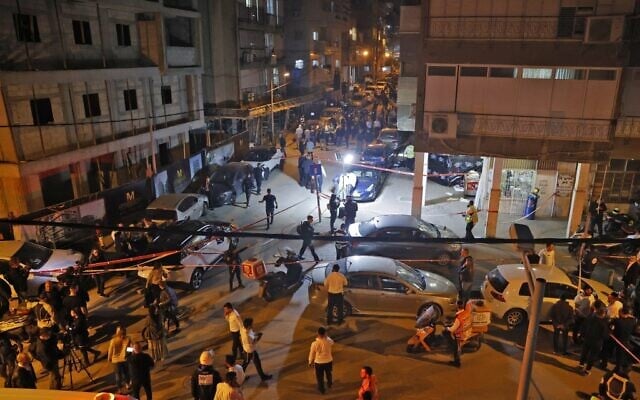
The attacks in Beersheba and Hadera, which left four and two people dead, respectively, were carried out by terrorists who had sworn allegiance to Islamic State. The Bnei Brak attacker who killed five people before he was shot dead was linked to members of both the Hamas and Palestinian Islamic Jihad terror groups.
In 2019, the High Court ruled that the IDF could keep bodies of alleged terrorists in custody for the purpose of ensuring national security, such as using the remains of Hamas terrorists as bargaining chips in an eventual exchange with the Gaza-based terror group.
The landmark decision reversed a previous ruling, in which the High Court had struck down the practice on a technicality.




The Times of Israel Community.