

‘We chose life’: Eli Sharabi, Alon Ohel recall helping each other survive Gaza captivity
Two ex-hostages, who were kidnapped separately on Oct. 7 but imprisoned together, credit their bond as keeping them alive and hopeful, comparing it to father-son relationship
 Add ToI as a Preferred Source on Google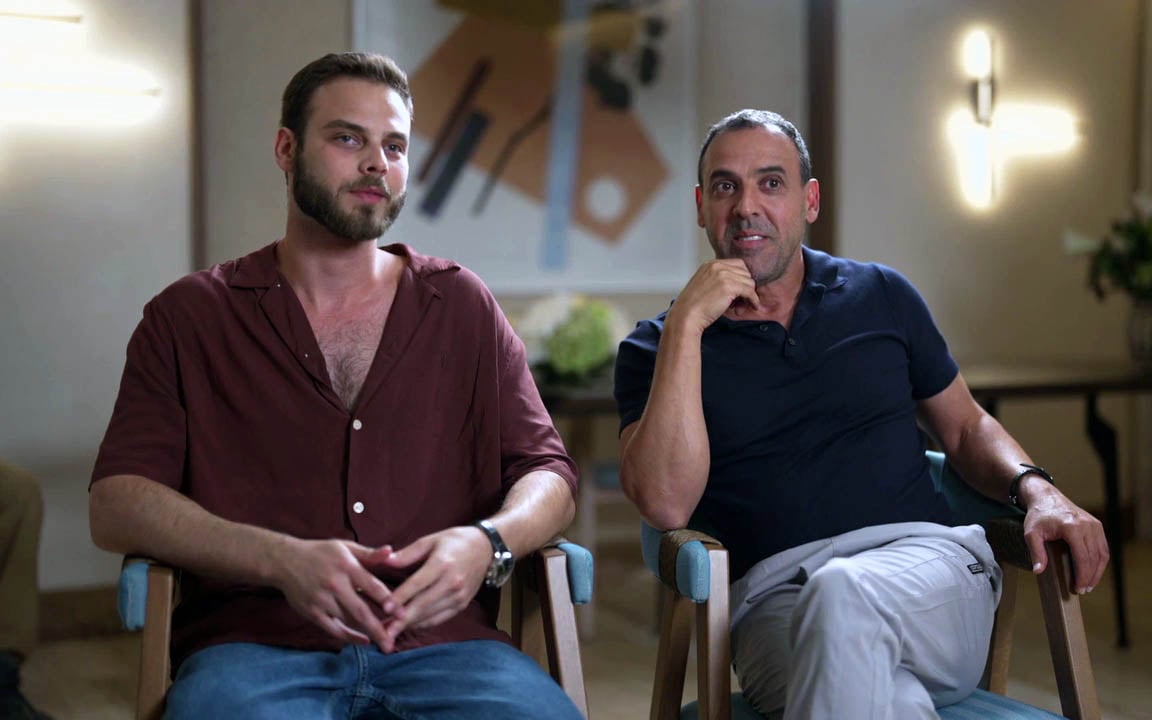
In an interview that aired Thursday night on Channel 12, reunited freed hostages Eli Sharabi and Alon Ohel recounted their time in Hamas captivity together, each crediting the other with his survival.
“It’s a dream come true,” Ohel said, of sitting together. Turning to Sharabi, he said: “This is victory, right? This is our victory.”
Sharabi concurred: “We’re lucky, look at this. We’re alive. There are those who didn’t come out of [Gaza] alive.”
Ohel and Sharabi were held together with fellow hostages Eliya Cohen and Or Levy for the majority of their time as hostages, having all been kidnapped by Hamas terrorists on October 7, 2023.
They weren’t all returned at the same time, however, with Ohel left behind during the January 2025 hostage deal that saw the other three freed.
The young pianist, who was abducted from the Nova music festival, was among the last hostages released in October, as part of the US-brokered ceasefire deal, over two years after he was taken captive.
Finally reunited:
Watch the moment hostage survivors, Eli Sharabi and Alon Ohel, meet for the first time since captivity.
These moments make our hearts full ????❤️
???? @N12News pic.twitter.com/LEelwduol6
— Embassy of Israel to the USA (@IsraelinUSA) December 4, 2025
“This whole group of four hostages… We went through a lot of things there, and a lot of challenges that aren’t easy to manage. And we said, and I always said to myself, luckily I am not alone,” recalled Sharabi.
“Alon, for seven months, survived day after day — with his thoughts, rising in the morning, closing his eyes at night. That’s being alone. That’s being alone with terrorists,” he said.
Sharabi: This isn’t the same Alon I met in November 2023
Ohel said in a recent solo interview that, while in captivity, the men discussed their potential responses to all sorts of scenarios upon being released.
“What did we survive all that for, only then to return here and be broken?” Ohel affirmed, explaining the mental preparations. “That would be totally meaningless.”
“We were strong there, and we are also strong now, it doesn’t matter what happens,” he continued. “We chose to live, we chose life.”
Sharabi, visibly moved by Ohel’s remarks, said, “This isn’t the same Alon that I met on November 27, [2023],” referring to their first encounter in Gaza, which occurred during the first of several ceasefire and hostage release deals brokered during the war.
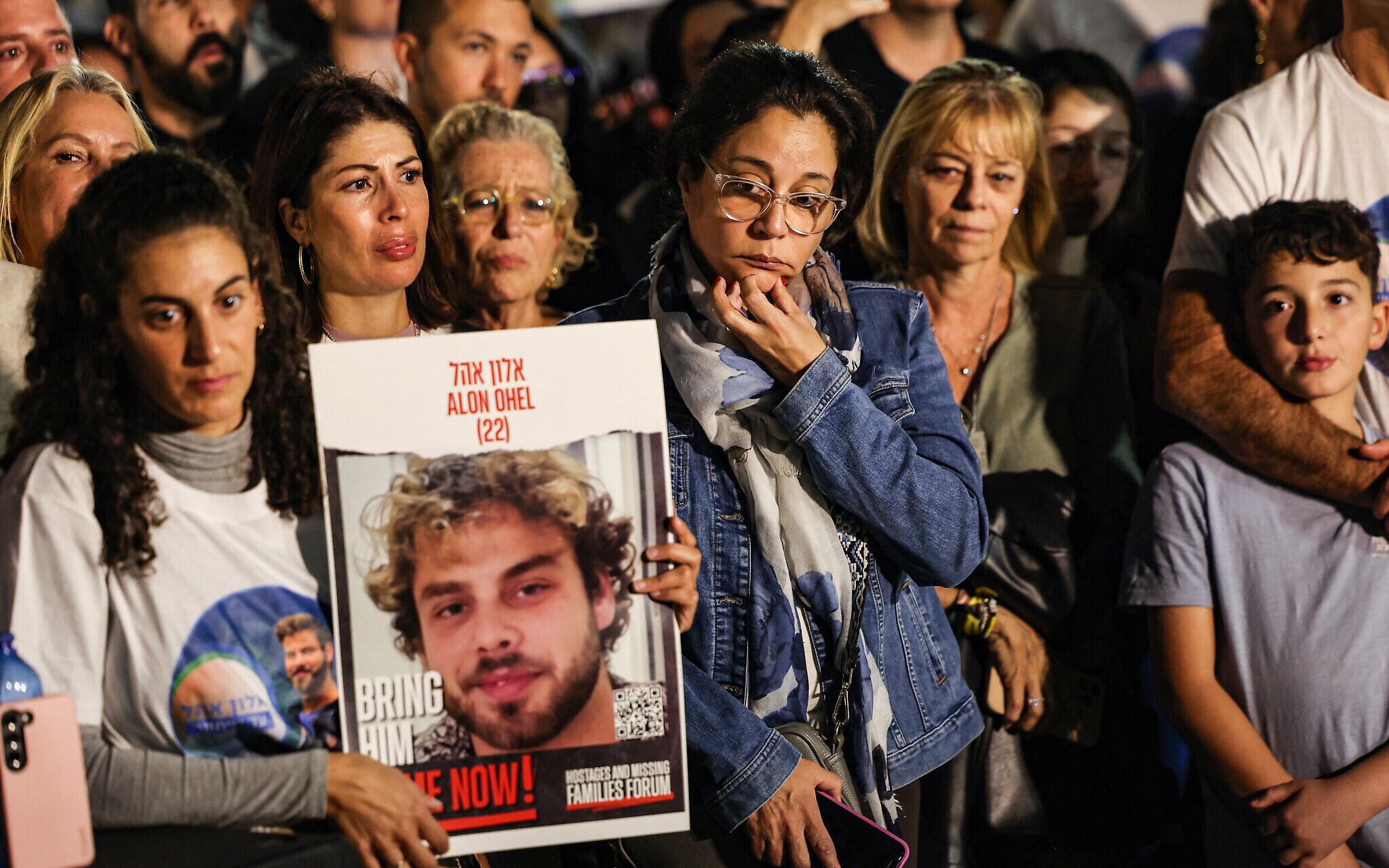
Recounting their conditions in Gaza, Sharabi said: “In the toughest moments, you’re so hungry you could eat the walls. We were gathering every crumb on the carpet.”
Despite the deprivation, 53-year-old Sharabi said, the much younger Ohel “stood across from the terrorist and told him he refuses to take food from him if he doesn’t give it to everyone.”
Ohel, recounting the same incident, said the terrorist was “playing with us. They were always playing with us.” He said the captives were similarly abused when it came to mattresses, pillows, blankets and clothes.
Sharabi on Ohel’s courage: ‘It wasn’t bravery, it was values’
“It wasn’t bravery, it was values,” Sharabi said, explaining what moved Ohel to confront their captor. “He only knows good, and to do good, and to think of others so it’s good for them before it is good for him.”
“I really, really identified with these values. He gave me meaning,” Sharabi continued, while choking up. “On October 7, I left two daughters, and I found the meaning of being a father here.”
Hamas-led terrorists murdered Sharabi’s wife Lianne, along with their daughters Noiya, 16, and Yahel, 13, during their October 7 onslaught. Eli’s brother Yossi, was also kidnapped and killed in Gaza.
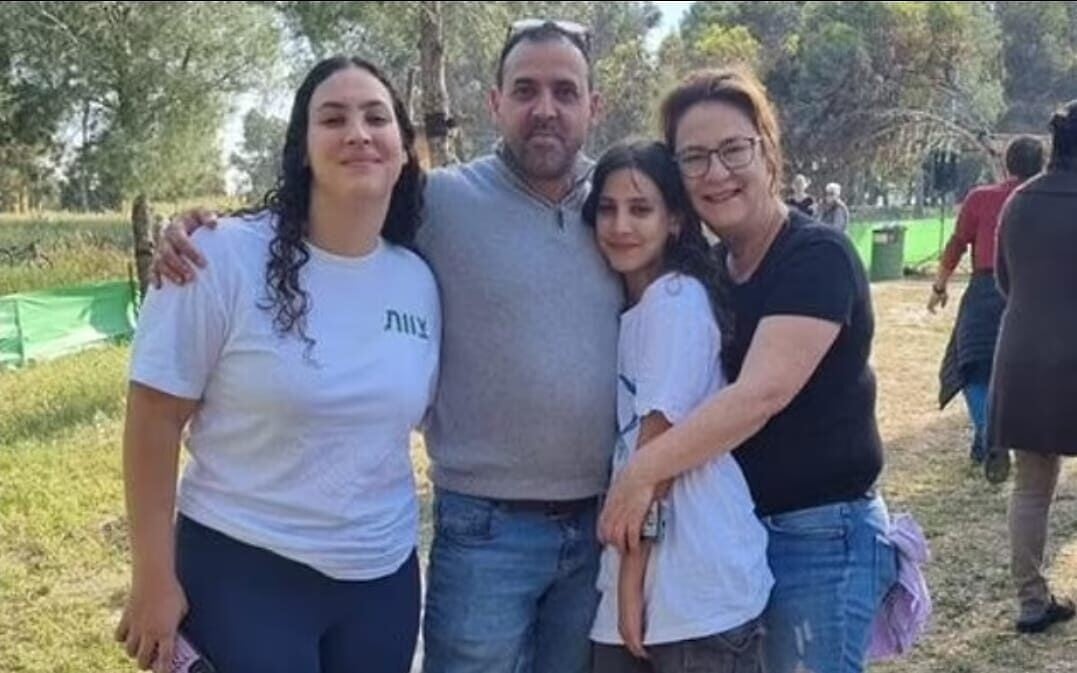
“The first time I saw he was willing to forgo food so there will be peace in the group, I said to myself, ‘I can connect with him, but there’s someone here who needs to be woken up for a moment, because he needs to return to his parents,’” Sharabi said.
“He did the same for me in no shortage of instances. In one case, I was taking blows — if there’s one person who likely stopped the terrorist, it was Alon. I’m on the ground, and he’s protecting me with his hands, and asks [the terrorist] to stop. Otherwise, how will you know how it will end today?” he recalled.
Ohel similarly said the hostages never knew at what point their captors would stop abusing them, noting that they had to beg the terrorists for everything, including to halt the beatings.
“Right after the blows, right after he broke my ribs, he brings food the next day and we say thanks,” Sharabi said, referring to the captor who assaulted them.
Sharabi and Ohel remembered some of their captors, referring to them by various nicknames, one of whom Ohel said once brought deodorant and told him that “it smells like a dead animal in here.”
Captor asked: ‘Why do we love death, and you Jews love life?’
“There were really difficult moments, when they would rejoice there,” Sharabi said, with Ohel citing the death of soldiers and attacks on Israel as causes for joy among the Palestinian terrorists holding them captive.
“One soldier is hit and they are in heaven, as if they conquered the whole world, not just Israel,” Sharabi said.
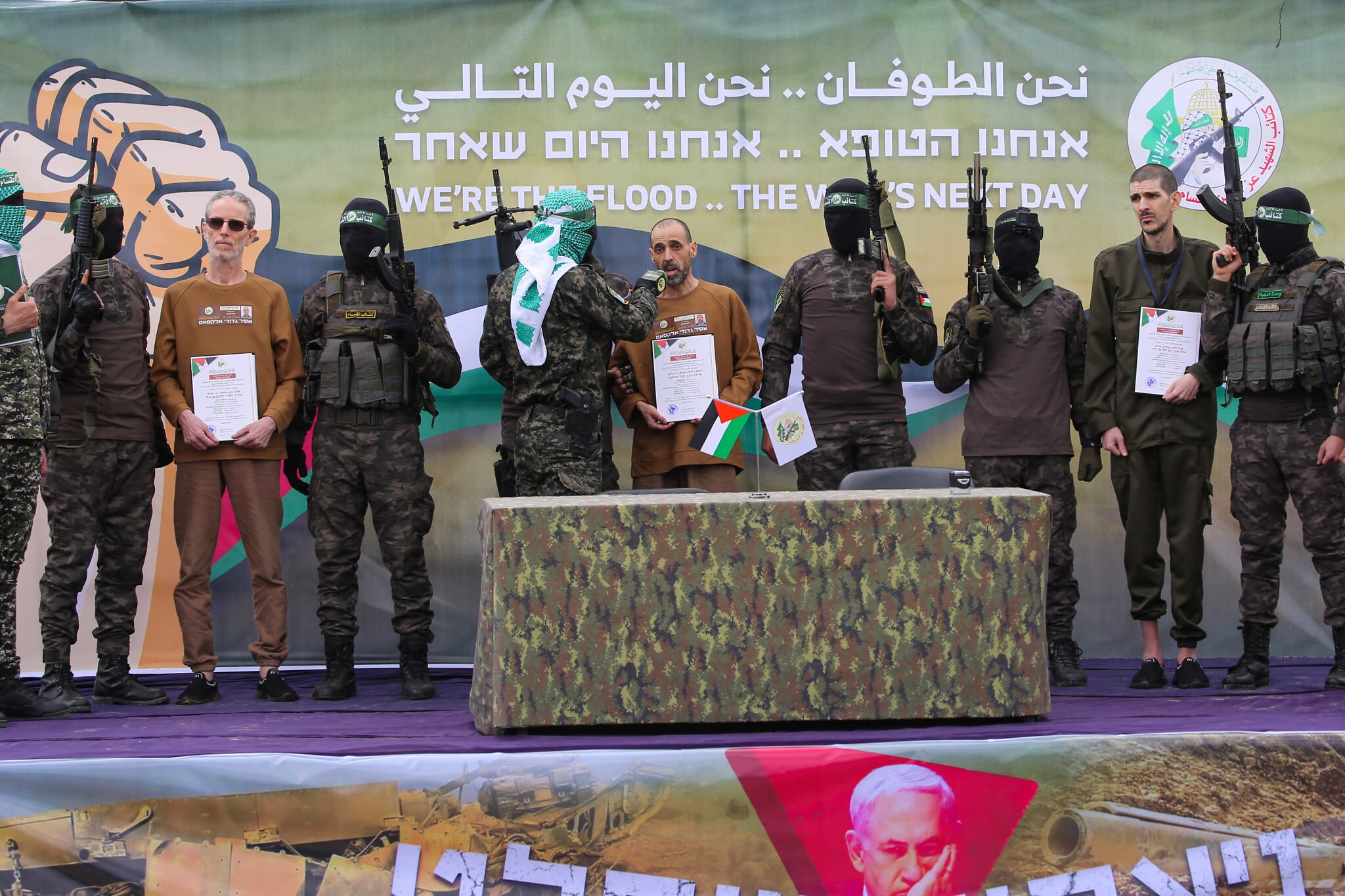
Ohel added, “They have no value for life. They sanctify death.”
Sharabi recalled that when they were moved between tunnels last year, one of their captors asked, “Why do we love death and you, the Jews, love life?”
“How do you answer that?” Sharabi said.
Asked about seeing a hostage video of Ohel, released in September 2025, Sharabi said: “The only thing that shocked me was seeing that he was starting to look better than he had.”
Several days before Ohel was released in the latest ceasefire deal, Sharabi said he asked his psychologist if Ohel would want to see him, as “maybe I disappointed him… I promised him that in a few days he’d follow after me.”
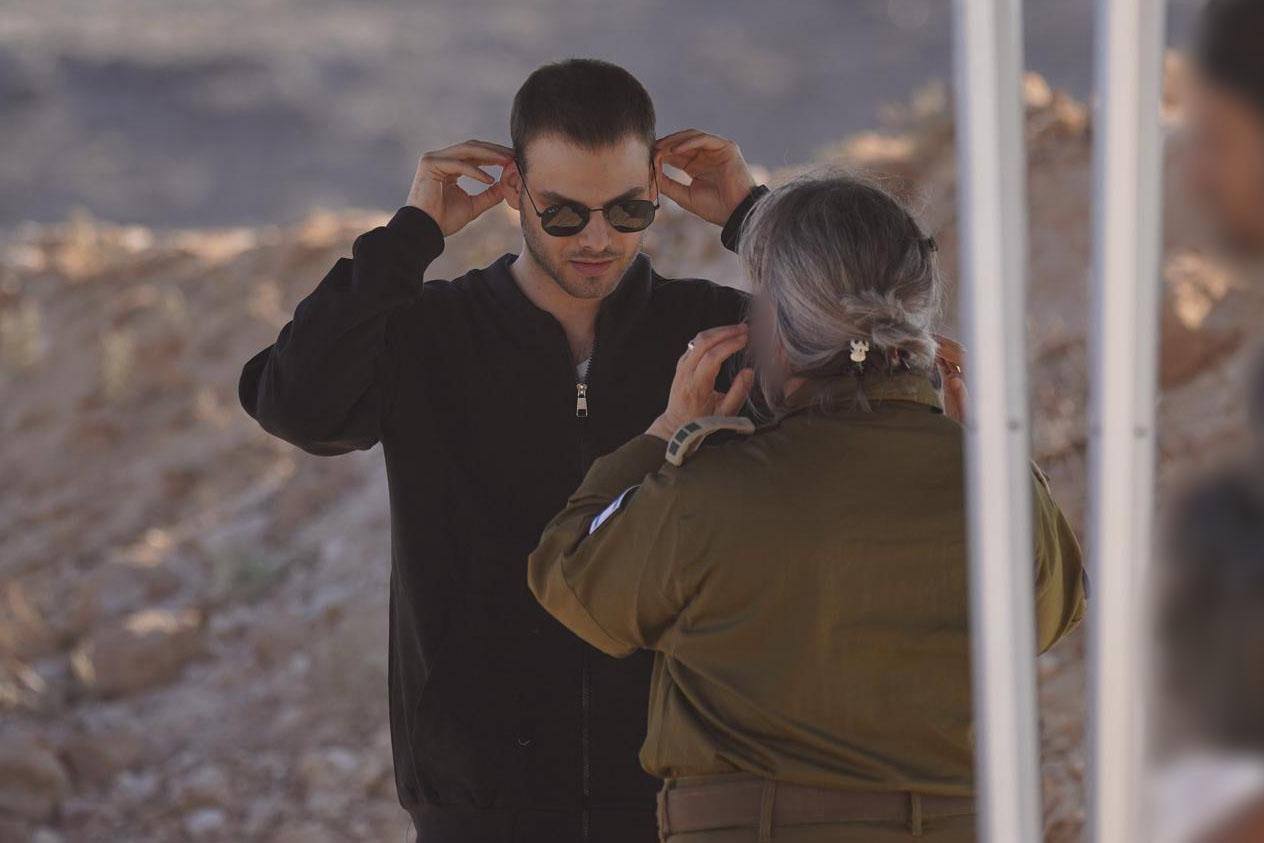
Ohel said he was never angry with Sharabi while he remained in captivity, stressing “he was part of my journey there.”
Sharabi joked that he was angry with Ohel about one thing — not telling him about his piano skills.
“He would play [piano] on himself all the time,” Sharabi said, demonstrating how Ohel would tap on his chest like keys on a piano.
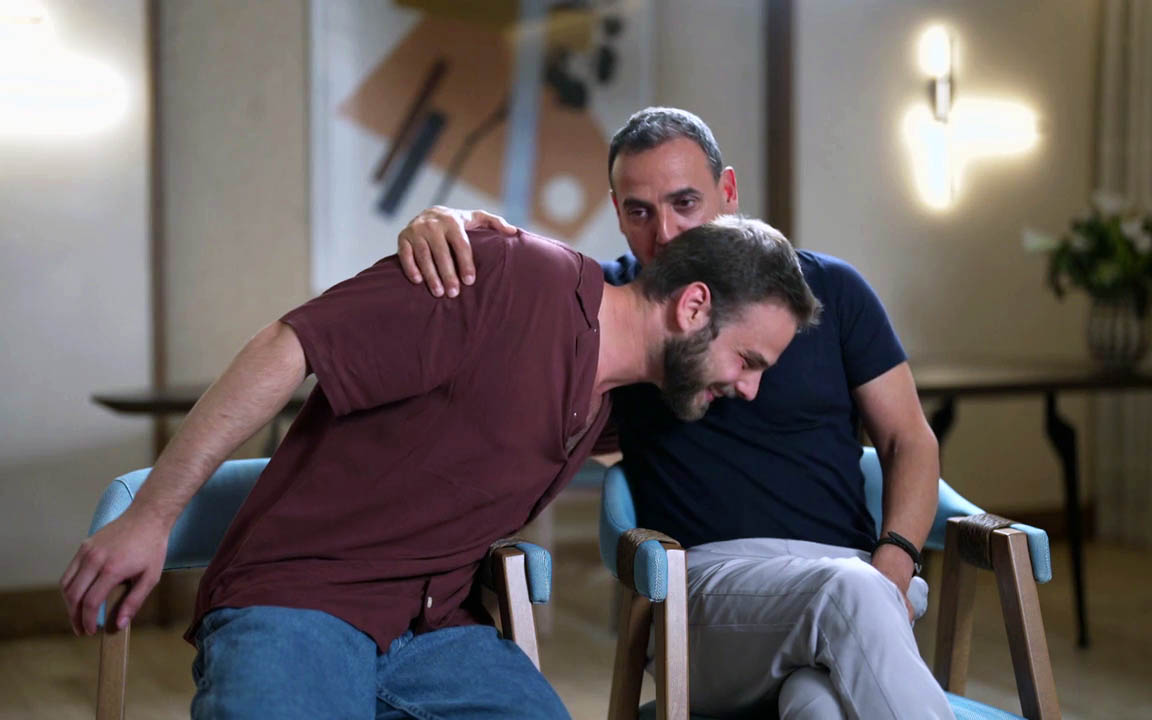
The two ended the interview by discussing their plans for the future, saying they hope to scuba dive around the world, and joking about opening a restaurant together, after long conversations about it in captivity.
“We wrote a business plan [while in Gaza], to open a jachnun business in Ko Phangan,” Sharabi recalled with a smile. “How much we’d have to sell, at what price, where we’d buy it from…”
“Would it work, jachnun in Thailand?” asked the interviewer, of the slow-baked Yemenite bread, traditionally eaten on Shabbat.
“I don’t think so,” admitted Ohel, prompting laughter in the studio, as Sharabi seconded his friend’s doubt.




The Times of Israel Community.