

Will you shut up, man: Whatever became of TV debates ahead of Israeli elections?
Lapid has challenged Netanyahu to a studio face-off and the PM affects to be considering the idea. But while a debate helped him win in 1996, it may not be his wisest move now

 Add ToI as a Preferred Source on Google
David Horovitz is the founding editor of The Times of Israel. He is the author of "Still Life with Bombers" (2004) and "A Little Too Close to God" (2000), and co-author of "Shalom Friend: The Life and Legacy of Yitzhak Rabin" (1996). He previously edited The Jerusalem Post (2004-2011) and The Jerusalem Report (1998-2004).
Candidate Benjamin Netanyahu wiped the floor with incumbent prime minister Shimon Peres when they debated one-on-one in a TV studio days before the 1996 elections. Peres, who had inherited the post after the assassination of Yitzhak Rabin, looked tired and sounded patronizing; his rival was energetic and well-prepared.
Peres seemed to assume that the job was his by right and that upstart Netanyahu was being impertinent in so much as challenging him, especially since the Likud leader and his right-wing allies had played so central a role in heating up the political climate prior to the killing of Rabin by a Jewish extremist.
The contrasting performances in that studio helped swing the election Netanyahu’s way: He went on to win, by fewer than 30,000 votes; his performance in the debate may well have made the difference.
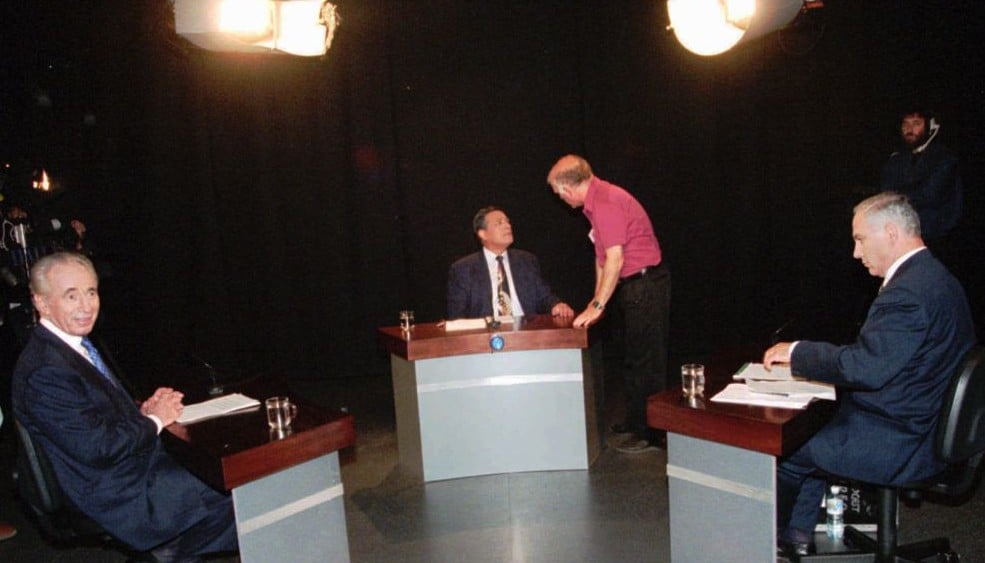
Three years later, in April 1999, incumbent Netanyahu participated in a second TV debate — against his own former defense minister Yitzhak Mordechai — with less success. (This was during the brief period when Israelis were casting two ballots — one for a prime minister and one for a party.) Mordechai, who wound up dropping out of the race, performed far more effectively than Peres had, scoring blows with attacks on Netanyahu’s honesty and integrity.
Ehud Barak, leader of The One Israel (Labor), chose not to appear, letting the two allies-turned-rivals slug it out. It proved a wise move. Barak won the following month’s election. And Netanyahu apparently learned a lesson.
In the years since, he has resolutely avoided formal TV studio debates with his various challengers — and has shut them all out in a record-breaking 12-year stint as prime minister.
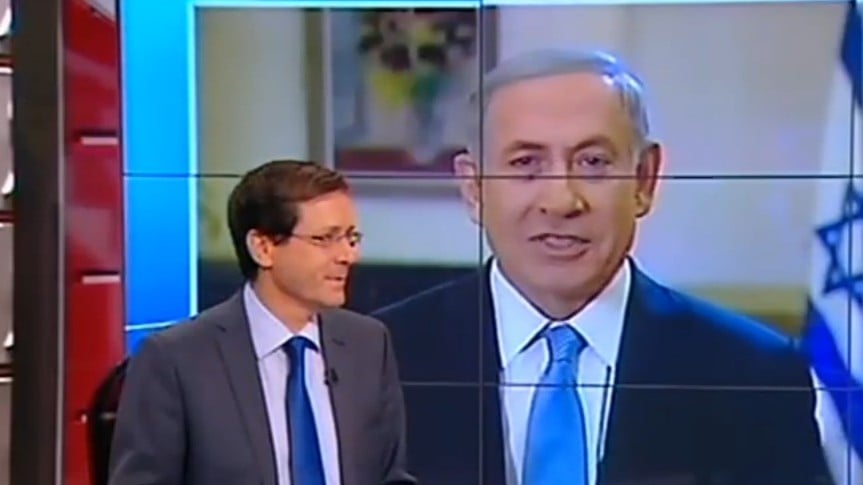
The closest he came was a brief clash with Zionist Union (Labor) leader Isaac Herzog on Channel 12 ahead of the 2015 election — with Herzog in the studio and Netanyahu in his office — in which Netanyahu surprised a rather discomfited Herzog. (The other main party leaders actually did agree to face off in the same studio during that campaign.)
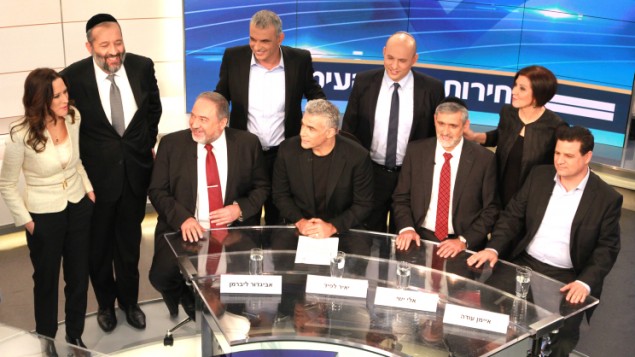
Israel certainly does not lack for arguments among its politicians. These go on for hours every day on TV and radio even when we’re not in the midst of an election campaign.
But the studio debates that are such a feature of American presidential elections, for instance, where candidates can be formally scrutinized, have become conspicuous by their absence here.
Netanyahu, so capable and deft an interviewee, evidently feels he has more to lose than gain in that constricted environment.
Moreover, he plainly believes, a readiness to so much as sit in a TV studio with the likes of Lapid, Yamina’s Naftali Bennett and/or New Hope’s Gideon Sa’ar would place his rivals on an implied equal footing with him. That’s the last thing he wants to do, particularly in this campaign, where one of his themes is that none of his would-be successors can match his domestic and international experience and contacts — the latter so central, he says in his now near-daily interviews across Hebrew media, in enabling Israel to get so many life-saving doses of coronavirus vaccine so quickly.
Lapid’s debate-me gambit makes a great deal of sense. As the Yesh Atid leader said in a Times of Israel interview last week, “it is so hard for people even to imagine Bibi not being the prime minister, that it sets a tone.” His own son, Lapid noted, “was born in 1995. Bibi [Netanyahu] was first elected in 1996. My son grew up, went to high school, met a young lady, they got engaged, they broke off the engagement, he went to the army, he served three years, he left the army, he started university, he’s now finishing his first degree. And Netanyahu is still the prime minister.”
As the Netanyahu era extends, more and more Israelis can remember less and less about pre-Bibi times. And when you’re a small country in a nasty region, the attraction of the devil you know, even if you’ve begun to take that proverb more literally, exerts a greater pull
Challenging Netanyahu in a TV debate would give Lapid the opportunity to try to persuade the public, watching them both at close quarters, to get over an ever-rising psychological hurdle: to contemplate that someone other than Netanyahu is capable of leading Israel. It’s a psychological hurdle that Bennett and Sa’ar are also well aware of; hence, both of them took pains in our recent interviews to assert that the country would do just fine under their leadership.
As the Netanyahu era extends, more and more Israelis can remember less and less about pre-Bibi times. And when you’re a small country in a nasty region, the attraction of the devil you know, even if you’ve begun to take that proverb more literally, exerts a greater pull. Thus his challengers are fighting not only the extraordinarily effective election campaigner Benjamin Netanyahu, but also the fact that the very words “prime minister” and “Benjamin Netanyahu” have become increasingly synonymous.
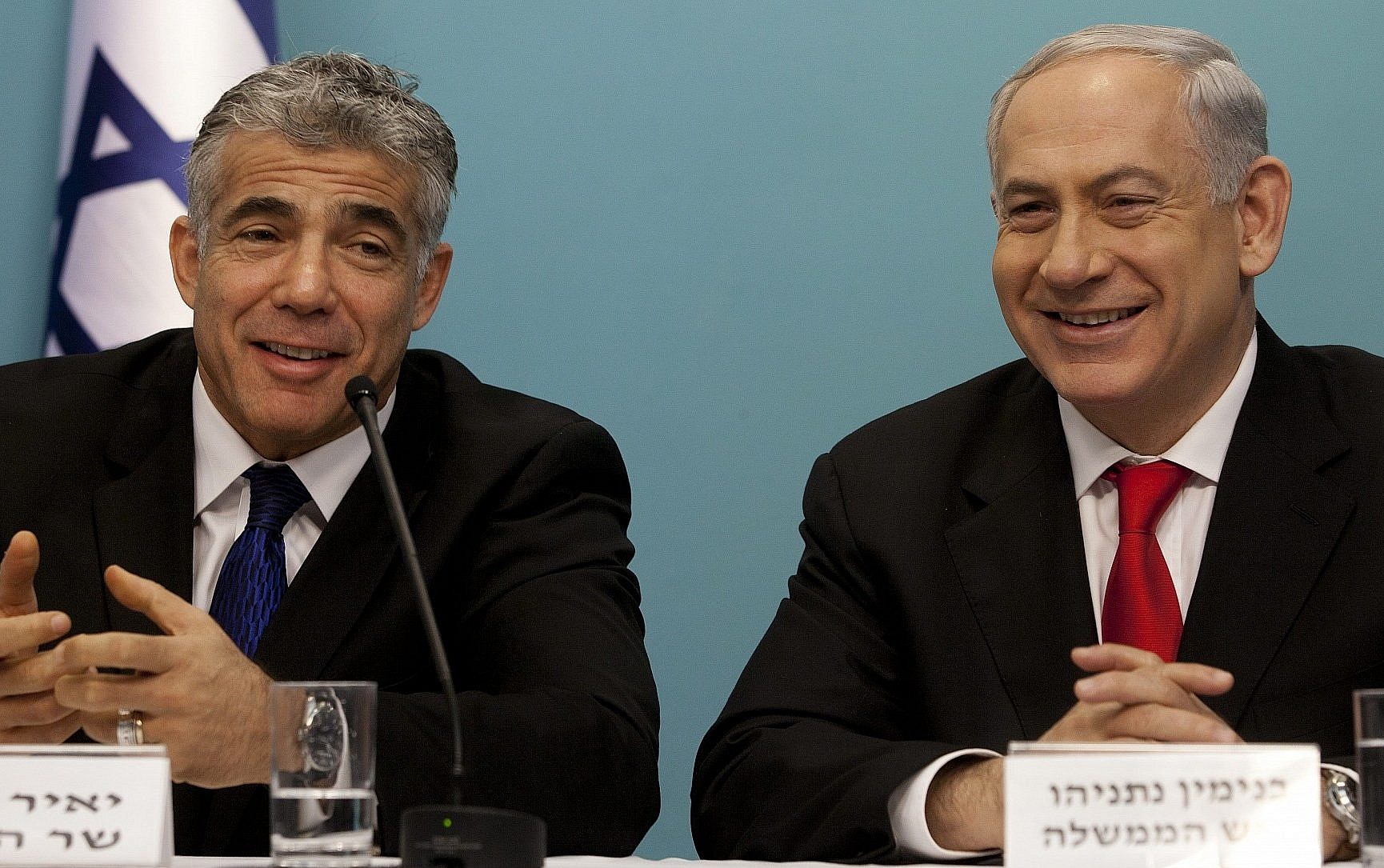
In an interview Tuesday on one of the most sycophantic of pro-Netanyahu platforms, Jacob Bardugo‘s Army Radio evening news show, the Likud leader suggested he would agree to face off against Lapid the moment the Yesh Atid leader “stops hiding” behind Bennett and Sa’ar and admits “he’s running for prime minister.”
We shall see. Much may depend on whether Netanyahu thinks he needs the kind of extra boost he secured in 1996. As things stand, polls show him within touching distance of retaining power, assuming Naftali Bennett’s Yamina would ultimately join his coalition, and that’s at a time when lots of Israelis are not quite convinced that the worst of COVID-19 is over. In a Wednesday night Channel 12 poll, only 24% said they agreed with Netanyahu’s declarations that the pandemic is essentially behind us; this number is bound to rise if current COVID-19 trends continue to improve, and in turn to boost Netanyahu’s reelection prospects.
Netanyahu would also need to feel certain of emerging decisively victorious when up against Lapid, a former TV presenter who is comfortable in the studios. Merely by entering a TV studio one-on-one with a rival, after all, Netanyahu would be signaling that his premiership is open to question. And why would he want to do that?
—
** An earlier version of this Editor’s Note was sent out Wednesday in ToI’s weekly update email to members of the Times of Israel Community. To receive these Editor’s Notes as they’re released, join the ToI Community here.







The Times of Israel Community.