

Biblical women step out of the shadows and into living color
Photographer Michal Baratz Koren offers a distinctly unconventional look at the foremothers of the Bible
 Add ToI as a Preferred Source on Google
Jessica Steinberg, The Times of Israel's culture and lifestyles editor, covers the Sabra scene from south to north and back to the center
It’s hard to put to a name to Michal Baratz Koren’s powerfully seductive biblical still lifes.
A series of staged photographs by an Israeli artist presents some lesser-known Biblical women as powerfully seductive still lifes with stories.
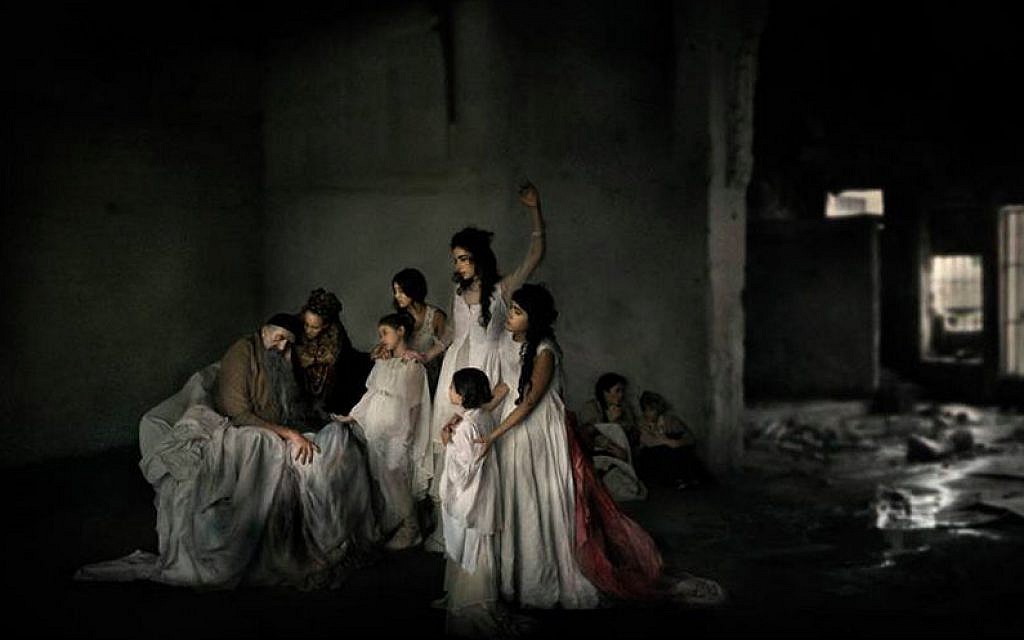
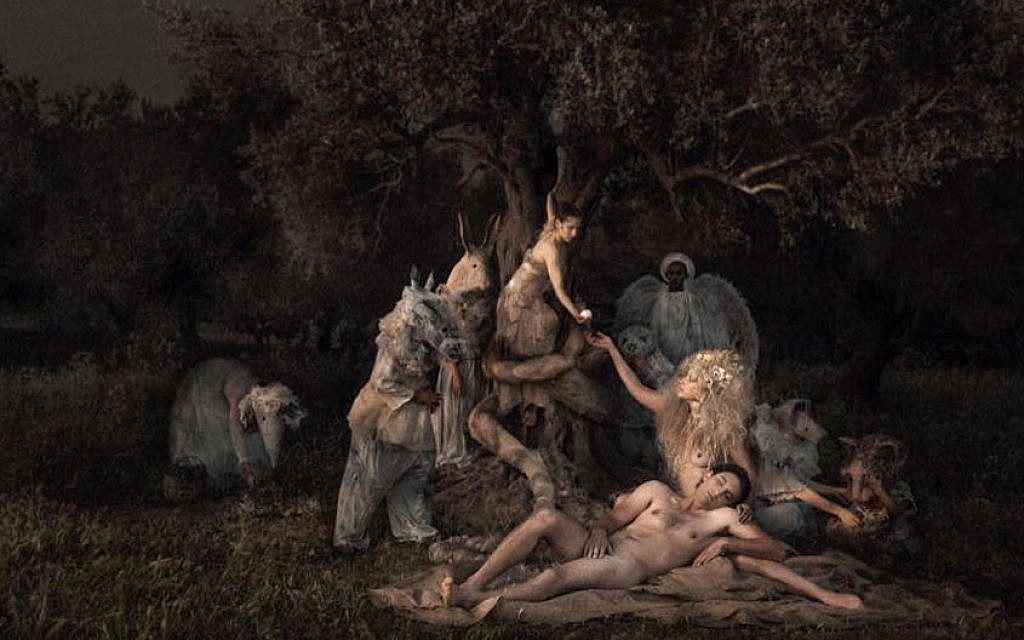
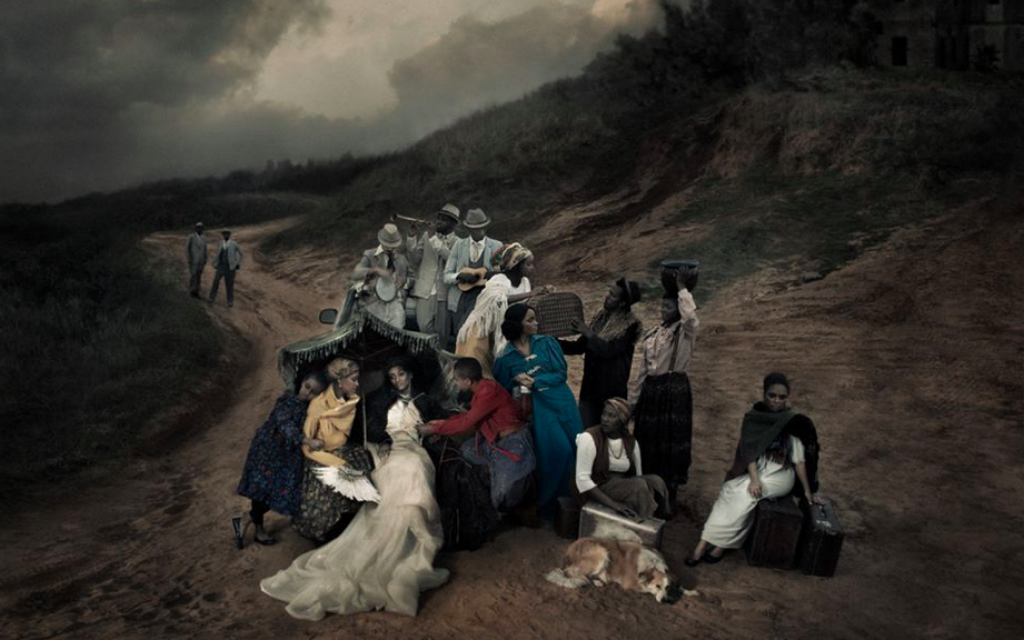
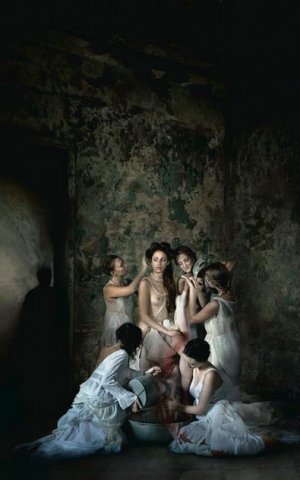
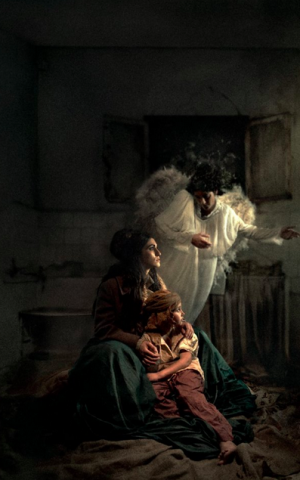
Created with Michal Baratz Koren’s Nikon d800, following hours of research, sketches, costume planning and location hunts, they are unconventional, romantic portraits of 11 women from the Bible, boldly rendered in concentrated hues and contrasts reminiscent of Renaissance paintings.
There’s also nothing remotely religious about them.
Inspiration for the series came when Baratz Koren was cleaning out her grandmother’s apartment. She came across an old book about women of the Bible, and, paging through the descriptions and portraits of Sarah, Rachel and Leah, Deborah and Bathsheba, was baffled by the lack of content and descriptions of the women.
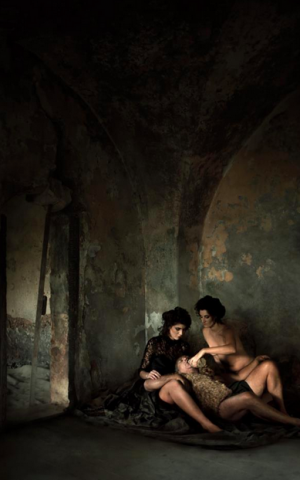
“There was only a line or two about each one, not a lot of information at all,” she said. “I wanted to put the ones I identified with in front, to bring them into our world.”
That was four years ago. Baratz Koren then embarked on this series, choosing which women she wanted to highlight — she decided against Sarah, Rachel and Leah, but went with Bathsheba, Deborah, Zelophehad’s daughters, and several others — and then set about interpreting their stories and reimagining their circumstances.
She chose models from her family and friends, dressing them in her grandmother’s castoffs, secondhand dresses from Jaffa’s flea market, and yards of fabric from local stores. She spent days searching for just the right setting, asking people on Facebook and Instagram if they knew of any rundown, ancient-looking site before finding one particular abandoned building with peeling walls in Ness Tziona.
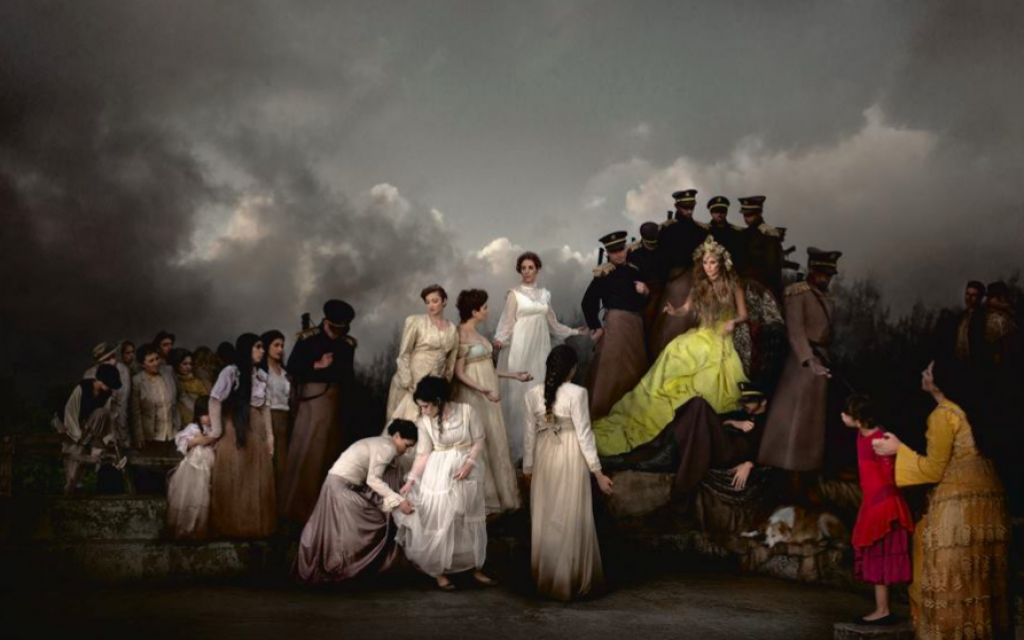
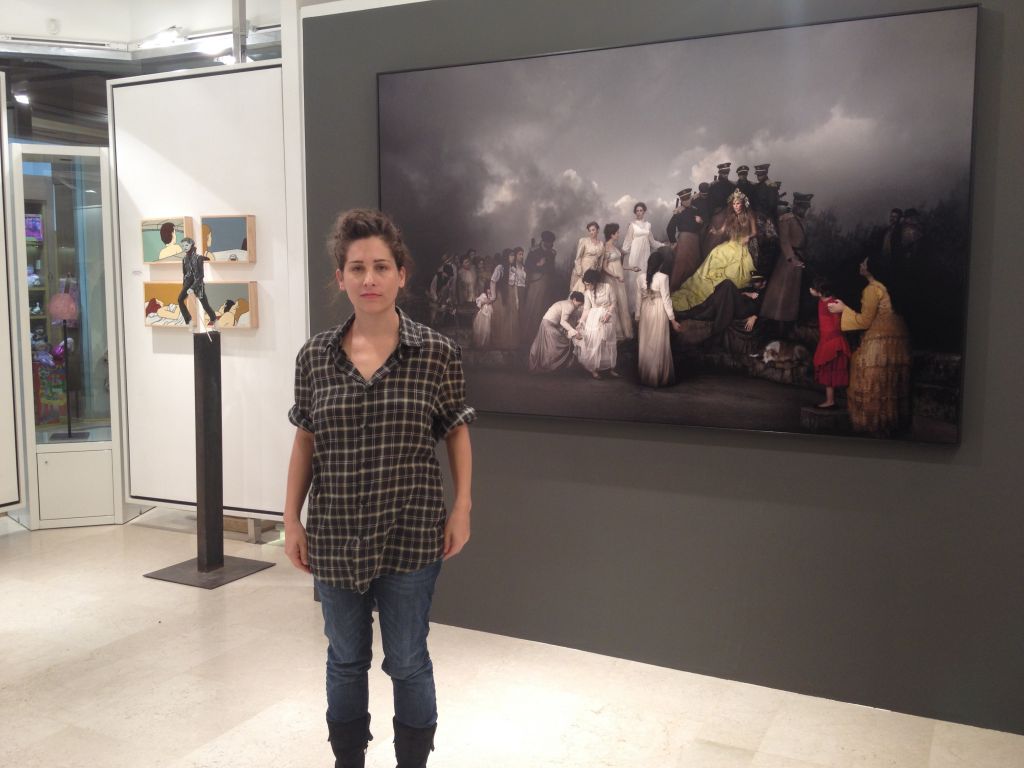
There were massive photo shoots, like the one for Deborah the prophetess, who is dressed in yellow — “a lioness look,” said Baratz Koren — surrounded by her posse of men, women and children. The woman posing as Deborah is a flight attendant, a friend of Baratz Koren, and she loved her looks, strong but not model-perfect. The portrait also includes Baratz-Koren’s husband, off to the right — he makes it into every piece — as well as her mother-in-law and her husband’s aunt.
Their dog insinuated himself into the portrait, nestled in a basket just under Deborah. And the sky, an awe-inspiring masterpiece of threatening clouds and gray skies was inserted into the portrait after the photo shoot, which took place on a sunny, summer day.
“It took a while to get everyone looking like that,” said Baratz Koren.
In the portrait of Bathsheba being bathed by her attendants and draped in pearls, Baratz Koren thought that she would have staged such a scene in an effort to entice King David.
“She knew exactly what she was doing,” she mused. “It’s there, in her eyes.”
It’s an intimate project, said Baratz Koren. She aimed to portray emotions and conflicts in the massive portraits, an intentional decision that gives the women the space and room they desire, she said.
Some might call this kind of art Accidental Renaissance, used to describe photographers’ snapshots that end up portraying beatific scenes with the heavenly glow so familiar from the old masters.
Yet there’s also nothing accidental about Baratz Koren’s works. She began thinking about the Renaissance period as a teenager during family trips through Europe, when her parents would take Baratz Koren to see the well-known masterpieces, painted in frescoes, on ceilings and altar walls. They inspired her.
“I envied the Christians and their art,” she said. “Jews don’t have anything like this. I knew that it’s because it’s against Judaism to show images of God, but I admired it, and I wanted to bring it to our world.”
It took some time for Baratz Koren to find her medium. She first studied at Shenkar College of Engineering, Design and Art, but decided that design wasn’t her forte. From there she headed to Jerusalem’s Bezalel Academy for Art and Design, where she ended up studying communication arts, a combination of art approaches that included photography as well as painting.
She knew she didn’t want to “hold a brush” all the time, but she also knew she wasn’t a photojournalist.
“I’m not a hunter,” she said. “I don’t want to look and find what I photograph; I want to create. I wanted to put it all together.”
Two portraits in the series, Deborah and Bathsheba, completed just before the birth of Baratz Koren’s first child, are currently hanging in the Corridor Contemporary Gallery in Tel Aviv’s David Intercontinental Hotel. The gallery, in representing Baratz Koren, is “taking a gamble” on the still-unknown artist, said Rachel Meijler, a member of the gallery staff.
The portraits, ranging in price from $4,500 to $9,000, can be ordered in smaller sizes. Corridor Contemporary will be showing Baratz Koren’s works at the SCOPE Art Show in Miami, Florida, from December 2-7.








The Times of Israel Community.