

Canadian opposition MP tweets ‘tikkun olam’
Liberal member Justin Trudeau uses Hebrew term for ‘repairing the world’ to criticize proposed immigration reforms, which, some claim, hearken back to the Holocaust
 Add ToI as a Preferred Source on Google
Renee Ghert-Zand is the health reporter and a feature writer for The Times of Israel.


The Canadian Jewish community took special note when, last weekend, Liberal MP Justin Trudeau sent out a tweet about an immigration bill being considered in the Canadian Parliament. Many paid close attention because of their concerns about the restrictions the proposed law would impose, but others did so because of the language the politician used in his tweet.
“The real problem I have with Stephen Harper’s (and the CPC’s) worldview? He doesn’t believe in ‘tikkun olam,’” Trudeau announced, utilizing the Hebrew term for “repairing the world” in criticizing the prime minister and his Conservative Party of Canada.
Trudeau, who represents the Papineau electoral district in Montreal, is the Liberal Party Critic for Youth, Post-Secondary Education and Amateur Sport. The 41-year-old is the eldest son of Pierre Trudeau, who was Canada’s prime minister from the late 1960s through the early 1980s.Trudeau’s constituents, as well as his Twitter followers, are used to his expressing himself fluently in English and French.
But Hebrew?
“As the representative for an electoral district where close to fifty percent of voters’ mother tongue is neither English nor French, Justin sees Papineau’s rich cultural diversity as being at the forefront of both Canada’s evolving identity and drive to generate social justice and prosperity for all,” readers of his official website are told.
It could be that Trudeau was already familiar with the Hebrew phrase he used in his tweet, but he more than likely learned it from an op-ed piece in The Globe and Mail to which he linked in his message. The article he referenced was written by three Jewish human rights activists: physician Philip Berger, high profile defense attorney Clayton Ruby, and Bernie Farber, former Canadian Jewish Congress currently running as a Liberal candidate for the Ontario provincial parliament office. In the piece, they voice their strong opposition to Bill C-31, which suggests cuts to refugees’ healthcare and calls for the creation of DCOs, or “designated countries” which the federal government considers to be safe.
“Refugees from DCOs will now have only a short time to prepare for their hearings, and will effectively lose their right of appeal,” they wrote. “Additionally, refugees will have no access to primary or emergency health care, even in the case of pregnancy or heart attack.”
Berger, Ruby and Farber stated that they were concerned for the welfare of all refugees. “While refugee claimants from DCOs are singled out for particularly alarming treatment under the new federal rules, the changes will harm all those claiming refugee status,” they added. “Claimants will lose access to life-saving drugs, such as insulin, and to preventive care. Physicians across the country warn that these changes will result in severe illness and death.”
The three men expressed particular fear that Hungary would be designated a DCO, negatively impacting the Roma, who, with the Jews, were historically singled out by the Nazis for annihilation during World War II.
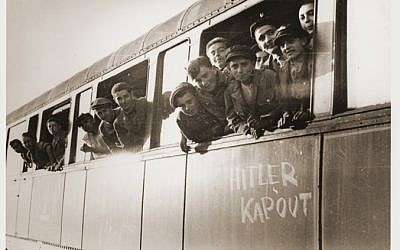
Canada effectively closed its doors to Jewish refugees from Nazi Europe when they most needed to escape
The writers reminded readers that Canada effectively closed its doors to Jewish refugees from Nazi Europe when they most needed to escape. “Bearing the scars of the Holocaust, most Jews fled Europe to countries like Canada, which finally opened its doors with a new immigration policy,” they wrote.
“However, the Roma mostly stayed behind, and there has been an enormous escalation of discrimination and bigotry against them, especially in Hungary… Many have tried to flee to Canada, where doors have once again become hard to pry open,” the continued.
On June 11, Bill C-31 passed a third reading in the House of Commons, with a vote of 159 to 132. It is now moving on to the Senate. So, at this point, it is looking as though neither Trudeau’s tweet, nor his opposition to Bill C-31, have been effective in stopping the immigration reform that Citizenship and Immigration Minister Jason Kenney claims is designed to combat human smuggling and ensure that the asylum system is “fast and fair.”
But perhaps, at the very least, Trudeau will have helped “tikkun olam” go mainstream.








The Times of Israel Community.